


More news on this day
Philadelphia, long defined by the Liberty Bell and Independence Hall, is experiencing a measured yet noticeable tourism rebound as air travel, hotel demand and major event planning point to a city steadily regaining momentum.
Get the latest news straight to your inbox!
Air Travel Signals a Stronger Gateway City
Recent data from Philadelphia International Airport indicate that travel demand is firmly in recovery mode, with 2024 passenger volumes surpassing 30 million for the first time since before the pandemic. Publicly available aviation reports show nearly 30.9 million passengers passing through the airport in 2024, an increase of almost 10 percent over 2023 and the strongest total since the record year of 2019. The growth reflects both domestic and international demand returning toward historical norms.
Airport documents highlight that passenger traffic in 2024 rose across most major categories, supported by new and restored routes that expand connectivity to Europe and key domestic hubs. This strengthening role as a transatlantic and national gateway is critical for a destination that markets itself as an accessible starting point for exploring American history. For many visitors, the Liberty Bell, Independence Hall and the city’s historic core begin with a flight routed through Philadelphia’s main terminal complex.
The recovery is not yet a complete return to pre‑pandemic conditions, particularly for some segments of international travel, but the trajectory is upward. Analysis in credit and activity reports suggests that while performance lagged 2019 benchmarks in the early recovery years, consistent year‑over‑year gains have narrowed the gap. Aviation planners are using these trends to justify airfield, terminal and ground access improvements intended to handle larger surges of travelers tied to future mega‑events.
The airport’s expanding role also has implications for regional tourism beyond the city limits. Increased passenger volume tends to support more competitive fares and higher route frequency, factors that can tip a traveler’s decision when choosing between Northeastern gateways. As Philadelphia works to position itself between New York City and Washington, the air travel backdrop is a key part of the recovery story.
Visitor Economy Rebuilds Around Major Events
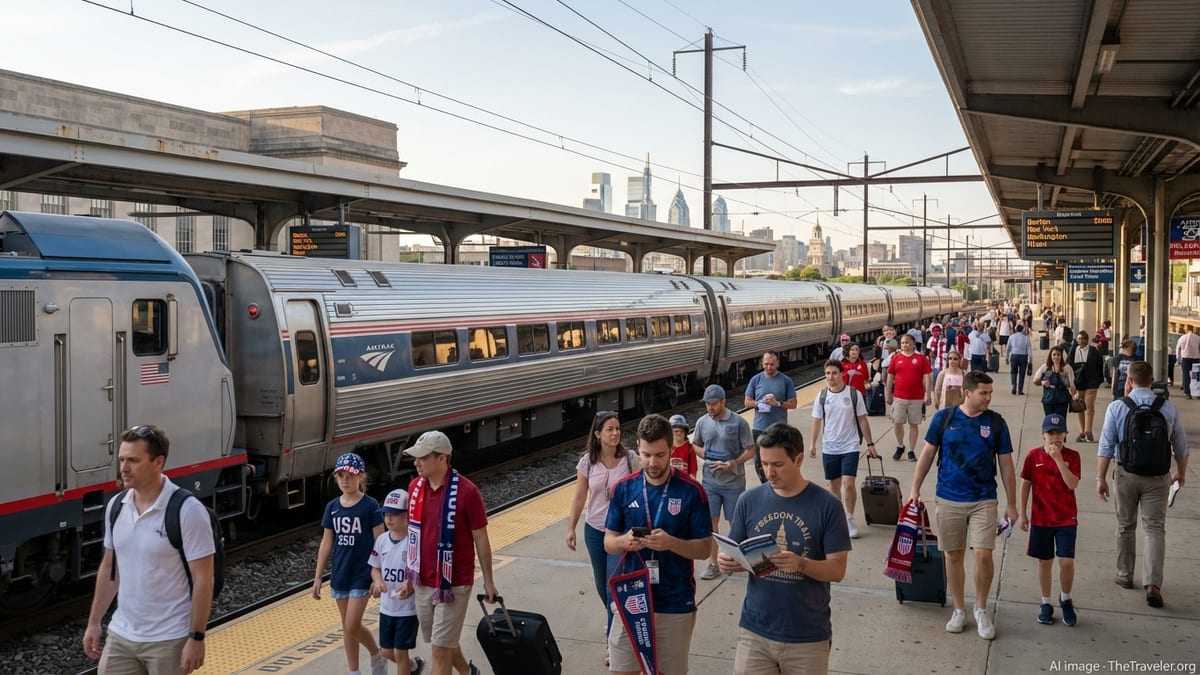
Tourism organizations and event planners are increasingly looking to 2026 as a pivotal year for Philadelphia’s visitor economy. The city is scheduled to co‑anchor celebrations for the 250th anniversary of the United States while serving as a host city for the FIFA World Cup. Information published by the city and tournament organizers shows that Lincoln Financial Field will stage six World Cup matches, including a Round of 16 game on July 4, placing global attention on the birthplace of American independence.
Host city guides and promotional material describe a 39‑day fan festival footprint that will extend the impact well beyond match days, with public viewing areas and cultural programming planned across significant sections of the city. State and local tourism agencies have framed the tournament as an opportunity to introduce first‑time international visitors to the Liberty Bell, Independence National Historical Park and the surrounding neighborhoods, with the expectation that some spectators will pair soccer with sightseeing.
Public health and emergency preparedness documents outline the scale of the coming events, forecasting sustained summer crowds and an influx of international guests. These planning materials anticipate weeks of heightened activity rather than single‑day spikes, a pattern that can benefit hotels, restaurants, museums and tour operators throughout the historic district and Center City. The Liberty Bell in particular is likely to serve as a symbolic focal point as the country’s semiquincentennial and a global sporting tournament coincide.
Travel industry observers note that an extended calendar of special events tends to accelerate recovery in urban markets by filling hotel rooms midweek and encouraging longer stays. For Philadelphia, which competes with other East Coast cities for group and leisure business, the 2026 slate is being viewed as a catalyst for rebuilding the convention and meetings pipeline around history‑themed programming.
Downtown Market Shows Uneven but Emerging Stability
While tourism metrics are strengthening, Philadelphia’s broader downtown recovery remains mixed. Commercial real estate analyses of the Center City office market at the end of 2024 describe modest improvement in leasing activity and net absorption, but also persistent elevated vacancy. Industry reports point to an office sector that has stabilized compared with the peak disruption years, yet still faces pressure from hybrid work patterns and the need to reposition older buildings.
Transaction data compiled by regional business publications show that several downtown office properties have changed hands at reduced values, underscoring the challenges landlords face in an environment of rising borrowing costs and evolving tenant requirements. At the same time, a growing list of conversion projects is reshaping the urban core, with obsolete office space being redeveloped into residential units and mixed‑use properties. This gradual shift is expected to bring more full‑time residents into areas that traditionally catered to daytime workers and tourists.
For visitors, these changes are beginning to alter the feel of Center City and Old City, the neighborhoods most closely associated with the Liberty Bell and Independence Hall. As more ground‑floor spaces are adapted for retail, dining and cultural uses, streets that once emptied after business hours are seeing extended activity. Travel planners suggest that such diversification of uses can make downtown districts more attractive for weekend city breaks and evening walking tours, complementing daytime historical sightseeing.
Economic development agencies are positioning these real estate trends as part of a long‑term rebalancing rather than a short‑term setback. By encouraging residential, hospitality and cultural investment alongside tourism marketing, city partners aim to create a more resilient urban core that can better weather future shocks to any single sector.
Historic Attractions Adjust to New Visitor Patterns
The Liberty Bell and the surrounding Independence National Historical Park remain central to Philadelphia’s tourism identity, but operators and civic partners are adapting to new visitor patterns that emerged after the pandemic. Publicly available tourism materials highlight a growing emphasis on timed entry, outdoor interpretation and digital resources that help manage crowding while still delivering an in‑depth historical experience.
Marketing campaigns from city and state tourism bureaus increasingly bundle the Liberty Bell with nearby museums, neighborhoods and waterfront attractions, encouraging travelers to spend more time exploring beyond a single landmark. This strategy reflects broader industry research suggesting that visitors who combine marquee sites with local food, arts and neighborhood experiences are more likely to extend their stays and return for repeat visits.
Education‑focused programming is also playing a role in the recovery. Initiatives tied to the approaching 250th anniversary aim to bring students and civic groups to Philadelphia for immersive history and civics experiences that include time at the Liberty Bell Center and Independence Hall. While these programs are framed as educational in nature, they contribute to hotel nights and restaurant traffic, particularly during months that have traditionally been quieter for leisure travel.
Such efforts point to a future in which historic symbols serve not only as must‑see attractions, but also as anchors for broader engagement with the city’s evolving neighborhoods and cultural scene. As Philadelphia advances through this phase of steady recovery, the Liberty Bell continues to ring loudly in the global imagination, even as the visitor experience around it becomes more diverse and dynamic.