


More news on this day
After several seasons of headline-grabbing queues at passport control, travelers heading to Portugal this summer are beginning to see signs that the worst airport bottlenecks may finally be easing.
Get the latest news straight to your inbox!
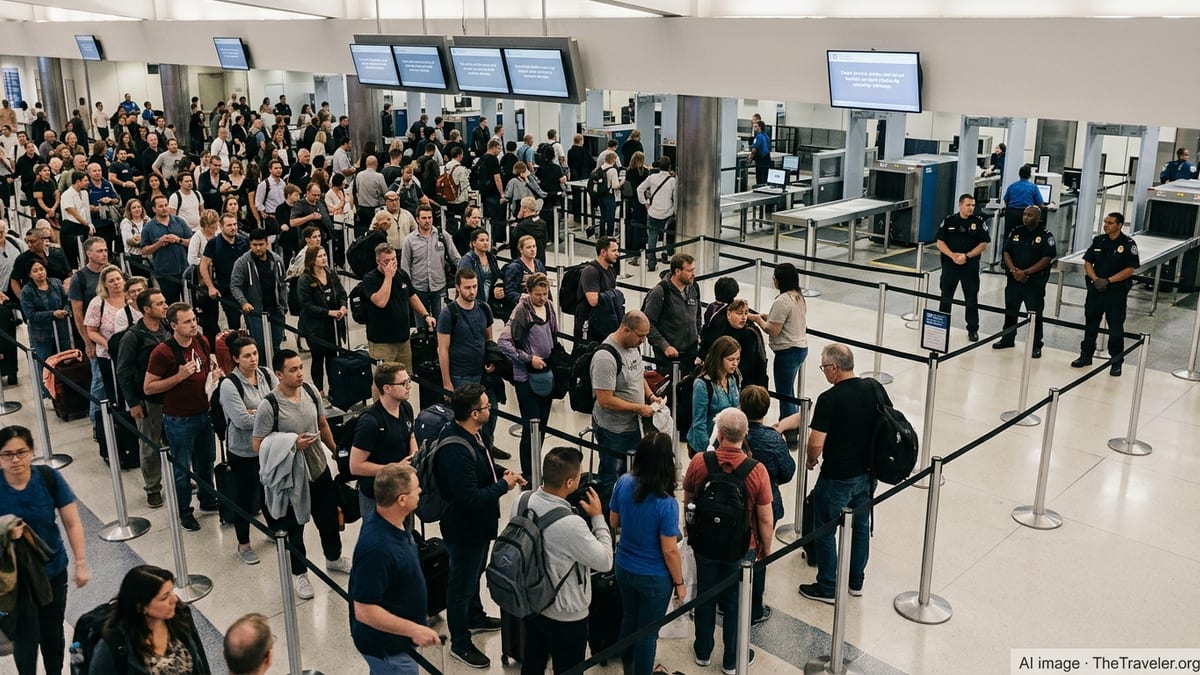
Staff reinforcements target peak summer bottlenecks
Portugal’s government has moved to tackle airport congestion by substantially increasing police staffing at border control in Lisbon, Porto, Faro and island gateways. Publicly available information from the Ministry of Internal Administration indicates that more than 360 Public Security Police officers are being deployed to the country’s main international airports in time for the high summer season, with the largest share assigned to Lisbon, followed by Porto and Faro.
Travel coverage across European media reports that the additional officers are being phased in between late May and early July to coincide with the busiest holiday travel weeks. Earlier reinforcements at Lisbon’s Humberto Delgado Airport are being followed by new teams for Sá Carneiro in Porto and Gago Coutinho in Faro, where non Schengen passenger volumes have grown sharply with transatlantic and UK flights.
Airport operators have described border control as a “permanent operational priority,” and recent data released by Portuguese authorities suggests that, despite record passenger numbers, maximum waiting times in June were generally held under around 70 minutes at major airports, a marked improvement compared with individual reports last year of several hours in line.
The current strategy combines more human resources with operational tweaks, such as opening additional manual passport booths during peak arrival banks and adjusting staff rosters around early morning and late evening long haul waves. Travel industry observers note that this mix appears to be slowly reducing the most extreme delays that had become common during earlier phases of the busy summer period.
New e-gates and tech upgrades speed up checks
Alongside extra staff, Portugal is investing millions of euros in automated border technology to process travelers more quickly. A resolution published in the country’s official journal in January authorized spending through 2028 on new electronic gates, software and maintenance intended to increase the capacity of air border control at the main international hubs.
According to recent integrated management reports from ANA Aeroportos de Portugal, the operator of the country’s principal airports, work is advancing on expanding automated systems at Lisbon, Porto and Faro. This includes new or upgraded e-gates at arrivals and departures, improved biometric capture equipment and real time monitoring of processing times so that additional positions can be opened when lines begin to swell.
The European Union’s new Entry/Exit System, introduced progressively since late 2025, has required non EU visitors to submit biometric data on first entry into the Schengen area. While this has initially increased transaction times at the border, Portuguese authorities have been installing more hardware to handle the extra steps and, when necessary, have temporarily relaxed the collection of some data elements to avoid excessive queues.
For travelers, the impact is increasingly visible. Frequent flyers report that where only a handful of booths once served entire wide body arrivals, there are now more staffed counters and a growing number of functioning e-gates, particularly for eligible passport holders who have already been registered in the new system. When these gates are fully operational, they can move passengers through in a matter of seconds rather than minutes.
Temporary relief from full biometric checks
One of the less publicized but significant measures helping to ease congestion is a partial suspension of mandatory biometric data collection in certain circumstances. According to Portuguese press reports summarizing police briefings, since April authorities have been allowed to temporarily skip some biometric enrolment steps at the air border when waiting times exceed predefined thresholds.
This approach follows concerns raised by airlines and airport organizations across Europe about the rollout of the Entry/Exit System, which they warn can double or triple processing times when every traveler must be fully registered. Industry associations have called for flexibility so that member states can pause or scale back some requirements during the busiest summer weekends.
Portugal’s contingency measures appear designed to strike a balance between complying with European border regulations and keeping passenger flows manageable. Publicly available information shows that this flexibility is time limited and targeted to specific peak periods, rather than a blanket suspension of the new system.
For visitors, the practical effect is that first time biometric registration may not always take place during the most crowded arrival waves, with some travelers instead processed through traditional document checks. While this does not eliminate queues entirely, it reduces the likelihood of extreme delays that previously stretched well beyond two hours for some incoming flights.
What passengers arriving this summer can expect
Despite the improvements, travelers should still prepare for lines at Portugal’s airports, particularly at Lisbon, which handles the majority of long haul arrivals. Recent local coverage and traveler reports suggest that waits at passport control can still reach around an hour during busy periods, especially when several non Schengen flights arrive in quick succession.
However, the pattern is evolving. Monitoring data published in June indicated that peak waiting times at Lisbon were substantially shorter than some of the worst episodes seen earlier in the Entry/Exit System rollout, and that average waits at Porto and Faro were lower still. Authorities say they are tracking real time flows and can temporarily redirect passengers between manual booths and e-gates to keep lines moving.
For many North American, UK and other non EU visitors, this means a more predictable arrival experience compared with the sudden gridlock that dominated social media last year. Travel agents advise building in some extra time for connecting flights or onward train journeys, but note that the risk of missing connections due to passport queues alone has decreased as staffing and infrastructure have been reinforced.
Departure times are generally less affected than arrivals, though outbound passport control can also back up when several wide body flights leave in a short window. Expanded departure e-gates and additional police positions are intended to prevent lines from spilling back into security areas, a scenario that drew criticism earlier in the year at some Portuguese airports.
Ongoing challenges as traffic keeps growing
While this summer’s measures are bringing relief, experts caution that structural challenges remain at Portugal’s busiest hubs. Lisbon’s long delayed plans for a new airport or major expansion of existing facilities are still under discussion, and in the meantime passenger numbers continue to climb, driven by tourism growth and new transatlantic services.
European level assessments have previously highlighted shortcomings in border facilities at Lisbon, including insufficient space for queues and limited flexibility to expand control positions. The current wave of investment in e-gates and staffing is viewed as an urgent response to these findings rather than a final fix.
Travel industry observers point out that, as the Entry/Exit System moves toward full implementation across the Schengen area, bottlenecks could reappear if traffic grows faster than infrastructure and staffing. They argue that ongoing monitoring, rapid deployment of additional officers during surges and continued upgrades to automated systems will be essential to maintain the recent gains.
For now, though, travelers heading to Portugal can expect a more orderly arrival than many experienced over the past two summers. Lines at passport control have not disappeared, but the combination of more staff, more e-gates and pragmatic use of new border rules is beginning to turn one of Europe’s most frustrating airport experiences into a more manageable start to a holiday.