


More news on this day
Rail connectivity between Uttar Pradesh and Madhya Pradesh is entering a new phase, as Indian Railways rolls out direct inter-state services and higher-capacity corridors that reshape how passengers and freight move across central India.
Get the latest news straight to your inbox!
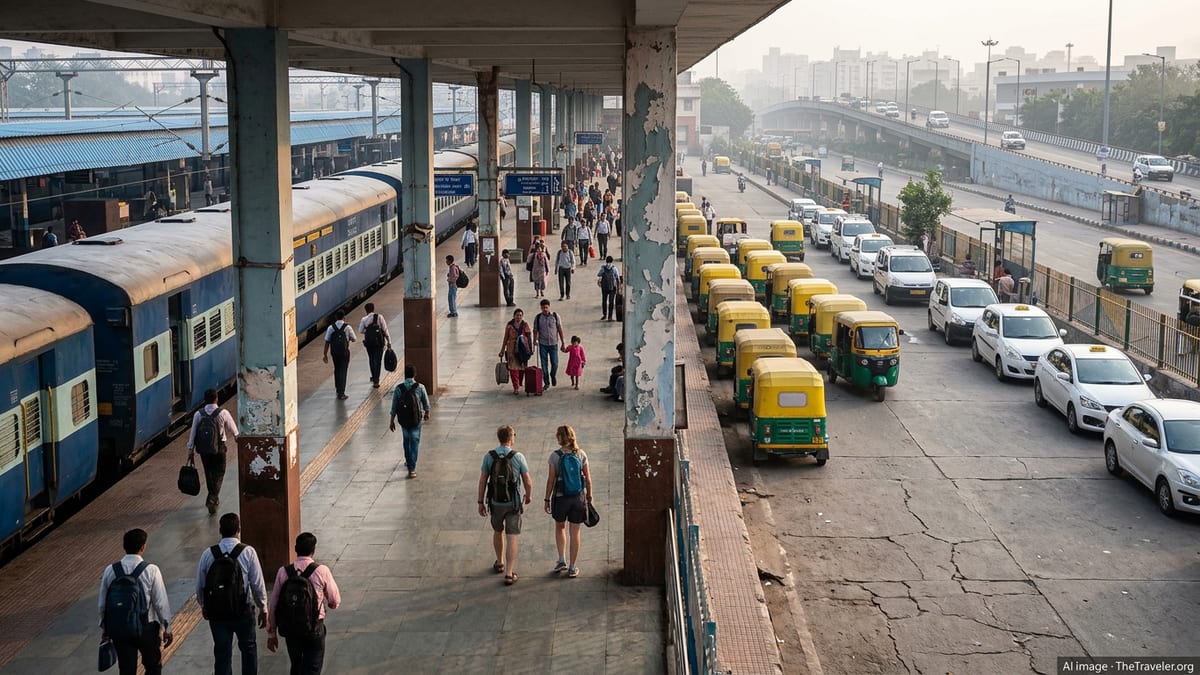
New Direct Trains Redraw the UP–MP Rail Map
Recent timetable additions are creating more seamless rail options between Uttar Pradesh and Madhya Pradesh, particularly along pilgrimage and tourism corridors. A standout example is the Banaras–Khajuraho Vande Bharat Express, which links Varanasi in eastern Uttar Pradesh with Khajuraho in Madhya Pradesh, providing a dedicated semi high-speed connection between two of the country’s most visited cultural destinations. Publicly available schedules show the service cutting journey times compared with conventional express trains and offering daytime connectivity through key hubs along the Bundelkhand belt.
Another high-profile link between the two states comes via the Banaras–Hadapsar (Pune) Amrit Bharat Express. The long-distance service originates in Banaras and traverses Uttar Pradesh before entering Madhya Pradesh via major junctions such as Jhansi and Bhopal, then continuing into Maharashtra. Published coverage highlights the route as a cost-focused, non air-conditioned superfast option that opens up new, direct end-to-end travel possibilities without the need to change trains in Delhi or other metros.
In parallel, the Hazrat Nizamuddin–Khajuraho Vande Bharat Express and the Rani Kamalapati–Hazrat Nizamuddin Vande Bharat Express further integrate Uttar Pradesh and Madhya Pradesh into the broader northern corridor. Both services pass through sections of Uttar Pradesh while connecting Delhi with Khajuraho and Bhopal respectively, giving travellers more one-seat rides that span the two heartland states and the national capital.
These direct connections reflect a broader shift within Indian Railways toward corridor-based planning, where trunk routes are designed not only to reach metros but to knit together second-tier cities and heritage destinations. As more semi high-speed and long-distance services are layered onto existing lines, UP–MP rail journeys that once required multiple changes are increasingly offered as through services.
Higher Capacity Through Doubling and Third-Line Projects
Behind the new train names and routes lies a wave of infrastructure work aimed at relieving pressure on some of North India’s busiest mixed-traffic corridors. Government releases on sanctioned projects indicate that both Uttar Pradesh and Madhya Pradesh feature prominently in current plans for new lines, doubling and multi-tracking under national rail modernization initiatives. These projects target bottleneck sections that carry heavy passenger and freight flows between coalfields, industrial centers and growing cities.
In Madhya Pradesh, official summaries list dozens of works classified as new lines, gauge conversions and doubling or third-line additions, spanning several thousand kilometers. Many of these projects intersect with corridors that either enter Uttar Pradesh directly or feed into junctions such as Jhansi, Itarsi and Bina, which serve as gateways for trains running toward Kanpur, Prayagraj, Varanasi and Lucknow. As additional tracks come online, the practical outcome is more paths for both express passenger trains and freight rakes sharing the same routes.
On the Uttar Pradesh side, railway documents and parliamentary answers show a similar emphasis on capacity enhancement, with multi-tracking, yard remodelling and signalling upgrades planned or underway. While some works focus on intra-state flows, a significant share of the investment supports east–west and north–south routes that carry trains linking UP to Madhya Pradesh and beyond, particularly along the Bundelkhand, Vindhya and central Indian corridors.
The cumulative impact of these capacity projects is intended to reduce congestion, shorten halt times at junctions and create room in the timetable for new services such as Vande Bharat and Amrit Bharat trains. For passengers, that translates into more frequency and better punctuality; for freight operators, it can mean faster transit times and the possibility of adding specialized container, automobile or bulk commodity trains on shared infrastructure.
Tourism Corridors Benefit From Faster, Direct Services
Tourism is emerging as one of the clearest early beneficiaries of the upgraded connectivity between Uttar Pradesh and Madhya Pradesh. The Banaras–Khajuraho Vande Bharat Express is a flagship example, explicitly designed around a circuit that links Varanasi’s ghats and temples with Khajuraho’s UNESCO-listed temple complex. Reports indicate that the train’s timings have been structured to allow same-day arrivals and convenient onward travel, making it easier for domestic and international visitors to pair both destinations in a single itinerary.
Along its route, the train touches regional centers such as Prayagraj and Chitrakoot, adding a practical rail spine to the broader “spiritual tourism” narrative often associated with the two states. Industry observers note that improved reliability and reduced travel times can encourage visitors to substitute overnight buses or fragmented rail journeys with a single, comfortable day train, potentially boosting hotel occupancy in smaller towns that gain better access to high-yield tourist flows.
Beyond premium services, the Banaras–Hadapsar Amrit Bharat Express is expected to support religious and cultural travel by connecting pilgrimage hubs across three states on a single rake. Stops in Uttar Pradesh and Madhya Pradesh, combined with the train’s wallet-friendly, non air-conditioned configuration, position it as a mass-market option for devotees heading to Varanasi, Ayodhya-sector junctions or onward corridors serving shrines in Maharashtra.
Khajuraho itself benefits from a dual uplift. In addition to its direct link with Banaras via Vande Bharat, the town is already part of services that connect it to Delhi and other northern nodes. Together, these routes help reposition Khajuraho from an endpoint on a branch line to a more integrated node on a fast-improving central Indian rail lattice.
Everyday Mobility Gains for Smaller Cities and Towns
The new phase of connectivity is not limited to high-profile tourist trains. Timetable changes and infrastructure upgrades are gradually affecting everyday mobility between smaller cities and towns straddling the UP–MP border. Junctions such as Jhansi, Satna, Rewa-adjacent stations and Bundelkhand-region halts are gaining from improved through services and reduced conflicts between express and freight trains as more track capacity becomes available.
According to publicly available operational data, semi high-speed services like Vande Bharat typically share existing tracks, benefiting directly from line doublings, improved signalling and higher permissible speeds introduced along key sections. When these enhancements occur on routes that pass between Uttar Pradesh and Madhya Pradesh, local passengers experience faster regional expresses and a wider choice of departure times, even if they do not board the premium trains themselves.
Over time, better rail options can influence how residents of tier‑2 and tier‑3 centers travel for education, healthcare and employment. Cities such as Bhopal, Lucknow, Varanasi and Prayagraj act as magnets for students and workers from smaller districts in both states. As more direct trains and faster corridors link these hubs, the catchment area for daily and weekly commuting widens, potentially changing patterns of migration and investment in secondary towns.
For freight, higher-capacity corridors crossing the UP–MP boundary carry critical commodities ranging from coal and cement to agricultural produce. Enhanced line capacity can make it easier to add time-tabled freight services that avoid peak passenger windows, reducing delays that have historically affected industries dependent on rail-based logistics. This, in turn, can support new industrial and warehousing projects positioned to take advantage of improved inter-state rail access.
Strategic Role in National Rail Planning
The strengthening of rail links between Uttar Pradesh and Madhya Pradesh aligns closely with the objectives set out in national planning documents for India’s rail system. The National Rail Plan and subsequent programmatic initiatives under the PM Gati Shakti National Master Plan emphasize high-capacity, multi-tracked corridors and better integration of passenger and freight flows across state lines. Both UP and MP, located in the heart of the country, figure prominently in maps outlining future dedicated freight, high-density and passenger-dedicated routes.
Recent overviews of sanctioned projects describe more than 300 new line, gauge conversion and doubling schemes across India in the current planning window, with a significant concentration in the northern and central zones that encompass UP and MP. As these schemes progress from approval to commissioning, sections that today handle mixed and often congested traffic are expected to evolve into more predictable, higher-capacity corridors, capable of supporting additional premium and regional trains.
The emerging network of Vande Bharat and Amrit Bharat services serves as a visible marker of this transition. New direct trains between Banaras and Khajuraho, and longer-haul routes from Banaras to Pune that pass through Madhya Pradesh, illustrate how infrastructure investments translate into tangible options for passengers. At the same time, the focus on non air-conditioned, affordable superfast trains underscores an effort to ensure that the gains from enhanced connectivity extend beyond premium segments to the broader traveling public.
Taken together, the combination of direct services, higher-capacity lines and corridor-based planning is moving Uttar Pradesh and Madhya Pradesh into a more integrated rail era. For travellers, that means shorter, more predictable journeys across the heart of India; for the wider economy, it lays the groundwork for tourism growth, more efficient freight movement and deeper regional ties between two of the country’s most populous states.