


More news on this day
US airlines are moving quickly to deploy new generations of long-range narrowbody jets on transatlantic and other long-haul routes, reshaping how Americans fly even as Delta Air Lines pursues a contrasting strategy centered on growing one of the industry’s largest widebody fleets.
Get the latest news straight to your inbox!
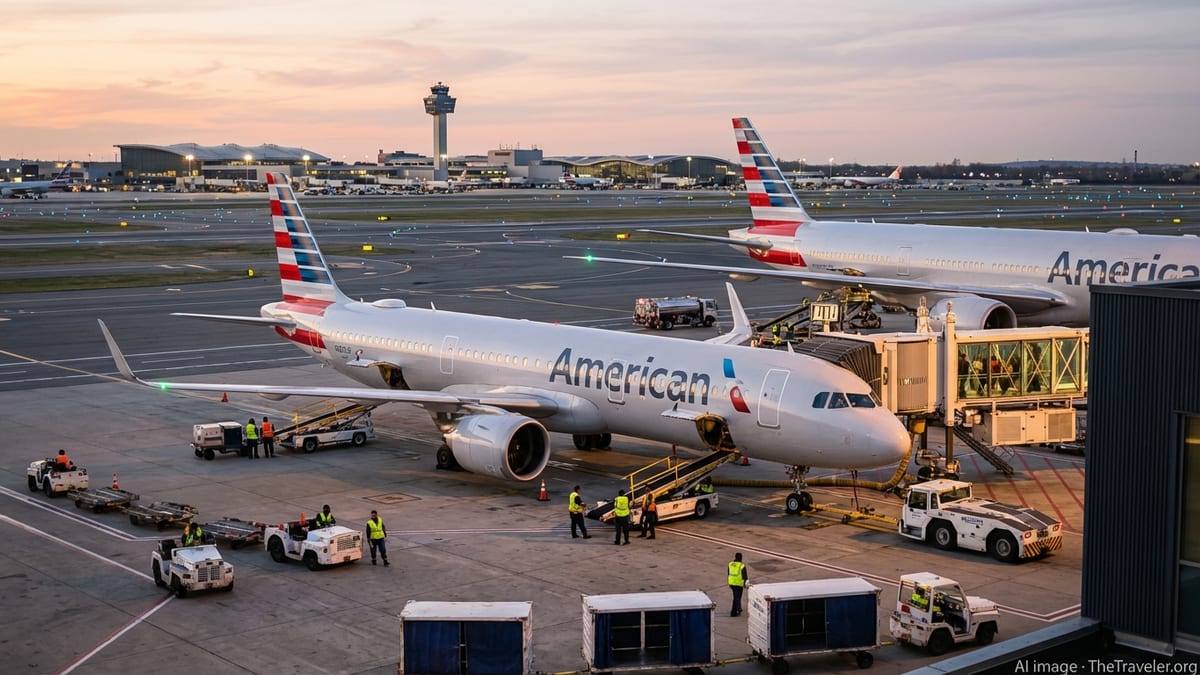
Long-Range Narrowbodies Redraw U.S. Route Maps
New aircraft such as the Airbus A321LR and A321XLR, along with long-range variants of the Boeing 737 MAX, are enabling US carriers to operate city pairs that were previously uneconomical with larger twin-aisle jets. Industry data and fleet filings show that these single-aisle types offer the range needed for many North Atlantic and deep Latin American routes while burning significantly less fuel per trip than legacy widebodies.
Published analyses of the long-haul single-aisle segment highlight how the A321neo family, including its LR and XLR variants, and the 737 MAX have “revolutionized” long-haul narrowbody flying since their introduction in 2017, particularly across the Atlantic and in secondary markets where demand for large premium cabins is limited. These aircraft typically seat 170 to 210 passengers in mixed cabins, allowing airlines to right-size capacity while sustaining nonstop service on routes that might not support a larger jet on a year-round basis.
Eurocontrol traffic snapshots and other industry statistics for 2024 indicate that new-generation narrowbodies are steadily capturing a larger share of overall narrowbody flying, with the A320neo and A321neo families now representing a material portion of Airbus single-aisle activity and the 737 MAX accounting for a growing slice of Boeing narrowbody operations. The same sources point to parallel growth in new widebody types, underscoring an industry that is segmenting its fleets rather than moving uniformly toward one category.
United and American Lead the A321XLR Charge
United Airlines and American Airlines are at the forefront of the US pivot toward long-range narrowbodies. United has highlighted the role of its incoming A321XLR fleet in supporting new transatlantic services, publicly showcasing cabin concepts that mirror the airline’s latest widebody interiors, including lie-flat business seats and large seatback screens at every seat. Aviation and technology coverage describes the type as a bridge between narrowbody economics and widebody range for United’s future network.
American, meanwhile, has positioned the A321XLR as a cornerstone of its next-generation long-haul product. Company disclosures and fleet summaries describe plans to introduce new Flagship Suite premium seats and refreshed cabins on both the A321XLR and Boeing 787-9, signaling that American intends to use the single-aisle type on routes that currently depend on mid-size widebodies. The approach supports thinner transatlantic and high-value leisure markets from hubs such as Philadelphia and Charlotte, where demand can be seasonal and highly directional.
Other US carriers have tapped long-range single-aisles as well. JetBlue pioneered the concept for US low-cost operators by using the A321LR for its first transatlantic services between the Northeast and London, pairing a narrowbody with a boutique, high-density premium cabin. Although the airline subsequently deferred deliveries of A321XLR aircraft and pushed a portion of its single-aisle order book into the 2030s as part of a broader restructuring program, published information indicates that JetBlue continues to see long-range narrowbodies as central to its eventual European and deep Latin American strategy.
Passenger Experience: Single Aisle on Long Sectors
The rapid spread of long-range narrowbodies is prompting debate about passenger comfort on flights that can stretch beyond seven hours. Travel coverage and online commentary note that cabin designers and airlines are attempting to close the gap with widebodies through larger overhead bins, improved lighting schemes, full-featured in-flight entertainment and, in some cases, premium-heavy layouts with lie-flat seating in the front cabin.
United’s A321XLR interior, for example, has been widely described as an evolution of the airline’s latest “United Next” domestic cabins, extended for longer missions with upgraded premium seating, in-seat power at every seat and expanded entertainment options. Similar shifts are under way at other carriers introducing the XLR, with many opting for more generous pitch in extra-legroom economy and attention to lavatory placement and galley design to mitigate the perception of a confined space.
Nonetheless, analysts point out that single-aisle aircraft cannot fully replicate the sense of space of a twin-aisle jet. Narrowbodies typically have fewer lavatories per passenger on long-haul layouts and offer just one aisle, which can concentrate congestion during meal service and turbulence. Airlines are betting that nonstop convenience, schedule choice and price will outweigh these concerns for most travelers, especially on routes that would otherwise require a connection over a major European or US hub.
Delta Charts a Different Path With Widebody Growth
While peers lean heavily into long-range narrowbodies, Delta Air Lines is notable for prioritizing growth through an expanded widebody fleet. Corporate fleet tables and manufacturer announcements show that Delta has committed to substantial orders for the Airbus A330-900neo and A350-900, as well as upcoming A350-1000 aircraft and additional Boeing 787 Dreamliners. A January 2026 bulletin from Airbus details a firm Delta order for 31 more widebodies, including 16 additional A330-900s and 15 A350-900s, with deliveries stretching into the next decade.
Delta’s published investor materials and network updates frame these aircraft as the backbone of its international expansion strategy, particularly across the Atlantic and Pacific. The airline has outlined plans for record transatlantic flying, with more than 700 weekly flights to dozens of European destinations in peak summer seasons, and continues to emphasize growth in premium cabins supported by its newest A330neo and A350 aircraft. Publicly available fleet information indicates that, as of early 2026, Delta operates one of the world’s largest fleets of A330neos and A350s, with further A350-1000 deliveries set to begin.
At the same time, Delta is actively renewing its domestic and short-haul fleet with the Airbus A321neo, exercising options for dozens of additional aircraft in 2025 and 2026. Company statements describe the A321neo as a pillar of Delta’s next-generation narrowbody strategy, but there is little sign that the airline intends to rely on long-range narrowbodies for intercontinental services in the way United and American are planning. Instead, Delta appears focused on leveraging the scale and product consistency of its widebody fleet to differentiate itself on high-demand long-haul routes.
Strategic Implications for U.S. Travelers
The split between long-range narrowbodies and expanded widebody fleets is shaping competitive dynamics and travel choices for US passengers. Airlines embracing the A321LR, A321XLR and similar types can open secondary city pairs across the Atlantic, Caribbean and Latin America, providing more nonstop options from mid-size markets that previously depended on connections. For travelers outside major coastal hubs, that can translate into shorter journeys and more point-to-point service, even if the aircraft is smaller.
Delta’s widebody-centric approach, by contrast, favors consolidation of long-haul capacity through large coastal and interior hubs such as Atlanta, New York, Detroit and Seattle. Public analysis of the carrier’s network strategy suggests that Delta is aiming to maximize connectivity and premium revenue by funnelling long-haul demand over these centers, where high-frequency narrowbody feeds can support large A330 and A350 departures. For passengers, that often means more choice of departure times and cabin products on trunk routes, but fewer narrowbody-operated “long and thin” nonstops from secondary cities.
Industry forecasts indicate that both models are likely to coexist. Eurocontrol’s fleet data show rising utilization of new narrowbodies and new widebodies alike, as airlines match aircraft type to market size and yield potential. For business and premium leisure travelers, US networks built around widebodies may offer a more consistent high-end experience, while value-focused passengers may gravitate to carriers that use long-range single-aisles to provide additional nonstop options and potentially sharper pricing in off-peak periods.
For now, the United States is emerging as a test bed for the two philosophies. United, American and JetBlue are leaning into long-range narrowbody flexibility, while Delta is reinforcing its longstanding bet on widebody heft. How travelers respond to long-haul flights in single-aisle cabins versus larger twin-aisles will help determine which strategy gains altitude in the next phase of global network competition.
Delta grows Airbus widebody fleet with new order
Delta continues fleet renewal with additional narrowbody aircraft
EUROCONTROL data on new-generation narrowbodies and widebodies