


More news on this day
More than 20 flights at Manchester Airport have been delayed and at least three cancelled today, as live tracking data shows a further day of disruption for passengers using the UK’s third-busiest airport.
Get the latest news straight to your inbox!
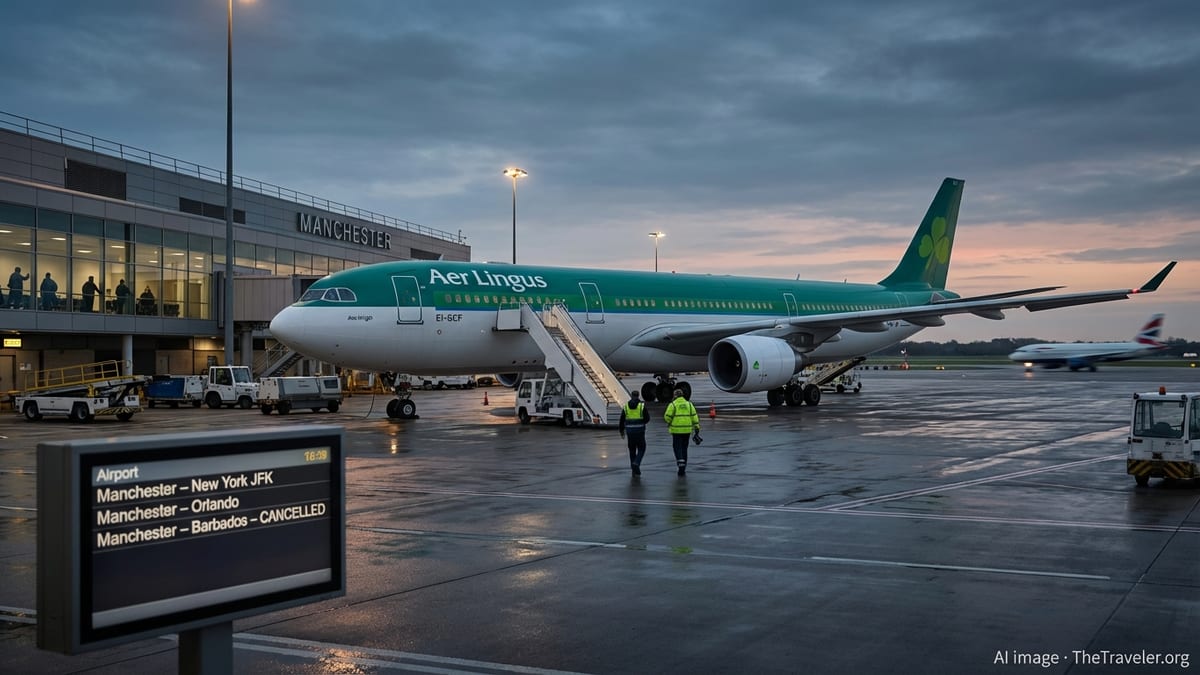
Live tracking shows disruption building through the morning
Publicly available flight-tracking dashboards for Sunday 30 August indicate that disruption at Manchester Airport has continued into a second consecutive day of difficult operations. Real-time arrival boards compiled by Trip.com show a mix of on-time movements, late arrivals and several cancellations across early morning and peak mid-morning periods, affecting both short-haul and long-haul services.
Data from one live arrivals feed lists a Qatar Airways service from Doha among flights cancelled for today, alongside several intra-European links that are either delayed or withdrawn from the schedule entirely. Other services into Manchester, including regional flights from the Isle of Man and Dublin, are reported as running behind schedule, with delays in some cases pushing beyond the half-hour mark.
On the departure side, information compiled by third-party trackers highlights knock-on delays to outbound services as aircraft and crews rotate through the schedule. An easyJet flight from Manchester to Sharm El Sheikh is recorded as leaving later than planned, with departure and arrival times revised on the day of operation, underscoring how today’s disruption is affecting both directions of travel.
These live readings build on a wider pattern identified over the weekend, with aggregated airport performance statistics for late August showing elevated average delay minutes per flight and a noticeable cluster of late-running services during busy evening and early-morning waves.
Three cancellations alongside more than 20 delayed flights
Analysis of multiple tracking feeds covering Manchester’s arrivals and departures suggests that more than 20 individual flights have encountered schedule changes today, ranging from modest delays of 15 to 30 minutes to more substantial hold-ups. The same datasets record at least three full cancellations on the airport’s Sunday program, affecting both inbound and outbound operations.
One real-time arrivals display shows an early-morning intercontinental flight listed as cancelled, while another overview of Manchester’s departures in the past 24 hours flags a small but notable number of services removed from the departure board altogether. Although the airport typically handles several hundred flights per day, today’s figures still represent a meaningful disruption for those on the affected services.
Recent historical performance data compiled by specialist aviation analytics sites indicates that Manchester has already experienced a spate of cancellations in the days leading up to today. Over the past week, daily statistics show multiple days with double‑digit numbers of cancelled departures, including more than 20 cancellations on one day earlier in the period and notable spikes on others.
Compared with that backdrop, the three cancellations recorded so far today appear more modest in absolute terms but remain significant when combined with the volume of delayed flights and the continuing pattern of late arrivals highlighted in hourly performance charts.
Knock-on impact for connecting travel and local transport
The disruption in the air is being mirrored to some extent on the ground. Service updates from Northern, the main regional rail operator serving Manchester Airport station, show selected rail services to and from the airport also cancelled today, including an evening train between Manchester Airport and Liverpool Lime Street. The operator’s update notes that the cancellation is linked to an incident requiring the involvement of emergency services.
This mixture of flight and rail disruption increases the likelihood of missed connections for travellers relying on same-day links between air and rail. Passengers arriving on delayed flights may find that onward train options are more limited, while those whose rail services are cancelled may need to reach the airport earlier than planned or seek alternative routes, placing additional strain on road access and airport forecourts.
While there is no single cause publicly identified for today’s pattern of delays and cancellations at Manchester Airport, the combination of busy late‑summer schedules, earlier days of elevated disruption and separate issues on the regional rail network contributes to a more complex environment for anyone travelling through the hub.
Rail operators and online journey planners generally advise passengers to keep tickets and claim compensation where eligible if they are delayed beyond published thresholds, which can be as low as 15 minutes in some cases. Similar guidance is reflected in air passenger advice from consumer bodies, where the focus is on checking live flight status, retaining documentation and, where relevant, exploring alternative routing options.
Recent days show elevated delay levels at the UK hub
Broader statistics for Manchester Airport’s recent performance provide context for today’s events. Figures compiled over the past week show that average delay minutes for both arrivals and departures have been running above the airport’s 30‑day norm, with some days earlier in the week recording average departure delays of more than 40 minutes and a tally of cancelled departures running into double digits.
One analytics provider tracking Manchester’s operations reports that, across a rolling 30‑day window, the airport has averaged delays in the mid‑teens per flight, with cancellations over that period totalling close to 200 flights. Within that data, several days in late August stand out as particularly difficult, including a day with more than 20 cancellations and another with 16, suggesting that the current weekend turbulence is part of a broader late‑summer pattern rather than an isolated event.
Separate route-level analysis covering Manchester’s links with key leisure destinations such as Spain and the eastern Mediterranean also points to a concentration of delays on certain popular corridors. Flight-specific trackers for services between Manchester and destinations including Sharm El Sheikh and Corfu show multiple recent days where individual flights departed well behind schedule, contributing to late arrivals back into the UK and increasing the risk of crew and aircraft being out of position for subsequent rotations.
For passengers, this operational picture means that even flights shown as on time when tickets are purchased can be vulnerable to same‑day rescheduling. Real‑time monitoring via airline apps, airport displays and independent trackers has become a crucial tool for keeping abreast of changing departure and arrival times, particularly during peak holiday periods when aircraft and crew utilisation is high.
Advice for travellers using Manchester Airport today
Travel advisories published across various platforms consistently stress the importance of checking live flight information on the day of travel, especially when disruption is affecting a hub airport. For those flying into or out of Manchester today, the pattern of more than 20 delayed flights and multiple cancellations underlines the need to monitor status updates closely and to allow additional time at the airport where possible.
Passengers with tightly timed connections, whether to other flights or to rail and coach services, may wish to consider building in extra buffers or exploring flexible options that allow for rebooking without penalty. This can be particularly relevant for long‑haul arrivals feeding into domestic trains from Manchester Airport station, where separate disruption is already documented on at least one key route.
Travelers already affected by cancellations are generally advised by passenger‑rights organisations to review their carrier’s rebooking and refund policies and to keep all receipts and documentation if they incur additional expenses as a result of the disruption. Many airlines provide rebooking tools via mobile apps or websites, which can reduce pressure on airport service desks during peak times.
With late‑August schedules at Manchester Airport approaching their busiest point and recent days marked by elevated disruption, today’s delays and cancellations serve as a reminder that conditions can change quickly. Those due to travel through the airport in the coming hours are likely to benefit from checking their flight status repeatedly in the run-up to departure and staying alert to gate changes or revised boarding times.
Live Manchester Airport arrivals and departures – Trip.com
Manchester Airport performance data – AeroCorner