


More news on this day
Prolonged flight delays on the busy Kisumu–Nairobi corridor left scores of passengers stranded at Kisumu International Airport over the weekend, as a series of disrupted services rippled across Kenya’s domestic network.
Get the latest news straight to your inbox!
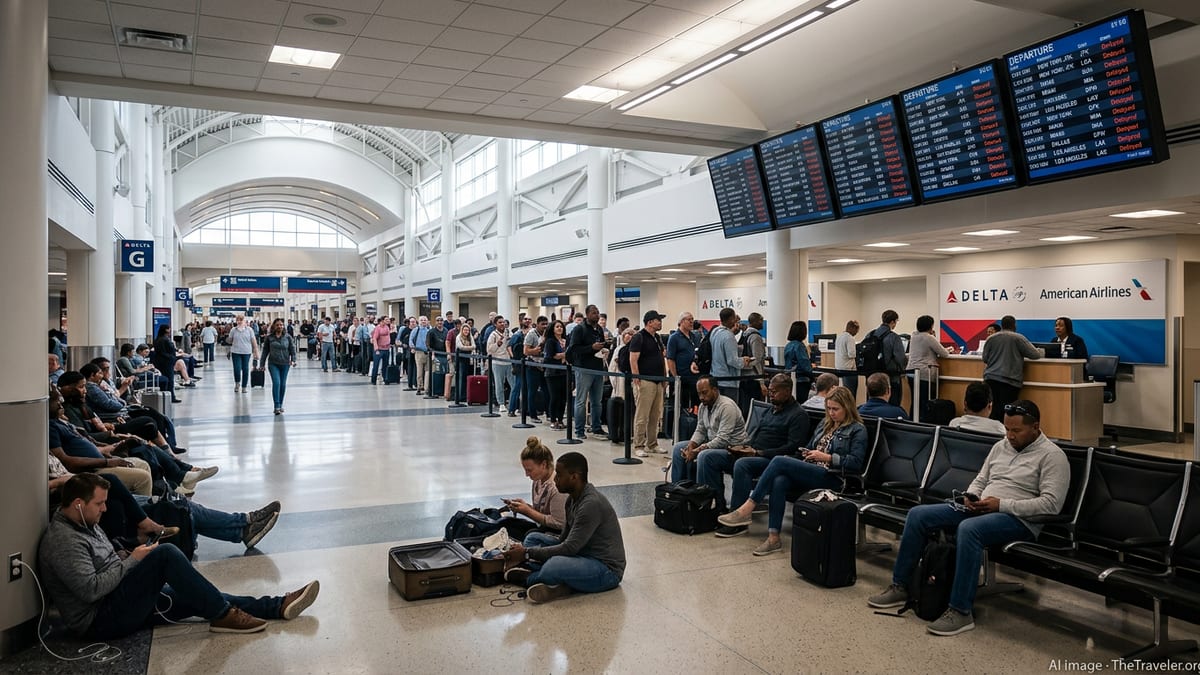
Disruptions hit key Kisumu–Nairobi shuttle services
Publicly available flight-tracking and schedule data for late August indicate a pattern of irregular operations on services linking Kisumu with Nairobi’s Jomo Kenyatta International Airport, a route ordinarily served by multiple daily departures on carriers such as Jambojet, Kenya Airways and Safarilink Aviation. The corridor functions as a high-frequency shuttle for business travelers, government staff and leisure passengers moving between western Kenya and the capital.
On August 29 and 30, several rotations between Kisumu and Nairobi showed extended delays or schedule changes, reducing the predictability that regular users of the route typically rely on. One Jambojet-operated service marketed jointly with Kenya Airways on the Kisumu–Nairobi leg departed significantly behind its planned time, narrowing the connection window for onward links through Jomo Kenyatta International Airport.
Flight-tracking platforms and schedule aggregators show that, while some services on the corridor continued to operate close to their planned times, others recorded late departures and arrivals, creating a patchwork of disruption that was keenly felt by passengers who rely on the shuttle pattern of departures spread throughout the day.
Lengthy waits and missed connections for stranded passengers
The immediate impact at Kisumu International Airport was visible in extended terminal waits as travelers remained on the ground while departure times slipped. Domestic passengers often plan tight itineraries around the Kisumu–Nairobi flights, using Nairobi as a hub for regional or international connections or for time-sensitive engagements in the capital.
When services depart more than an hour behind schedule, publicly available guidance from compensation and passenger-rights platforms notes that travelers can face a cascade of missed onward flights, forfeited hotel bookings and additional ground transport costs. Recent records for specific Kisumu–Nairobi flights show average arrival delays ranging from several minutes to well over an hour, with some individual services operating substantially later than planned.
For travelers who reached Nairobi much later than scheduled, the late arrivals reduced the options for same-day rebooking, particularly in the evening peak when seats are already heavily subscribed. As a result, a proportion of stranded passengers at Kisumu and Nairobi likely had to accept overnight stays or altered itineraries, adding unplanned expense to already tight travel budgets.
Operational pressures on a growing regional hub
Kisumu International Airport has evolved into a key node in Kenya’s domestic network, linking western Kenya to Nairobi, the coast and other regional centers. Official route filings and gazetted applications for scheduled services highlight the importance of the Kisumu–Jomo Kenyatta and Kisumu–Mombasa corridors in national connectivity, with multiple operators vying for market share on these domestic links.
As traffic has grown, the operational resilience of high-frequency routes has come under scrutiny. Any disruption affecting aircraft rotations, crew availability or weather-sensitive approaches can trigger follow-on delays along the chain of flights using the same aircraft. In a network where aircraft are often scheduled for several domestic legs in a single day, a delayed departure from Kisumu can quickly translate into a line of late operations across other routes.
Published analyses of previous disruptions in Kenya’s aviation sector, including strike-related stoppages that have affected major airports, underscore how quickly congestion and stranded passengers can accumulate when a hub experiences extended operational challenges. Although the current delays at Kisumu appear to stem from day-to-day schedule and operational factors rather than a single dramatic incident, the effect on travelers in the terminal has been similar: long waits and uncertainty over revised departure times.
High-frequency corridor shows signs of strain
Route-planning data show that the Kisumu–Nairobi link typically features multiple departures spread from early morning through the evening, operated or marketed by Jambojet, Kenya Airways and other carriers. This pattern is designed to provide flexibility for business travelers and to offer convenient same-day return options.
However, recent flight histories suggest that some of these services have recorded recurring delays, with certain flight numbers showing average late arrivals compared with their scheduled times. While many departures still leave within a reasonable window of the published timetable, a cluster of late operations in a short period can quickly erode the corridor’s reputation as a reliable shuttle.
Industry observers routinely point to factors such as aircraft rotation pressure, demanding turnaround schedules, localized weather and airspace congestion around Nairobi as potential contributors when repeated delays occur on domestic sectors. The current pattern on the Kisumu–Nairobi route fits into a broader picture in which high-demand domestic links across East Africa are operating close to capacity, leaving limited slack when irregularities arise.
Calls for clearer information and long-term resilience
For affected passengers at Kisumu, the most immediate concern has been the availability and clarity of information during delays. Passenger-rights platforms emphasize that transparent updates on revised departure times, options for rebooking and assistance with disrupted itineraries are central to reducing the stress and financial impact of extended waits.
Travel advisories and consumer guidance sites increasingly encourage domestic flyers in Kenya to build additional buffer time into their itineraries when planning tight onward connections through Nairobi or Mombasa. In periods of repeated delays, such as those recorded on recent Kisumu–Nairobi rotations, this buffer can make the difference between a manageable disruption and a cascade of missed flights and added costs.
Looking ahead, aviation analysts and policy documents highlight the need for continued investment in airport infrastructure, air traffic management and airline operational resilience to support growing demand in western Kenya. Kisumu’s role as a gateway for business, tourism and regional trade means that maintaining a robust and reliable flight schedule will be critical, particularly as the city positions itself as a hub for conferences and lake tourism.
For now, the recent pattern of delays serves as a reminder that even short domestic hops can leave travelers stranded when schedules fray, reinforcing the importance of real-time information, contingency planning and sustained attention to the pressures on Kenya’s busiest domestic corridors.
Kisumu to Nairobi flight schedule overview
Recent Kisumu–Nairobi timetable and available flights
Kisumu Airport recent arrivals and delays data
Sample flight history for Jambojet services involving Kisumu