


More news on this day
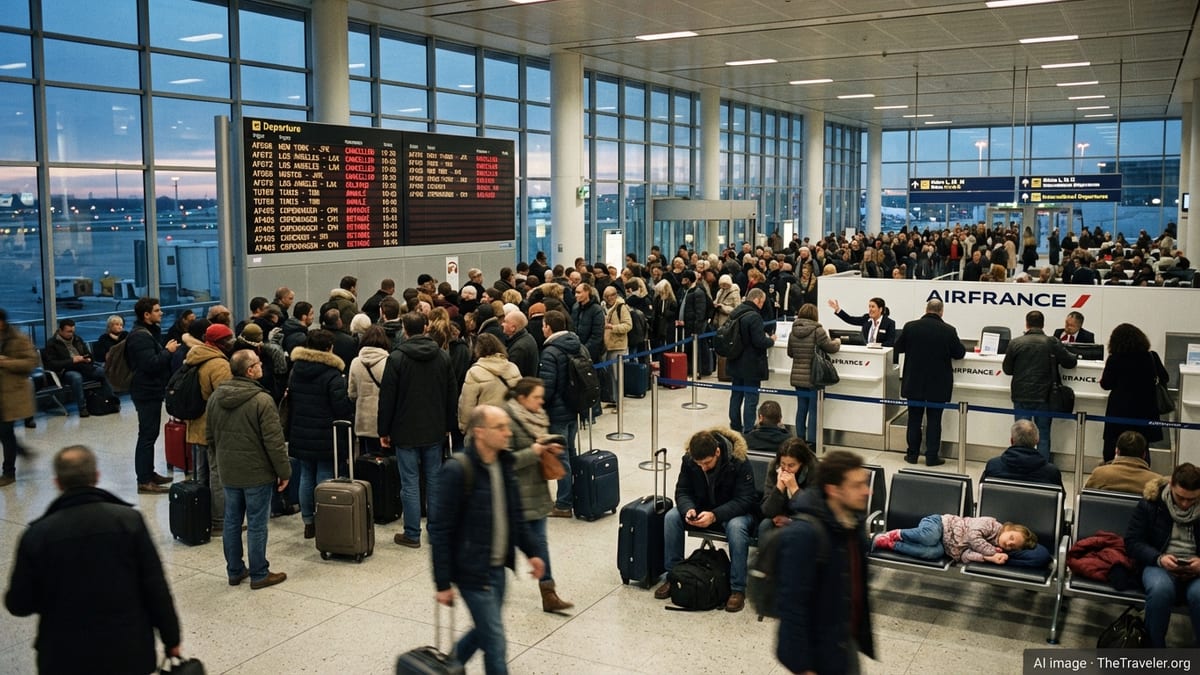
American travelers heading to France this week are being urged to prepare for severe disruption as a nationwide strike on Thursday, November 5, triggers sweeping transport cancellations, protest marches and heightened security across the country, prompting a fresh alert from the US Embassy in Paris.
Get the latest news straight to your inbox!
US Embassy Flags Heightened Risk as Unions Call General Strike
The US Embassy in Paris has circulated a new security alert for US citizens in France, warning that a coordinated national strike and protest day on Thursday, November 5, could bring widespread shutdowns and localized unrest in major cities. Publicly available Embassy information highlights the potential for sudden street demonstrations, transport walkouts and localized violence, particularly around large marches and in areas where recent student and labor protests have already been active.
The alert follows weeks of mounting social tension. Large French union federations, including CFDT, CGT, FO, Unsa and FSU, have jointly called for a nationwide day of strikes and demonstrations on November 5 in response to disputes over wages, public services and education. Reports from French and international media indicate that unions are urging participation from workers across both public and private sectors, with expectations of a “generalized mobilisation” that extends beyond traditional transport walkouts.
While France remains at Level 2 on the US State Department’s broader country advisory scale, updated guidance on the official France advisory page and in a separate demonstration-focused fact sheet underscores that strikes and protests are now a standing concern for visitors. The material advises travelers to avoid protest areas, monitor local media, be prepared for route closures and remain flexible with itineraries on and around major protest days.
Travel advisories from other governments, including those of the United Kingdom, Canada and Australia, have also been updated in recent days to warn of increased demonstrations and potential unrest on November 5, reinforcing the picture of a heavily disrupted day rather than isolated local action.
Trains, Flights and City Transport Facing Major Disruption
France’s transport system is expected to bear the brunt of the November 5 action. All four representative unions at national rail operator SNCF have announced participation in the strike, and rail-focused briefings indicate that TGV high-speed services, Intercités long-distance trains and many regional TER routes are likely to see significant cancellations or reduced timetables. RER and Transilien commuter lines serving the Paris region, including links to Paris Charles de Gaulle Airport, are also expected to run on limited schedules, with the precise plan typically published only the day before.
For air travel, notices shared by aviation worker organizations and summarized by French travel industry outlets forecast disruption at several major airports. Paris Charles de Gaulle and Paris Orly are identified as the most exposed, with partial reductions in flight programs and possible last-minute schedule changes. While not all airlines are directly involved in the strike, knock-on effects from air traffic control slowdowns, ground handling shortages and crew availability are likely to ripple through short- and medium-haul services in particular.
Within Paris, local authorities and transport operators expect a mixed picture. According to recent operational updates, the city’s Metro, bus and tram networks plan to run close to normal timetables, but RER suburban rail and some Transilien services are forecast to be reduced. Travelers heading to Disneyland Paris, Versailles or the airports by train on November 5 may therefore face longer waits, crowded carriages or the need to switch to road transfers such as taxis, shuttles or private car services.
Outside the capital, regional rail users are being advised to check their specific route on the morning of travel. Information from regional tourism boards and operator notices suggests that Alpine lines toward destinations such as Chamonix, as well as key intercity corridors linking Paris with Lyon, Bordeaux, Marseille and Lille, may all experience cancellations or truncated services during the strike day.
Protests and Security Measures in Major French Cities
The nationwide strike is expected to coincide with large street marches, particularly in Paris, Lyon, Marseille, Toulouse, Bordeaux and other regional centers. French media coverage of union planning points to central gathering points such as Paris’s Place de la République and Place de la Concorde as likely focal locations, although final routes are often confirmed only shortly beforehand and can shift in response to negotiations between march organizers and municipal authorities.
City bulletins and tourism information sites for Paris already flag November 5 as a day of “exceptional vigilance,” with warnings of diversions, road closures and intermittent disruption to bus routes near demonstration areas. Travelers can expect heavily policed protest corridors, the possibility of tear gas or crowd-control measures near the largest gatherings, and temporary closures of some shops or attractions situated directly along march routes, especially during the afternoon peak of activity.
Outside the capital, prefectural notices and international travel advisories describe a similar pattern: daytime marches through city centers, concentrated around town halls, main boulevards and transport hubs, with the scale varying by region. In previous large strike days this year, most demonstrations remained peaceful but some were accompanied by scattered clashes on the fringes and acts of vandalism. Current advisories therefore recommend that visitors leave a wide buffer around any protest, even if the main event appears calm.
The strikes also coincide with a period of elevated security sensitivity in France due to recent regional tensions and the country’s internal political climate. France’s Vigipirate security framework remains in force nationwide, and travelers may see increased identity checks, patrols around train stations and airports, and occasional bag inspections near key sites, particularly in the days immediately surrounding November 5.
What US Travelers Should Do If Traveling on or Around November 5
Public guidance from the State Department and the US Embassy in Paris urges travelers to plan for disruption rather than cancel trips outright. The Embassy’s demonstration safety materials recommend that visitors keep passports and key documents with them, program local emergency numbers into their phones, and allow extra time to move between the airport, train stations and accommodations on days marked by protests or strikes.
For flights, passengers are encouraged to verify the status of their specific departure or arrival directly with their airline in the 24 hours before travel and again on the day itself, as schedules may be trimmed or re-timed in response to staff participation in the strike or air traffic flow restrictions. Travelers connecting via French hubs such as Paris Charles de Gaulle may wish to leave longer transfer windows on November 5 or consider rebooking to itineraries that avoid tight connections through France on that date.
Rail users should check real-time information through official operator channels for TGV, Intercités and TER trains, as well as for Paris-area RER and Transilien services. International travel advisories point out that alternative options, such as long-distance coaches or shared car services, can sell out quickly once a major strike has been confirmed, so travelers with fixed commitments on November 5 may want to explore backup arrangements as early as possible.
Once in France, visitors are advised to stay away from protest routes, even out of curiosity, and to avoid photographing or filming security responses at close range. Embassies and consulates generally recommend that travelers maintain low profiles near sensitive sites, keep valuables out of sight in crowded areas and monitor local news and transport apps for updates. If a demonstration unexpectedly blocks access to a hotel or station, advisory material stresses that the safest option is usually to move away from the crowd and wait for authorities to reopen streets rather than attempting to push through.
Looking Beyond the Strike Day
Although November 5 is being framed by unions as a pivotal test of strength, there is currently no clear indication that the strike will extend into an open-ended shutdown. International travel advisories note that most recent French national strike days have lasted 24 hours, with some residual disruption to transport timetables the following morning as services gradually resume normal operations.
That said, foreign ministries in several countries caution that further protest dates may be announced with relatively short notice if talks between the government and union leaders fail to progress. Travelers planning extended stays in France over the coming weeks are therefore being encouraged to check advisories periodically in case of additional strike calls, especially if their itineraries rely heavily on long-distance rail or domestic flights.
For now, the primary impact for US travelers is expected to fall on those transiting French transport networks on or very close to Thursday, November 5. By building extra flexibility into travel plans, keeping close track of airline and rail announcements, and steering clear of protest areas, visitors can often continue with planned trips while minimizing the impact of what is shaping up to be one of France’s most disruptive strike days of the year.