


More news on this day
Household budgets are coming under increasing strain ahead of the 2026 winter holiday season, and a growing body of consumer research suggests that travel will bear much of the cutback even as many people still plan to get away.
Get the latest news straight to your inbox!
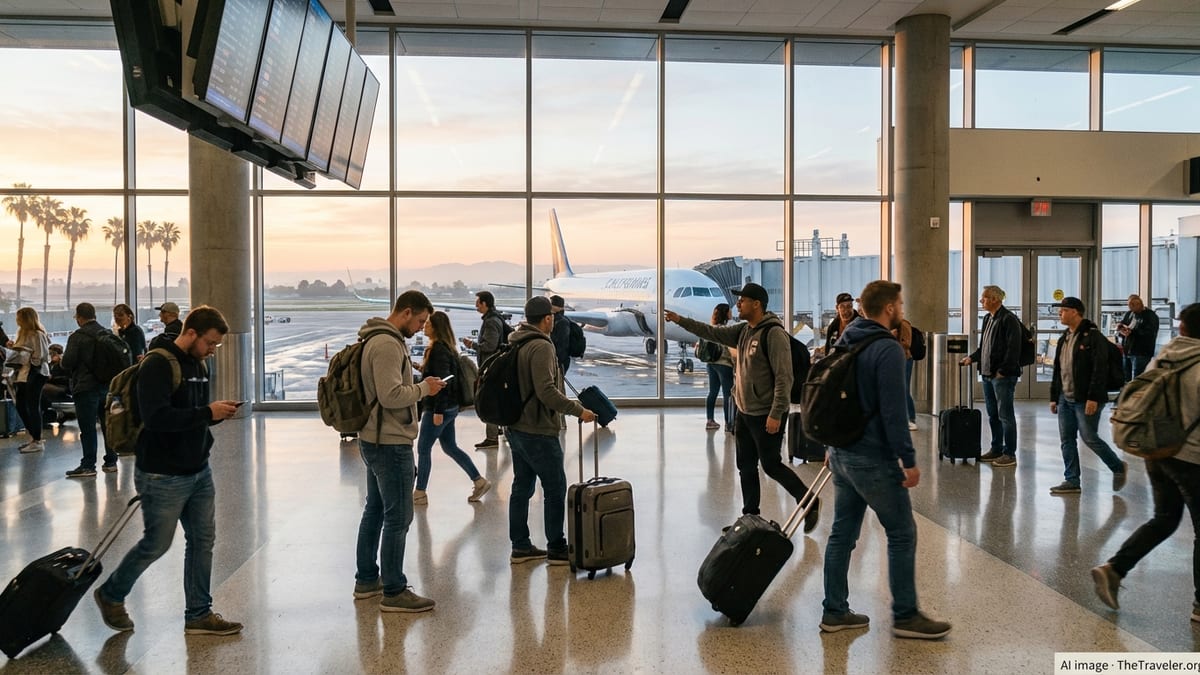
Consumers plan to travel, but with slimmer wallets
Recent consumer spending surveys indicate that many households intend to keep winter travel in their plans, but with less money to spend on each trip. Analysis of holiday behavior by major consultancies shows that the share of Americans planning to travel over the winter break is holding relatively steady compared with last year, yet average planned travel spend per person is falling sharply.
One national outlook on holiday behavior for 2026 reports that about four in ten consumers still expect to travel over the winter holidays, only slightly down on 2025. However, reported intended travel budgets have dropped by roughly a quarter year on year, from just over 550 dollars to a little above 400 dollars per traveler. That gap suggests a shift in how people travel rather than whether they travel at all.
Other seasonal studies, looking back to the 2025 and 2024 holiday periods, point in the same direction. Deloitte’s global holiday travel survey has highlighted fewer trips, shorter stays and tighter daily budgets as recurring themes, with respondents citing higher living costs and financial uncertainty as key reasons to pare back spending.
Budget pressures ripple through middle and higher income groups
The squeeze on winter travel is not confined to lower income households. Multiple 2026 consumer sentiment reports show that Americans earning more than 100,000 dollars a year are increasingly pessimistic about their finances compared with a year earlier, even though they typically take more trips and spend more on them. Published analysis warns that caution among these higher spenders could have an outsized effect on overall winter travel revenue.
Industry outlooks describe a pattern in which middle income households cut back first on discretionary categories such as vacations when essential bills rise. One summer consumer survey in 2026 found that a majority of respondents with annual income below 100,000 dollars regarded travel as one of the first areas to trim when budgets tighten.
At the same time, organizations tracking the paycheck to paycheck economy report that basic expenses are increasingly absorbing household income. Research released in July 2026 found that roughly two thirds of U.S. consumers were living paycheck to paycheck, with a notable share falling into that situation over the summer as utility, grocery and fuel costs climbed. Analysts note that this kind of financial hangover often carries into autumn and winter, limiting funds available for holiday trips.
Higher prices push travelers toward cheaper choices
Winter trips themselves are becoming more expensive. A 2026 holiday travel index produced by a major airfare and accommodation tracker suggests that flights around Thanksgiving and Christmas are on track to be the priciest in a decade. Consumers have already faced elevated airfares for much of the year, driven in part by higher fuel costs and capacity constraints on key routes.
Faced with that backdrop, survey data points to a growing trade down in how people plan their winter breaks. In one 2026 holiday outlook, around a third of travelers with winter plans said they would avoid flying altogether, opting instead for destinations closer to home. More than a third expected to choose budget or midrange hotels over higher end properties, and a significant portion planned to stay with friends or family rather than pay for lodging.
Other published coverage shows similar behavior in summer and shoulder seasons, with travelers adjusting rather than cancelling: reducing the number of trips, shortening stays, and shifting to nearby or lower cost destinations. Travel insurance and booking platforms have noted strong demand for destinations in Canada, Mexico and the Caribbean that can be reached with relatively short flights from the United States, while some long haul routes see more price sensitivity.
Leisure and corporate travel face different budget dynamics
The winter travel squeeze is most visible in leisure spending, but corporate travel is also contending with tighter budgets. A 2026 corporate travel study from a major professional services firm found that business travel budgets were rising modestly, yet most of the additional funds were being absorbed by higher prices for air, hotel and ground transport rather than by a true increase in trip volume.
For leisure travelers, the mood is more clearly cautious. Holiday spending research by personal finance and card comparison sites indicates that more Americans plan to avoid paying for flights and hotels entirely this season and will instead stay close to home. In one national survey released in October 2026, nearly one in three respondents said they did not expect to spend on flights and hotels for holiday travel, compared with just over one in five a year earlier.
Despite this, several travel industry outlooks stress that the desire to travel remains robust. Analysts describe a market in which demand for experiences is strong, but households feel compelled to make tradeoffs by cutting back in other categories or seeking deeper discounts on transport and lodging. This tension is likely to define the coming winter peak period.
Implications for airlines, hotels and destinations
The combination of resilient demand and tighter wallets presents a complex picture for airlines, hotels and destinations going into the Northern Hemisphere winter. Consulting firms that track sector performance warn that metrics such as airline load factors, hotel revenue per available room and in-destination activity bookings could soften if travelers follow through on plans to trim trip length and on-the-ground spending.
Industry analysts suggest that pricing strategies may come under closer scrutiny. With several years of fare and room rate increases already behind them, travel providers could encounter more resistance to additional rises, particularly among price sensitive segments. Some reports argue that allowing prices to stabilize, or selectively adjusting capacity to better match demand, may prove more sustainable than continuing to test how much more can be charged.
Destinations that rely heavily on long haul visitors may also feel the effects of weaker winter budgets. Outlooks produced by tourism organizations highlight growing importance of value-focused messaging, flexible booking options and targeted offers for younger travelers, especially Generation Z, who are more likely to take shorter trips and place greater emphasis on price.
Across the sector, data from mid 2026 points to a winter season in which consumers still want to travel, but under tighter financial constraints. How travel brands respond on pricing, product mix and promotion over the coming months is expected to play a significant role in determining how much of that demand ultimately converts into bookings.