


Winter on the Red Sea has quietly become one of Europe’s most reliable escapes from cold, grey weather. Egypt’s big hitters, Hurghada and Sharm El Sheikh, are now competing directly with the Canary Islands and Morocco for winter-sun bookings, helped by warm seas, short flight times from Europe and aggressive package-holiday pricing. For travelers weighing Hurghada against Sharm El Sheikh for a winter holiday, the decision increasingly comes down to what kind of resort atmosphere, snorkeling and excursions they want to build into a week or two in the sun.
Get the latest updates straight to your inbox!
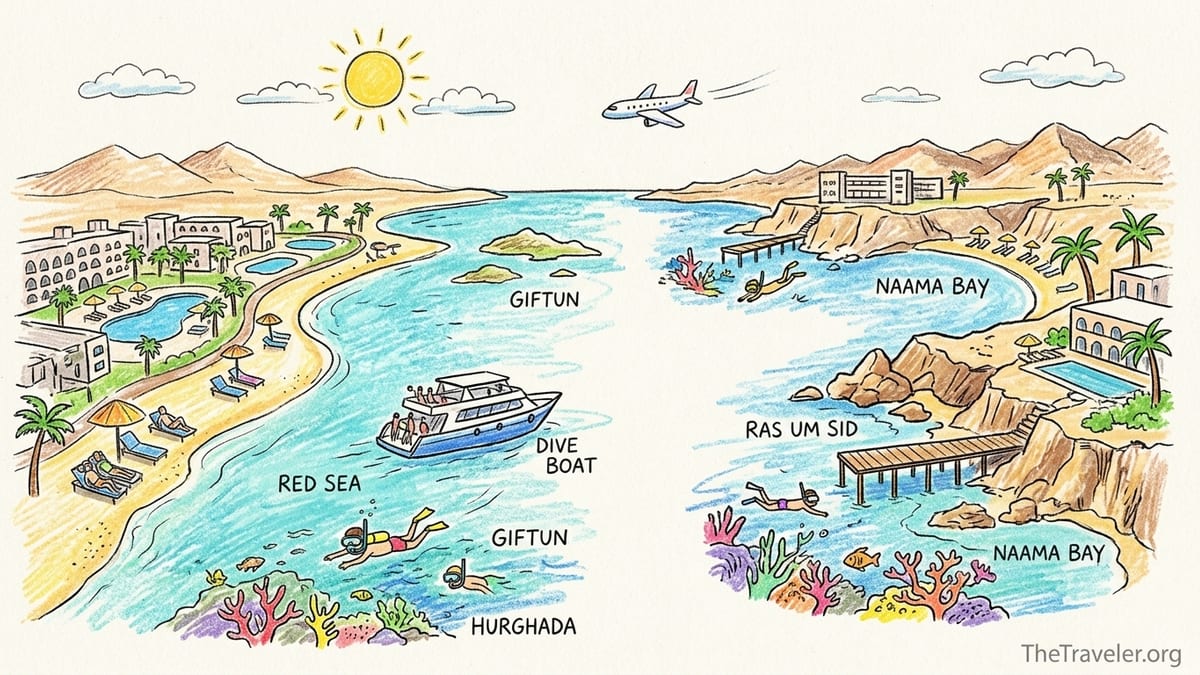
Egypt’s winter-sun boom and why Hurghada and Sharm lead it
Over the past few winter seasons, Egypt has shifted from a niche choice to a mainstream package-holiday destination for Europeans looking for guaranteed sun without long-haul flights. Recent booking data from major online agencies and tour operators in the UK show Egypt among the fastest-growing winter-sun markets, with some reports indicating that bookings for Red Sea resorts have roughly doubled compared with the previous year’s winter season. Tour operator analyses of winter-sun trends have specifically highlighted Hurghada and Sharm El Sheikh as driving this growth, with both resorts posting strong percentage increases in bookings year on year.
Part of the appeal lies in climate. In December and January, average daytime highs in both Hurghada and Sharm El Sheikh sit in the low to mid-20s Celsius, with the Red Sea itself typically around 23 to 25 degrees. That makes it warm enough to swim and snorkel without the extremes of summer heat. Climate comparison data for the two resorts show Sharm tending to be a touch warmer, especially at night, which can matter for travelers sensitive to cooler evenings.
Price is another driver. Winter packages from major European cities can be strikingly competitive compared with the Canary Islands or UAE. In recent seasons, large online travel brands have advertised seven-night all inclusive packages in Hurghada starting from under 400 pounds per person including flights outside the Christmas peak, with Sharm El Sheikh often a little higher but still noticeably below many eurozone beach destinations. Peak dates around Christmas and New Year see prices jump, sometimes by 40 to 80 percent compared with early December or late January, yet overall value remains strong given that most packages bundle flights, transfers and extensive resort facilities.
For Egypt, this surge in winter visitors has encouraged investment along the Red Sea coast: new resorts south of Hurghada in Sahl Hasheesh and Makadi Bay, and continued development of Nabq Bay and the area around Sharm El Sheikh Airport. For travelers choosing between Hurghada and Sharm today, that means more choice of modern hotels, family-oriented resorts and adult-focused properties than even five years ago.
Weather and sea conditions in winter: how different are they?
From late November through February, Hurghada and Sharm El Sheikh share a broadly similar winter climate: bright, mostly cloudless days, with negligible rainfall and relatively calm seas. Long-term climate normals around Hurghada Airport show average daytime highs of roughly 24 degrees in December and 22 degrees in January, with nights dropping close to 12 or 13 degrees. Sharm El Sheikh data for the same period report slightly higher daytime and night-time temperatures, which many regular visitors notice as marginally milder evenings, especially in January.
Sea temperatures are one of the key selling points. Comparative Red Sea weather tables that place Hurghada and Sharm side by side list water temperatures around 24 to 25 degrees in December, dipping only slightly through January and February. For swimmers used to the Atlantic off Spain or Portugal in winter, this feels significantly warmer and allows comfortable snorkeling with a short wetsuit or even just a rash vest on sunny days. Many local dive centers suggest a 3 mm wetsuit for diving in December and January, with some regulars perfectly happy in similar gear they would use in the Mediterranean in late summer.
The main practical difference for travelers is wind and evening chill. Hurghada, spread along an open stretch of coastline, can feel breezier on some winter days, which is noticeable on exposed hotel beaches or during boat trips. Sharm’s main hotel zones, especially Naama Bay and areas sheltered by headlands like Ras Um Sid, can feel slightly less windy. That said, recent winter-travel guides for the Red Sea coast still advise bringing a light jacket or fleece for evenings in both resorts, since terrace dinners and late-night strolls can feel cool once the sun drops.
For families, the question is often pool comfort. Some Hurghada mega-resorts now emphasize heated pools during the November to March period, advertising specific temperature ranges to reassure parents. In Sharm El Sheikh, large international brands along the main bays follow a similar pattern, but it is worth checking individual hotel descriptions or emailing properties directly before booking if heated pools are a priority for younger children.
Resort atmosphere: Hurghada’s sprawl vs Sharm’s bays
Hurghada and Sharm El Sheikh evolved in different ways, and winter visitors feel this as soon as they land. Hurghada has grown into a long, linear resort region that includes the original city, the modern marina area and a series of self-contained hotel zones stretching south toward Sahl Hasheesh and Makadi Bay. This creates a mix of environments: traditional Egyptian streets in the old town, promenade dining at the new marina, and gated complexes with multiple pools and slides further out of town.
For example, large all inclusive resorts in Hurghada’s southern sectors often sit on broad sandy beaches with gently shelving entries to the sea. Many are popular with European charter flights and feature on the brochures of brands that specialize in family packages. Travelers who prefer leaving the resort on foot for evening walks, cafes and local restaurants tend to choose hotels near the new marina or in central Hurghada, where winter nights see a mix of tourists and locals along the waterfront and in shopping streets.
Sharm El Sheikh, by contrast, is organized around a string of natural bays separated by headlands and rocky promontories. Naama Bay remains the best-known tourist hub, lined with hotels, shisha bars and international chains, and it stays lively even in the cooler months. Further south, Ras Um Sid offers more elevated cliff-top hotels with steps down to small beaches and excellent house reefs, while Sharks Bay and the area near the airport have developed into clusters of upscale resorts with jetties extending over coral ledges.
This geography shapes the feel of a winter holiday. Visitors who like to stroll a busy promenade on mild evenings tend to favor Naama Bay, where outdoor bars and restaurants stay open year-round. Those looking for quieter, more self-contained stays often choose Sharm’s outer bays or Hurghada’s southern hotel zones. Solo travelers and divers sometimes prefer Sharm or the central parts of Hurghada because they can reach dive shops, marinas and nightlife without needing long transfers from remote resorts.
Snorkeling and diving: where the Red Sea really shines
Both Hurghada and Sharm El Sheikh are gateways to world-class Red Sea reefs, and for many winter visitors this is the main reason to choose Egypt. Yet they offer slightly different snorkeling and diving experiences. Around Sharm, hotels built on rocky headlands in areas like Ras Um Sid and Sharks Bay often have direct access to steep fringing reefs immediately off the hotel jetty. Experienced snorkelers praise these house reefs for dramatic drop-offs, schools of anthias, occasional turtles and the chance encounters with rays or larger pelagic fish, all a short swim from their sunbed.
Several popular online discussions from recent seasons describe repeat trips to Sharm specifically for the shore snorkeling. Travelers frequently mention Ras Um Sid as a highlight, noting that its sheltered position behind a natural barrier reef provides impressive underwater scenery while still feeling relatively secure for confident swimmers. Others highlight central beaches where hotel jetties step directly onto vibrant coral gardens, pointing out that staying at a property with a good house reef can significantly reduce the need for organized boat trips if snorkeling is a daily priority.
Hurghada’s snorkeling is structured a little differently. Although some areas, particularly around Makadi Bay and Sahl Hasheesh, have good house reefs accessible directly from hotel beaches, much of the best coral sits on offshore reefs and around island areas like Giftun and Orange Bay. As a result, Hurghada’s snorkeling scene is heavily boat-based. Winter holidaymakers typically book full-day trips that include two or three snorkel stops, equipment rental, lunch on board and sometimes a short beach visit to a sandbar island.
Dive operators across both resorts offer introductory dives, certified diving and specialty courses throughout the winter months. Recent first-hand reports from divers in Hurghada in November and Sharm in mid-winter indicate water temperatures in the low to mid-20s Celsius, with many divers comfortable in a 3 or 5 mm wetsuit. Visibility can remain exceptionally good even in January, often quoted in the 20 to 30 metre range on clear days. While marine life sightings always depend on luck and conditions, both areas regularly deliver colorful reef fish, hard and soft corals and, on some sites, encounters with turtles, moray eels and eagle rays.
Excursions and day trips: what you can add beyond the beach
One of the practical questions for choosing between Hurghada and Sharm El Sheikh in winter is how easily you can add classic Egyptian experiences beyond the Red Sea. From Hurghada, overland excursions to Luxor and the Nile Valley are a major selling point. Tour desks in large Hurghada resorts commonly advertise day trips to Luxor that include the Temple of Karnak, the Valley of the Kings and a Nile-side lunch. These trips involve an early start and several hours by road in each direction, but winter’s milder temperatures make them more manageable than in midsummer, when Luxor can be uncomfortably hot.
Hurghada also serves as a springboard for Cairo excursions. Winter package-holiday guests frequently book one-day or overnight trips that combine the Pyramids of Giza, the Sphinx and the main museum collections with return flights or long-distance coach travel. Prices vary by operator and inclusions, but recent promotional materials from established agencies describe full-day Cairo by air trips from Hurghada with flights, transfers, guiding and entrance fees bundled together. For travelers who want a Red Sea base and at least a glimpse of ancient Egypt’s headline sites, Hurghada’s position on the mainland is a genuine advantage.
Sharm El Sheikh’s signature excursions lean more toward natural landscapes and Sinai highlights. Many winter visitors book tours to Ras Mohammed National Park, reached by boat or minibus, for a blend of snorkeling, beaches and dramatic coastal scenery. Other popular outings include jeep or quad-bike trips into the desert, often timed for sunset and sometimes combined with a Bedouin-style dinner. Mount Sinai hikes and visits to St Catherine’s Monastery are also offered year-round, typically as overnight or early-morning excursions involving a few hours of road travel from Sharm.
Both resorts feature a similar menu of local activities: evening trips to markets, shopping streets and entertainment districts, submarine or glass-bottom-boat rides for non-swimmers, and family-oriented venues such as aquariums and water parks. Hurghada’s marina district and Sharm’s Old Market and SOHO Square remain busy in winter, with many bars and restaurants open even outside peak seasons. Travelers should be prepared for a certain amount of sales attention in tourist zones in both destinations, and many operators advise booking the more substantial excursions with reputable agencies or the hotel’s main partner desk rather than informal street sellers.
Package prices, value and where each resort saves you money
For price-conscious winter travelers, both Hurghada and Sharm El Sheikh offer clear savings compared with many western Mediterranean or Gulf options. Price comparisons from UK-based online travel firms for the 2026 winter season show week-long all inclusive stays in Hurghada often starting a little below those in Sharm when similar hotel standards are compared, particularly in large family resorts on the southern stretches of Hurghada’s coast. That marginally lower base price, combined with high competition among charter flights into Hurghada International Airport, has helped position it as one of the best-value winter-sun options from northern Europe.
Sharm El Sheikh, which at times in the past had fewer direct flights from some markets, has regained capacity and now features strongly in winter-sun brochures. While headline prices can be slightly higher than Hurghada for comparable four and five star properties, Sharm’s strong appeal for divers and snorkelers who make heavy use of on-site reefs can reduce add-on costs for daily boat trips. A traveler staying at a hotel with an excellent house reef in Ras Um Sid or Sharks Bay, for instance, may choose just one or two paid snorkeling excursions during a week-long stay, relying on hotel access the rest of the time.
Excursion pricing is an area where real-world examples help calibrate expectations. Small-group operators that run Red Sea boat trips from both Hurghada and Sharm describe common price points in recent seasons of around the equivalent of 30 to 50 pounds per person for a shared day boat with multiple snorkel stops, lunch and hotel transfers, with private charters costing more. Quad-bike desert trips and combined desert-and-dinner experiences often fall into a similar price bracket for standard group tours, while more bespoke or private experiences can be significantly higher. Travelers regularly note that booking directly with reputable local agencies or specialized small-group operators can offer better value and clearer inclusions than purchasing every activity through a hotel desk.
Another factor is what winter packages include within the resort. In both Hurghada and Sharm, many large hotels work on an all inclusive basis that covers buffet meals, snacks and a defined list of local drinks, which allows travelers to budget most of their food and beverage costs in advance. Differences emerge in extras such as use of premium a la carte restaurants, kids’ club hours, spa access or water-park entry. Before booking, it is worth checking whether specific features that matter to you, like heated pools, certain water slides or late check-out, are included at your chosen hotel or treated as add-ons.
Practicalities, safety and who each resort suits best
From a practical perspective, both Hurghada and Sharm El Sheikh are well set up for winter charter and scheduled flights from Europe and the Middle East, with direct flight times from hubs such as London, Frankfurt or Istanbul sitting around five hours or less. Airports in both resorts have been upgraded over time to handle holiday traffic, and hotel transfer systems are routine, whether pre-booked with a package operator or arranged through local transfer firms. Many winter visitors buy complete packages through large European tour brands because these bundle flights, transfers, checked luggage and hotel stays under a single contract, something that can be reassuring given broader regional news cycles.
In terms of safety and health, both resorts are accustomed to international tourism and have plenty of experience managing high-season arrivals. Travelers should check the latest government travel advisories issued close to their departure date, as guidance can evolve in response to regional events. On the ground, common-sense precautions apply: drinking bottled or safely filtered water, using sun protection even on cooler days, and being cautious with raw foods and street snacks if you have a sensitive stomach. Travel forums and recent traveler reports include both glowing reviews and occasional accounts of illness or pushy selling tactics, so setting expectations realistically can help.
Hurghada may suit travelers who value easy access to mainland Egypt’s cultural sites and who enjoy a mix of resort relaxation and urban atmosphere. Couples and families who like to wander local streets, browse markets used by both tourists and residents, or tack on a Luxor or Cairo visit often find Hurghada a logical base. The region south of the city, with purpose-built resort zones, appeals to those who simply want a self-contained winter sun break with large pools and sandy beaches.
Sharm El Sheikh tends to draw visitors who prioritize snorkeling and diving or who are intrigued by Sinai’s desert and mountain landscapes. Its bay-based layout and concentration of high-quality house reefs make it particularly attractive to underwater enthusiasts planning multiple sessions in the water each day without long boat rides. Travelers who prefer a resort-town feel built largely for tourism, with promenades, evening squares and organized excursions into surrounding nature rather than major urban centers, often lean toward Sharm for their winter escape.
So which should you choose this winter?
For a winter holiday in Egypt, both Hurghada and Sharm El Sheikh combine reliable sunshine, warm seas and competitive package pricing in a way that few other mid-haul destinations from Europe can match. Deciding between them is less about finding a clear winner and more about matching each resort’s character to your priorities. If you want a straightforward beach holiday, access to mainland historical sites and the option of mixing resort time with city promenades, Hurghada makes a compelling case, especially in newer zones like Sahl Hasheesh and Makadi Bay where large family-friendly resorts dominate.
If instead your ideal winter week centers on snorkeling straight from your hotel, diving legendary Red Sea sites and adding in a day at Ras Mohammed or a desert-and-mountain excursion, Sharm El Sheikh leans ahead. Its slightly warmer winter nights and concentration of hotels on reef-topped headlands mean you can build a very water-focused holiday even in January, when some Mediterranean destinations are too cool for comfortable swimming.
Whichever you choose, booking early for peak festive dates and checking the details of packages and excursions before paying will help secure better value. With demand for Egyptian winter sun still growing and both Hurghada and Sharm investing in new hotels and infrastructure, the Red Sea is likely to remain a central player in Europe’s winter-holiday conversation for seasons to come. For many travelers, that means an increasingly pleasant choice each year between two strong competitors on the same glittering coast.