


More news on this day
Flight disruption across several major United States hubs intensified on 28 June, with at least 55 cancellations and more than 600 delays reported at New York JFK, Boston Logan, San Francisco and Miami, disrupting services on JetBlue, Delta Air Lines, American Airlines and other carriers to destinations in Europe, Asia, the Middle East and South America.
Get the latest news straight to your inbox!
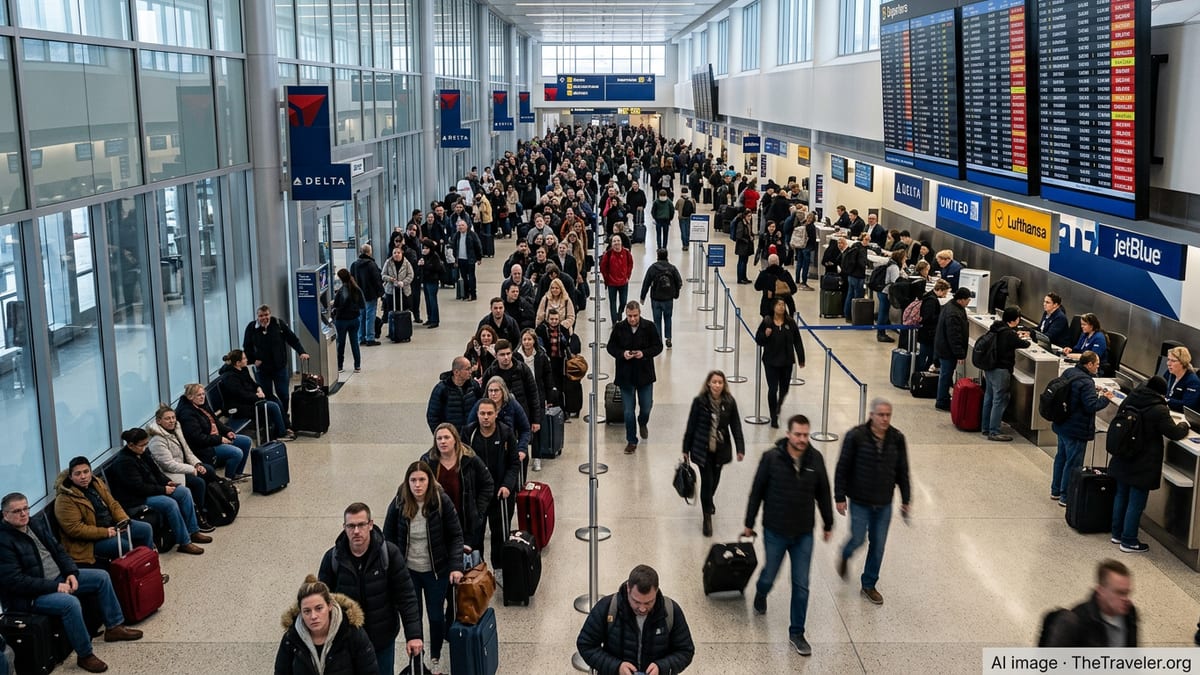
Major East Coast Gateways Struggle With Knock-On Delays
Publicly available data from flight tracking and passenger rights platforms indicates that New York’s John F. Kennedy International Airport and Boston Logan International Airport remain among the most disrupted US gateways at the start of the key summer travel period. Recent tallies show JFK recording more than one hundred delays and multiple cancellations in a single day, with disruption stretching into the evening peak as aircraft and crews fell out of position.
Boston Logan has seen similar strain, with earlier weather and operational issues this week contributing to more than three hundred delayed flights and a series of cancellations across JetBlue, American Airlines, Delta Air Lines and regional partners. Although today’s schedule shows most early-morning departures operating, residual disruption from previous days continues to feed into rolling delays.
Operational logs suggest that the bulk of today’s 55 confirmed cancellations are concentrated on short and medium haul routes along the US East Coast and to the Midwest, but the impact is rippling outwards through connecting banks at JFK and Boston. As a result, long haul services bound for Europe and beyond are facing late departures, tight connections and in some cases missed onward links.
For passengers, the practical effect is extended time in terminals and uncertainty around connections, particularly for those travelling on multi-leg itineraries using JFK or Boston as transatlantic gateways.
San Francisco and Miami Disruption Reaches Long-Haul Networks
On the opposite coast, San Francisco International Airport has been contending with intermittent disruption through June, including weather and air traffic control constraints that have triggered cancellations and diversions on both domestic and international services. Recent reports from travellers at San Francisco describe late-evening arrival waves pushed back by several hours and some flights rerouted to nearby airports when arrival slots became constrained.
Miami International Airport, a major hub for American Airlines and a key bridge between North America and Latin America, is also experiencing elevated levels of schedule changes. Live departure boards for Miami show clusters of delayed early-morning and evening departures, with some services being retimed or consolidated as airlines work to reset their networks after earlier irregular operations at other hubs.
Because San Francisco and Miami are important connection points for transpacific and Latin American traffic respectively, disruptions there are feeding directly into long haul itineraries. Delayed departures from San Francisco can cascade onto flights linking the US West Coast with Asia and Oceania, while Miami irregularities are affecting journeys into South America and onward links for passengers arriving from Europe and the Middle East.
Together with the challenges at JFK and Boston, the issues at San Francisco and Miami are helping to drive the tally of at least 55 cancellations and more than 600 delays recorded across the four airports in the current travel window.
Impact on Services to Europe, Asia and the Middle East
The latest disruption is particularly visible on routes connecting the United States with the United Kingdom, France, Switzerland, Qatar and China, where carriers rely heavily on tightly timed connecting traffic from across the domestic network. Recent days have seen JFK departures to major European hubs such as London Heathrow and Paris Charles de Gaulle leave late as inbound feeder flights arrived behind schedule, forcing airlines to hold departures where possible to protect connections.
At Boston Logan, carriers including JetBlue and Delta Air Lines have built up significant transatlantic schedules to London, Paris and other European cities. Weather and congestion-related delays at the airport earlier in the week continue to reverberate across those services, with some overnight flights arriving later than timetabled and departure waves shifting into the early hours of the morning.
Services to Doha and other Middle Eastern hubs, routinely marketed in partnership with US and European airlines, are also affected when domestic feeder flights run late into JFK, Boston or Miami. Even when the long haul sectors operate close to schedule, passengers risk missing connections if their inbound US flights have been delayed, and some are being rebooked through alternative gateways or placed on later departures.
Relations with Asian partners are similarly exposed. Shared-code operations linking US carriers with Chinese and other Asian airlines, particularly on transpacific corridors that feed through San Francisco, can be vulnerable when the initial domestic segments depart late or are cancelled altogether, requiring complex re-routing or overnight stays.
Australia, Argentina and Southern Hemisphere Links Under Pressure
Travel corridors to Australia and Argentina, which depend on a mix of direct and one-stop itineraries, are also feeling the strain. Flights between US hubs and West Coast gateways such as San Francisco and Los Angeles form the first leg of many journeys to Sydney, Melbourne and other Australian cities. When these domestic sectors are delayed or cancelled, passengers can miss once-daily or less frequent long haul departures onward to the Southern Hemisphere.
Argentina-bound travellers face similar vulnerabilities. Many itineraries from the United States to Buenos Aires route through Miami or other East Coast hubs. The current pattern of delays and cancellations at Miami increases the risk that passengers will miss southbound overnight departures or arrive significantly later than planned due to disrupted connections.
Publicly available flight histories show that some services carrying codes for Australian and South American partners have operated with extended departure delays in recent days, reflecting the knock-on effects of earlier network disruption. While most long haul flights are still operating, the margin for error on complex multi-leg itineraries has narrowed, leading to tighter connection windows and higher chances of misconnection.
For airlines, protecting these long haul flows is a priority, but doing so amid ongoing irregular operations has required schedule tweaks, aircraft swaps and occasional strategic cancellations of lower-demand services in order to free up crews and equipment.
Airlines Balance Recovery Efforts and Passenger Rights
JetBlue, Delta Air Lines and American Airlines are at the center of the current disruption, given their large presences at JFK, Boston, San Francisco and Miami. Industry analyses published in recent months have highlighted how concentrated hub operations, combined with air traffic control staffing constraints and summer weather patterns, have left carriers vulnerable to cascading delays when even minor issues arise during peak periods.
Official data from the US Department of Transportation on earlier months of the year already showed elevated tarmac delays and schedule pressures at key East Coast airports, particularly for carriers with dense schedules at JFK and Boston. Today’s pattern of 55 cancellations and more than 600 delays appears consistent with that broader picture of a system operating close to capacity as peak summer demand returns.
Passenger advocates note that, under US rules, travellers affected by cancellations are generally entitled to a choice between rebooking and a refund for the unused portion of their ticket when the airline calls off a flight. Compensation for delays is more limited, but airlines often provide meal vouchers or hotel accommodation during severe disruption as part of customer service policies published on their websites.
With schedules at major hubs already tightly packed, experts advise travellers transiting JFK, Boston, San Francisco or Miami to monitor their flight status closely, allow extra time for connections where possible, and be prepared for itinerary changes as airlines work through the latest wave of operational challenges.