


More news on this day
FedEx’s newly unveiled retro livery on a Boeing 777 freighter is more than a nostalgic design choice. It draws fresh attention to the largely invisible cargo networks centered on Memphis that make modern global tourism possible, from online bookings in distant markets to last‑minute spare parts keeping holiday flights on schedule.
Get the latest news straight to your inbox!
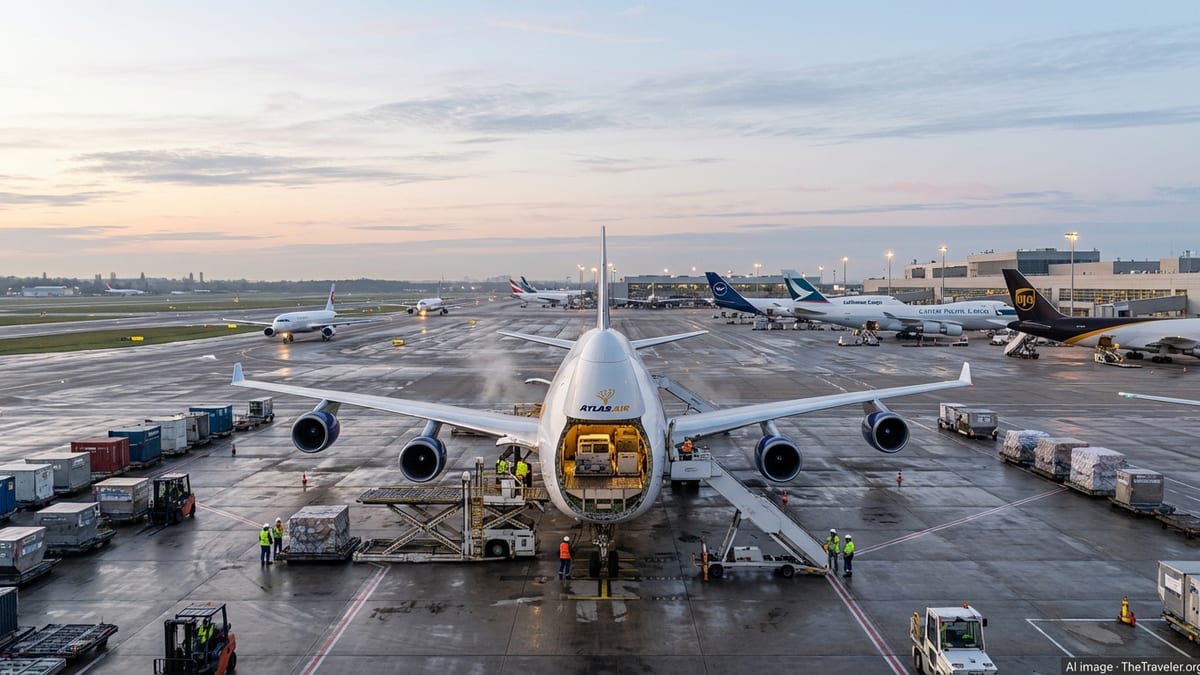
A Retro 777 That Points Back to Aviation’s Future
The retro livery on FedEx 777 N884FD, recently revealed by aviation enthusiasts, revives the company’s earlier branding on one of the most advanced long‑haul cargo aircraft in service. The juxtaposition of heritage colors on a long‑range twin‑engine freighter underlines how express cargo has moved from niche role to central infrastructure in the global travel economy.
The Boeing 777F gives FedEx the ability to connect Memphis directly with key markets in Europe and Asia on single‑stop routes, enabling overnight delivery cycles that many international travelers now take for granted when planning trips. Travel documents, replacement aircraft components and high‑value consumer goods routinely move through the same network, even though passengers never see these flights from the terminal window.
The choice of a 777 as the canvas for a retro design underscores how the cargo sector has quietly mirrored the long‑range shift in passenger aviation. As airlines focused on point‑to‑point service and more efficient widebodies, FedEx and other integrators expanded dedicated freighter fleets to guarantee reliability on trunk routes where tourism demand has steadily increased.
By celebrating its history on a modern aircraft, FedEx is effectively branding the backbone of a system that supports not only e‑commerce and trade, but also the seamless experience travelers expect when they cross borders for leisure.
Memphis Super Hub: A Nighttime Engine for Daytime Tourism
Memphis International Airport’s role as FedEx Express’s global super hub has turned the city into one of the world’s busiest cargo airports by volume. Publicly available airport data and economic impact reporting indicate that hundreds of FedEx flights operate to and from Memphis on a typical day, with sophisticated sort systems handling hundreds of thousands of packages and documents each hour.
Most of this work happens overnight, far from the public eye. While tourists sleep in resort cities from Cancun to the Amalfi Coast, time‑sensitive items routed through Memphis keep travel infrastructure running. Replacement avionics, catering components, ground‑handling equipment parts and even marketing materials for newly launched routes often move through the Tennessee hub before being dispatched to distant airports.
Memphis’s central position in the FedEx network allows one hub to serve as an interchange for shipments tied to travel and hospitality sectors across six continents. Economic impact studies on FedEx operations highlight how this connectivity has become deeply integrated into regional tourism supply chains, linking hotels, cruise terminals and tour operators with manufacturers and distributors thousands of miles away.
For visitors arriving in Memphis itself, the city’s dual identity as a cargo giant and cultural destination means that the same airport that anchors the global hub also serves as a passenger gateway to the Mississippi Delta, music history attractions and regional road‑trip routes.
The Hidden Role of Air Cargo in the Tourism Economy
Industry analyses from organizations such as IATA and ICAO indicate that while air cargo accounts for a relatively small share of global trade by weight, it represents a substantial portion by value. That pattern is especially visible in tourism, where high‑value, time‑critical goods are essential to keeping destinations running smoothly.
Everything from resort electronics and premium food imports to urgent maintenance materials for widebody aircraft typically travels by air. Main‑deck freighters like the FedEx 777F handle a significant share of this traffic alongside “belly” cargo loaded in the holds of passenger jets. When disruptions affect these networks, reports show that tourism destinations quickly feel the impact through reduced inventory, delayed repairs and schedule constraints.
Travelers rarely consider how a replacement part reaches an aircraft grounded in a holiday hotspot or how a luxury property in a remote island market restocks perishable items at short notice. In many cases, the solution involves an express shipment routed through hubs like Memphis and then onward on dedicated freighters or connecting passenger services. The reliability of these flows directly influences how confidently airlines and tour operators can advertise high frequencies and tight turnarounds.
As global tourism volumes rebound and diversify, industry outlooks suggest that dependence on tightly synchronized cargo networks will deepen. The retro‑painted FedEx 777 is therefore emblematic of an infrastructure layer that is becoming more strategically important even as it remains largely invisible to most travelers.
From Memphis to the World: FedEx Routes and Tourism Hotspots
FedEx route announcements and economic impact documents describe a network linking Memphis with major hubs in Europe and Asia, including Liège and Guangzhou, as well as numerous regional gateways. These corridors parallel many of the busiest tourism flows, even though the freighters carry goods rather than passengers.
Transatlantic and transpacific cargo lanes align closely with city pairs that have seen strong growth in visitor numbers over the past decade. Travel industry reporting shows that as new routes and additional frequencies are added for holidaymakers, cargo operators adjust capacity to take advantage of the same demand patterns, moving high‑value freight into and out of these markets.
Memphis’s cargo connectivity also indirectly supports secondary and tertiary destinations far from major hubs. Packages routed overnight through FedEx facilities can reach regional airports by morning, allowing small tourism‑driven communities to access global supply chains without the scale needed to attract long‑haul passenger service of their own.
This structure helps explain why some remote resorts, expedition operators and niche tour companies can reliably serve international customers. Behind every seamless transfer or on‑time departure is a network of flights, many of them operated by freighters like the retro‑liveried 777, that link Memphis to an array of international gateways.
Why Nostalgia Matters for a Global Logistics Brand
The decision to revive a historic livery on a modern freighter resonates beyond aviation enthusiasts. In a sector dominated by efficiency metrics and yield curves, visual storytelling allows cargo airlines to signal continuity and reliability to businesses that depend on them, including airlines, hospitality groups and travel intermediaries.
Brand researchers often point to the role of heritage in reinforcing trust for infrastructure providers. By referencing its past on one of its most capable long‑haul aircraft, FedEx underscores a narrative of long‑term investment in connectivity that is highly relevant to a tourism industry looking for stability in the face of economic and geopolitical uncertainty.
The retro 777 also serves as a moving reminder that aviation history is not just about passenger glamour. The growth of global tourism has been enabled as much by highly optimized freight operations in places like Memphis as by iconic terminals or new cabin products. Painted in vintage colors, the aircraft effectively invites travelers and industry observers to consider the cargo ramps, sort facilities and nighttime crews that underpin their journeys.
As global air cargo demand continues to expand, the Memphis‑centered FedEx network is poised to remain a critical but unseen part of how tourism develops. The retro livery on N884FD turns that hidden architecture into a visible symbol, linking aviation’s past aesthetics with the logistical foundations of contemporary travel.