


More news on this day
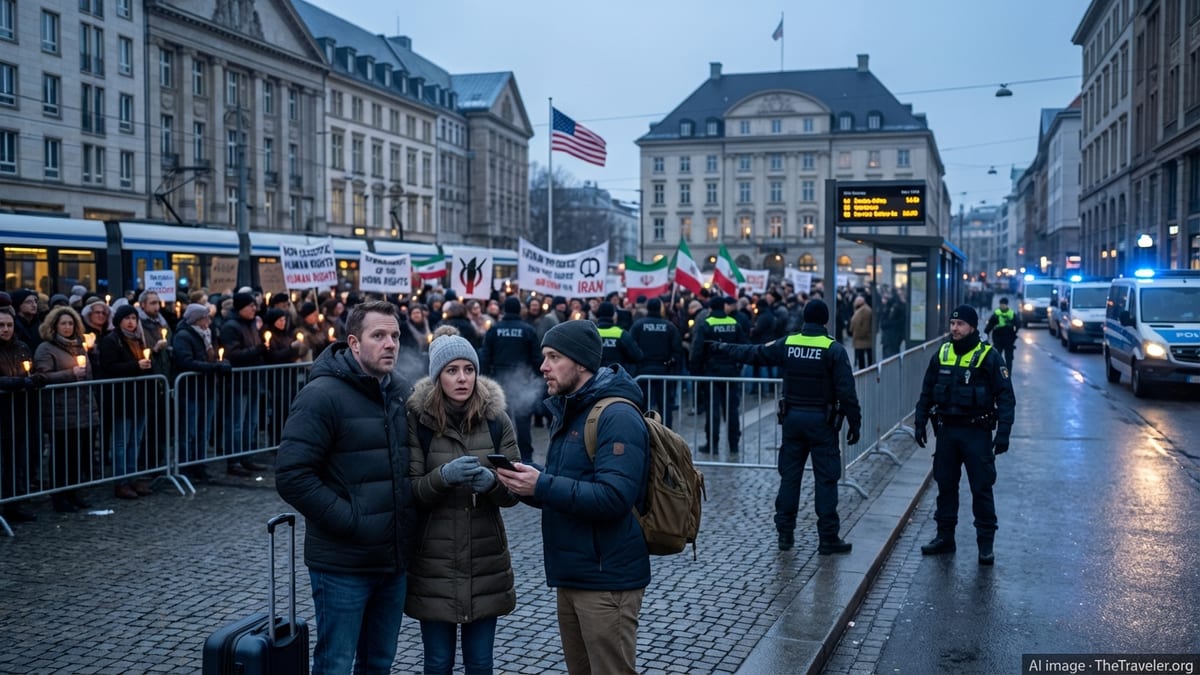
A widening wave of protests over housing and living costs across Western Europe, now visibly affecting central Lisbon and major German cities, is prompting many US travelers to reassess winter and spring itineraries as they weigh the appeal of off-season deals against images of riot police, encampments and sporadic transport disruption.
Get the latest news straight to your inbox!
Housing Protests Put Lisbon in the Spotlight
Portugal has become one of the most visible new fronts in Europe’s late‑2026 protest wave, with housing‑focused demonstrations growing from local gatherings into nationwide encampments. Publicly available reporting describes crowds in central Lisbon rallying against a deepening housing crisis, as rents surge in popular neighborhoods and short‑term rentals expand in areas long favored by tourists. In recent days, police interventions in central squares have drawn global attention after officers moved in on protest camps that had been occupying major downtown spaces.
Coverage from Lisbon indicates that thousands have gathered outside Portugal’s Parliament and in central squares such as Rossio over the past two weeks, echoing cost‑of‑living and housing grievances seen earlier this year in France and Spain. Accounts describe tents pitched in symbolic locations close to major tram lines and tourist routes, creating an unusual overlap between protest sites and some of the capital’s busiest visitor areas.
For US travelers planning trips to Portugal in late 2026 and early 2027, these scenes translate less into a broad security crisis and more into highly localized disruption. The most affected zones are central urban spaces where demonstrations are announced in advance and concentrated in the evenings or on specific days. Reports from recent days describe nearby restaurants and hotels largely remaining open while streets immediately around protest sites are cordoned off or heavily policed.
Portugal’s current travel advisory from the US government remains at Level 1, the lowest risk tier, with guidance that visitors may encounter protests linked to social and labor issues and should avoid large gatherings. Public information from tourism and aviation bodies in Portugal similarly focuses on practical disruptions, such as delays tied to airport labor actions, rather than broad warnings about personal safety in city centers.
Germany Faces Expanding Demonstrations but Stable Advisory
Germany, already under a Level 2 advisory from the US for concerns related primarily to terrorism, is now also seeing its own protests folded into the broader European unrest narrative. Recent Europe‑wide coverage notes that youth‑led and cost‑of‑living demonstrations that began in France have been mirrored in German cities, including student‑organized marches and rallies responding to economic pressures and education policies.
Publicly available country‑risk briefings for Germany describe a landscape where large rallies are relatively common but typically orderly, supported by significant police deployments around protest routes and central squares. Demonstrations against government economic and migration policies, as well as climate action marches, have drawn tens of thousands in recent years, with authorities increasing the use of temporary road closures and public‑transport diversions to manage crowds.
Industrial and transport strikes, while less frequent in Germany than in some neighboring countries, have periodically affected travelers by disrupting rail services and, more occasionally, airport operations. Reports covering the broader European situation reference earlier waves of German rail and aviation walkouts that led to widespread delays, underscoring why many US visitors now pay closer attention to strike calendars when planning multi‑country itineraries.
Despite this backdrop, official US travel advisories for Germany have not changed in response to the latest protests in neighboring France or the intensifying housing marches in Portugal. Guidance continues to emphasize situational awareness, avoiding large demonstrations, and monitoring local media. For most visitors, the practical effect is the possibility of localized transit disruptions rather than a need to cancel trips outright.
Transport Strikes Add Another Layer of Risk Calculus
Beyond street protests, US travelers are also confronting a dense autumn and winter calendar of strikes that could complicate movement across Europe. In Portugal, cabin crew based in the country for a major low‑cost carrier have filed notice of two separate five‑day strikes running from October 2 to 6 and from December 19 to 23, 2026. Travel and labor bulletins indicate that hundreds of flights within Europe, including services linking Portugal with Germany and other hubs, could face cancellations or schedule changes if negotiations fail to produce an agreement.
Ground‑handling staff strikes at Portuguese airports this season, including walkouts affecting baggage and ramp services, have already prompted airlines such as Azores‑based carriers to activate contingency plans. Public statements from those airlines advise passengers to check flight status regularly, complete online check‑in when possible and arrive early at airports during strike windows to navigate potentially longer lines and manual procedures.
Elsewhere in Europe, regional travel agencies and industry briefings point to additional actions this autumn, such as 24‑hour transport strikes scheduled across several Iberian and Mediterranean countries and partial work stoppages on key travel dates. For travelers connecting through multiple hubs, a single delayed or canceled flight in Lisbon, Porto or a German airport can cascade into missed rail connections or tours elsewhere in the Schengen Area.
These dynamics are pushing many US visitors to treat flight flexibility and travel insurance as core planning tools rather than afterthoughts. Policies that cover missed connections, strike‑related delays and rebooking costs are drawing renewed attention, particularly for trips scheduled close to announced strike periods or during high‑demand holiday weeks in December.
How US Travelers Are Adjusting Plans and Expectations
Travel trade reporting and online forums suggest that, so far, the protests and strikes have prompted more itinerary reshaping than outright cancellations among US visitors considering late‑2026 and early‑2027 Europe trips. Advisors quoted in recent industry coverage describe clients reconfiguring routes to build in longer layovers, choosing secondary airports with fewer announced strike actions, or shifting stays a few blocks away from traditional protest hot spots such as central squares and parliament districts.
Several travel‑planning resources recommend that Americans heading to Portugal or Germany this season map likely demonstration routes against hotel locations and primary sightseeing areas. In Lisbon, that can mean checking whether accommodations lie directly along tram corridors or boulevards that connect major plazas where housing protests have gathered. In Berlin, Hamburg or Munich, it can involve noting the proximity to government buildings or main train stations that frequently host rallies.
There is also growing emphasis on monitoring day‑of conditions using local news and municipal transport feeds. Because many protests are announced with relatively short notice and may be adjusted in size or location, travelers are being encouraged to keep a flexible schedule on days when marches are expected, allowing time to bypass cordoned‑off streets or rerouted tram and bus lines.
At the same time, tourism analysts point out that the unrest has not erased Europe’s appeal for US visitors. Survey data from recent holiday barometers still places European destinations high on Americans’ wish lists, even as some respondents cite demonstrations, cost‑of‑living tensions and transport strikes as factors that could influence the timing or structure of their trips.
Practical Safety and Planning Guidance for Upcoming Trips
For US travelers who decide to move forward with plans to visit Portugal, Germany or neighboring countries amid the current protest wave, publicly available guidance converges on a few practical steps. First, visitors are urged to review the latest country‑specific advisories from their own government shortly before departure and again during their stay. These advisories are updated as conditions change and typically highlight shifts in protest activity, security postures and transport reliability.
Second, travelers are being advised to build redundancy into critical travel days. That can include booking earlier trains or flights when heading to onward connections, scheduling key long‑distance moves outside of announced strike windows when possible, and confirming hotel check‑in flexibility in case arrival times slip. For itineraries that hinge on a particular low‑cost carrier or rail operator, it may be worth identifying at least one alternative route in advance.
Third, on the ground, basic crowd‑safety practices remain relevant. Travel risk briefings for both Portugal and Germany consistently recommend steering clear of large demonstrations, even when they appear peaceful, and paying attention to instructions from transport staff regarding station or stop closures. In dense urban cores where protests pass near major sightseeing areas, simply shifting visits by a few hours or adjusting walking routes can significantly reduce exposure to congestion or tense atmospheres.
Finally, industry observers note that direct spending by foreign visitors remains an important economic factor for both countries at a time when many of the protests are, at their core, about affordability and opportunity. Travelers who stay informed, plan for potential disruption and respect local dynamics are likely to find that most of Europe’s cultural, culinary and historic attractions remain accessible, even as the continent navigates one of its most politically charged autumns in recent memory.