


More news on this day
The United States has intensified its security guidance for Ethiopia, designating 14 areas of the country as Level 4 “Do Not Travel” amid continuing conflict, ethnically driven violence and heightened concerns about potential long-range attacks on military targets.
Get the latest news straight to your inbox!
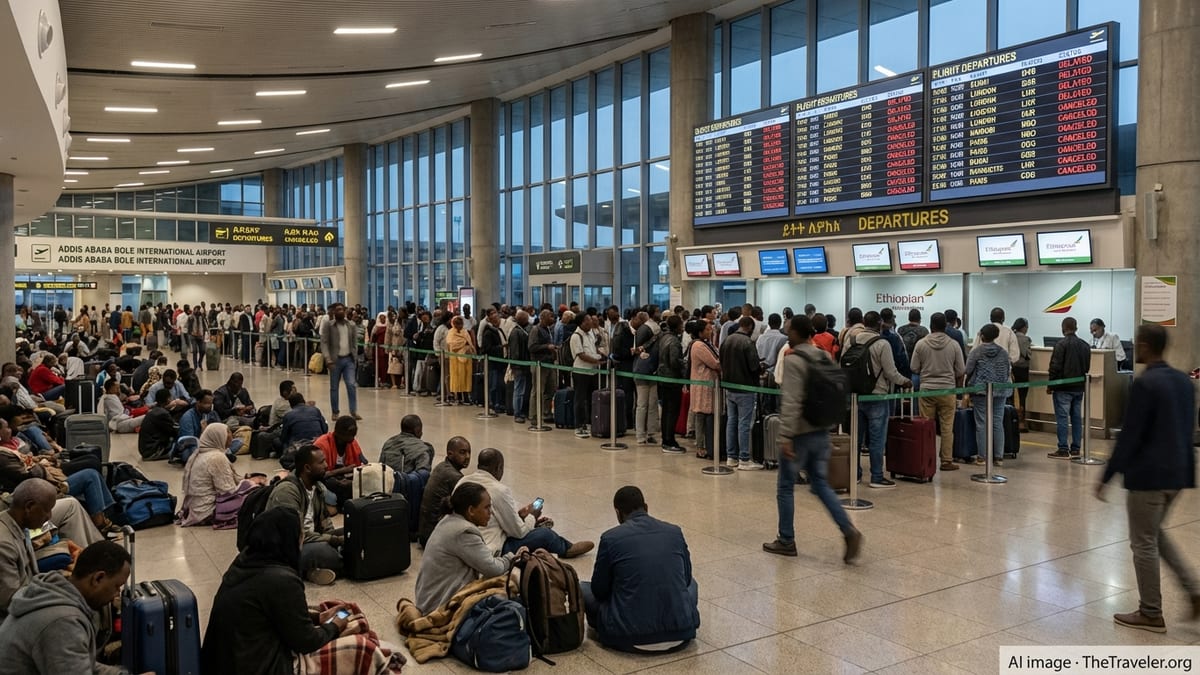
Targeted Level 4 warning within a broader Level 3 advisory
According to the latest Ethiopia country page on the U.S. State Department’s travel advisory system, updated on August 27, 2026, the overall advisory for Ethiopia remains at Level 3, “Reconsider Travel.” Within that framework, however, the department applies its highest Level 4 “Do Not Travel” designation to multiple regions and border areas where the likelihood of life-threatening risks is assessed as significantly higher.
Publicly available U.S. government information groups these locations under a “Risks in specific areas” section that outlines where travel is strongly discouraged. The list includes the Tigray Region, the Afar Region, the Amhara Region, the Gambella Region, Benishangul-Gumuz, several zones of Oromia, areas of the South Ethiopia Region, and sections of the border with Somalia and Eritrea. In total, these warnings now cover 14 distinct areas and corridors that the United States considers exceptionally hazardous for civilian travel.
The State Department’s advisory framework specifies that a Level 4 warning reflects a greater likelihood of life-threatening risks and indicates that in an emergency the U.S. government may have very limited ability to provide assistance. The current guidance stresses that conditions in Ethiopia can change suddenly and that travel plans to higher-risk regions may become impossible to carry out at short notice.
Travelers reviewing the advisory are encouraged to distinguish carefully between the country’s overall Level 3 posture and the stricter Level 4 designations that apply to specific parts of Ethiopia, since permitted movement by U.S. government personnel is often more restricted in those Level 4 zones than elsewhere in the country.
Regions and routes under “Do Not Travel” guidance
The updated advisory highlights a series of regions where travel is specifically discouraged due to active or potential armed clashes, criminal activity, and limited local security capacity. In northern Ethiopia, the Tigray Region remains subject to a “Do Not Travel” warning, including its border with Eritrea. Reports note the history of intense conflict there, lingering insecurity, and the possibility that roads and border areas can close or become unsafe without warning.
The Afar Region, which borders both Tigray and Amhara, is likewise identified as Level 4 because of armed conflict, unrest and crime. Public information indicates that certain corridors near the frontiers and within disputed zones remain volatile, with risks tied to political and ethnic tensions as well as sporadic fighting.
The Amhara Region is also classified as “Do Not Travel” in the U.S. advisory matrix. Recent coverage has pointed to episodes of armed confrontation and unrest in parts of Amhara, along with incidents of kidnapping and other violent crime. The advisory notes that U.S. government employees require special authorization to travel into these areas, underscoring how movement for official personnel is closely controlled.
Farther west, the Gambella Region and Benishangul-Gumuz are both covered by Level 4 warnings. Available material describes a mix of crime, ethnically motivated violence, kidnapping, and armed conflict in and around these regions, particularly in areas close to international borders and remote rural communities where state presence is weaker and response times are slower.
Security alert on long-range attack threat adds urgency
The renewed focus on Ethiopia’s high-risk regions comes as the U.S. Embassy in Addis Ababa has circulated an updated security alert describing the potential for long-range attacks against Ethiopian military installations. A notice shared on October 7, 2026, advised U.S. citizens not to travel to the Amhara, Tigray or Afar regions for any reason and urged those already in those areas to leave if they can do so safely or otherwise shelter in place.
News reports summarizing the alert indicate that it did not specify the nature of the potential weapons or likely targets but stressed that any such attacks could occur with little or no warning. The embassy message reiterated that security conditions can deteriorate quickly in parts of northern Ethiopia and that transport routes may close suddenly, leaving travelers with limited options to relocate.
The new alert builds on an earlier communication in late September that drew attention to fighting near the historic town of Lalibela in Amhara and reminded travelers that parts of both Amhara and Tigray are subject to Level 4 restrictions. Together, these messages suggest an elevated focus on northern Ethiopia in particular, even within the broader set of 14 Level 4 areas identified in the advisory system.
Travel analysts tracking the situation note that such alerts are designed to update risk assessments between formal changes to the country-level advisory, giving U.S. citizens more granular information about emerging threats or shifts in conflict dynamics.
Risks for travelers: conflict, kidnapping and limited support
The State Department’s explanatory material on travel advisory levels states that Level 4 designations are used where there is a significantly increased chance of life-threatening danger and where the U.S. government may be constrained in its ability to provide assistance. In Ethiopia’s high-risk regions, published sources describe overlapping threats that include armed clashes between state forces and non-state groups, intercommunal violence, banditry, and targeted or opportunistic kidnappings.
Some of the affected regions sit close to international borders, including areas adjoining Eritrea, Sudan, South Sudan and Somalia, where the combination of cross-border movements, arms flows and localized disputes has contributed to unpredictability. In certain districts, reports point to the presence of unexploded ordnance and landmines, another factor that can complicate overland travel and make off-road excursions particularly hazardous.
Beyond direct physical threats, travelers are also warned about secondary risks. These include intermittent communications blackouts, checkpoints controlled by different security actors, sudden curfews, and the possibility of road closures that can disrupt both commercial transport and humanitarian access. Such conditions can make it difficult to reach airports or safer urban centers during a crisis.
Because of these constraints, consular services may not be immediately available in some Level 4 zones. Publicly available guidance stresses that U.S. citizens who choose to travel despite the warning should have contingency plans, maintain a low profile, and avoid travel to border areas and locations with a known history of clashes or attacks.
What the advisory means for tourism and overland travel
For prospective visitors, the combination of a Level 3 countrywide advisory and Level 4 regional warnings has significant implications. While the overall guidance does not bar all travel to Ethiopia, it indicates that leisure trips to the most affected areas, including large parts of the north and west, carry elevated risk that may not be acceptable to many travelers or tour operators.
Reports from travel industry channels suggest that some international operators have already modified itineraries to avoid the most sensitive regions identified in the advisory. Routes that previously linked Addis Ababa with historical sites in Amhara or overland excursions through remote parts of Afar and Tigray are now being reassessed or suspended, with greater emphasis placed on destinations closer to the capital or in comparatively more stable regions.
Travelers who still plan to visit Ethiopia are advised in publicly available guidance to monitor the State Department advisory page, enroll in consular notification systems so they can receive security alerts, and stay in close contact with airlines and local partners regarding route changes or last-minute cancellations. Those considering travel to areas near the 14 Level 4 zones are also encouraged to track local news and be prepared for heightened security presence, checkpoints and possible movement restrictions.
Given the speed with which conditions can evolve, particularly in regions already under “Do Not Travel” designation, specialists in travel risk management note that flexible booking arrangements, comprehensive insurance and realistic contingency options are now central considerations for any trip planning that involves Ethiopia’s higher-risk areas.