


More news on this day
Travelers eyeing Mozambique’s Indian Ocean coast are being urged to reconsider where they go and how they move, as a newly updated United States advisory warns that terrorist attacks in parts of the country could strike tourist areas with little or no notice.
Get the latest news straight to your inbox!
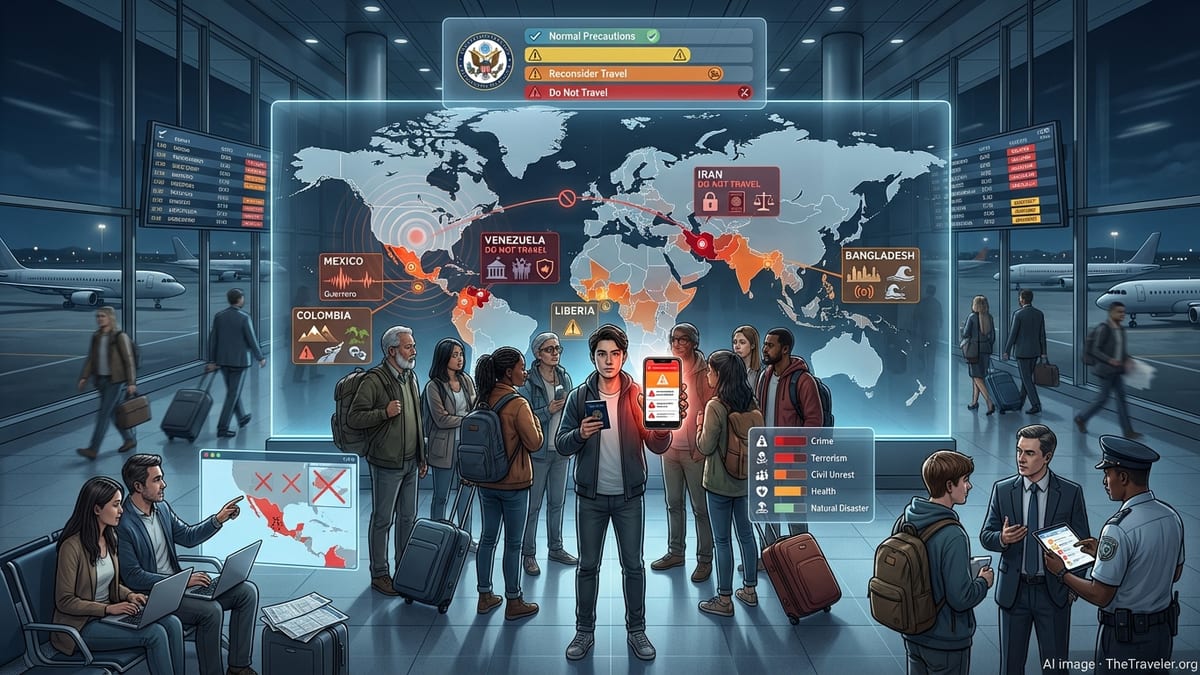
Updated US advisory singles out coastal and safari hotspots
The US Department of State revised its guidance on Mozambique on August 21, 2026, keeping the country at Level 2, meaning travelers are asked to exercise increased caution, while highlighting terrorism concerns in several regions. Publicly available information shows that parts of the northern Cabo Delgado province, home to beaches, islands and wildlife areas on the Indian Ocean, are now listed as Level 4 "Do Not Travel" due to the risk of attacks.
Coverage of the advisory notes that militants aligned with extremist movements have previously targeted upscale safari lodges and remote resorts in northern Mozambique’s bush and coastal zones, areas that attract international big game hunters and high-spending visitors. Reports indicate that security conditions remain fluid, with sporadic violence clustered away from the capital Maputo but close to some wilderness concessions and off-grid coastal hideaways.
The advisory emphasizes that in affected areas, US government assistance is limited or unavailable if an incident occurs. For travelers, that translates into longer response times during emergencies and greater reliance on private operators and local services, especially in remote islands or interior reserves reachable only by small aircraft, road convoys or boats.
Beyond the specific zones marked as off limits, the broader Level 2 rating signals that travelers across Mozambique should be prepared for evolving security conditions, including checkpoints, occasional operations by local security forces and changing access to particular districts or roads.
How the terror risk affects coastal and island tourism
Mozambique’s appeal has long rested on its ribbon of Indian Ocean coastline, coral-fringed islands and low-density wildlife experiences that feel far from mass tourism. Travel industry reporting points out that some of the areas now flagged for elevated terrorism risk overlap with coastal districts known for exclusive beachfront lodges and island gateways in the north of the country.
While much of the country’s southern shoreline, including more established resort corridors closer to South Africa, remains outside the highest-risk designations, the warning underscores that plots against tourist locations in northern coastal areas have included hotels and lodges that cater mostly to international guests. According to recent coverage, attacks in recent years have involved raids on remote properties and nearby communities, underlining the vulnerability of isolated beachfront and riverside sites.
Tour operators serving Mozambique’s coast have in the past adjusted itineraries in response to flare ups, sometimes rerouting guests away from particular islands or mainland gateways when risk levels rise. The latest advisory suggests that such contingency planning is likely to remain a feature of travel to northern Mozambique for the foreseeable future.
For independent travelers, the new guidance reinforces the importance of scrutinizing exact locations, not just countrywide labels. Two properties in the same province can face very different risk profiles depending on their distance from contested districts, road access and proximity to security forces or population centers.
Part of a wider pattern of terror-focused travel alerts
The Mozambique update arrives against a backdrop of broader terrorism-related advisories affecting popular destinations worldwide. The State Department maintains global guidance noting that terrorist attacks can occur in crowded public spaces, transport hubs and venues that attract tourists, often without warning, and encourages travelers to review destination-specific alerts before departure.
Recent advisories for countries such as Türkiye and Indonesia, both rated Level 2, similarly highlight that terrorist groups may strike with little or no notice, with potential targets that range from hotels and restaurants to shopping malls, transport nodes and places of worship. In each case, public information stresses that travelers should remain aware of their surroundings in crowded areas, limit time in unsecured zones of airports and identify potential shelter or exit routes in advance.
Security analysts quoted in open reporting on Mozambique’s situation suggest that while the number of militants in some northern districts may be relatively small, their attacks have been particularly brutal and aimed at maximizing impact on local communities and the international tourism economy. The convergence of luxury tourism assets, remote geography and limited state presence in some parts of Cabo Delgado has made risk management especially complex for operators and visitors alike.
The worldwide context is a reminder that terrorism concerns are no longer limited to traditional conflict zones. Coastal destinations, islands and resort areas far from major cities can still be exposed to plots that exploit high-profile tourism brands and concentrations of foreign travelers.
What travelers should consider before booking Mozambique
Publicly available guidance encourages anyone considering Mozambique to start by reading the full country advisory, paying particular attention to maps and district-level notes that spell out which areas are marked "Do Not Travel" and which are considered lower risk. Enrolling in traveler alert programs can provide email or text updates if the security picture changes while a trip is in progress.
Travelers are also advised in open-source material to discuss security planning with tour operators or lodge hosts before confirming an itinerary. Key questions include how guests are transferred to and from airports, how long they will spend on vulnerable roads, what communication systems are in place during excursions and whether properties have established shelter plans in case of nearby incidents.
Insurance is another consideration. Many policies distinguish between general cancellation coverage and cancellations tied to terrorism or security events. Travelers looking at northern Mozambique or other higher-risk areas may want to verify whether their policy includes evacuation assistance and how decisions are made about when to activate those services.
Finally, destination experts often recommend that visitors keep flexible arrangements where possible, such as refundable domestic flights or changeable hotel bookings, in case advisories tighten or local operators decide to suspend services in certain districts at short notice.
Balancing Mozambique’s draw with evolving security realities
Despite the warnings, Mozambique continues to entice travelers with its blend of safari and sea, including marine parks, whale migrations and emerging cultural tourism along the coast. Many areas of the country, especially in the south and center, see relatively limited international tourism and have not been directly affected by the violence reported in northern districts.
For some visitors, the calculus may be to focus on regions that lie well outside the zones of concern while monitoring developments closely. Others may postpone trips that hinge on remote northern lodges until the security picture improves and travel advisories ease.
The latest update to Washington’s guidance underscores that conditions in Mozambique’s far north remain in flux, even as efforts by regional governments and international partners aim to contain the threat. For travelers and the industry that serves them, adapting to that reality means treating risk assessment as an integral part of planning, not an afterthought.
Those considering Mozambique’s coastline in the coming months face a more complex checklist than in years past, yet many of the safety habits encouraged by this advisory mirror best practices that can enhance resilience on trips worldwide, from identifying potential shelter locations to maintaining regular contact with family or friends back home.
US Department of State Mozambique Travel Advisory
US State Department terrorism risk guidance for travelers
Fox News coverage of Mozambique terror threat and travel warning
Syndicated report on US warning for Mozambique’s coastal lodges