


More news on this day
The United States is maintaining its highest travel warning for Ukraine, keeping the country at Level 4 “Do Not Travel,” as Russia’s ongoing missile and drone campaign continues to threaten civilians and critical infrastructure across the country.
Get the latest news straight to your inbox!
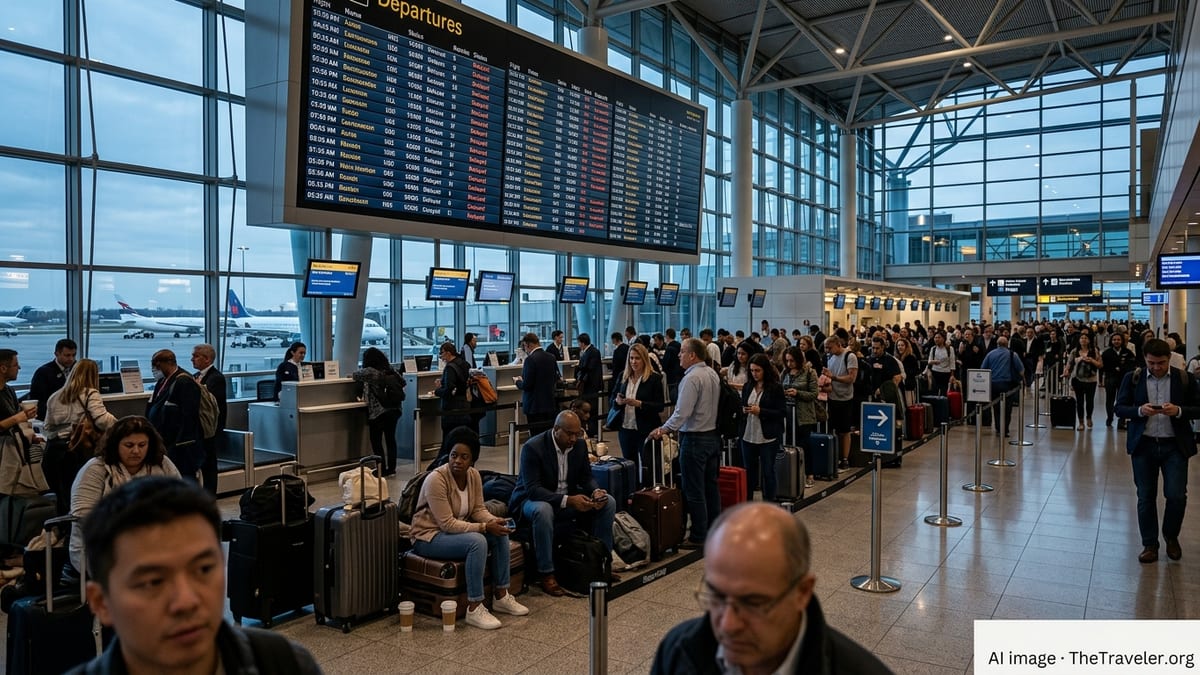
Advisory Remains at Level 4 as War Enters Another Year
According to publicly available information on the U.S. Department of State’s travel advisory map, Ukraine remains classified at Level 4 “Do Not Travel,” a status it has held since shortly before and throughout Russia’s full-scale invasion in February 2022. The current listing identifies “other” and “unrest” indicators and directs U.S. citizens to avoid any travel to the country due to the risks associated with the ongoing war.
Recent advisory updates, reflected in U.S. government documentation circulated on August 28, 2026, reiterate that there has been no change to the advisory level. The summary guidance continues to urge individuals not to travel to Ukraine for any reason and stresses that the conflict affects both front-line and non-front-line regions.
Publicly accessible travel guidance notes that while the U.S. Embassy in Kyiv is operating, its staff face movement, activity, and curfew restrictions that can delay consular assistance, particularly outside the capital. This limited capacity underscores the broader message that private travel into Ukraine remains extremely high risk, even for short visits or purportedly safer western regions.
Russian Missile and Drone Strikes Keep Risk Nationwide
International travel advisories consistently point to sustained Russian missile and drone attacks as the primary driver of the ongoing security threat. Updated British government travel advice for Ukraine, for example, highlights frequent long-range strikes across the country that target or damage civilian infrastructure, rail and industrial facilities, and energy networks. Published coverage notes that recent months have seen some of the highest civilian casualty totals since the early phase of the invasion, with hundreds of missiles and thousands of drones launched over a three‑month span.
These attacks are not confined to the military front lines. Guidance aimed at foreign nationals describes regular air raid alerts in major cities, including Kyiv and other urban centers far from active ground combat. Travelers are warned that falling debris, misdirected strikes, and shrapnel pose serious risks even when air defense systems intercept incoming projectiles.
Russian strikes on Ukraine’s energy grid compound the hazards. Public information from European and North American government sources explains that repeated attacks on power infrastructure have forced authorities to impose rolling blackouts and emergency cuts, which in turn affect heating, water supply, and transport. For travelers, this translates into unpredictable conditions: outages can disrupt everything from mobile networks and air raid alert apps to basic services such as lighting, traffic control, and payment systems.
Foreign Governments Align on “Avoid All Travel” Guidance
The United States is not alone in maintaining its strict stance. Canada’s official travel advisory also instructs citizens to avoid all travel to Ukraine due to the Russian military invasion, stressing that attacks continue to hit both government and civilian targets, including in major cities. The advisory notes that Ukraine’s airspace remains effectively closed to commercial traffic, limiting evacuation options and complicating any emergency departure.
Updated British Foreign, Commonwealth and Development Office (FCDO) advice similarly urges against all travel to most of Ukraine, and against all but essential travel even to selected western regions. The FCDO outlines specific areas near the Belarusian border, Crimea, and eastern and southern regions under or near Russian control as particularly dangerous, but makes clear that missile and drone attacks can and do occur countrywide.
Regional guidance for neighboring states also reflects the wider security implications of the conflict. For instance, the U.S. advisory for Moldova flags ongoing security concerns linked to Russia’s war against Ukraine, indicating that the conflict’s spillover effects remain under close observation even beyond Ukraine’s borders.
Implications for Travelers and Overland Routes
With Ukraine’s airspace closed to civilian flights, travelers who might consider overland entry via neighboring countries face additional complications. Land borders can be subject to sudden closures, extensive security checks, and rapidly shifting conditions tied to the military situation. Publicly available advice warns that routes in and out of Ukraine are vulnerable to disruption from shelling, infrastructure damage, and cyberattacks on rail and ticketing systems.
Travel advisories emphasize that foreign nationals inside Ukraine should be prepared for limited consular assistance, curfews, checkpoints, and rapid changes to local regulations under martial law. Guidance routinely stresses that unexploded ordnance, landmines, and damaged infrastructure pose ongoing dangers in areas previously occupied or heavily shelled, making road travel particularly hazardous.
For those considering humanitarian or business trips, the continued Level 4 U.S. warning and parallel “avoid all travel” messages from partners such as Canada and the United Kingdom highlight a consistent international assessment: security conditions remain too volatile and unpredictable for routine or discretionary travel, regardless of purpose or length of stay.
Travel Risk Outlook as Conflict Persists
As of late August 2026, publicly available information shows no indication that the United States is preparing to relax its Ukraine travel advisory. The conflict’s trajectory, marked by sustained long-range strikes, continued martial law, and widespread damage to energy and transport infrastructure, keeps overall risk at the highest level in U.S. advisory terminology.
Other governments continue to update their guidance to reflect the evolving pattern of attacks, but the core message remains unchanged: Ukraine is subject to frequent missile and drone strikes, unpredictable blackouts, and broad security restrictions, all of which severely limit the feasibility of safe travel. Any future shift in advisory levels is likely to depend on a durable reduction in attack intensity, improved protection for civilians, and more reliable access to essential services.
Until then, prospective visitors, dual nationals, and those with family ties to Ukraine are being directed, through widely available public advisories, to avoid travel and to closely monitor official channels for any change in the security picture or border and transportation arrangements.
U.S. Department of State Travel Advisories
U.S. government Ukraine travel advisory summary
UK Foreign, Commonwealth & Development Office: Ukraine travel advice
Government of Canada: Travel advice and advisories for Ukraine