


More news on this day
The United States has upgraded its Bahrain travel warning to a Level 3 “Reconsider Travel” advisory, reflecting heightened security risks linked to regional tensions, terrorism concerns and the potential for armed conflict that could affect both residents and visitors in the Gulf kingdom.
Get the latest news straight to your inbox!
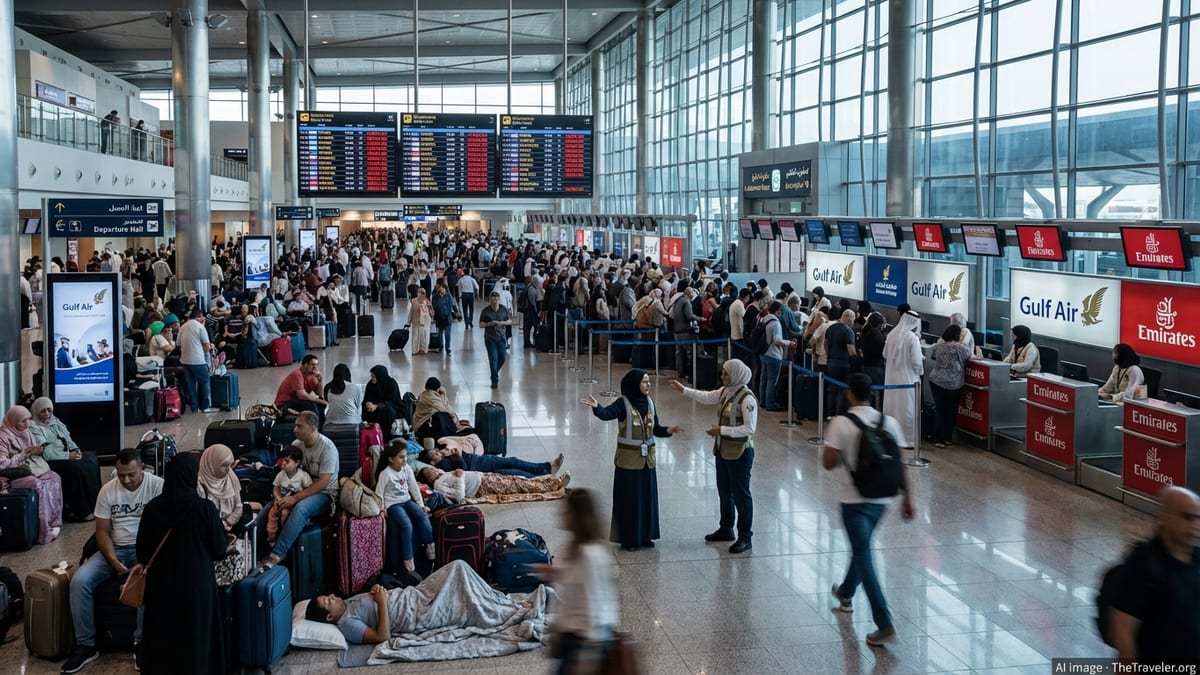
Advisory Raised Amid Escalating Regional Tensions
According to publicly available information from the U.S. Department of State, Bahrain is now listed at Level 3 on the four-tier advisory scale, which ranges from Level 1 “Exercise Normal Precautions” to Level 4 “Do Not Travel.” A Level 3 assessment indicates that travelers are advised to reconsider plans due to serious safety and security risks.
The most recent Bahrain travel advisory was updated on October 23, 2026, following a series of changes earlier in the year. The advisory reiterates that the primary concerns are terrorism and armed conflict, reflecting a broader deterioration in the regional security environment since hostilities flared between the United States and Iran in late February 2026.
Publicly available summaries of the advisory note an increased potential for armed attacks by Iranian-linked groups, including the Iranian-supported Houthi movement, as well as efforts by Iran to target U.S. government personnel and interests elsewhere in the region. These risks are viewed as having possible spillover effects in Bahrain, where U.S. assets and personnel are present.
The Level 3 designation places Bahrain in the same risk category as several other Gulf and Middle Eastern destinations where the United States now urges citizens to take additional precautions or reconsider non-essential travel.
Key Risk Factors: Terrorism and Armed Conflict
The advisory cites terrorism and armed conflict as the main drivers of the upgraded guidance. Country summaries indicate an ongoing threat of drone and missile attacks linked to tensions with Iran, as well as the possibility of attacks targeting locations associated with the United States and its allies.
Information released in connection with related U.S. government notices in 2026 describes disruptions to commercial flights and the risk of sudden airspace restrictions linked to these threats. Such measures can lead to delays, diversions or cancellations for travelers transiting through or departing from Bahrain and other regional hubs.
Bahrain hosts the U.S. Navy’s Fifth Fleet, a fact widely noted in open-source commentary and advisory trackers. Analysts point out that this longstanding security presence can make the country strategically significant in periods of tension, while also increasing the potential for Bahrain to be affected by regional confrontations.
Even as day-to-day life in much of Bahrain continues without incident, the advisory framework reflects an assessment that the risk of sudden escalation or targeted attacks is elevated enough that travelers should carefully weigh the necessity of any trip.
Impact on U.S. Government Personnel and Operations
The progression of U.S. guidance through 2026 shows a tightening posture toward official travel and staffing in Bahrain. A judicial assistance notice published in March 2026 records that, as of March 2, non-emergency U.S. government employees and family members were ordered to depart the country due to safety risks.
Other publicly accessible documents summarizing State Department communications note that on February 28, 2026, non-emergency staff and dependents were authorized to leave Bahrain, coinciding with the initial rise in regional hostilities. Later updates state that U.S. government personnel now require special authorization to travel to Bahrain and that staffing levels may be adjusted in response to evolving security concerns.
These measures underscore how the Level 3 advisory is not only a signal to private travelers but also part of a wider recalibration of official U.S. activity in the country. Changes in staffing, movement restrictions, and security protocols for diplomatic and military facilities are being made in parallel with the public-facing travel guidance.
Advisory-history tools and regional risk trackers compiled by independent organizations also confirm that Bahrain has remained at Level 3 since early 2026, with periodic updates refining the description of risks rather than lowering the overall level.
What the Level 3 Advisory Means for Travelers
The U.S. State Department’s general guidance explains that a Level 3 advisory urges travelers to reconsider travel plans because of serious risks to safety and security. While it does not constitute a ban on travel, it signals that individuals should avoid non-essential trips and undertake additional planning if travel is deemed necessary.
For Bahrain, this means prospective visitors are encouraged to review the full advisory text, including any regional or city-specific notes, before booking flights or accommodation. Travelers are also advised in public guidance materials to stay informed about regional developments, monitor local news, and have contingency plans for changes in flight operations or local security conditions.
Education abroad offices, travel insurers and multinational employers often rely on the U.S. advisory system as one factor in their own risk assessments. Separate information published by universities and insurance providers shows that some institutions restrict or subject travel to Level 3 countries to extra review, which can affect study abroad programs, corporate assignments and conference travel to Bahrain.
Although prices for flights and hotels in Bahrain are set by airlines and local operators rather than by governments, travel planners note that heightened risk perceptions can influence booking patterns and may lead to more flexible reservation policies or increased demand for refundable fares and comprehensive travel insurance among risk-sensitive travelers.
Planning a Trip Under the New Advisory
Under the upgraded guidance, U.S. citizens who decide to travel to Bahrain are encouraged, according to publicly available government resources, to adopt additional safety measures. These include enrolling in traveler enrollment programs where available, sharing itineraries with family or friends, and preparing for the possibility of sudden route changes or delays.
Government advisories and risk summaries emphasize the importance of checking airline notifications and airport information frequently, particularly given the history of airspace disruptions in the region following escalations in late February 2026. Travelers transiting Bahrain to other Gulf or Asian destinations are urged to pay close attention to potential knock-on effects from any regional security incident.
Publicly accessible guidance also stresses the need to stay alert in areas frequented by foreigners or associated with Western interests, to follow local security instructions if incidents occur, and to maintain a low profile in sensitive locations. Travelers are advised to keep identification documents secure and accessible and to be familiar with basic shelter-in-place and evacuation concepts.
While the Level 3 advisory does not prevent travel to Bahrain, it signals a more complex and potentially volatile environment than in previous years. Travelers and travel providers now face a landscape in which security assessments can change quickly, making flexible planning and up-to-date information essential for any journeys to or through the kingdom.