


More news on this day
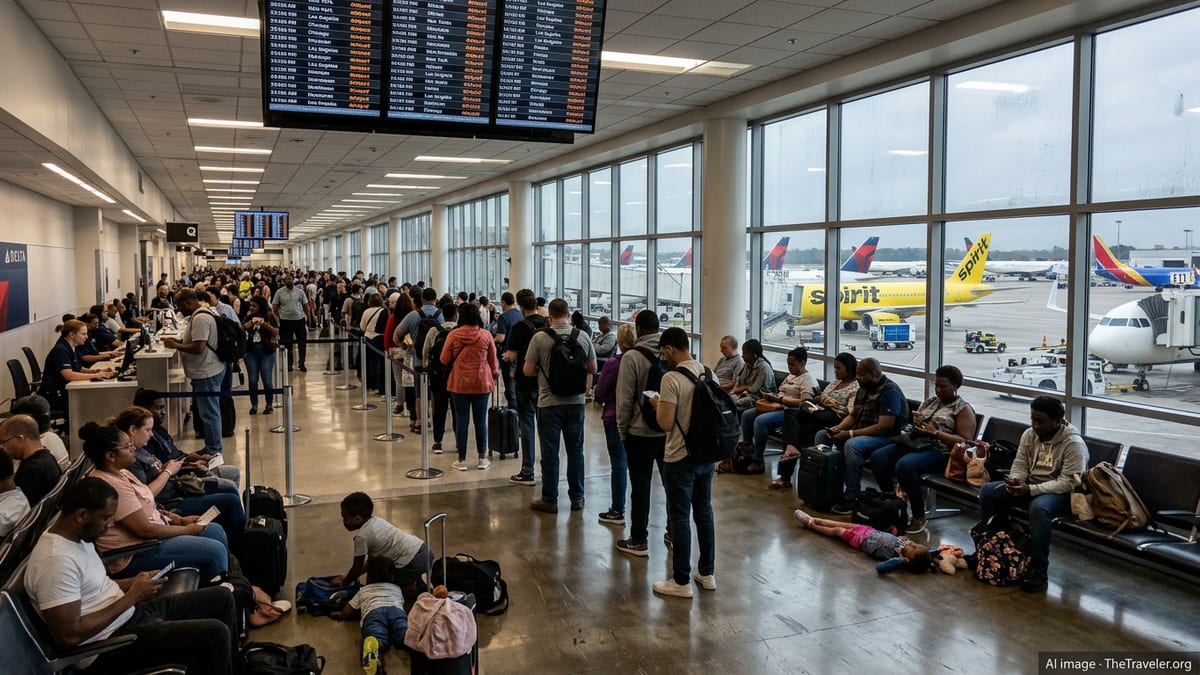
Flight disruption pressures intensified at Hartsfield-Jackson Atlanta International Airport on June 13, as tracking data showed more than 170 delayed services and at least 11 cancellations affecting domestic and international routes across the United States, Mexico, the United Kingdom, France, Italy and other key markets.
Get the latest news straight to your inbox!
Atlanta Hub Struggles As Summer Traffic Builds
Atlanta’s role as one of the world’s busiest hubs has amplified the impact of the latest operational setbacks. Publicly available tracking boards for June 13 indicate roughly 174 delays and 11 cancellations connected to flights passing through Hartsfield-Jackson Atlanta International Airport, affecting departures and arrivals across multiple airlines, including Delta Air Lines, Frontier Airlines and regional carrier PSA Airlines.
The disruption comes as summer travel demand accelerates and schedules remain tightly packed. Atlanta’s status as a primary hub for Delta and an expanding base for Frontier means even modest operational issues can quickly cascade, influencing flights across North America and transatlantic networks.
Data released by the U.S. Department of Transportation for recent months shows that carriers with significant Atlanta operations, including Delta, Frontier and PSA, have been contending with a mix of weather, air traffic system constraints and late-arriving aircraft as recurring sources of delay. These structural pressures appear to be feeding into the current day’s elevated disruption numbers.
Recent airport traffic reports from Atlanta’s Department of Aviation also underscore how concentration of operations at a single mega-hub can magnify any irregular operations event. With tens of thousands of monthly flight movements tied to a few key carriers, any spike in delays rapidly affects large volumes of passengers and connecting itineraries.
Major Carriers Log Rising Delays and Cancellations
On June 13, Delta and Frontier feature prominently in the disruption picture at Atlanta, alongside PSA-operated regional services. Real-time trackers show multiple Delta mainline and regional flights arriving late into the hub, pushing back onward departures and creating knock-on effects for passengers bound for destinations throughout the United States and beyond.
Frontier’s growing schedule at Atlanta, including routes to major markets such as New York, Washington and Houston, is also contributing to the day’s congestion as some of its services operate behind schedule. While many flights are still completing their sectors, the pattern of late departures and arrivals adds stress to already tight turnaround windows.
PSA Airlines, which operates regional flights under the banner of a larger U.S. network carrier, has recorded one of the higher cancellation rates among domestic operators in recent federal performance summaries. Industry observers note that when regional carriers experience crew or fleet constraints, their cancellations often occur on shorter routes that feed major hubs, further complicating connection banks for mainline partners in places like Atlanta.
Across all affected airlines, the tally of 174 delays and 11 cancellations on June 13 reflects a day of elevated operational strain rather than a single isolated incident. The numbers show disruptions dispersed across multiple carriers, suggesting a combination of weather exposure, congestion and resource limitations rather than a single airline-specific issue.
Ripple Effects Across the United States and Mexico
The impact of Atlanta’s disruptions on June 13 extends far beyond Georgia. Tracking information indicates that delayed and cancelled flights from Hartsfield-Jackson are tied to a web of routes touching major U.S. hubs and leisure destinations, as well as key points in Mexico.
Domestic flights linking Atlanta with cities such as New York, Washington, Houston, Tampa and Raleigh-Durham reveal scattered delays, sometimes in the range of 30 minutes to more than an hour. For connections built on short layovers, those delays can translate into missed onward flights, particularly for travelers heading to or from secondary markets served by regional affiliates.
Routes to Mexico and Caribbean gateways are also vulnerable because they often rely on tight morning and midday connection banks at Atlanta. When those banks are disrupted by late arrivals or ground holds, travelers can face same-day rebookings onto limited remaining services or, in some cases, overnight stays awaiting the next available flight.
With airlines attempting to run fuller schedules to meet strong summer demand, spare capacity to absorb stranded passengers is limited. That reality can turn a single delayed flight out of Atlanta into a multi-leg disruption for travelers crisscrossing the United States and Mexico.
Transatlantic Schedules Feel the Strain
The effects of June 13’s disruptions are not confined to North America. Hartsfield-Jackson is a critical connecting point for transatlantic services to the United Kingdom, France, Italy and other European destinations, particularly for Delta and its partners. Delays on domestic feeder flights into Atlanta can threaten evening departures across the Atlantic and complicate aircraft and crew rotations.
Publicly accessible timetables for the day show multiple long haul flights scheduled to depart Atlanta for London, Paris and Rome during traditional overnight banks. If significant portions of the domestic network arrive late, airlines face difficult decisions about holding departures for connecting passengers versus preserving punctuality for those already on board.
Disruptions in one direction can reverberate into the next day’s operations in Europe. Late-arriving overnight flights from Atlanta can compress ground times at airports such as London Heathrow, Paris Charles de Gaulle or Rome Fiumicino. That, in turn, risks downstream delays on return services back to the United States, potentially prolonging the overall disruption window.
For travelers originating in European cities and connecting through Atlanta to Latin America, the Caribbean or secondary U.S. destinations, the combined effect of long haul and domestic delays can be particularly challenging. Missed connections may require re-routing through alternative hubs or overnight hotel stays, especially when seat availability is tight at the height of the summer season.
Systemic Pressures Behind Today’s Numbers
While the 174 delays and 11 cancellations reported on June 13 appear striking, they are also part of a broader pattern visible in aviation data. Recent federal Air Travel Consumer Reports show that carriers with strong Atlanta footprints, including Delta, Frontier and PSA, have been operating in an environment where roughly 70 percent of flights arrive on time, with the remainder subject to delays or cancellations for a range of reasons.
Extreme weather remains a leading factor, particularly in the Southeast during summer, when thunderstorms can trigger ground stops and re-routing. National airspace constraints, including congestion on key en route corridors and staffing challenges in air traffic control facilities, add another layer of unpredictability. Late-arriving aircraft and crew availability issues further complicate efforts to maintain tightly timed schedules.
Guidance from aviation authorities for summer 2026 emphasizes that travelers should anticipate periodic disruption spikes at major hubs such as Atlanta, especially during peak travel weekends. Publicly available resources encourage passengers to monitor flight status frequently, build additional time into connections and familiarize themselves with airline policies on rebooking and compensation for controllable delays.
For Hartsfield-Jackson Atlanta International Airport, the latest wave of disruptions underscores the operational balancing act that comes with being a primary global hub. As airlines continue to rebuild and grow networks, maintaining resilience against weather, infrastructure and staffing shocks will remain central to keeping days like June 13 from turning into wider travel crises for passengers across the United States, Mexico, Europe and beyond.