


More news on this day
The United Kingdom has tightened its travel warnings across parts of the Middle East as heightened regional tensions, missile and drone attacks, and renewed conflict in Yemen and along Israel’s borders increase the risks facing British holidaymakers and business travellers.
Get the latest news straight to your inbox!
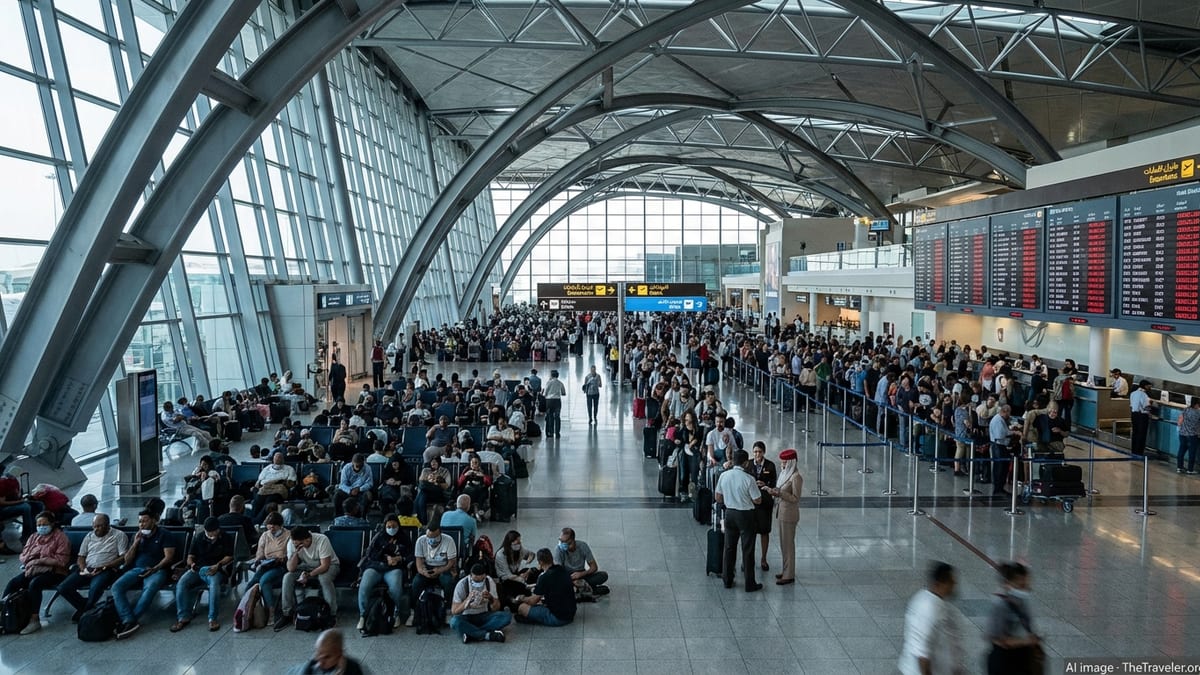
Expanded UK Warnings as Regional Flashpoints Multiply
Updated Foreign, Commonwealth and Development Office travel advisories highlight a patchwork of risk across the Middle East, with several destinations now covered by guidance against all or all but essential travel. Publicly available government material indicates that Israel, the Occupied Palestinian Territories, Lebanon, Iran, Iraq, Syria and Yemen are among the locations subject to the strongest warnings, reflecting persistent conflict and the potential for rapid escalation.
In travel advice covering Israel and the Occupied Palestinian Territories, the UK government points to the volatile security environment following rounds of conflict between Israel and armed groups, as well as clashes linked to the wider confrontation with Iran. Separate safety and security guidance on Palestine notes that a ceasefire agreed in April 2026 has not removed the risk of further attacks or civil unrest, and advises against all travel to some areas while urging extreme caution elsewhere.
Lebanon travel advice has also been tightened. Official notices describe increased airstrikes and rocket fire between Israeli forces and Hezbollah, concentrated particularly in southern Lebanon, where an Israeli military presence remains despite a cessation of hostilities announced in mid‑2026. The UK now advises against all travel to parts of the country and against all but essential travel to others, underscoring the risk of spillover from any renewed confrontation on the Israel–Lebanon frontier.
Separate government responses and reports on Iran highlight long‑standing advice against all travel to that country and warn that, in the event of serious unrest or conflict, the UK would have limited capacity to assist nationals on the ground. This reflects concerns that any further escalation involving Iran could reverberate across the wider region and complicate evacuation or consular support.
Red Sea and Yemen Tensions Raise Alarm for Maritime Routes
The tightening of travel warnings is closely linked to the renewed flashpoint around Yemen and the Red Sea, where Houthi forces have intensified attacks on Saudi territory and commercial infrastructure. Recent statements from the UK Foreign, Commonwealth and Development Office condemn Houthi threats against Saudi Arabia, including plans for a maritime blockade, and highlight the danger posed to freedom of navigation through the Red Sea and the Bab el‑Mandeb Strait.
Separate maritime security bulletins from international authorities describe how Houthi attacks on shipping since 2025 have targeted vessels with links to the United Kingdom, the United States and Israel, prompting carriers to reassess routings through the southern Red Sea, Bab el‑Mandeb, the Gulf of Aden and adjacent waters. Public advisories warn that vessels associated with these countries face an elevated terrorism and security risk in the area, even during periods when attacks temporarily subside.
More recent reporting from the region indicates a sharp escalation in fighting around Yemen’s Red Sea coast, including Houthi advances that have brought key ports and islands under their control and revived large‑scale operations by a Saudi‑backed coalition. These developments have raised the stakes for maritime trade and added to UK concerns about possible knock‑on effects for energy supplies and global markets, with Brent crude prices hovering around 100 US dollars a barrel in October 2026 compared with about 70 dollars before the latest Iran‑related conflict.
In parallel, Associated Press coverage shows that the United Kingdom has expanded its military support to Saudi Arabia with defensive air patrols aimed at countering missile and drone strikes, after attacks on Saudi airports caused civilian casualties and led several international airlines to suspend flights temporarily. While these deployments are presented as defensive, they underline the wider escalation risk the UK is factoring into its travel and security assessments.
Airspace Closures and Flight Schedules Disrupt UK Travel
The heightened security risk has had a direct impact on air travel between the UK, the Middle East and surrounding regions. Guidance from the UK Civil Aviation Authority issued in early 2026 notes that many passengers have faced disruption on routes linking the UK with the Middle East and Cyprus because of the evolving situation, and urges travellers to check Foreign Office advice and confirm flight status with their airline before heading to the airport.
Industry notices compiled in March 2026 point to full or partial airspace closures over Iran, Israel, Qatar, Bahrain, Kuwait, Iraq, Syria and the United Arab Emirates, along with significant disruption reported in Saudi Arabia, Oman, Jordan, Lebanon and Egypt. Airlines have been forced to cancel or reroute services, increasing flight times and, in some cases, suspending direct connections entirely until the risk picture improves.
European carriers have also adjusted Middle East schedules. Reporting from travel industry outlets in June 2026 shows that some airlines have extended suspensions of flights to destinations such as Beirut and Dubai, while others have restored limited links to Tel Aviv under enhanced risk assessments. A safety bulletin from European aviation regulators advises operators to exercise caution when flying through the airspace of Bahrain, Kuwait, Israel, Jordan, Qatar, Oman, the United Arab Emirates and Saudi Arabia, and to ensure robust contingency planning.
In anticipation of ongoing turbulence, the UK government has announced measures designed to protect summer holiday plans from large‑scale cancellations triggered by Middle East disputes. Policy updates released in May 2026 explain that airlines will be granted flexibility on the use of take‑off and landing slots when conflict‑related disruptions or jet fuel shortages force temporary schedule cuts, with the Transport Secretary emphasising cooperation with carriers such as British Airways, Virgin Atlantic and easyJet to keep key routes operating where it is judged safe to do so.
Practical Implications for British Holidaymakers and Business Travellers
For UK travellers, the tightening of Middle East travel warnings has immediate financial and practical consequences. Travel industry briefings circulated in early March 2026 state that when the Foreign Office advises against all travel or all but essential travel to a country, standard travel insurance policies often cease to provide cover for new trips, leaving those who travel regardless exposed to potentially high medical, evacuation or cancellation costs.
The same guidance indicates that travellers whose package holidays are cancelled or significantly altered because of flight disruptions linked to the Middle East situation are entitled to a full refund or a suitable alternative from their tour operator. The UK Civil Aviation Authority advises passengers to contact their airline, travel agent or package organiser promptly if official warnings or airspace closures affect their itinerary, and to keep records of any written advice or schedule changes.
Publicly available Foreign Office material also urges British nationals already in affected countries to register their presence, enabling crisis response teams to share updates more quickly during emergencies. The government’s crisis centre operates on a continuous basis to track incidents and coordinate information for UK citizens abroad, although separate policy documents on high‑risk destinations such as Iran caution that there may be limits to the direct assistance that can be provided in a severe deterioration.
Business travellers are being encouraged by corporate risk advisers to treat Middle East trips as high‑consequence journeys requiring formal risk assessments, route planning and contingencies for sudden border closures or airspace changes. Employers are advised to align duty‑of‑care policies with official UK travel advisories, both to protect staff and to avoid situations in which employees are asked to travel into areas that government guidance flags as too dangerous for non‑essential visits.
Escalation Risk Keeps Outlook Uncertain for Regional Tourism
The tightening of UK travel warnings comes as the wider Middle East continues to grapple with overlapping crises, from the revived conflict in Yemen and attacks on Saudi airports to lingering instability following the U.S. and Israeli strikes on Iran earlier in 2026. Analysts note that these flashpoints are interconnected, with developments in the Red Sea, the Gulf and the Levant all capable of triggering further changes in government travel advice at short notice.
Tourism boards in relatively stable Gulf hubs such as the United Arab Emirates and Qatar have sought to reassure visitors by highlighting robust security measures and the continued operation of major transit airports. However, international safety notices emphasise that even countries not directly involved in active conflict can be affected by missile overflights, debris risks and precautionary route changes, particularly where regional air corridors overlap.
For now, the outlook for leisure and business travel into higher‑risk parts of the Middle East remains constrained by the possibility of sudden escalation, reflected in the UK government’s cautious stance. Reports from travel and aviation sectors suggest that airlines will continue to calibrate schedules in step with official advice, while insurers and corporate travel managers track developments closely across the Red Sea, the eastern Mediterranean and the Gulf.
With energy markets and shipping lanes also exposed to the same tensions that underpin the travel warnings, British travellers are being urged by publicly available guidance to monitor official updates right up to the day of departure, remain flexible in their planning and be prepared for itinerary changes as the regional security picture evolves.