


More news on this day
United States visa authorities have revoked more than six hundred visas in recent months, marking a sharper global crackdown on fraud, misrepresentation and abusive travel schemes that is reshaping how students, workers and tourists plan trips to the country.
Get the latest news straight to your inbox!
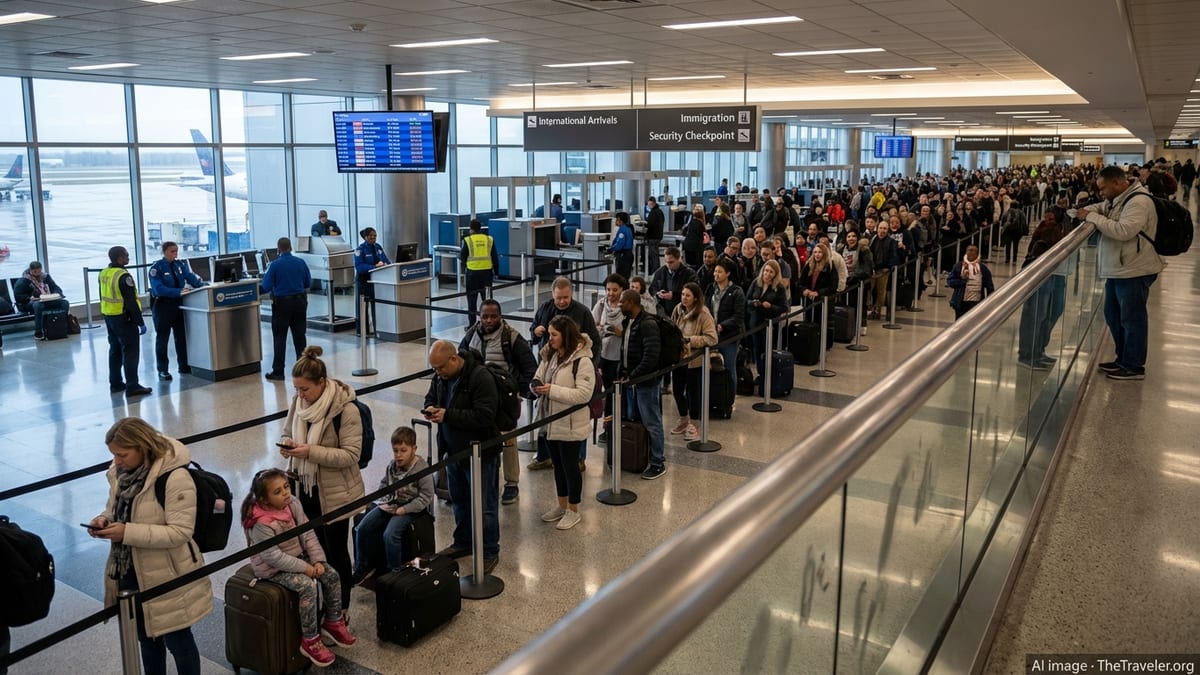
New Enforcement Wave Targets Questionable Visa Activity
Publicly available information indicates that US authorities have intensified reviews of existing visas, leading to the cancellation of hundreds of entries linked to suspected fraud, criminal conduct or misrepresentation. The latest actions span a range of categories, including students, temporary workers, business travelers and individuals tied to complex financial crimes.
Reporting in specialist immigration and legal bulletins notes that consular officers can prudentially revoke visas when new information suggests that a traveler may be ineligible, even if the visa was previously issued and used. In practice, that has translated into a growing number of people learning that their US visa is no longer valid only when attempting to board a flight or apply for a new immigration benefit.
Recent coverage of enforcement trends highlights particular scrutiny of applicants whose stated travel purpose, academic plans or employment arrangements appear inconsistent with their activities on the ground. Where evidence suggests that an individual planned to work without authorization, participate in sham study programs or use shell companies to obtain work visas, revocation has increasingly become the preferred tool.
The current wave of more than six hundred revocations sits within a broader pattern of tightened oversight under the present administration, which has repeatedly framed visa integrity as a national security and economic priority.
Focus on Misrepresentation, From Student Visas to Skilled Workers
According to analysis from immigration law practices and policy organizations, misrepresentation has become one of the most common grounds cited in recent visa cancellations. This can include false statements on application forms, failure to disclose prior visa refusals or immigration violations, or providing documents that do not accurately reflect a traveler’s real situation.
Alerts circulated in 2025 and 2026 describe heightened checks in the student and exchange visitor system, with authorities reviewing whether applicants’ declared programs, funding sources and academic histories match what universities and colleges later report. In some cases, discrepancies have prompted both revocations and termination of student records, leaving individuals suddenly unable to continue studies or reenter the United States after travel.
Scrutiny has also intensified in work visa categories such as H 1B, where lawmakers and analysts have pointed to patterns of shell companies, inflated job descriptions and manipulated wage data. Letters from members of Congress and subsequent media coverage describe concerns about regional clusters of alleged H 1B abuse, prompting calls for closer coordination between the State Department, Department of Labor and Department of Homeland Security.
For travelers, these developments mean that even minor inconsistencies or omissions can carry significant risk. Legal guides now routinely warn that misstatements once seen as technical errors may be treated as willful misrepresentation, with consequences that include immediate visa cancellation and potential long term ineligibility for future travel.
High Profile Cases Underscore Fraud Priorities
Several recent cases have illustrated how US authorities are using visa revocation to respond to financial crimes and elaborate fraud schemes. Coverage in regional and financial media has described instances where foreign nationals linked to multimillion dollar investment scams or healthcare fraud had their visas pulled alongside criminal charges.
In one widely discussed cluster of cases, individuals accused of orchestrating investment fraud, manipulating Medicaid reimbursements, or forging corporate documents to attract investors were reported to have lost their US visas as investigations advanced. Public information shows that visa cancellations often occurred in parallel with asset freezes and indictments in US courts, reinforcing the perception that immigration tools are being deployed as part of a broader law enforcement strategy.
Travel and business analysts note that revocations are not limited to people physically present in the United States. A foreign national living abroad can see a visa canceled without advance notice, effectively shutting off access to US markets, conferences and financial centers while legal proceedings unfold.
These high profile actions serve as a warning signal to professionals and entrepreneurs that any attempt to leverage a US visa for fraudulent schemes, even indirectly, can lead to swift loss of travel privileges alongside potential criminal liability.
Global Impact on Students, Tourists and Business Travelers
The stepped up enforcement campaign is being felt across multiple regions, with travelers from Asia, Latin America, Africa and Europe all reporting greater scrutiny. Student associations and alumni groups describe growing anxiety among current and prospective students, who worry that social media activity, political views or minor administrative mistakes could complicate future travel.
Tourism boards and travel agents in several countries have begun advising clients to keep detailed records of itineraries, accommodation bookings and funding sources, anticipating more questions from consular officers and border officials. For some would be tourists, the possibility of sudden visa revocation adds another layer of uncertainty to already complex long haul trip planning.
Business travelers are also adapting. Corporate mobility teams are revisiting compliance training and document retention policies, ensuring that employees’ stated roles, salaries and work locations align with visa applications. In sectors such as technology and consulting, where frequent cross border travel is routine, companies are paying closer attention to short term assignments and remote work arrangements that might inadvertently conflict with visa conditions.
Travel industry observers say that while the absolute number of revocations remains a small fraction of total US visa holders, the symbolic effect is far larger, shaping perceptions of risk and reliability around US travel opportunities.
What Travelers Can Do to Protect Their Status
Immigration practitioners and advocacy organizations are publishing detailed guidance on how travelers can reduce the chances of falling under suspicion. A recurring recommendation is to treat every visa application and immigration form as a formal legal document, double checking that all answers are complete, consistent and supported by evidence.
Experts also emphasize the importance of updating consulates, schools and employers when circumstances change. A student who switches programs or funding sources, a worker whose job location changes, or a visitor who remains in the United States longer than first planned is urged to seek professional advice before assuming that existing permissions still apply.
For current visa holders, monitoring email accounts and online consular profiles is increasingly essential, as revocation notices can arrive electronically without prior in person contact. Travelers are also advised to verify visa validity before booking international flights, particularly if they have had any recent encounters with law enforcement or significant changes in employment or study plans.
Ultimately, the recent decision to revoke more than six hundred visas underscores a clear message: visa holders are expected to closely follow the terms of their stay and to be fully transparent about their intentions. For anyone planning a trip, work assignment or degree program in the United States, careful preparation and strict compliance have become central parts of the travel experience.