


More news on this day
The United States is tightening visitor visa rules worldwide in a renewed push against so called birth tourism, intensifying scrutiny of pregnant travelers and commercial maternity package operators amid broader efforts to curb fraud and misuse of its visitor categories.
Get the latest news straight to your inbox!
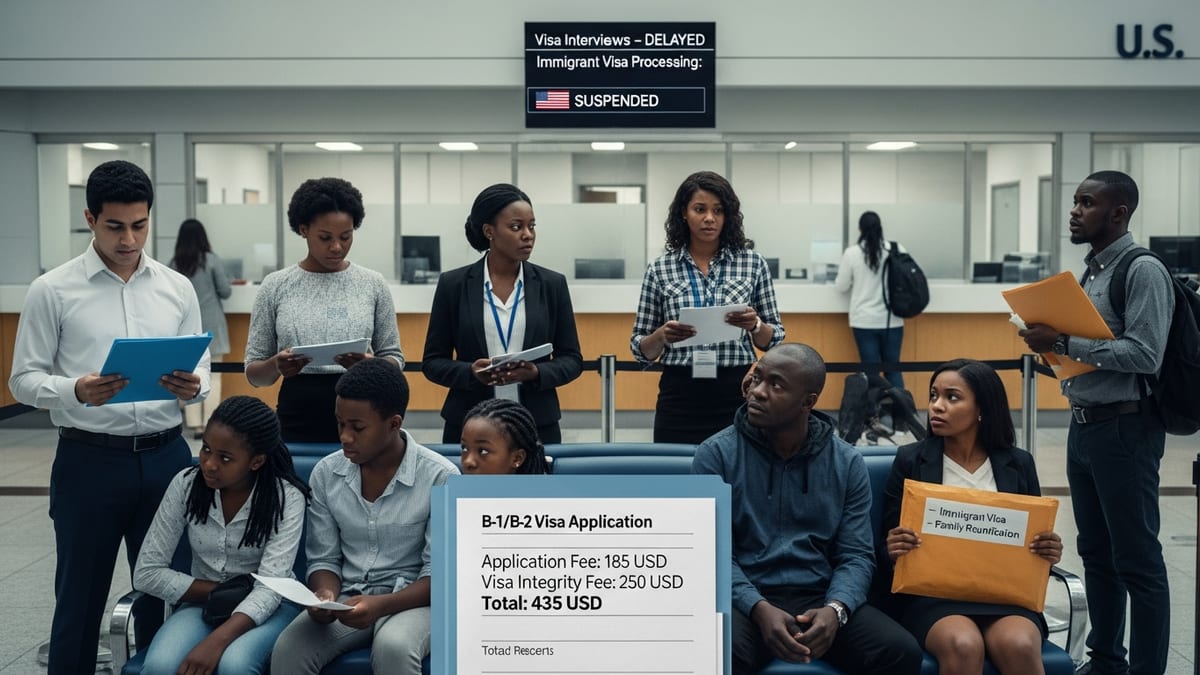
New Executive Actions Zero In on Birth Tourism Industry
Recent policy moves from Washington are sharpening long running efforts to restrict travel by foreign visitors who seek to give birth in the United States so their children acquire citizenship. According to published coverage, a new executive order directs federal agencies to update guidance, strengthen screening and prioritize investigations into organized birth tourism networks that market packages combining visas, accommodation and hospital care.
Existing rules already describe birth tourism as a form of visa fraud when a traveler misrepresents the primary purpose of a visit. Publicly available information on enforcement cases shows that federal prosecutors have pursued operators who coached clients to conceal pregnancies, laundered payments through shell companies and left U.S. hospitals and state programs with unpaid maternity bills. The latest measures build on that enforcement record while signaling a broader, system wide tightening of how visitor intent is assessed.
Analysts note that the campaign against birth tourism sits within a wider immigration agenda focused on reducing both illegal entry and perceived abuses of legal channels. Policy papers from restriction oriented advocacy groups have urged authorities to link birth tourism more directly to national security vetting and to treat commercial operators as a form of transnational organized crime. The new directives appear to move federal agencies closer to that framing.
From 2020 Rule Change to 2026 Crackdown
The current push builds on a key regulatory change introduced in January 2020, when the State Department revised visitor visa guidance to state that consular officers should generally refuse B class visas if the primary purpose of travel was to give birth in the United States. The rule clarified that tourism for pleasure does not include travel undertaken mainly to obtain citizenship for a child, and it explicitly identified birth tourism as a basis for refusing a visa.
Subsequent congressional and oversight reports pointed to that 2020 rule as a turning point. Investigators reviewing earlier policy found that guidance issued in 2015 had made it easier for pregnant travelers to secure visas by instructing consular officers not to deny applications solely because an applicant planned to give birth in the country. That shift, critics argued, helped fuel a commercial birth tourism industry that advertised streamlined access to U.S. hospitals and passport benefits.
By the time the latest round of executive actions was announced in 2026, a body of research from think tanks, academic institutions and government committees suggested that tens of thousands of births each year could be linked to foreign visitors. Estimates vary widely, but several studies cited figures in the low tens of thousands annually, with significant flows reported from China, Russia and parts of Latin America. The renewed crackdown is framed in Washington as an effort to align visa practice with this evolving data.
Global Consular Posts Face Pressure to Screen Pregnant Travelers
The practical impact of the policy shift is being felt at U.S. consular posts worldwide, which are tasked with applying stricter standards while still facilitating legitimate tourism and business travel. Public guidance emphasizes that pregnancy alone is not grounds for visa refusal, but consular officers are encouraged to examine financial capacity, stated travel plans and links to known commercial birth tourism operators more closely.
Travel industry observers report that applicants from countries previously associated with organized birth tourism networks now face lengthier interviews and more detailed questioning about medical plans and support arrangements. In some locations, local media and travel agents describe a noticeable rise in refusals where consular officers conclude that a declared holiday or family visit masks an underlying intention to give birth.
Airlines and tour companies that serve U.S. routes are also monitoring the changes. Carriers have long faced questions about boarding visibly pregnant passengers whose destination is the United States, given the risk of secondary inspection and possible return on the next flight. The renewed focus on fraudulent intent may prompt some companies to tighten their own policies or to warn customers that incomplete documentation could lead to denied entry.
Travel and Tourism Sector Weighs Economic Fallout
The broader travel industry is assessing whether the emphasis on birth tourism could further dampen international demand at a time when U.S. visitor numbers have already come under pressure from stricter visa vetting, higher fees and expanded security checks. Tourism analysts have previously linked declines in inbound travel to policy uncertainty and perceptions that the United States has become more difficult to visit compared with competing destinations.
Industry groups argue that the volume of suspected birth tourism cases remains small relative to overall visitor traffic, and they caution that aggressive messaging around fraud and misuse can create a chilling effect on ordinary travelers. Travel planners in markets with rising middle class demand for overseas maternity care say some clients are reconsidering plans to combine late stage pregnancy with shopping or family visits to the United States, opting instead for countries viewed as less restrictive.
On the other hand, some policy commentators contend that clearer rules could eventually provide more certainty. By codifying that medical travel is acceptable when transparently declared and properly financed, they argue, authorities may reduce confusion among legitimate visitors seeking specialized care. The challenge will be to ensure that front line consular and border officers apply the rules consistently, so that genuine patients are not inadvertently swept up in measures aimed at organized fraud.
Fraud, Enforcement Cases and Civil Liberties Concerns
One of the central justifications for tightening visa rules has been a steady stream of enforcement cases involving birth tourism rings. Court records in recent years describe networks that advertised in foreign languages, offered step by step coaching on how to answer consular questions, and arranged housing in so called maternity hotels. Some operations charged clients tens of thousands of dollars for packages that included advice on concealing pregnancies and avoiding detection at ports of entry.
These cases often involved related charges such as money laundering, health care fraud and immigration document fraud. Investigators detailed schemes in which bills for maternity care were shifted onto public programs, or where hospitals were left unpaid after foreign patients departed. Advocates of the new rules argue that such patterns show how misuse of visitor travel can impose real costs on local communities and public budgets.
Civil liberties and immigrant rights organizations, however, warn that efforts to identify potential birth tourists risk broader collateral damage. They point out that travelers from certain countries, or women of childbearing age more generally, may face disproportionate scrutiny based on appearance or medical history. Concerns have also been raised about privacy, particularly if screening involves probing questions about fertility treatments, previous pregnancies or reproductive intentions that go beyond what is necessary for visa adjudication.
Legal scholars add that while the government has wide latitude to set visa policy, aggressive enforcement could generate new litigation over discrimination or overreach. With the latest executive directives instructing agencies to coordinate more closely on fraud detection and visa revocations, the balance between border control objectives and individual rights is likely to remain a contested space, watched closely by both the travel sector and civil society groups.