


More news on this day
The United States has revoked more than 6,000 visas connected to alleged birth tourism arrangements, in a sweeping enforcement move that expands the government’s years-long effort to curb travel aimed at securing US citizenship for children born on American soil.
Get the latest news straight to your inbox!
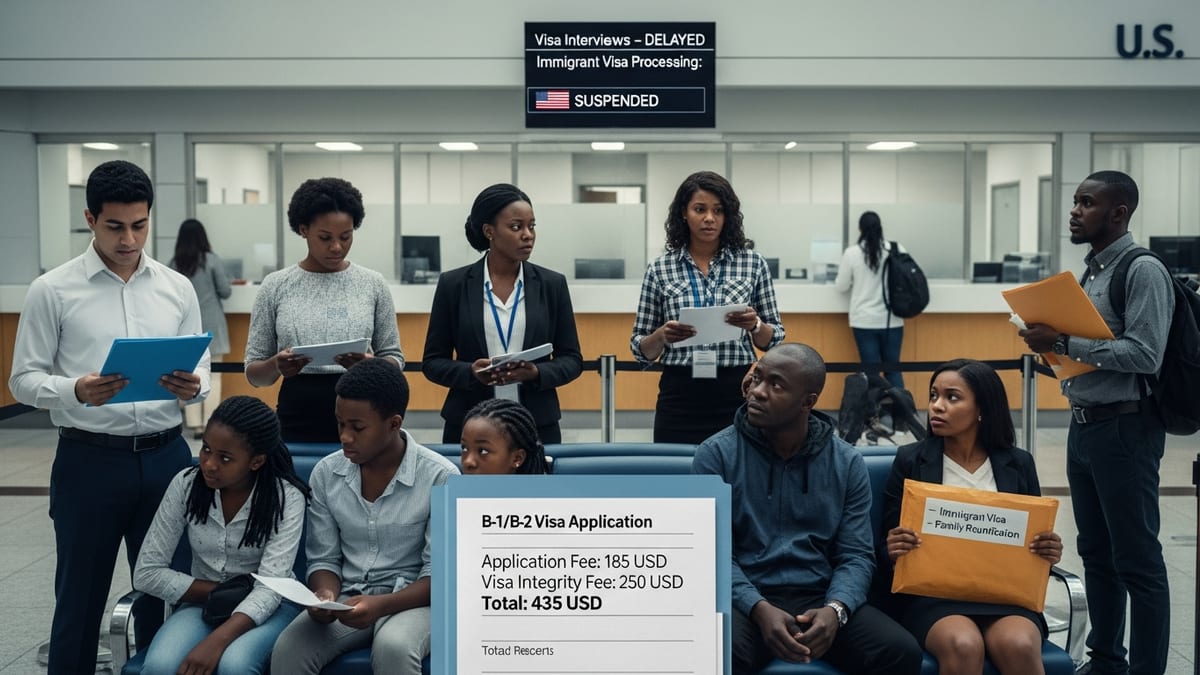
Large-Scale Visa Revocations Target Birth Tourism Networks
According to recent media coverage citing State Department statistics, more than 6,000 business and tourist visas have been revoked after US officials linked them to suspected birth tourism activities. The revocations affect travelers whose primary reason for entering the country was judged to be giving birth in the United States so that their children would acquire citizenship at birth.
Reports indicate that the visas were cancelled over a multiyear period as consular and law enforcement investigations identified organized businesses that advertised packages including US hospital deliveries, accommodation and postnatal care. Publicly available information describes some of these operations as commercial networks that coached clients on how to answer visa interview questions and, in certain cases, how to conceal their true travel purpose.
Birth tourism itself is not a criminal offense under US law, but investigators have pursued cases involving related conduct such as visa fraud, money laundering and failure to pay medical bills. In several high-profile prosecutions over the past decade, federal indictments have described schemes in which clients paid tens of thousands of dollars for assistance entering the country and delivering children in American hospitals.
The scale of the recently revealed visa cancellations underscores how aggressively the US government is now applying existing rules. Travel industry observers note that the measure also reflects broader political debates about immigration, border controls and the scope of birthright citizenship in the United States.
Regulatory Shift Made Birth Tourism a Non-Permissible Purpose
The crackdown builds on a regulatory change first introduced in January 2020, when the State Department amended its rules for B-class visitor visas. Under that rule, travel to the United States with the primary purpose of obtaining US citizenship for a child by giving birth in the country was explicitly defined as an impermissible basis for receiving a tourist visa.
Government documents show that the rule created a rebuttable presumption: if a consular officer has reason to believe an applicant will give birth during a planned stay, the officer is instructed to treat birth tourism as the primary purpose of travel unless the applicant can demonstrate another legitimate reason, such as necessary medical treatment. This marked a significant shift from earlier practice, in which pregnancy itself was not grounds for denying a visa.
Official guidance issued after 2020 continues to draw a sharp line between birth tourism and lawful medical travel. Visitors may still apply for a B visa to receive medical care related to childbirth if they can show that treatment is medically indicated, that qualified facilities are available, and that expenses will be covered without relying on US public assistance. However, travel advertised chiefly as a route to US citizenship for a newborn is now treated as outside the scope of “pleasure” or tourism for visa purposes.
In parallel with the rule change, consular training materials were updated to instruct officers on assessing pregnancy-related travel. These materials, as described in legal and policy analyses, emphasize case-by-case evaluations, taking into account declared travel plans, past travel history, financial documentation and any connections to known commercial birth tourism operators.
How Visa Revocation Works and What Travelers Face
Publicly accessible State Department information explains that visas can be revoked at any time if new facts emerge suggesting the holder is no longer eligible. In birth tourism cases, revocations often occur after investigations reveal that an applicant misrepresented the purpose of travel, concealed a pregnancy or used documents prepared by visa facilitators that encouraged false statements.
Once a visa is revoked, it generally cannot be used for travel to the United States, and airlines are advised through electronic systems that boarding should be denied. Affected travelers can, in theory, reapply, but consular officers must then assess the previous conduct, including any suspected fraud, when deciding whether to issue a new visa.
Immigration law specialists cited in recent coverage note that findings of misrepresentation can carry long-term consequences, including potential ineligibility for future visas without a discretionary waiver. For many would-be visitors, that creates a powerful deterrent against participating in commercial birth tourism programs that rely on misleading visa applications.
The revocation campaign has particular resonance for travelers from countries whose citizens are not eligible for the Visa Waiver Program and must obtain B-1 or B-2 visas for short stays. Travel industry stakeholders say the new data on cancelled visas is likely to prompt additional questions from legitimate tourists and business visitors who want reassurance that their plans will not be misconstrued.
Impact on Travel, Hospitals and Immigration Debate
The large number of revoked visas is already feeding into a broader national discussion about birthright citizenship and the limits of legal travel. Commentaries in major US outlets note that, while the Constitution continues to guarantee citizenship to almost all children born on US soil, policymakers of different political views are increasingly focused on the small fraction of births linked to organized travel schemes.
Hospital administrators in regions that have seen concentrated birth tourism activity have previously described strains on maternity wards and billing systems, especially when clients depart the country with unpaid medical charges. The new visa data suggests that federal authorities are relying more heavily on pre-travel screening to prevent such situations from arising, rather than addressing them only after arrivals.
Civil liberties advocates and some women’s health organizations have expressed concern in published analyses that aggressive enforcement could lead to discriminatory treatment of pregnant travelers or women of childbearing age. They warn that poorly implemented screening practices may intrude on privacy or discourage legitimate medical travel, particularly for high-risk pregnancies that require specialized care available in US hospitals.
Travel policy analysts point out that the United States is simultaneously aiming to attract record numbers of visitors for major events such as the 2026 World Cup and the 2028 Olympics. Balancing that objective with tighter visa scrutiny around birth tourism will be a continuing challenge for consular posts already managing heavy appointment backlogs after the pandemic.
What Prospective Visitors Should Know Now
For travelers planning legitimate tourism or business trips, the main practical lesson from the recent developments is the importance of transparent, well-documented applications. Public guidance from the State Department stresses that visitor visas remain available to millions of people each year, but that applicants must clearly explain their travel purpose and be prepared to show how their stay will be financed.
Pregnant applicants or those planning medical procedures in the United States are advised in widely circulated legal guidance to obtain detailed documentation from healthcare providers, evidence of financial arrangements and a clear itinerary. Stating “tourism” on forms while intending to give birth in the United States can be interpreted as a material misrepresentation if uncovered later.
Observers in the travel industry also recommend that prospective visitors be wary of companies that advertise guaranteed visas or “citizenship packages” for newborns. Recent enforcement trends suggest that authorities are paying particular attention to such intermediaries, and association with a known birth tourism network can result in visa denial or cancellation even if the applicant personally has no criminal record.
As the United States revokes thousands of visas linked to birth tourism and tightens scrutiny of pregnancy-related travel, international visitors are navigating a more complex environment. For now, publicly available policy statements emphasize two parallel goals: curbing the use of tourism visas for citizenship-seeking births while continuing to facilitate bona fide tourism, business visits and medically necessary care.