


More news on this day
The United Kingdom has hardened its travel guidance for Saudi Arabia following a series of missile and drone strikes on airports and critical infrastructure, prompting renewed concern for holidaymakers, business travelers and airlines operating across the kingdom.
Get the latest news straight to your inbox!
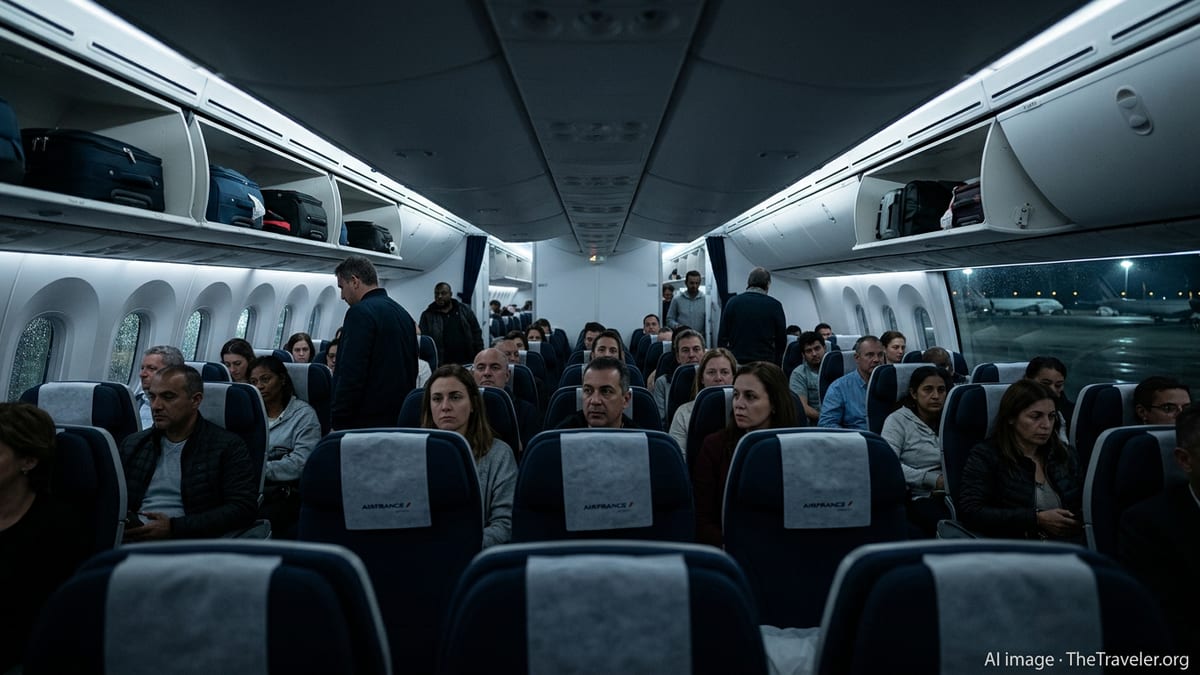
Expanded UK Warning Follows October Airport Strikes
Updated Foreign, Commonwealth and Development Office advice now highlights an elevated threat from missile and drone attacks across large parts of Saudi Arabia, including major cities and transport hubs. Publicly available government information notes that King Khalid International Airport in Riyadh was struck by a missile on 10 October 2026, an incident that damaged airport facilities and disrupted flight operations.
The safety and security section of the UK guidance stresses that there is a heightened threat against airports, military and defence sites, ports and energy infrastructure in locations such as Riyadh, Jeddah, Dammam, Abha, Jizan, Najran and Yanbu, as well as against shipping in the Red Sea. The wording marks a clear sharpening of tone compared with earlier iterations of the same travel advice, reflecting the recent pattern of long-range attacks launched from Yemen.
Information circulated by UK universities and corporate mobility teams in mid-October cites the updated FCDO line as advising against all but essential travel to Riyadh province, Jeddah, Dammam, Taif and several other regions after the October strikes. Such third-party guidance also warns that travel insurance may be invalidated if travellers ignore official advisories, reinforcing the practical impact of the change for people planning trips to Saudi Arabia.
Independent security assessments compiled in early November describe how a Saudia airliner was heavily damaged by fire during an 8 October missile attack on Riyadh’s main airport and report at least three fatalities among Saudi citizens. The same analysis notes that the UK widened its “all but essential travel” designation on 11 October to cover Jeddah, Dammam and all Saudi airports except Medina, underlining how rapidly the security picture has evolved.
Missile Threat Linked to Houthi Campaign and Red Sea Tensions
The updated British travel warning is framed against a wider backdrop of cross-border attacks by Yemen’s Houthi movement, which has repeatedly targeted Saudi territory since the resumption of hostilities in 2026. Recent reporting from international outlets describes Saudi air defences intercepting multiple ballistic and cruise missiles aimed at Riyadh and other regions in early November, although debris from interceptions still caused damage, including to a commercial building in the capital.
Written statements to the UK Parliament in October outline concerns about the threat to the Red Sea and Bab al Mandab Strait, describing these waterways as crucial maritime trade routes and citing Houthi missile and drone activity as a serious regional risk. Government updates on UK military support indicate that additional air defence assets and advisers have been sent to Saudi Arabia in response to what is described as an escalation in cross-border attacks.
Separate assessments from the United States and Canada also characterise the security environment as deteriorating. A revised US travel advisory issued in late October orders non-emergency government personnel and their families to leave Saudi Arabia and urges other citizens to reconsider travel, explicitly referring to missile and drone attacks by Iran and Iran-backed Houthis. Canadian travel advice updated in late October records that missile and drone strikes on airports have disrupted flights at several locations across the kingdom.
Maritime security notices from agencies such as the US Maritime Administration refer to more than one hundred Houthi attacks on commercial shipping between late 2023 and late 2025 and warn that vessels with Saudi or Saudi-linked associations remain at higher risk in parts of the Red Sea and Gulf of Aden. While these notices primarily address ship operators, they contribute to a broader picture of heightened regional tension informing government travel warnings.
Practical Impact on Flights and Itineraries
The latest phase of missile activity has had a tangible effect on commercial aviation and travel planning. Government advisories and airline communications report temporary suspensions of flights, diversions and enhanced security checks at key Saudi airports following the October incidents, particularly at Riyadh’s King Khalid International Airport. Some routes were moved to alternative gateways or experienced schedule reductions while damage was assessed and repairs initiated.
Foreign travel advice from the UK and other governments now explicitly recommends that passengers reconfirm their flights before setting out for any Saudi airport. Australian guidance, which currently advises against travel to Saudi Arabia because of the volatile security situation, stresses that travellers who elect to fly should verify departures with airlines or travel providers shortly before leaving for the airport in order to avoid becoming stranded by last-minute cancellations.
International risk consultancies monitoring the situation suggest that insurance coverage is a key consideration. Many policies exclude claims arising from travel to areas where a traveller’s home government advises against all or all but essential travel. As a result, UK residents heading to parts of Saudi Arabia now covered by the FCDO warning may find that they are unable to secure comprehensive cover for disruption or medical costs, even if airlines continue to operate flights.
Corporate travel managers are responding by tightening internal approval processes for trips to Saudi Arabia, particularly to Riyadh, Jeddah and eastern energy hubs such as Dammam. Some organisations have temporarily postponed non-critical visits, shifted meetings to virtual formats or relocated regional gatherings to neighbouring countries while they monitor how frequently missile and drone attacks continue to affect transport and urban areas.
What UK Travellers Are Advised to Do Now
Publicly available UK travel advice encourages British nationals with plans in Saudi Arabia to review their itineraries carefully in light of the changed security picture. Travellers are urged to check the latest FCDO guidance before booking and again immediately before departure, since the areas covered by warnings can change at short notice in response to new attacks or intelligence.
The advice also underlines the importance of registering contact details with consular services and maintaining regular communication with family or employers while in the kingdom. Those who decide that their journey is essential are encouraged to maintain a high level of awareness around airports, energy sites and other prominent infrastructure, where the missile and drone threat is assessed as highest.
Other governments, including the United States, Canada and Australia, recommend similar precautions for their citizens in Saudi Arabia, highlighting the risk of further attacks on airports and cross-border strikes linked to the conflict in Yemen. Travellers holding multiple nationalities are advised to pay close attention to the strict local regulations around photography and behaviour near security installations, as breaches can attract severe penalties irrespective of foreign citizenship.
Security analysts caution that the pattern of missile launches and interceptions may create a fluctuating risk environment for some time. For UK travellers, the strengthened warning does not prohibit entry to Saudi Arabia but signals that government concern about the missile threat has reached a level where journey plans, insurance and contingency arrangements require far closer scrutiny than in previous years.
Regional Outlook and Implications for Future Travel
Forward-looking assessments from defence and security think tanks suggest that the missile and drone threat facing Saudi Arabia is closely tied to the wider trajectory of the Yemen conflict and regional rivalries. Recent analysis of Houthi capabilities points to sustained access to long-range weapons and a political incentive to continue targeting Saudi infrastructure and shipping so long as front-line tensions persist.
For airlines, tour operators and the wider travel industry, the strengthened UK warning introduces additional uncertainty around demand for Saudi routes, especially among leisure travellers. While religious travel and essential business trips are expected to continue, route planners and insurers are likely to keep a close watch on any further strikes on airports or energy facilities when setting schedules and pricing cover for 2027.
Neighbouring states are also factoring the situation into their own risk assessments. Several foreign travel advisories reference the potential for spillover effects on Red Sea and Gulf airspace, as well as on key maritime chokepoints that underpin passenger cruise itineraries and cargo shipping lanes. Any wider disruption in those corridors could have knock-on effects for journeys that do not involve a stay in Saudi Arabia but transit nearby.
For now, the message to UK travellers is that trips to Saudi Arabia demand a far higher threshold of justification and preparation than in the recent past. The raised warning over the missile threat underscores how quickly security dynamics can shift in a key Middle Eastern destination that is simultaneously trying to expand tourism and host major international events, leaving travellers weighing opportunity against significantly increased risk.