


More news on this day
A sweeping series of new security alerts from United States embassies and consulates across the Middle East is tightening the practical limits on American travel through the region, as diplomatic posts warn of possible attacks, airspace closures and abrupt disruptions to commercial flights.
Get the latest news straight to your inbox!
Fresh alerts expand earlier worldwide caution
The latest embassy notices build on a Worldwide Caution published by the US Department of State on July 22, 2026, which highlighted a complex security environment linked to regional tensions and conflict involving Iran and its allies. That global notice urged Americans, with particular reference to those in the Middle East, to exercise increased vigilance and prepare for sudden changes to travel conditions.
In mid October 2026, multiple US embassies and missions across the Gulf, the Levant and Iran issued near-identical security alerts dated October 18 and 19. Publicly available embassy texts and regional coverage indicate that posts in Saudi Arabia, the United Arab Emirates, Kuwait, Jordan, Bahrain, Oman, Qatar, Iraq, Lebanon, Yemen, Iran and Israel or Jerusalem warned of a “complex security environment,” potential further escalation and the risk of flight cancellations and airspace closures.
On November 7, 2026, new reports indicated that US diplomatic missions refined those messages again, with security channels highlighting increased threats attributed to Houthi forces in Yemen and Iran-linked actors. The coverage describes a coordinated pattern of alerts that reference heightened risks of armed attacks in several countries and renewed concern about the vulnerability of civilian airports and key air routes.
These measures follow months of escalated conflict, including US and allied strikes on Iranian targets and repeated missile and drone activity affecting Saudi Arabia and other Gulf states. Public information from government travel sites and international media points to a sustained rather than temporary shift in the baseline level of risk facing civilian travelers.
Tighter rules and ordered departures for diplomatic staff
The security tightening is not limited to advice for private citizens. Documentation cited in recent coverage shows that by late October 2026, non emergency US government employees and eligible family members were ordered to leave Saudi Arabia, with similar measures reported or discussed for several other Gulf posts. Such ordered departures typically signal that Washington has assessed a significantly higher threat to official personnel and facilities.
Region focused reporting and government records also describe narrower movement rules around sensitive border areas. In Saudi Arabia, for example, US government employees are reported to face strict limits on travel near the Yemen frontier and in specific provinces and cities that have seen previous missile or drone incidents. These limitations indirectly indicate where risks to civilian travelers may be greatest, even when commercial flights and tourism services continue to function.
Earlier in 2026, heightened threat levels led some US diplomatic facilities in the region to suspend routine visa services, cancel non essential appointments and, in a few cases, close temporarily. Professional mobility advisories for multinational companies recorded that closures and reduced staffing could occur with little notice, often in response to nearby incidents or intelligence about potential attacks.
For travelers, reduced consular staffing and restricted movement by embassy personnel can translate into slower assistance during emergencies and fewer options for in person services such as lost passport replacement or notarial support, particularly outside capital cities.
Impact on commercial flights and travel plans
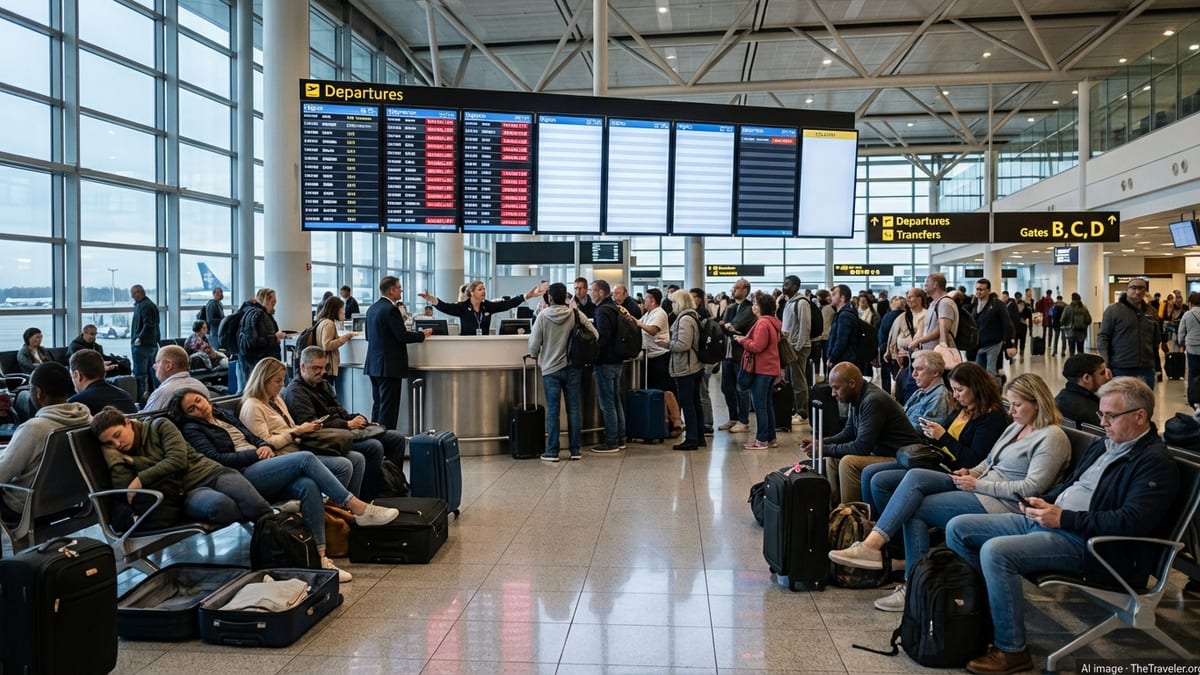
Across multiple advisories, a recurring theme is the warning about airspace disruptions. Security messages from US missions in the region and subsequent media coverage repeatedly note that Americans should be ready for flight cancellations, rerouted services and periodic airspace closures affecting both direct routes and common transit corridors.
Reports from Doha, Riyadh and other hubs in September and October 2026 describe episodes where renewed strikes on Iranian targets and intensified Houthi activity against Saudi infrastructure prompted temporary adjustments to flight paths and schedules. While major Gulf carriers have not announced long term shutdowns of key routes, the pattern of short notice changes has become a central risk factor for anyone planning multi leg itineraries through the Middle East.
Travel risk bulletins from foreign ministries beyond the United States echo this picture. Recent advisories from partners such as Australia classify parts of the region, including Saudi Arabia, at their highest “do not travel” level, and place neighboring states like Jordan and the United Arab Emirates under elevated warning categories. For American travelers, these parallel assessments underline that disruption risk is not confined to a single country or air corridor.
Given the fluid situation, publicly available guidance stresses the need for flexible tickets, contingency time between connections and readiness to adjust plans if carriers alter routes around conflict zones or if new airspace restrictions are issued with little advance warning.
Practical steps for Americans already in the region
For US citizens currently in the Middle East, the network of embassy alerts translates into a series of practical recommendations. The State Department’s Bureau of Consular Affairs continues to urge travelers to enroll in the Smart Traveler Enrollment Program so that local missions can send security messages directly by email or text in the event of localized incidents or broader regional developments.
Publicly available hotline information shows that Americans overseas can reach the department through a dedicated Washington based call center, using one set of numbers from the United States and Canada and another from other locations. Embassies also publish country specific emergency contact numbers and social media feeds that they use to distribute urgent security updates and, in some cases, instructions about gathering points or departure options when commercial routes narrow.
Coverage of the October and November alerts notes that some embassy messages in 2026 have gone beyond general caution to advise Americans to consider leaving or to be ready to depart rapidly if conditions deteriorate. In earlier waves of escalation, the State Department created online crisis intake forms for Americans seeking information about possible government facilitated departures from countries such as Israel, Saudi Arabia, the United Arab Emirates and Qatar.
Travel risk experts emphasize that in this environment, travelers should ensure that passports remain valid for the full intended stay plus a buffer period, maintain access to sufficient funds for unexpected tickets and overland transport, and keep digital and physical copies of key documents in case of sudden relocation.
Rethinking nonessential trips and transit routes
The cascade of embassy alerts is also reshaping how prospective travelers think about nonessential journeys and even simple transits through the region. Global coverage of US and partner government warning systems shows that several Middle East destinations now sit at higher advisory tiers, where trips for tourism or discretionary business may not align with official risk tolerance thresholds.
American travelers who previously treated Gulf hubs as convenient neutral transit points on routes between North America, Europe, Asia and Africa are being encouraged by multiple advisories and risk analyses to review whether they can route flights through alternative regions while tensions remain elevated. This is particularly relevant for itineraries that would require overnight layovers or long connections in cities that have featured in recent security messaging.
Industry analyses published in late 2026 suggest that airlines and travel insurers are closely tracking the embassy warnings and government advisories as they reassess coverage terms, routing decisions and contingency planning. Travelers may find that policies exclude certain destinations or require additional premiums where official guidance signals a higher probability of disruption or security incidents.
While there is no blanket prohibition on US citizens traveling to the Middle East, the cumulative effect of the July worldwide caution, the October regional alerts and the early November refinements is to raise the bar on preparation. Americans considering trips are being asked, through publicly available advice, to weigh not only personal safety but also the practical question of whether they could leave quickly if the security picture shifts again.