

More news on this day
Heightened security concerns in Nigeria have prompted the United States to authorise the departure of non‑emergency staff and families from its embassy in Abuja, sharpening an already strict travel warning and raising fresh questions for international travellers assessing risk in Africa’s most populous nation.
Get the latest news straight to your inbox!
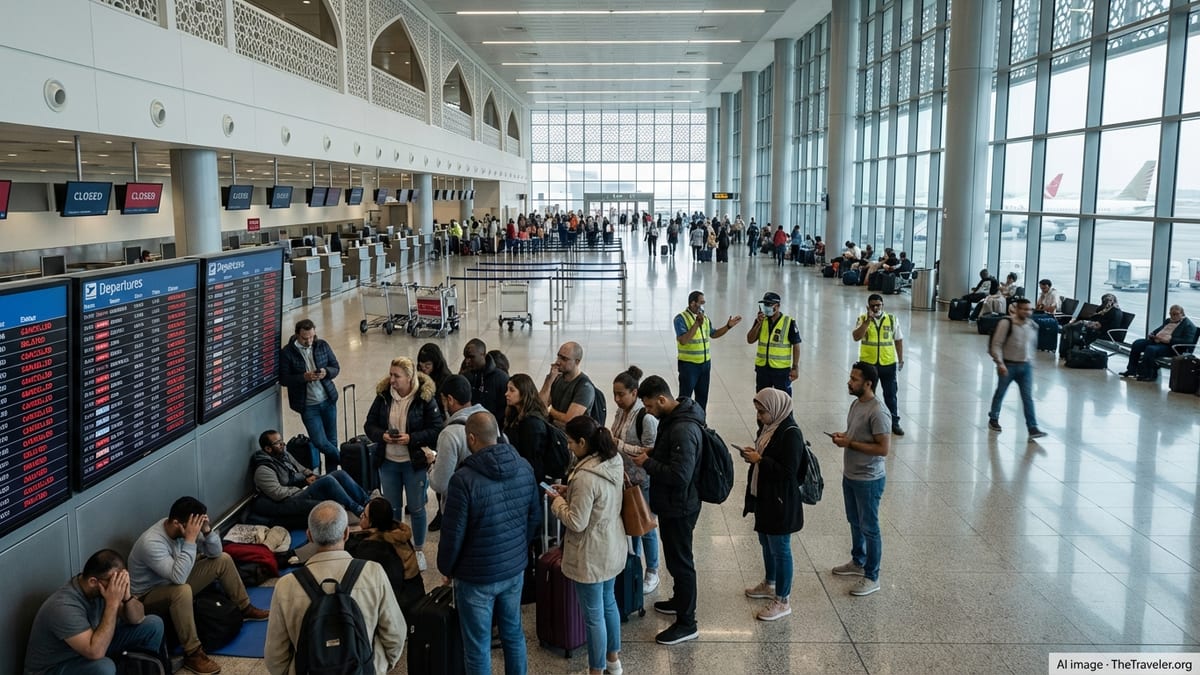
New Advisory Raises Nigeria to the Top Tier of US Concern
The latest United States travel advisory for Nigeria, updated on April 8, 2026, maintains the country at Level 3, a category that urges travellers to reconsider non‑essential trips. Publicly available information shows that the advisory cites a combination of crime, terrorism, kidnapping, civil unrest and limited access to healthcare as key drivers of concern.
Within that broader warning, the State Department has highlighted 23 Nigerian states under Level 4, the strictest classification in the system, which effectively advises against any travel. Coverage of the advisory notes that these higher‑risk areas are concentrated in the north and central belt, where armed groups, banditry and mass abductions have been recurring problems in recent years.
The decision to keep Nigeria in the upper tiers of the advisory system reflects a long‑running pattern of security incidents. Analysts point to the persistence of militant activity in the northeast, rural bandit attacks in the northwest and inter‑communal violence in several central states as factors that collectively elevate the threat profile for both residents and visitors.
For travellers from the United States and other countries that closely track Washington’s assessments, the advisory adjustment is likely to influence corporate risk calculations, insurance coverage and the viability of leisure travel, even to parts of Nigeria that have not experienced recent attacks.
Authorised Embassy Departure Signals Deteriorating Risk Around Abuja
What distinguishes the April 2026 update from earlier guidance is the authorisation for non‑emergency US government employees and their family members to depart the embassy in Abuja. Reports from Nigerian and international outlets indicate that this decision follows a review of the security picture in and around the federal capital territory, where concerns about possible unrest and targeted attacks have risen.
According to recent coverage, the embassy in Abuja has temporarily suspended routine visa appointments and curtailed some public‑facing operations after the advisory was issued. Consular services for US citizens are reportedly being prioritised for emergencies, while non‑immigrant visa processing has shifted more heavily to the consulate in Lagos.
Security analysts note that authorised or ordered departures of embassy personnel are used sparingly and tend to signal that a host government may face challenges in guaranteeing the safety of diplomatic staff. In the case of Abuja, the move appears to be linked to a combination of protest risks, potential targeting of official facilities and broader volatility tied to armed groups operating in surrounding states.
The practical effect for travellers is that the US mission may have a reduced capacity to provide routine consular services in the capital at short notice. Observers say foreign visitors are likely to be encouraged to review their own evacuation plans, ensure that itineraries are registered with their home governments and maintain flexible travel arrangements.
Nigerian Government Plays Down Fears as Security Incidents Mount
The Nigerian federal government has publicly downplayed the implications of the US decision, describing the move in local media interviews as a routine precaution based on Washington’s internal protocols. Officials in Abuja have argued that while certain areas face serious security challenges, the overall situation across the country remains stable and that most regions are open for business and travel.
That message, however, sits uneasily alongside a series of high‑profile incidents that have kept Nigeria in global headlines. Over the past two years, the country has grappled with repeated mass kidnappings of schoolchildren, attacks on rural communities and bandit activity that has affected major highways and farming belts.
In late 2025, Nigeria’s president declared a national security emergency following successive abductions and directed a surge in military and police deployments. Subsequent reports have described efforts to recruit additional security personnel, reinforce vulnerable communities and improve coordination between federal and state agencies.
Critics quoted in Nigerian press coverage contend that these measures have yet to produce a sustained reduction in violence, especially in remote areas where state presence is thin. For foreign travellers, the apparent gap between official assurances of stability and the security incidents documented in local and international reporting complicates efforts to gauge real‑world risk.
Implications for Business, Humanitarian and Diaspora Travel
The updated US advisory and embassy staff departure are expected to have ripple effects across several categories of travel. Multinational companies operating in Nigeria, particularly in sectors such as energy, infrastructure and financial services, often benchmark their security policies against US and European government assessments when determining acceptable risk for expatriate staff.
Some risk consultancies tracking Nigeria indicate that the Level 3 advisory, coupled with Level 4 designations in multiple states, may prompt firms to limit non‑essential travel, increase reliance on local staff or shift meetings and conferences to Lagos or offshore locations. Elevated kidnap‑for‑ransom risks in certain regions also influence corporate decisions on road movements, hotel selection and use of private security.
Humanitarian organisations and international NGOs, many of which operate in precisely the areas most affected by violence, face a more complex calculus. While their mandates often require a presence in high‑risk communities, new travel restrictions for staff from donor countries can affect staffing levels, project timelines and insurance costs. Some groups may need to adjust programming or expand partnerships with Nigerian civil society actors to maintain field coverage.
For the large Nigerian diaspora in the United States, the advisory does not prohibit travel but is likely to shape individual choices around visiting relatives or investing in projects back home. Travel professionals say that while many diaspora travellers continue to fly to major cities such as Lagos and Abuja, there is increasing reliance on trusted local contacts, vetted transport providers and tightly planned itineraries that minimise overland travel through high‑risk corridors.
What Travellers Should Watch in the Coming Weeks
In the near term, observers expect the security environment around Abuja and several northern and central states to remain fluid. The US government typically reviews travel advisories on an ongoing basis, and any significant deterioration or improvement in conditions could prompt further adjustments, including possible changes to the authorised departure status at the embassy.
Travel risk specialists advise that would‑be visitors pay close attention to patterns rather than single incidents. Trends in highway attacks, mass abductions, urban crime and protest activity, as reflected in open‑source reporting, can provide a more accurate picture of risk than isolated headlines. Local media and community‑based organisations also remain key sources for understanding neighbourhood‑level dynamics.
Travellers evaluating Nigeria as a destination are being urged by tour operators and corporate security teams to conduct granular planning that distinguishes between regions, to avoid overland travel at night and to ensure that communication and tracking tools are in place. Many companies now integrate real‑time incident monitoring and check‑in protocols for staff moving between cities.
For the broader travel industry, the situation in Nigeria underscores how quickly a shift in embassy posture can heighten global perceptions of risk. As the United States and other governments recalibrate their assessments, airlines, hotels and travel planners will be watching closely for signs of either further escalation or a stabilisation that could eventually support a softening of current warnings.