


More news on this day
The United States has moved to reinforce its crackdown on so‑called birth tourism by tightening rules for B-1/B-2 visitor visas, reviving and extending measures first introduced under President Donald Trump and drawing renewed attention to similar debates in Canada, Mexico, Argentina, Brazil and Chile, where broad birthright citizenship has also made the region a magnet for maternity travel.
Get the latest news straight to your inbox!
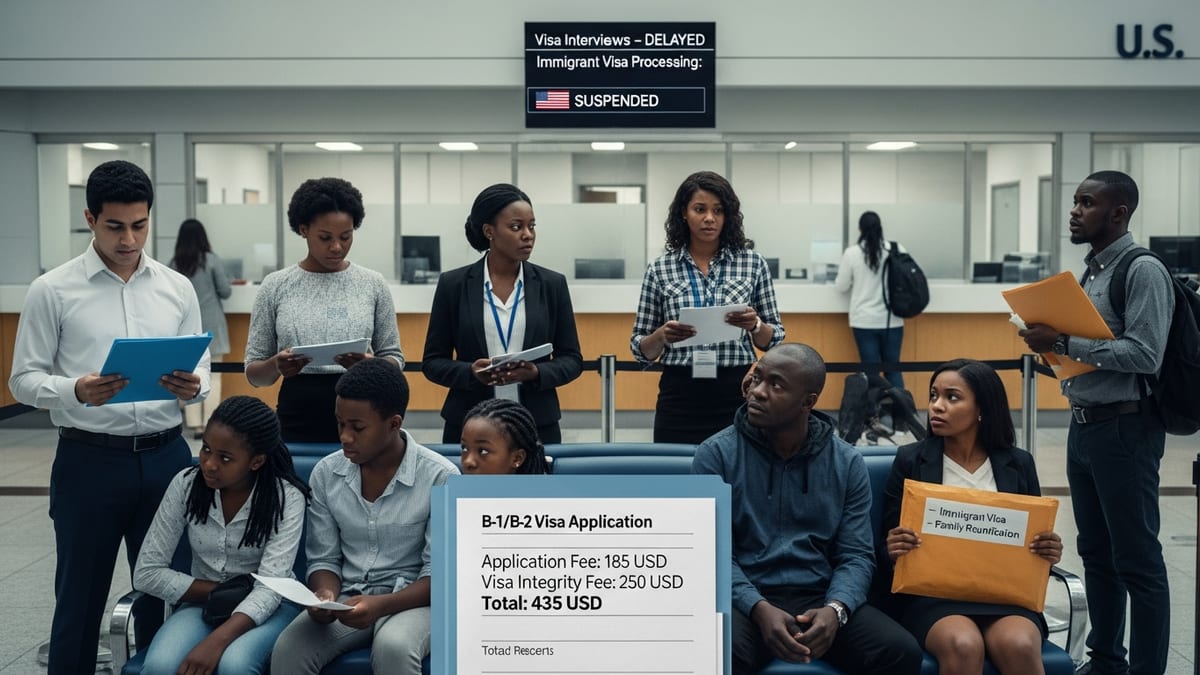
Trump-Era Birth Tourism Rule Back in the Spotlight
The latest update builds on a State Department rule that took effect on January 24, 2020, during Donald Trump’s previous term in office. That regulation amended the B nonimmigrant visa rules to state that travel where the primary purpose is to give birth in the United States in order to obtain citizenship for a child is not a permissible basis for issuing a B-1/B-2 visa. Publicly available regulatory documents explain that consular officers are instructed to treat suspected birth tourism as outside the scope of ordinary tourism or business travel.
Guidance in the State Department’s Foreign Affairs Manual further describes how consular officers should examine applications where the traveler indicates that childbirth or late-stage pregnancy is part of the itinerary. The burden falls on the applicant to show that the main purpose of the trip is permissible under the B category, or that specialized medical care for a complicated pregnancy is genuinely required and properly arranged. Those standards, first articulated under the 2020 rule, remain the reference point for current screening practices.
Legal and policy analyses indicate that the Trump administration framed the rule as a national security and public charge measure aimed at what it described as “criminal birth tourism rings” and misuse of public resources. Commentaries also note, however, that there is no routine requirement for pregnancy testing, and that consular officers are not directed to ask all women of childbearing age about pregnancy, but instead to focus on stated travel purposes and supporting documentation.
Stricter Screening and What Travelers Can Expect
For travelers, the tightening of B-1/B-2 policy is most apparent in more detailed questioning and document checks at the visa application stage. Consular posts are expected to scrutinize itineraries that suggest extended stays near major medical hubs, late-term travel, or previous patterns associated with birth tourism agencies. Applicants may be asked to clarify medical arrangements, demonstrate the ability to pay for childbirth services in full, and show compelling ties that indicate they will depart after a temporary stay.
Immigration law specialists note that the rule distinguishes between birth tourism and legitimate medical travel. An applicant seeking high-risk maternity care, for example, can still qualify if they show a clear medical need, prearranged treatment, and financial resources. However, the presumption is that seeking U.S. citizenship for a child as the main objective is not compatible with visitor status. That presumption gives consular officers wide discretion, which can create uncertainty for pregnant travelers with mixed purposes such as family visits, business meetings, or tourism that overlaps with a due date.
At ports of entry, U.S. Customs and Border Protection applies separate admissibility rules, but travel experts caution that those arriving visibly pregnant may face additional questions about length of stay, medical insurance and ability to cover hospital costs. Even with a valid visa, travelers can be refused entry if the inspecting officer determines that the primary purpose of the trip conflicts with the visitor category.
Regional Context: Shared Birthright Citizenship and Rising Scrutiny
The renewed U.S. focus on birth tourism comes as other countries in the Americas grapple with similar issues. Publicly available research on global citizenship laws highlights that only a relatively small group of countries still offers nearly unconditional birthright citizenship, including the United States, Canada, Mexico, Brazil and Argentina. Chile maintains a broad version of jus soli with limited exceptions. This shared legal framework has, over time, made the region attractive for parents seeking a future migration or mobility advantage for their children.
In Canada, government evaluations and media reporting have documented pockets of birth tourism concentrated in major urban hospitals, prompting calls from some local officials to tighten rules or impose additional charges on nonresident mothers. Federal authorities have so far resisted large structural changes, emphasizing that the overall share of nonresident births remains small compared with total deliveries, but there is sustained political debate over whether the system is being exploited.
Argentina and Brazil, which also grant citizenship based primarily on birthplace, have reported isolated concerns about organized birth tourism, especially involving foreign nationals seeking easier access to South American passports and, in some cases, simplified pathways to third-country visas. Chile has seen attention around its own role in regional mobility, given that Chilean citizenship can open doors to relatively favorable visa policies in parts of North America and Europe. While these countries have not adopted U.S.-style visitor visa rules that explicitly reference birth tourism, public discussions have grown sharper as governments reassess migration frameworks.
Criminal Cases and Enforcement Against Birth Tourism Networks
The policy tightening in the United States is part of a broader enforcement campaign targeting commercial birth tourism operations. Court records and Justice Department releases describe prosecutions in California, New York and other states involving companies that marketed packages to foreign clients, often from China or Turkey, promising U.S. passports for newborns in exchange for substantial fees. These schemes frequently relied on coaching clients to misrepresent their travel purpose on visa applications and to hide pregnancies at the consular interview and during travel.
Charges in these cases have included visa fraud, conspiracy, money laundering and health care fraud, especially where hospital bills went unpaid or public programs were improperly billed. Sentencing documents show that organizers have received prison terms and orders to pay restitution, while some clients have faced immigration consequences or future visa ineligibilities. The 2020 B-1/B-2 rule, and its continued use today, effectively codifies the government’s view that such arrangements are fundamentally incompatible with temporary visitor status.
Travel-industry observers note that these enforcement actions have had a chilling effect beyond the organized birth tourism sector. Some maternity clinics that previously advertised to international clients have narrowed or abandoned such services in response to higher legal risks and reputational concerns. Airlines and travel agencies, particularly those operating in markets once associated with birth tourism, have also become more cautious in advertising packages that might be interpreted as promoting the practice.
What the Changes Mean for Legitimate Travelers
For ordinary tourists and business visitors, the core eligibility requirements for B-1/B-2 visas remain the same: applicants must show that they intend a temporary stay, that the visit fits within approved purposes such as tourism, family visits or meetings, and that they have sufficient funds and strong ties abroad. The additional layer is a more explicit evaluation of whether childbirth and the acquisition of a child’s U.S. citizenship are a primary motive.
Prospective travelers who are pregnant or planning a pregnancy are advised by immigration commentators to be especially transparent and prepared. That can mean carrying documentation of medical insurance, return travel plans, and any specialist care arrangements that explain the timing of the trip. Public guidance emphasizes that misrepresentation on the visa application or at the border can lead to long-term bans, even when the underlying activity, such as tourism or private medical care, might otherwise have been permissible.
For now, the United States stands out as the only country in the region with a visitor visa regulation that directly addresses birth tourism at the consular stage, but the broader conversation around birthright citizenship and maternity travel is intensifying across the Americas. As Washington continues to refine its approach under President Donald Trump, travelers to the United States and neighboring countries can expect closer scrutiny of long stays linked to childbirth and more active debate over how far governments should go in curbing the practice.