


More news on this day
Major US airports in Atlanta, San Diego and Miami experienced scattered delays and congestion on September 12, as a mix of heavy traffic volumes and localized weather added fresh strain to late summer air travel.
Get the latest news straight to your inbox!
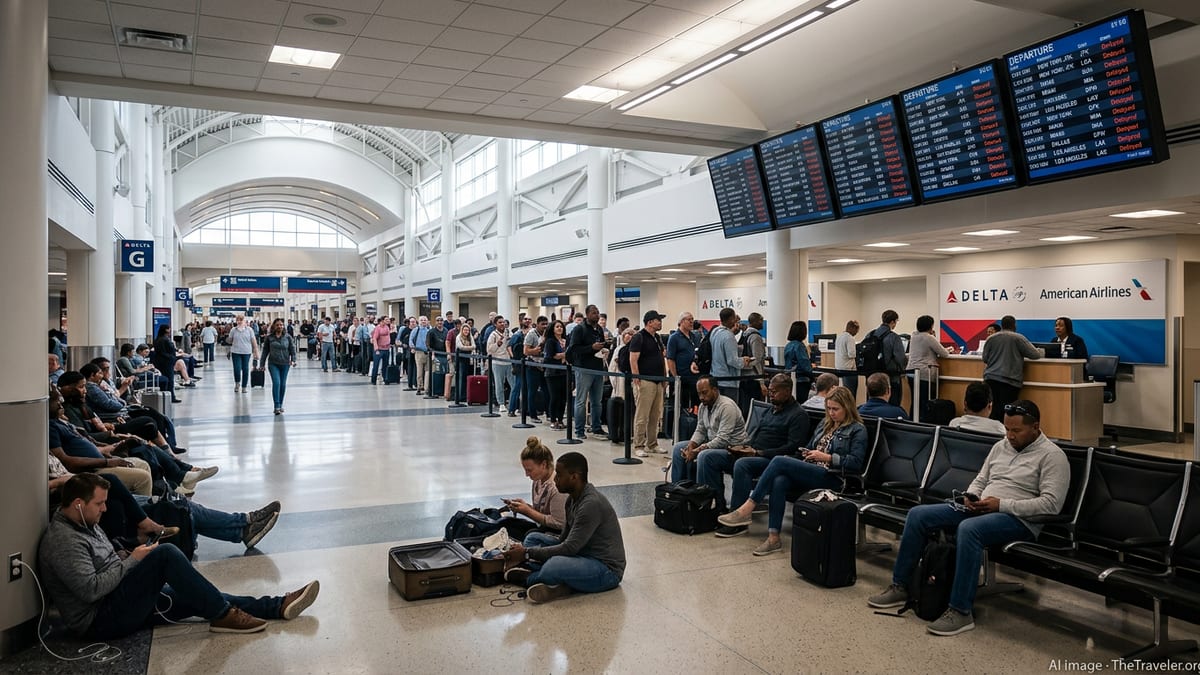
Traffic Bottlenecks Intensify at Atlanta Hub
At Hartsfield Jackson Atlanta International Airport, one of the world’s busiest hubs, publicly available tracking data for September 12 showed a high volume of arriving and departing flights, with knock on effects for punctuality across multiple domestic routes. Schedules remained dense through the evening peak, increasing the risk that minor operational hiccups could ripple across the network.
Online flight boards indicated that many services were operating close to schedule, but with periodic pockets of delay on key domestic corridors, including routes linking Atlanta with major Florida and West Coast cities. The pressure came as airlines continued to run near full late summer schedules, with limited spare capacity to absorb disruptions.
Operational reference material for the airport highlighted ongoing complexity in airfield movements, with busy runway use and intricate taxi patterns that can slow ground handling when traffic is sustained at high levels. While no single outage dominated the day, the cumulative effect of heavy demand and tight turnarounds contributed to longer than usual waits for some passengers.
Travel analysts note that Atlanta’s central role in national connectivity means even modest slowdowns can quickly affect large numbers of travelers, particularly on Saturdays when leisure traffic remains elevated and connecting flows remain robust.
San Diego Faces Weather and Volume Related Delays
San Diego International Airport experienced measurable departure delays on September 12 as traffic volume built through the afternoon and evening. Airport wide monitoring services reported average departure hold times in the range of roughly 15 to 30 minutes, with indications that delays were trending longer as demand peaked.
Regional meteorological guidance for Southern California referenced typical late summer heat and localized coastal influences, conditions that can contribute to airspace congestion when combined with busy weekend schedules. While most individual flights still departed and arrived the same day, the combination of tight turn times and short ground windows left limited room to recover from minor slowdowns.
Individual long haul and transcontinental services into San Diego continued to operate, but with schedules occasionally adjusted by several minutes to accommodate flow control. Some passengers reported longer waits at gates and on taxiways as aircraft queued for takeoff during the busiest periods.
Despite the disruptions, the airport remained operational, with no indication of a full ground stop. However, the creeping departure delays underscored how quickly conditions at a single runway coastal airport can shift when airline schedules are near capacity.
Miami Operations Strained but Largely Maintained
At Miami International Airport, published flight performance data for September 12 pointed to selective delays rather than widespread cancellations. Some morning and evening services showed minor shifts to scheduled arrival or departure times, including adjustments of several minutes on certain domestic routes.
Historical scheduling information for Miami routes on this date showed that carriers largely preserved their planned frequencies, even as the broader US system contended with congestion. Individual flights recorded modest departure or arrival delays, typical of a high traffic international hub navigating variable weather and busy airspace over the Southeast.
Background reports on Miami’s traffic patterns indicate that the airport has been managing evolving fleet and capacity constraints among several US carriers in recent years, a factor that can limit flexibility when trying to re route or upsize aircraft during disruption days. With some airlines operating leaner fleets, the margin for last minute recovery swaps or additional sections remains narrow.
On September 12, that constrained flexibility translated into a pattern of localized delays rather than large scale schedule cuts. For travelers, the practical impact was longer waits on the ground, tight or missed connections in some cases, and a heightened need to monitor day of travel updates.
Knock On Effects Across the National Network
The combined operational strain at Atlanta, San Diego and Miami contributed to a broader sense of instability across the US flight network on September 12. As three important hubs and gateways, delays at these airports can propagate to secondary cities through missed connections, aircraft rotations, and crew scheduling challenges.
Publicly accessible tracking platforms showed that several flights touching these airports operated behind schedule, with delay durations varying throughout the day. In many cases, aircraft arriving late into a hub subsequently departed late on outbound legs, reinforcing the ripple effect.
Industry observers highlight that the present environment of sustained demand, constrained fleets and ongoing staffing challenges leaves airlines more exposed when multiple key airports face concurrent pressure. Even in the absence of a single headline making disruption such as a nationwide outage, the aggregate effect of small delays across several hubs can create a day of difficult travel for many passengers.
Travelers connecting through Atlanta, San Diego or Miami on September 12 who encountered longer than expected journeys were likely experiencing the cumulative outcome of these interacting factors, rather than a single identifiable incident or failure.
What Travelers Can Expect in the Coming Days
Looking beyond September 12, aviation forecasters and airport planners expect late summer and early autumn traffic to remain strong, sustaining pressure on major US hubs. With schedules tightly packed and spare aircraft capacity limited, conditions similar to those seen at Atlanta, San Diego and Miami can recur quickly when minor weather or airspace constraints emerge.
Passenger advocates recommend that travelers build additional buffer time into itineraries involving tight connections through these airports, particularly on weekend and peak season travel dates. Monitoring real time flight status tools and airport specific operational notices can also help travelers respond more quickly to emerging disruptions.
Airlines are expected to continue fine tuning schedules and turn times as they adjust to evolving fleet availability and regional weather patterns. However, observers caution that systemic challenges in aircraft supply and staffing are unlikely to resolve immediately, meaning days of scattered delays similar to September 12 may remain a recurring feature of US air travel.
For now, the experience of travelers moving through Atlanta, San Diego and Miami on September 12 illustrates how even modest disruptions at several key nodes can combine into a wider sense of flight chaos across the national network, despite the absence of a single catastrophic event.