


More news on this day
The United States has updated its travel advisory for China as Typhoon Dolphin approaches the eastern coast, disrupting trips to Shanghai and neighboring Zhejiang province and prompting travelers to reassess plans at the height of the summer holiday period.
Get the latest news straight to your inbox!
Revised US Guidance Highlights Weather and Transport Disruptions
Publicly available US government information now urges travelers to eastern China to closely monitor Typhoon Dolphin, with specific reference to potential disruption in major hubs such as Shanghai and coastal areas of Zhejiang. The advisory highlights the likelihood of significant delays and cancellations across air, rail and sea networks as the storm nears landfall in the East China Sea.
Reports indicate that the updated guidance does not bar travel outright but advises US citizens to reconsider nonessential trips into the projected impact zone over the coming days. Travelers already in affected areas are being encouraged in public advisories to follow local safety instructions, remain alert to changing forecasts and maintain flexible itineraries.
According to published coverage, similar advisories have been issued during past typhoon seasons when powerful systems moved toward key Chinese coastal cities. In those cases, transportation networks experienced cascading delays even in locations far from the storm’s center, a scenario officials are again anticipating as Dolphin advances.
The advisory also underscores the importance of travel insurance that covers weather related disruptions. Industry briefings note that comprehensive policies can help recover some costs when airlines or cruise operators modify or cancel itineraries because of severe storms.
Shanghai and Zhejiang Brace for Strong Winds and Heavy Rain
Forecast models tracked by regional meteorological centers show Typhoon Dolphin moving toward the Yangtze River Delta, with Shanghai and parts of Zhejiang expected to see strong winds, storm surge and intense rainfall. Recent satellite analysis described fluctuating but still powerful convective bands as the system crosses the East China Sea.
Local bulletins from Chinese provincial and city level governments, summarized in international media, describe preparations that include temporary closures of schools, attractions and some coastal tourist sites. In Shanghai, low lying districts along the estuary are on alert for potential flooding, while Zhejiang’s popular coastal cities are preparing for rough seas and port disruptions.
Comparisons are being drawn in regional coverage to earlier storms that affected the same corridor, when precautionary port closures and the suspension of ferry routes significantly limited movement between coastal islands and the mainland. While each system behaves differently, analysts suggest that even a slight shift in Dolphin’s track could sharply change conditions in both Shanghai and Zhejiang.
Travel specialists focusing on East Asia note that the broader region remains operational, but emphasize that the Shanghai area serves as a critical aviation and logistics gateway. Any extended shutdowns of runways or rail lines there could reverberate across domestic routes and connecting services throughout China.
Flight Cancellations, Waivers and Cruise Itinerary Changes
Airlines serving Shanghai Pudong and nearby airports have started to issue weather related waivers, allowing passengers bound for the city over the weekend and early next week to change their plans without standard penalties. Notices posted by major international carriers indicate flexibility for tickets covering travel dates that coincide with the storm’s closest approach.
Travel forums and airline customer updates describe a pattern of rolling cancellations focused on periods when crosswinds and low visibility are expected to be most severe. Aviation analysts point out that even when runways remain technically open, air traffic control may impose flow restrictions that slow arrivals and departures and create knock on delays for onward connections.
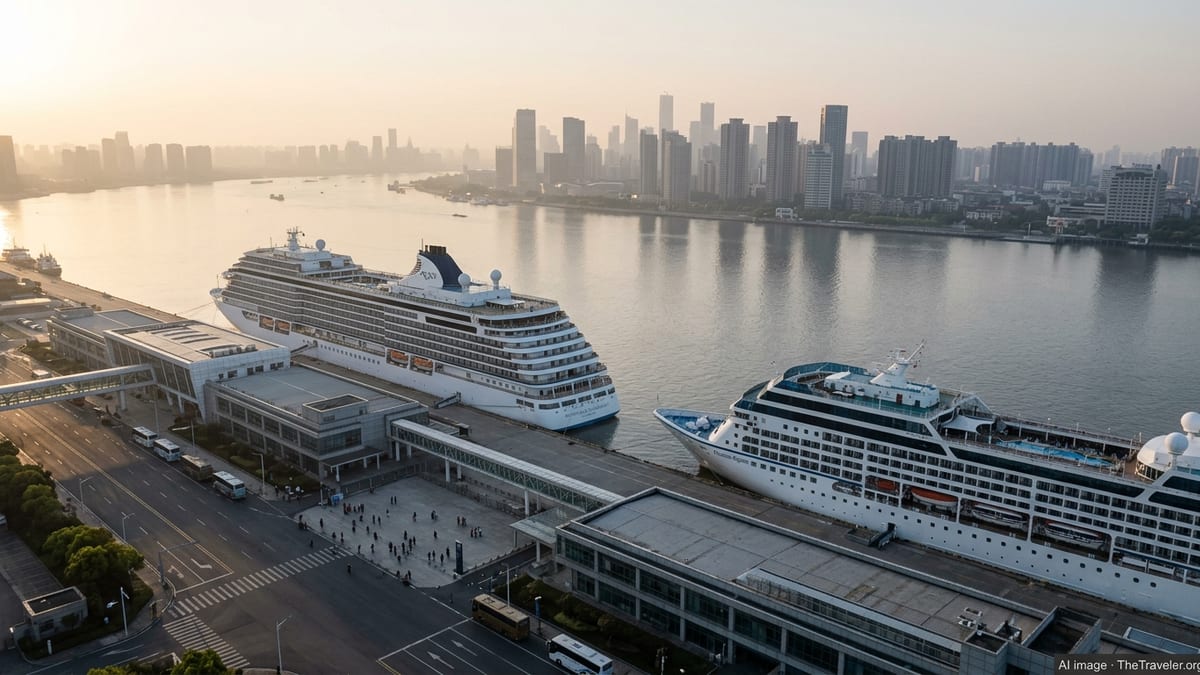
Cruise lines operating out of Shanghai’s cruise terminals and nearby ports in Zhejiang are also adjusting itineraries. Industry updates describe ships delaying departures, rerouting to avoid the projected path of the storm or extending stays in alternative ports. Passengers are being advised via public channels to check for schedule changes before heading to embarkation points.
Rail services, particularly high speed lines linking Shanghai with Hangzhou, Ningbo and other Zhejiang destinations, are preparing for possible speed reductions or suspensions during the most intense phases of the storm. Past typhoons affecting the region have led to the temporary closure of selected routes when heavy rain threatened track stability.
Tourist Attractions Scale Back Operations Amid Safety Concerns
Major tourist attractions in Shanghai and Zhejiang are adjusting operations in anticipation of Typhoon Dolphin. Public statements from theme parks and cultural sites, summarized in local media and shared by visitors online, outline shortened opening hours, the temporary closure of outdoor rides and the suspension of large outdoor events.
In Shanghai, popular waterfront areas and observation decks are limiting access when strong gusts and driving rain are forecast. Visitor advisories emphasize the risk of falling debris and slippery surfaces in densely built urban districts, particularly around high rise commercial zones and older neighborhoods with less robust drainage.
Resort areas along the Zhejiang coast are likewise warning of dangerous surf and advising against swimming or water sports until conditions stabilize. Travel industry observers note that some seaside hotels have encouraged guests to stay indoors during peak storm periods and prepared backup power and supplies in case of localized outages.
While many indoor museums, galleries and shopping centers intend to remain open where conditions allow, operators caution that staff availability and transport conditions could change quickly. Travelers are being encouraged to confirm opening hours on the day of their visit and to prioritize personal safety over nonessential sightseeing.
Advice for Travelers With Imminent Plans to Eastern China
Travel organizations recommend that US visitors with imminent trips to Shanghai, Hangzhou, Ningbo and other eastern China destinations review airline, hotel and tour operator policies as Typhoon Dolphin approaches. Flexible ticket options and weather related waivers may enable changes without substantial financial loss, particularly for those who can postpone journeys by a few days.
Specialists in risk management for international travel advise building extra time into itineraries that rely on a Shanghai connection, since missed links caused by weather delays can quickly cascade. They also suggest carrying essential medications, basic snacks and portable chargers in hand luggage in case extended waits occur at airports or rail stations.
Published guidance from consular and emergency management agencies stresses the value of registering contact details with relevant national traveler enrollment systems before departure. Doing so can make it easier to receive targeted safety updates or emergency messages if conditions deteriorate more than forecast.
For those already on the ground, meteorological services and regional media remain the primary sources for near real time information on Dolphin’s track. Observers note that typhoons can weaken, stall or accelerate unexpectedly, reinforcing the need for travelers to monitor updates frequently and adjust their plans as new data emerges.