


More news on this day
Air travelers across the United States are facing fresh disruption today as major carriers including American, Delta, United, Southwest and Frontier report dozens of cancellations and rolling delays at key hubs from Atlanta and New York to Las Vegas, impacting some of the country’s busiest leisure routes to Orlando, Miami, Los Angeles, San Francisco, Boston and Phoenix.
Get the latest news straight to your inbox!
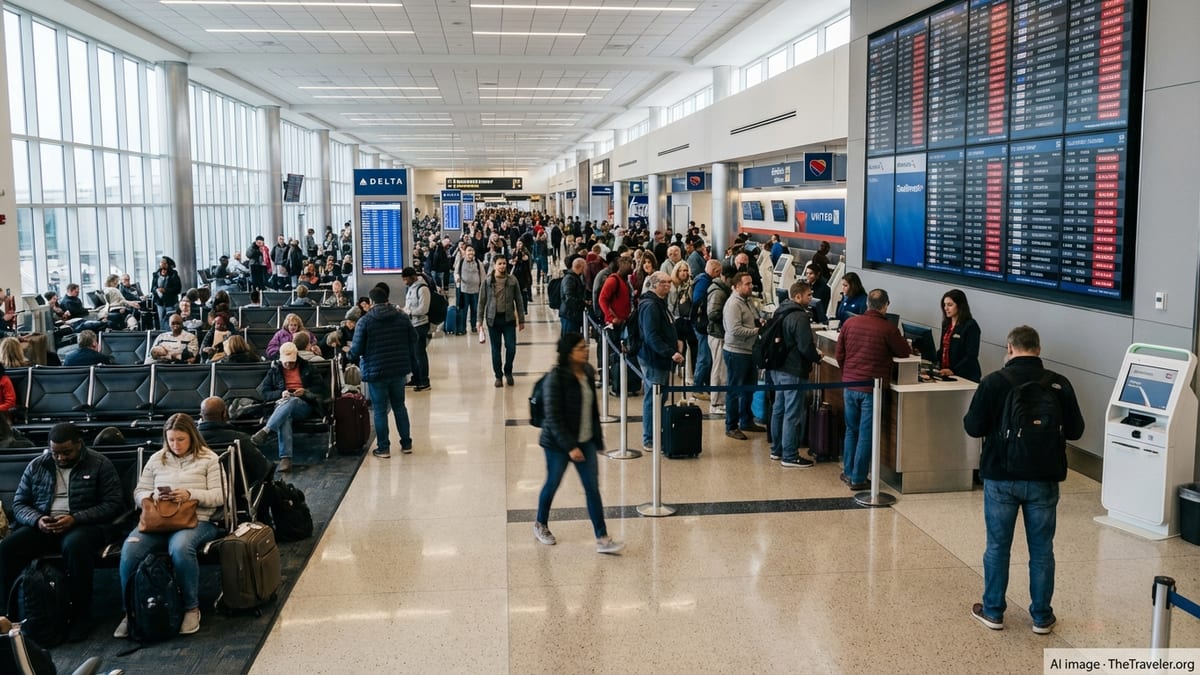
Fresh Operational Strains Hit Major US Hubs
Publicly available tracking data for Monday, May 11, indicates that more than 80 flights have been canceled nationwide by a mix of full service and low cost carriers, with many more departures and arrivals posting significant delays. While the figure is a fraction of the thousands of daily departures across the system, the concentration of problems at a handful of large hubs is magnifying the impact for travelers making connections on popular coast to coast and sun destination routes.
Atlanta, New York’s John F. Kennedy International Airport and Las Vegas are among the locations seeing clusters of schedule changes, according to multiple airport and flight status dashboards. That disruption is spilling onto services bound for Orlando and Miami in Florida, as well as long haul domestic routes into Los Angeles, San Francisco, Boston and Phoenix, where aircraft and crews depend on on-time departures from earlier segments.
Industry observers note that the current wave of disruptions follows a spring period marked by weather volatility, tight airline staffing and continued high demand for domestic leisure travel. Even when the absolute number of cancellations remains relatively limited, the knock-on effects from one hub to another can ripple across the network throughout the day.
Weather, Congestion and Tight Schedules Create a Fragile Network
Recent operational advisories have highlighted how quickly conditions can deteriorate when storms and low clouds converge on major coastal and inland hubs. A Federal Aviation Administration planning notice in late April flagged the use of ground-delay programs in San Francisco and warned of possible ground stops in Atlanta and New York due to low ceilings, thunderstorms and high winds, underscoring how sensitive large, complex airspace regions have become during peak travel periods.
Those same regions host some of the busiest connections in the country, linking major business centers and vacation gateways. Orlando International Airport, for example, lists multiple daily departures to Atlanta, New York JFK, Phoenix, Los Angeles, Boston and other domestic hubs operated by Delta, American, United, Frontier and several additional carriers, according to live departure boards. When weather or congestion slows traffic into a single hub, aircraft arriving from or departing to Orlando and similar leisure markets can be pushed off schedule for much of the day.
A similar pattern is visible in South Florida. Real-time boards at Miami International Airport routinely show dense banks of operations across American and other airlines on routes to New York, Boston, Atlanta, Dallas, Los Angeles and Chicago. Even a small cluster of cancellations on those corridors can force passengers onto already crowded later flights, compounding delays as airlines work to re-accommodate disrupted travelers.
Passengers to Orlando, Miami and the West Coast Feel the Impact
The current bout of cancellations has been particularly disruptive for travelers heading to and from key leisure destinations. In Orlando, flight status displays and third-party trackers show a steady stream of traffic from hubs in the Northeast, Midwest and West, including services to and from Atlanta, New York JFK, Phoenix, Denver, Los Angeles and Boston. When incoming aircraft are delayed or taken out of service, return legs from Orlando are often among the first to see revised departure times.
West Coast gateways are also affected. San Francisco and Los Angeles rely on tightly timed morning and evening banks of transcontinental flights from New York, Boston, Miami and Atlanta. Any disruption early in the day can cascade into missed connections for travelers continuing on to secondary markets such as Phoenix or additional international destinations. With many planes flying near full, reaccommodating disrupted customers can require significant juggling across multiple flights and airlines.
For families heading to Florida theme parks or cruise departures, the timing of these cancellations can be especially challenging, given the prevalence of same-day connections into Orlando and Miami from smaller regional airports. Even when a particular flight shows on time, travelers may encounter last-minute gate changes or aircraft swaps if incoming sectors are delayed.
What Today’s Disruptions Mean for Summer Travel
While today’s cancellation tally remains well below the levels seen during major holiday meltdowns in recent years, the episode is being viewed by analysts as a reminder of how little slack remains in the US aviation system heading into the busy summer season. Airlines continue to operate aggressive schedules using fleets and crews that are still rebuilding after the pandemic-era downturn and subsequent staffing shortages.
Publicly available aviation briefings suggest that spring and early summer will continue to bring bouts of severe weather to major hubs along both coasts and in the central United States. That forecast, combined with sustained high passenger volumes, raises the risk that relatively minor operational issues could again spread quickly across networks, especially when they strike during peak morning or evening departure waves.
Travel planners point out that hubs like Atlanta, Orlando, Miami, Las Vegas, Los Angeles, San Francisco, Boston and Phoenix sit at the intersections of some of the country’s most heavily traveled domestic corridors. The disruptions seen today highlight how closely tied those markets are, with a storm or scheduling issue in one city quickly leading to missed connections or cancellations hundreds or thousands of miles away.
Airlines Urge Close Monitoring as Schedules Evolve
According to published coverage and live airport dashboards, airlines are continuing to adjust schedules throughout the day as weather, airspace constraints and resource availability evolve. Some carriers are proactively combining lightly booked flights, rerouting aircraft or adding larger jets on select routes in an effort to absorb displaced travelers without resorting to further cancellations.
Travel industry guidance emphasizes the importance of monitoring flight status frequently on the day of travel, especially for passengers connecting through hubs currently experiencing congestion. With connections through cities like Atlanta, JFK or Las Vegas linking to popular destinations including Orlando, Miami, Los Angeles, San Francisco, Boston and Phoenix, even modest delays at departure can make a difference in whether travelers make their onward flights.
As today’s disruptions unfold, the broader picture suggests a domestic air travel system operating close to capacity, where pockets of bad weather, air traffic flow initiatives or equipment issues can quickly translate into cancellations across multiple airlines. For passengers, that reality means building in extra time, considering earlier departures where possible and remaining prepared for rapid changes to itineraries as airlines work to keep complex networks moving.