

Hawaii may be part of the United States, but using your credit card here still deserves some planning. From resort fees and rental car holds to maximizing travel rewards on everyday island spending, understanding how credit cards work in Hawaii can help you cut costs and earn valuable points while avoiding surprise charges on your statement.
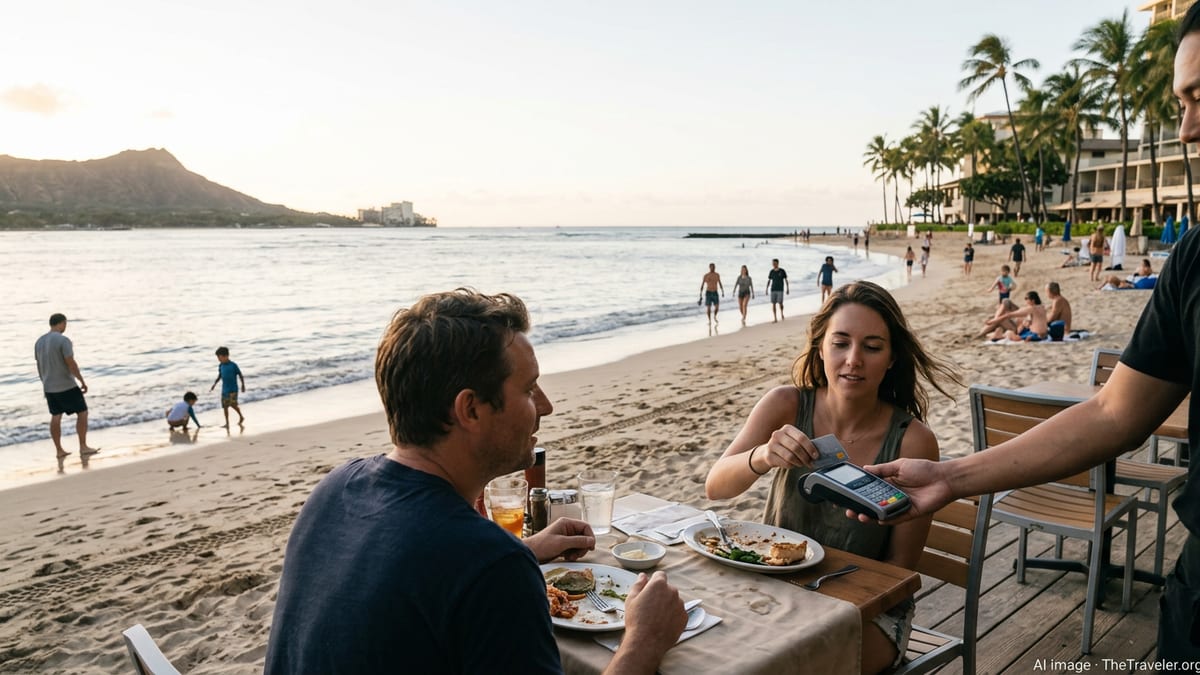
Do You Need a Credit Card in Hawaii
Hawaii is highly card friendly and most visitors will find that a credit card is the most convenient way to pay. Hotels, major attractions, rental car counters, and sit down restaurants overwhelmingly expect card payments, and some high end properties strongly prefer a card to secure reservations and cover incidentals. While you can travel with only a debit card or cash, you may encounter more deposits, higher security holds, or additional paperwork.
Using a credit card instead of a debit card in Hawaii also offers stronger protections in many cases. Credit cards typically provide more robust dispute rights for fraudulent or incorrect charges, and many issuers extend purchase protection and trip delay coverage when you use the card to pay. That can be especially useful if flights are disrupted between islands or weather forces last minute changes to your plans.
Cash still has a place, especially on smaller islands and in rural areas where farmers markets, food trucks, and small craft vendors may be cash only or impose minimums for card payments. Carrying a modest cash cushion can help in those cases. Still, for most travelers, a primary credit card plus a backup card is the smoothest way to navigate payments throughout the islands.
Because Hawaii uses U.S. dollars, you do not face traditional foreign transaction fees, but that does not mean all fees disappear. Resorts can add mandatory nightly charges, parking can be costly, and dynamic currency style conversion sometimes shows up when booking through offshore platforms. Treat Hawaii like any other major U.S. destination and review every charge closely before you sign.
Reward Earning Opportunities on Island Spending
Hawaii can be an excellent place to rack up credit card rewards if you align your spending with bonus categories. Travel credit cards that offer extra points or miles on airfare and hotels will pay off as soon as you book flights to Honolulu or Maui and secure your lodging. Many premium cards also recognize major U.S. airlines and hotel brands as travel merchants, so tickets and room charges often earn elevated rewards.
Once you land, dining and grocery bonuses come into play. Hawaii is famous for its food trucks, plate lunches, and shaved ice stands, and many of these operate as standard dining merchants. Cards that offer bonus rewards on restaurants often recognize everything from sit down seafood dinners to casual poke spots, so a large portion of your food spending may earn more than the usual base rate. Likewise, grocery stores and big box markets where you stock up on snacks and sunscreen can trigger supermarket or general travel categories, depending on how your issuer codes them.
Transportation is another major rewards category. Charging your rental car, rideshare trips, inter island flights, and airport parking to a card that earns extra points on travel can add up over a week or two. If you book excursions, such as catamaran sails, guided hikes, or snorkel tours, they may code as travel or entertainment and bring in additional rewards. Because merchant coding varies, it is wise to check your statements after the first few days to see how different businesses are categorized for rewards purposes.
To keep rewards simple, many travelers assign one main card for travel and dining and a backup card for everything else. If you layer this with a hotel or airline co branded card for your main carrier or preferred chain, you can earn both base loyalty points and bonus card rewards on the same purchase, which is particularly valuable on resort stays and longer vacations.
Avoiding Surprise Fees at Hotels and Resorts
One of the biggest frustrations for travelers in Hawaii is discovering unexpected fees at checkout. Many hotels and resorts, particularly on Oahu, Maui, and the Big Island, impose daily resort charges that are not always obvious at booking. These fees can cover amenities like Wi Fi, pool access, or beach chairs, and they are usually mandatory even if you do not use the benefits.
When you reserve a room with your credit card, read the fine print carefully for resort fees, parking charges, and taxes that might not appear until the final booking screen. In some cases, the nightly rate looks attractive until these add ons are included, which significantly increases the total amount that will be charged to your card. If the listing is unclear, contact the property and ask for a full estimate, including all mandatory fees, before committing.
Hotels in Hawaii commonly place a hold on your credit card for incidentals such as room service, spa treatments, or in room purchases. The hold can range from a modest nightly amount to a sizable buffer, particularly at luxury resorts. Although the hold is not an actual charge, it does temporarily reduce your available credit line. If you are working with a smaller limit, this can affect your ability to use the card elsewhere on the trip.
To avoid issues, bring a card with a comfortable credit limit for lodging and keep a second card available for daily spending. At check in, ask the front desk how large the incidental hold will be and how long it typically takes to release after checkout. Monitor your account online to confirm that pending authorizations drop off within a reasonable time frame.
Using Credit Cards for Rental Cars, Tours, and Activities
Transportation and activities in Hawaii often rely heavily on credit cards. Rental car companies typically require a major credit card in the driver’s name to pick up the vehicle. Debit cards are sometimes allowed but can trigger extra documentation, credit checks, or larger deposits. Using a credit card usually streamlines the process and may activate built in rental car coverage on many travel cards, though the level of protection varies.
When you reserve a vehicle, pay attention to the security hold amount the agency will place on your card. In Hawaii, daily rates can be high during peak travel seasons, and the hold will reflect not only the rental cost but also taxes and potential surcharges. A large security hold can temporarily tie up part of your credit limit, which is another reason to keep a dedicated card for larger travel expenses.
Tours and activities frequently accept credit cards at the time of booking or check in. Boat excursions, helicopter flights, zipline experiences, and guided cultural tours often process payments as travel or entertainment transactions. Some smaller operators may prefer cash or require a deposit on a card with the balance due in cash at the activity site. Confirm payment methods and refund policies before you authorize a charge to ensure you can recover funds if weather or operational issues force a cancellation.
Always verify tipping and service charge practices when paying for tours and excursions with a credit card. Some providers automatically add a gratuity to card payments, while others leave the tip line open. Clarifying this prevents unintentional double tipping and avoids confusion when you review your statement after returning home.
Foreign Transaction Fees and Dynamic Currency Confusion
Because Hawaii is part of the United States and uses the dollar as its currency, you will not incur foreign transaction fees on standard purchases within the islands. However, some credit cards still apply foreign transaction fees when transactions are processed through non U.S. based payment platforms, which can occasionally occur when you book lodging or tours through international websites before your trip.
If you are reserving a vacation rental, tour, or flight through an overseas operator, review your card’s foreign transaction policy. Cards that charge a percentage fee on foreign purchases can add a noticeable cost when you convert a large reservation amount. Using a card that waives foreign transaction fees for any globally processed payment can be a safer choice when you are unsure where a vendor is located or how it will route the charge.
Dynamic currency conversion can also create confusion, even though it is more common abroad than in Hawaii itself. Some international booking sites may offer to bill you in your home currency rather than in U.S. dollars, sometimes at a marked up exchange rate. For visitors to Hawaii from outside the United States, allowing the card network to handle currency conversion rather than an intermediary can be cheaper, especially with a card that has no foreign transaction fee.
As a U.S. based traveler in Hawaii, focus instead on avoiding unnecessary add ons such as optional insurance you do not need or premium processing charges for online bookings. Check the final confirmation screen or receipt for fees labeled as conversion, premium, or international handling and decline any that do not make sense for a transaction taking place in U.S. dollars.
Security, Fraud Prevention, and When to Use Cash
Hawaii is generally safe for card use, but standard precautions still apply. Use credit cards instead of debit cards at gas pumps, unattended kiosks, and busy tourist areas to benefit from stronger fraud protections and to shield your bank account from direct access. Many travelers prefer contactless payments where available, as tap to pay reduces the need to insert or swipe cards in readers that could be compromised.
Before departure, let your card issuer know that you will be traveling to Hawaii, especially if you rarely use the card outside your home region. While many banks have sophisticated fraud systems that recognize Hawaii as a common destination, a sudden spike in out of state transactions can still trigger security alerts. Adding a travel note to your account or enabling real time transaction alerts can minimize the chance of declined charges at inconvenient moments.
Cash remains useful in certain situations, particularly in remote areas, small roadside stands, and tips. Some independent vendors accept only cash or impose minimum purchase amounts for card use. Carrying a modest but sufficient amount of cash lets you support local artisans and food stalls that may not find card processing practical. At the same time, avoid carrying large sums that could be lost or stolen, and use hotel safes when storing extra cash.
If you need to withdraw cash during your trip, use ATMs affiliated with recognized banks and stick to machines located inside branches or major hotels. Using your credit card for a cash advance is generally costly because interest begins accruing immediately and fees are often high. A debit card linked to a checking account is typically the better option for ATM withdrawals, reserved for times when you cannot plan ahead to bring enough cash.
The Takeaway
Using credit cards in Hawaii is straightforward and often the most efficient way to manage your travel budget, but it works best when you plan ahead. Understanding how hotels, rental car agencies, and tour operators process card payments helps you avoid unexpected holds and last minute surprises. Matching your major spending categories with the right rewards cards can turn your vacation expenses into future flights or hotel nights, stretching your travel dollars further.
At the same time, staying alert to add on fees, dynamic currency style charges through offshore platforms, and optional services you may not need will keep your statement from ballooning after you return home. Using credit cards for most purchases, supplemented by a modest cash cushion, strikes a practical balance between convenience, security, and local flexibility.
With a bit of preparation, your wallet can work quietly in the background while you focus on the real reason for visiting Hawaii: enjoying the beaches, mountains, and cultural experiences that make the islands such a compelling destination.
FAQ
Q1. Do I need to carry cash in Hawaii if I have a credit card
It is wise to carry some cash for small vendors, farmers markets, and remote areas where card acceptance is limited or minimum purchase amounts apply.
Q2. Are there foreign transaction fees when using a credit card in Hawaii
Hawaii uses U.S. dollars, so standard in person purchases do not incur foreign transaction fees, though international booking platforms might for some cards.
Q3. Will my hotel in Hawaii put a hold on my credit card
Most hotels place an incidental hold for potential charges such as dining or spa services, which temporarily reduces your available credit until it is released.
Q4. Is it better to use a credit card or debit card for a rental car
A credit card is usually better because it often simplifies the rental process, may provide additional coverage, and keeps your bank account more protected.
Q5. Can I earn extra travel rewards on my spending in Hawaii
Yes. Many travel credit cards offer bonus rewards on categories such as airfare, hotels, dining, and transportation that are common expenses on a Hawaii trip.
Q6. Are contactless payments widely accepted in Hawaii
Contactless payments are increasingly accepted at major hotels, restaurants, and shops, though smaller vendors may still rely on traditional card readers or cash.
Q7. Should I tell my bank I am traveling to Hawaii
Notifying your bank or enabling travel alerts is a good idea so that out of state transactions in Hawaii are less likely to trigger fraud holds or declined charges.
Q8. Is it safe to use my credit card at gas stations in Hawaii
Generally yes, but as elsewhere, using a credit card rather than a debit card at pumps offers better fraud protection if a card reader were compromised.
Q9. Can I use my foreign credit card easily in Hawaii
Most major international credit cards work in Hawaii, but choosing one with no foreign transaction fees and wide network acceptance will keep costs lower.
Q10. What should I do if a charge from Hawaii on my statement looks wrong
Contact your card issuer promptly, review receipts, and consider initiating a dispute if the merchant cannot explain or correct the questionable charge.