

More news on this day
A Virgin Australia domestic flight arriving in Melbourne declared an in-flight emergency after a vape-related incident reportedly produced smoke in the cabin, prompting a full emergency response but ultimately highlighting the effectiveness of modern airline safety procedures.
Get the latest news straight to your inbox!
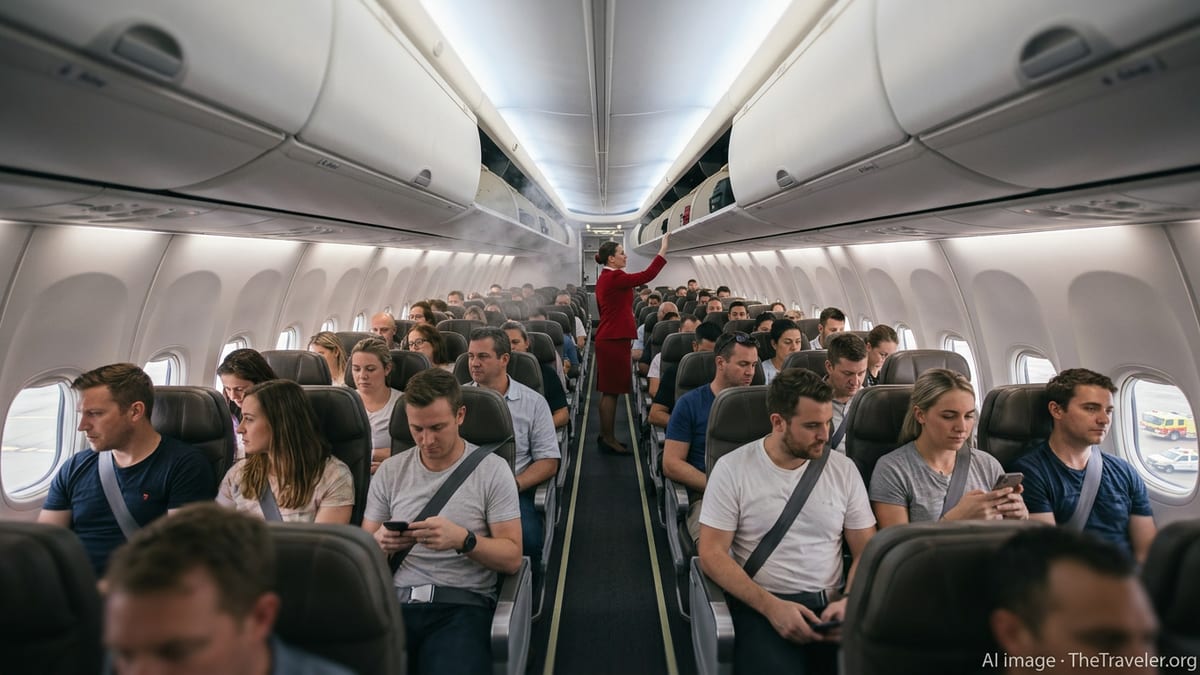
Emergency Declared After Vape Incident on Brisbane–Melbourne Route
Publicly shared accounts and local coverage indicate the incident occurred on a recent Virgin Australia service operating from Brisbane to Melbourne, when a vape reportedly malfunctioned or activated in the cabin. Passengers described seeing smoke and signs of a small fire, which led the flight crew to initiate an emergency response as the aircraft neared its destination.
Reportable details suggest the crew issued a PAN alert, an internationally recognised radio call used to indicate an urgent but not immediately life threatening situation. This type of declaration typically triggers heightened readiness on the ground, including preparations by airport emergency services and prioritised landing clearance from air traffic control.
Despite the alarm, the aircraft continued under control and landed safely in Melbourne. Passengers disembarked via normal procedures, and there were no widespread reports of serious injuries. The episode nonetheless underscored how seemingly minor personal electronic devices can quickly escalate into aviation safety concerns.
Local media and social media posts referencing the flight show that the event drew significant attention at Melbourne Airport, with multiple emergency vehicles positioned on standby. The visible response reflected standard airport planning for any declared in-flight emergency, regardless of whether a situation ultimately proves limited in scope.
Rapid Cabin Crew Response Contained the Risk
Early indications from passenger reports suggest cabin crew moved quickly once smoke or flames were noticed near the source vape device. Standard airline procedures for potential lithium battery incidents require immediate identification of the device, relocation if safe to do so, and use of onboard extinguishing equipment and water to cool the affected area.
In this case, descriptions of the event point to a small, localised fire or thermal incident that was contained before it could spread. The aircraft’s cabin environment, which is tightly controlled and monitored, allows crew members to detect and respond to smoke far faster than would be possible in many other public settings.
Virgin Australia, like many major carriers, has updated its internal guidance on lithium battery management in the past year following several high profile power bank and e-cigarette incidents in Australia and overseas. Those changes have included renewed emphasis on visual checks, passenger briefings about battery devices, and use of specialised fire-containment procedures for electronics in the cabin.
Published safety material from Australian aviation agencies has repeatedly stressed that crew training is one of the most important safeguards when personal devices malfunction in flight. The Virgin Australia incident appears to follow that pattern, with trained personnel intervening before the situation could escalate beyond a confined area of the cabin.
Vapes and Lithium Batteries Under Growing Scrutiny
The Brisbane to Melbourne emergency comes against a backdrop of increased concern about lithium-powered devices on aircraft, including vapes, e-cigarettes and portable chargers. In 2025, a separate Virgin Australia flight from Sydney to Hobart experienced a lithium battery fire in an overhead locker when a power bank entered thermal runaway, filling the cabin with smoke before crew and passengers extinguished the flames with water.
Subsequent reports from Australian aviation safety investigators have pointed to a growing list of incidents globally involving small rechargeable batteries, from laptops and phones to e-cigarettes. While serious outcomes are rare, the rapid heat buildup associated with thermal runaway can pose a significant challenge at altitude, where evacuation is impossible and access to equipment is limited to what is carried on board.
As a result, airlines operating in and out of Australia have progressively tightened guidance on where and how battery powered items can be carried. Vapes and spare lithium batteries are generally required to be kept in the cabin rather than checked baggage so that any smoke or fire can be detected and addressed quickly. Some carriers have also reinforced messaging that such devices must be fully switched off and protected against accidental activation for the entire journey.
Recent travel advisories and trade bulletins show that Virgin Australia has joined other major airlines in reminding passengers to keep high capacity power banks and similar devices within sight, discouraging storage in overhead lockers where early smoke may be harder to notice. The latest vape related event is likely to add weight to calls for even more explicit communication at check in and during safety briefings.
Airport and Airline Protocols Prove Their Strength
The Brisbane flight’s emergency declaration led to a full scale response at Melbourne Airport, with fire and rescue units positioned alongside the runway in anticipation of a potential evacuation. In line with contemporary safety practice, this level of readiness is activated whenever an in-flight emergency call is received, even if the underlying issue is quickly stabilised.
Publicly available information relating to the incident indicates that the aircraft was able to taxi to the gate, and passengers disembarked without the need for slides or other high risk evacuation measures. Ground assessment then focused on confirming the status of the device involved, checking surrounding cabin panels for heat or damage, and verifying that no residual risk remained for subsequent operations.
Aviation safety specialists frequently point out that such events, while unsettling for those on board, can also be interpreted as evidence that layered defences are functioning as designed. Multiple safeguards were visible in the Virgin Australia case: trained crew in the cabin, cockpit decision making that treated smoke as a serious threat, and robust airport emergency planning triggered the moment the PAN call was made.
The outcome fits a broader trend in which most lithium battery and vape incidents on commercial flights are contained without serious injury, thanks to improved procedures and equipment. For travellers, however, the sight of emergency vehicles on the tarmac and the knowledge that a small personal device prompted an in-flight alert serve as a powerful reminder of why airline safety rules around batteries and vapes are enforced.
What Passengers Should Know Before Flying With Vapes
In the wake of the Brisbane–Melbourne emergency, aviation safety information distributed in Australia points to several practical steps passengers can take to reduce the risk of similar incidents. These include storing vapes and spare batteries in a protective case, keeping them in carry on bags placed where they remain visible, and ensuring any removable batteries are secured against short circuits.
Travellers are also urged to confirm airline and government regulations before departure, as rules for using or charging vapes and e-cigarettes can vary by carrier and jurisdiction. On many routes, use of vapes on board is prohibited at all times, and some airlines have begun considering additional restrictions or clearer labelling for devices that contain higher capacity batteries.
For holidaymakers and business travellers alike, the Virgin Australia episode is a reminder that the convenience of personal electronics needs to be balanced with care and awareness. A device small enough to fit in a pocket can still generate intense heat if damaged, faulty or accidentally activated, particularly in the confined environment of an aircraft cabin.
Industry data released in recent years shows that, while battery related cabin incidents have risen with the proliferation of portable devices, the rate of serious outcomes has remained low. The response to the vape incident on the Brisbane flight reinforces that trend, demonstrating how established protocols, coordinated airport support and informed passengers together play a decisive role in keeping air travel safe.