


More news on this day
Back-to-back major earthquakes in Venezuela, combined with a recent shift in the United States travel advisory to “Reconsider Travel,” are rapidly reshaping how travelers and insurers assess risk in the country and across the wider region.
Get the latest news straight to your inbox!
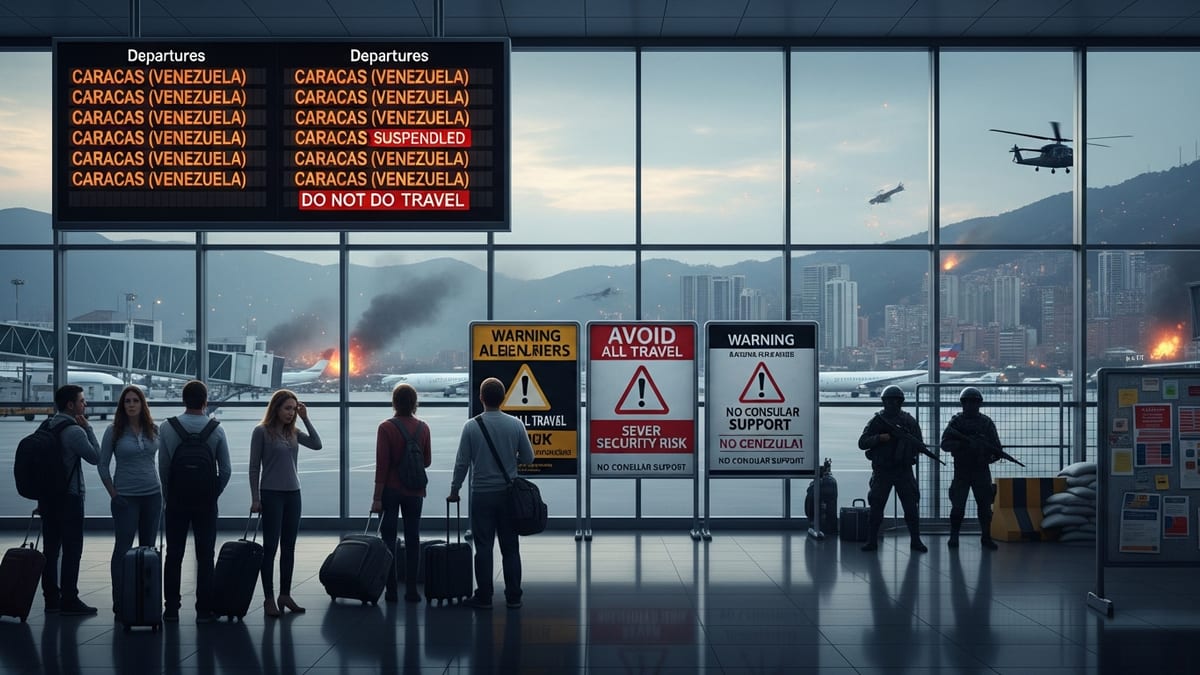
Powerful Double Earthquakes Devastate Northern Venezuela
Venezuela is confronting a deepening humanitarian crisis after two powerful earthquakes struck the country on June 24, 2026, in what regional seismologists describe as a rare doublet event. The quakes, measured at magnitudes 7.2 and 7.5 and separated by mere seconds, rattled densely populated areas across the north, including the capital, Caracas, and the coastal state of La Guaira.
Published reports from international and regional outlets indicate that the death toll has surged into the four figures as search and rescue efforts continue. Thousands of people are reported injured, with hospitals in several states operating at or beyond capacity. Large swaths of residential neighborhoods and critical infrastructure, including roads, bridges, and utilities, have sustained heavy damage, complicating access for emergency teams.
Data compiled by global earthquake monitoring services show that at least 3.9 million people were exposed to severe shaking, with structural damage observed across multiple states bordering the Caribbean coast. Aftershocks, some of them strong enough to trigger renewed panic and minor collapses, are expected to continue in the coming days, prolonging the sense of uncertainty for residents and the small number of foreign visitors in affected zones.
Humanitarian situation reports describe widespread power outages, disrupted water supplies, and growing pressure on shelter capacity as families displaced by the quakes seek safer ground. Authorities in neighboring countries and regional organizations are tracking the situation closely because of the potential for cross-border population movements and logistical bottlenecks for aid flights and maritime shipments.
U.S. Travel Advisory: From “Do Not Travel” to “Reconsider Travel” Before the Quake
The earthquakes struck just weeks after the United States adjusted its official travel advisory for Venezuela, a move that had started to reframe how some travelers, insurers, and corporate security teams viewed the country. On March 19, 2026, the advisory was lowered from Level 4, “Do Not Travel,” to Level 3, “Reconsider Travel,” according to publicly available State Department documentation.
The March revision did not signal that Venezuela had become low risk. Level 3 remains a high-alert categorization, reflecting significant concerns about crime, civil unrest, infrastructure reliability, and the limited capacity of foreign missions to provide assistance. However, for tour operators and multinational companies with personnel in the country, the change was viewed as a marginal improvement in the operating environment, opening the door for tightly controlled trips and limited in-country work.
That recalibration now collides with a sudden, large-scale natural disaster. The advisory in place as of June 27 emphasizes reconsidering any nonessential travel, and security specialists note that the earthquakes have added layers of logistical and health risk to an already complex destination. Evacuation corridors may be impaired, medical facilities are overstretched, and basic services are disrupted in several of the very areas that previously hosted what little formal tourism Venezuela still received.
Risk consultants observing the situation suggest that the earlier shift from Level 4 to Level 3 may be reviewed again in light of the extensive damage. Even if the formal advisory level remains unchanged in the near term, underwriters and corporate travel departments are expected to impose stricter internal controls than those reflected in the baseline public guidance.
Global Safety Update: Worldwide Caution and Elevated Risk Environment
The Venezuela disaster comes at a time when global travel safety messaging is already heightened. The U.S. government has maintained a broad “worldwide caution” notice in 2026, citing a combination of geopolitical tensions, terrorism concerns, cyber incidents with physical implications, and increasingly frequent climate and weather-related disruptions.
Within that context, the Venezuelan earthquakes are being treated as another example of how suddenly conditions can shift for travelers, even in destinations where risks are well known but perceived as static. Analysts point out that the quakes have affected urban centers, transport nodes, and port facilities that are part of broader regional networks, raising the possibility of knock-on effects for itineraries that involve transit through the southern Caribbean.
Insurance providers and global assistance companies are reassessing their exposure in northern South America, revisiting assumptions about evacuation timelines, surge medical capacity, and the reliability of local partners in complex emergencies. Early commentary from industry briefings indicates a move toward tighter pre-trip vetting and more aggressive use of real-time tracking tools for any personnel in or near Venezuela.
For individual travelers, the evolving worldwide safety environment means that official advisories are only one part of the risk calculation. Analysts stress the importance of monitoring multiple sources, including local media, regional weather and seismic services, and airline operational updates, to capture changes that may not yet be reflected in formal government notices.
What the Earthquake Means for Travelers in and Around Venezuela Now
For travelers currently in Venezuela, the earthquakes have immediate and practical implications. Airports serving Caracas and coastal states have reported disruptions, with some terminals focusing heavily on humanitarian and emergency operations. Commercial schedules are subject to short-notice changes as carriers evaluate runway and terminal conditions, air traffic control capability, and fuel availability.
Surface travel is even more challenging. Reports indicate that landslides, bridge damage, and collapsed overpasses have severed key road links between interior cities and the coast. In affected urban areas, debris and ongoing rescue operations are limiting vehicle access, while fuel shortages and intermittent power are constraining public transport and ride-hailing services.
Travel risk monitors advise that any nonessential movement within the hardest hit regions be deferred until structural assessments are complete and local authorities have cleared major routes. Even in areas that escaped heavy damage, the prospect of strong aftershocks raises concerns about older buildings, hillside communities, and informal accommodation without modern seismic standards.
Travelers in neighboring countries or on cruise itineraries that include Venezuelan ports may also experience itinerary changes as operators divert vessels or reroute overland segments. Industry updates suggest a cautious approach, with many companies temporarily suspending optional shore excursions or in-country add-ons while they evaluate port facilities, security conditions, and medical infrastructure.
Risk Management Takeaways for Future Trips to High-Risk Destinations
The Venezuela earthquakes underscore how quickly conditions can shift in countries already subject to elevated travel advisories. For organizations and individuals contemplating future travel to high-risk destinations, specialists highlight several themes emerging from this crisis.
First, advisory levels and country risk ratings offer only a snapshot in time. Venezuela’s move from “Do Not Travel” to “Reconsider Travel” in March did not anticipate a significant seismic event in June, yet the earthquakes now dominate the risk landscape. Travelers who rely solely on the headline advisory level may underestimate the speed and scale of such shifts.
Second, contingency planning is critical. Corporate security teams are being urged to revisit questions about how quickly they can evacuate staff with damaged airports, limited medical capacity, and possible shortages of fuel and communications. For leisure travelers, that translates into scrutinizing emergency clauses in insurance policies, maintaining flexible ticket options, and having clear communication plans with family or travel companions.
Third, the Venezuela case reinforces the need to track structural vulnerabilities, not just political or crime-related risk. Seismologists and urban planners have long noted that much of Venezuela’s population is concentrated in areas with active faults and varied building standards. For risk-aware travelers, understanding such underlying exposure can be as important as monitoring headlines about protests or elections when deciding whether, when, and how to visit.