


More news on this day
Venezuela is facing mounting travel disruption and a fast‑deepening tourism crisis after powerful twin earthquakes devastated the coastal state of La Guaira, pushed the confirmed death toll beyond 1,400 and severed a key Caribbean gateway used by international airlines and cruise operators.
Get the latest news straight to your inbox!
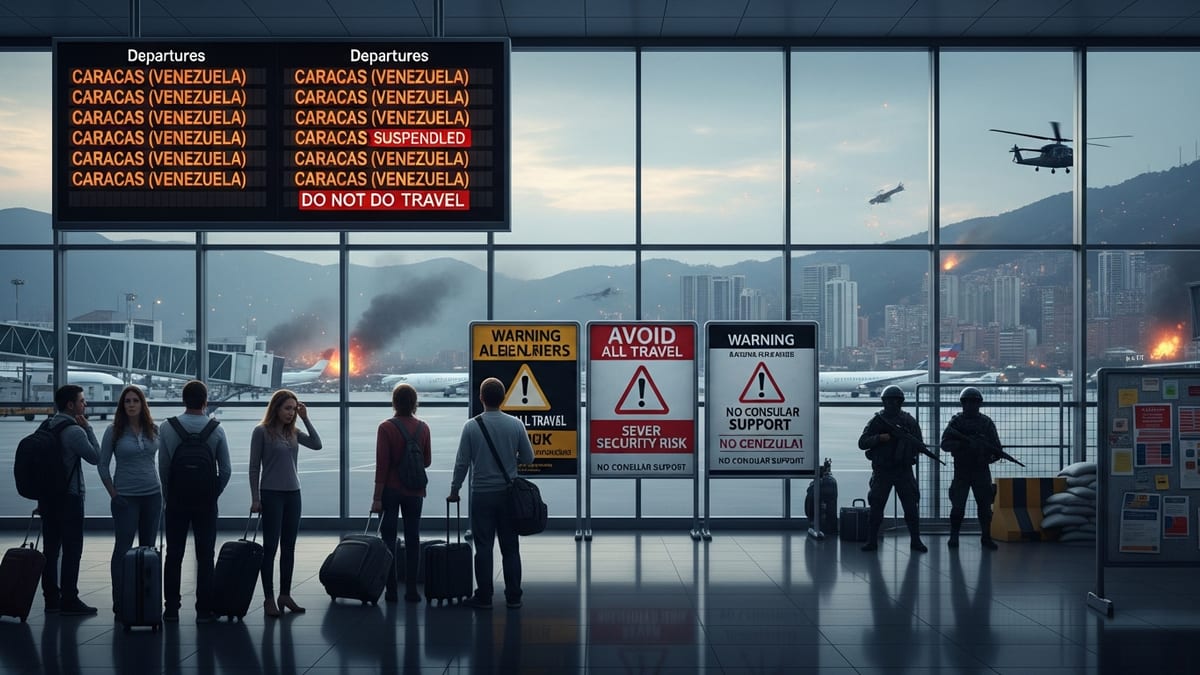
Death Toll Climbs As La Guaira Becomes Disaster Epicenter
Published reports from international news outlets and humanitarian situation briefings indicate that two major earthquakes, measured at magnitudes 7.2 and 7.5, struck northern Venezuela on June 24, with the coastal state of La Guaira and nearby Caracas among the hardest hit. Updated tallies released over the weekend place the number of confirmed dead at more than 1,400, with thousands injured and tens of thousands still unaccounted for in the worst affected neighborhoods.
Images and assessments from La Guaira describe entire apartment blocks pancaked, hillside communities cut off by landslides and key access roads twisted or blocked. Drone footage and satellite-based damage analysis point to extensive destruction in Catia La Mar, Caraballeda and other coastal districts, where dense tourism development and informal housing sit close to the shoreline.
Humanitarian situation reports compiled since June 25 describe overstretched local services, shortages of fuel and medical supplies, and severe congestion on the main highway corridor linking La Guaira with the capital. This combination is slowing evacuations, complicating aid deliveries and adding to what analysts describe as one of the most complex disaster responses the country has faced in decades.
Seismologists note that northern Venezuela is crisscrossed by active faults and has a long history of destructive earthquakes. In this event, the shallow depth of the tremors and their proximity to highly populated coastal and urban zones significantly amplified the impact, turning a popular beach and cruise region into what observers now label a broad disaster zone.
Airport Damage And Transport Breakdowns Hit International Travel
La Guaira hosts the main international airport serving Caracas, making it a vital hub for both domestic and long haul connections across the Americas and to Europe. Publicly available information from aviation trackers, airline advisories and regional travel bulletins shows that regular commercial flight operations have been severely disrupted, with many services suspended, rerouted or operating on emergency schedules.
Early structural assessments indicate that parts of the airport complex and surrounding access infrastructure suffered damage, with debris, power instability and security cordons hampering the movement of passengers and staff. Several carriers have issued warnings about prolonged disruption, advising travelers to postpone nonessential trips to Venezuela or to reroute via alternative regional hubs where possible.
Road access between the capital and the coast has also been repeatedly interrupted. Traffic monitoring and news footage show long tailbacks on the Caracas–La Guaira highway as emergency convoys, private vehicles and spontaneous aid caravans compete for limited road space. Landslides, collapsed overpasses and damaged tunnels have forced periodic closures, creating unpredictable travel times and leaving some communities temporarily isolated.
Maritime traffic is affected as well. While Venezuela’s main oil export terminals lie outside the worst hit area, port facilities serving cruise vessels and cargo near La Guaira have reported operational constraints. Shipping-focused reports suggest that inspections for underwater and quay wall damage are underway, and some passenger itineraries in the southern Caribbean have already been modified or canceled to avoid the affected coastline.
La Guaira Tourism Industry Grinds To A Halt
Before the earthquakes, La Guaira and nearby beach towns functioned as one of Venezuela’s primary coastal tourism corridors, drawing domestic holidaymakers and international visitors for short-stay beach breaks and cruise extensions. Travel industry analyses now describe a near-total collapse of the local tourism sector, with hotels, guesthouses, restaurants and tour operators either destroyed, damaged or repurposed as shelters.
Visual evidence from the shoreline shows popular beachfront promenades buried in rubble, seafront high-rises with gaping facades and beach infrastructure such as piers and kiosks twisted or washed away. Reports from regional tourism associations estimate that thousands of tourism-related jobs have been abruptly lost, interrupting one of the region’s main sources of formal and informal employment.
Many remaining accommodation providers that are structurally intact are focusing on hosting displaced residents, emergency responders or medical teams rather than paying tourists. Analysts warn that this redirection, while necessary for humanitarian reasons, will delay any meaningful recovery in visitor arrivals and spending. Marketing campaigns that had sought to reposition La Guaira as a safe and accessible Caribbean entry point are now on hold indefinitely.
Economists following the region note that the shock comes on top of years of economic strain and infrastructure underinvestment. The destruction of hotels, restaurants and tour services strips municipalities of tax revenues, while damaged utilities and roads raise the cost and complexity of rebuilding. Observers warn that without significant international support, the tourism collapse could entrench poverty and slow reconstruction far beyond the immediate emergency phase.
Global Advisories And Escalating Safety Warnings For Travelers
Travel safety notices issued since late June from multiple governments and independent risk consultancies uniformly advise against nonessential travel to the hardest hit parts of northern Venezuela, particularly La Guaira state and affected districts of Caracas. Several countries have elevated their overall alert level for Venezuela, citing earthquake damage, unstable infrastructure and limited availability of essential services as primary concerns.
These advisories highlight a range of acute risks for visitors, including ongoing aftershocks, the danger of structurally compromised buildings, disrupted medical services and constrained access to food, fuel and clean water in some localities. Security analysts additionally point to the potential for opportunistic crime in areas where street lighting is limited, cash circulation is restricted and local emergency capacities are stretched.
International tour operators and cruise lines that had previously included La Guaira or nearby ports on their itineraries are rapidly updating schedules. Public statements and booking platform notices show itinerary changes, substitute ports of call and, in some cases, outright suspension of operations in Venezuelan waters until more reliable assessments of port safety and onshore infrastructure can be completed.
Insurance companies and travel assistance providers are also revising guidance. Industry briefings note that coverage conditions may change for trips booked after public disclosure of the disaster, and travelers are being urged to review policy terms that relate to natural disasters, medical evacuation and trip interruption before committing to new reservations in the wider region.
Regional Ripple Effects And Outlook For Recovery
The sudden loss of La Guaira as a functioning air and cruise gateway is already having knock-on effects across the Caribbean and northern South America. Aviation route data and regional tourism commentary point to increased pressure on neighboring hubs as airlines seek alternative entry points for passengers who would typically connect through Caracas and La Guaira to reach other Venezuelan destinations.
Smaller Caribbean islands and nearby South American cities may see a temporary uptick in diverted traffic, but analysts caution that the overriding trend is a net decline in regional demand, as many travelers opt to defer or cancel trips entirely rather than reorganize complex itineraries in a rapidly changing environment. Tour operators that package multi-country circuits are now reassessing logistics, as overland connections, cross-border bus routes and regional cruise legs that intersect with Venezuela all face uncertainty.
Reconstruction timelines remain unclear. Engineering assessments of damaged buildings, bridges and port infrastructure are only beginning, and early technical bulletins suggest that large sections of La Guaira’s waterfront and hillside housing may require full or partial rebuilding. Given the scale of destruction, travel specialists expect a prolonged period during which the area will function primarily as a recovery and reconstruction zone rather than a leisure destination.
For now, global travel experts urge prospective visitors to monitor official advisories from their own governments, follow airline and cruise operator updates closely and exercise extreme caution when considering any travel in or around northern Venezuela. The country’s tourism future will depend not only on the speed of physical rebuilding in La Guaira, but also on restoring traveler confidence in a region that has suddenly shifted from sun and surf to one of the hemisphere’s most visible disaster zones.