

More news on this day
Major global and African carriers are racing to lock in capacity across the continent ahead of an expected tourism and business travel surge in 2026, with routes linking iconic destinations such as Victoria Falls and Zanzibar emerging as focal points of a broader shift in Africa’s aviation map.
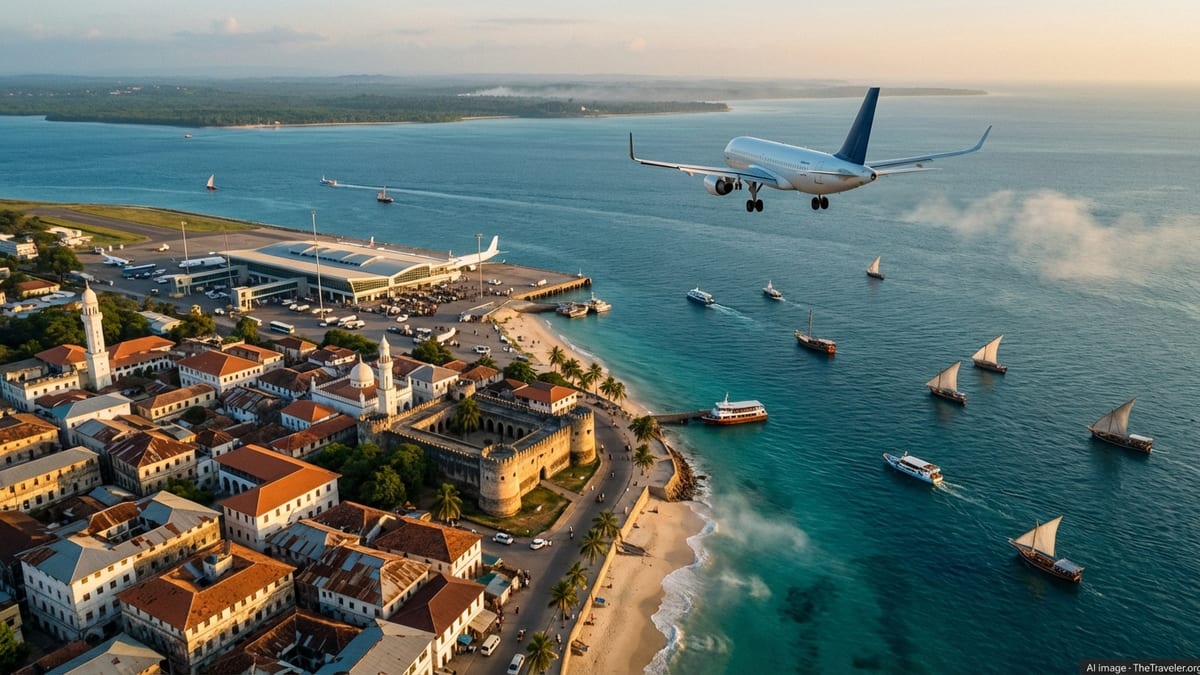
Carriers Position for Africa’s Next Big Travel Wave
Across airline boardrooms from Dubai to Doha and Johannesburg, Africa is no longer viewed as a peripheral market but as one of the fastest-rising frontiers for global aviation. After a decade of incremental growth and a sharp post-pandemic rebound, 2026 is shaping up as a pivotal year in which new routes, higher frequencies and targeted leisure services converge to redefine travel patterns to and within the continent.
While North African hubs and long-established West African gateways remain important, airlines are increasingly centering strategies on high-appeal leisure destinations that can anchor broader networks. Victoria Falls on the Zambia and Zimbabwe border and Zanzibar off the Tanzanian coast have emerged at the forefront of that shift, drawing investment from full-service global players and nimble regional carriers alike. Their appeal as twin pillars of safari-and-sea itineraries has placed them squarely in the sights of Emirates, South African Airways, Air Tanzania and Qatar Airways as they refine their Africa playbooks for 2026.
Industry analysts note that the current wave of announcements is not just about adding flights. It reflects a deeper structural change as African governments expand airports, ease visa rules and court foreign carriers to support tourism-led growth. Airlines, in turn, are using the coming year to secure early-mover advantage in corridors that are expected to see double-digit passenger growth for several seasons.
Emirates Targets High-Yield Safari and Island Flows
Dubai-based Emirates has long been one of the most active Gulf carriers in Africa, using its wide-body fleet and global hub to funnel traffic from Europe, Asia and North America into the continent. As demand for premium leisure trips rebounds, the airline is sharpening its focus on itineraries that combine inland wildlife experiences with Indian Ocean beaches, a trend that directly lifts destinations such as Victoria Falls and Zanzibar.
Travel trade data for the past two peak seasons shows strong growth in itineraries pairing southern African safari circuits with beach extensions in Tanzania and the wider Indian Ocean. Emirates has responded by reinforcing capacity into key southern African gateways and developing partnerships that give its passengers through-ticketed access to secondary destinations. By 2026, these flows are expected to be further supported by upgraded schedules into South Africa and expanded connectivity with regional partners that serve Victoria Falls and the wider Zambezi region.
On the eastern seaboard, Emirates’ longstanding services into Dar es Salaam and other East African hubs continue to act as important feeders into Zanzibar and northern Tanzania’s safari heartland. Industry observers say that as new direct and seasonal services into Zanzibar from other global carriers come online in 2026, Emirates is likely to lean even more heavily on its stopover and multi-destination products to keep Dubai at the center of long-haul journeys that ultimately end on African soil.
South African Airways Rebuilds as Tourism Recovers
South African Airways, once on the brink of collapse, has spent the past several years methodically rebuilding its regional and long-haul network. By 2025 it had restored a limited intercontinental presence, including services to Brazil and Australia, and was openly evaluating a return to the United States by the end of 2026 via West African or Ghanaian hubs. That ambition is unfolding against the backdrop of a broader tourism recovery that is reshaping demand for travel to and from South Africa.
Executives at the Johannesburg-based flag carrier have signalled that future long-haul expansion will hinge on the performance of regional and intra-African routes, many of which are closely tied to leisure flows through Cape Town, Johannesburg and onwards to high-profile attractions like Victoria Falls. The airline’s strategic plan anticipates that a growing share of traffic will be point-to-point leisure travel, rather than purely connecting traffic through European hubs, as travelers from North and South America look for more direct access to African destinations.
As South African Airways explores new long-haul links, it is also expected to deepen cooperation with regional players that already connect Johannesburg with hotspots including Victoria Falls and Livingstone. For the carrier, 2026 could become the year when its network recovery translates into a more integrated southern African proposition, with South Africa positioned not only as a destination in its own right but as the natural gateway to the Zambezi and Indian Ocean leisure belt.
Air Tanzania and Zanzibar at the Heart of East Africa’s Boom
No destination captures airlines’ shifting priorities quite like Zanzibar. The Tanzanian archipelago has seen a rapid build-up in air access, underpinned by national carrier Air Tanzania’s fleet expansion and new routes. In 2024 the airline launched direct flights between Dubai and Zanzibar, tapping surging demand from the Gulf region and beyond, and has since added long-haul capacity through the arrival of additional Boeing 787 Dreamliners to support its international ambitions.
By mid-2025 Air Tanzania had also opened new regional links, including a twice-weekly service between Zanzibar and Johannesburg that routes via Dar es Salaam, weaving the island more tightly into southern Africa’s tourism ecosystem. At the same time, domestic and regional services from Dar es Salaam to secondary cities and parks are giving visitors simpler options to combine beach stays in Zanzibar with safaris in the Serengeti or business trips to Tanzania’s interior.
That growing web of connections is being matched by broader market interest. Regional airlines such as Flightlink and Precision Air are adding new services linking Zanzibar with Nairobi and key safari gateways, while RwandAir has launched and expanded routes intertwining Kigali, Mombasa and Zanzibar. For Air Tanzania, these moves validate its early bet on the island as a strategic asset: by 2026, the carrier expects to benefit both from sixth-freedom traffic connecting through its hubs and from the sheer growth in inbound tourism to Zanzibar itself.
Qatar Airways Deepens Its South African Footprint
Qatar Airways, long a major player in Africa’s long-haul market, has moved decisively to capture more of the recovering demand into South Africa. In early 2026 the Doha-based airline announced a substantial increase in its South African schedule, lifting total weekly flights from 35 to 42 as it boosted frequencies to Johannesburg, Cape Town and Durban.
From February 2026, flights on the Doha to Johannesburg route begin rising to 21 per week, while services to Cape Town ramp up to 14 weekly frequencies. In March, Durban’s link via Maputo grows to daily service, restoring pre-pandemic capacity and creating more options for both business and leisure travelers departing from South Africa’s three primary gateways. For global passengers, the changes mean more choice in connecting from Qatar Airways’ extensive network into southern Africa’s key hubs.
Those capacity gains have implications far beyond the three cities themselves. Johannesburg remains a critical staging point for travelers heading onwards to Victoria Falls, either via regional carriers or through tour operator arrangements, while Cape Town’s role as a long-stay leisure destination is increasingly tied to multi-stop itineraries that span the region. By bulking up its presence in South Africa, Qatar Airways is effectively reinforcing its role as a conduit to southern Africa’s broader tourism corridor in the run-up to 2026’s peak seasons.
Victoria Falls Emerges as a Southern African Anchor
Victoria Falls has long been one of Africa’s most recognized natural landmarks, but its air connectivity has historically lagged behind its fame. That has begun to change in recent years as both legacy and regional carriers bolster routes into nearby gateways in Zimbabwe and Zambia, and as Johannesburg evolves into an even stronger hub for southern African leisure circuits.
Travel operators report a marked increase in demand for itineraries that combine the falls with safaris in Botswana, Namibia or South Africa and then extend to beach destinations such as Zanzibar or Mauritius. Airlines are responding by coordinating schedules and code-shares so that visitors arriving from Europe, the Middle East or the Americas can move through Johannesburg or other regional hubs and on to Victoria Falls with shorter transit times.
For carriers such as South African Airways, Emirates and Qatar Airways, Victoria Falls is less a stand-alone market and more a crucial link in a higher-value chain that can support premium cabins and longer stays. As 2026 approaches, hoteliers in the region are already reporting strong forward bookings tied to new and expanded air links, suggesting that the falls will continue to anchor southern Africa’s appeal even as airline strategies evolve.
Zanzibar’s Skyward Surge Reshapes Indian Ocean Tourism
On the opposite side of the continent, Zanzibar is experiencing a transformation that aviation executives say is reminiscent of earlier booms in destinations like Mauritius and the Maldives. A steady pipeline of new routes is feeding the island’s growth, with carriers from the Gulf, Europe and across Africa adding services ahead of the 2026 high season. Seasonal flights from Abu Dhabi by Etihad Airways, increased frequencies by Turkish carriers into Tanzania and new Johannesburg to Zanzibar links from regional operators are among the more visible pieces of this shift.
European leisure airlines have also stepped in, sustaining or expanding seasonal services from major cities such as Frankfurt, Munich and Berlin. Attractive fares and direct routings are making Zanzibar more accessible to budget-conscious travelers, while tour operators bundle charter capacity into package holidays that pair the island with safari circuits on the mainland. These developments are reinforcing Zanzibar’s status as one of the Indian Ocean’s most competitive beach destinations.
Behind the scenes, infrastructure upgrades are working to keep pace. Ongoing expansion of Zanzibar’s main international airport and the development of new passenger and ferry facilities are designed to handle higher volumes of visitors without eroding the destination’s appeal. For airlines like Air Tanzania and Emirates, that combination of improved ground infrastructure and surging demand creates an opportunity to entrench their presence before rival hubs can fully respond.
Infrastructure and Policy Lay the Groundwork for 2026
The rapid growth of air services into Victoria Falls, Zanzibar and other African hotspots would be impossible without parallel investments in infrastructure and policy reforms. Across the continent, governments are modernising terminals, upgrading runways and launching ambitious projects to improve maritime links and ground transportation. Zanzibar, for example, is moving ahead with a major passenger and roll-on roll-off ferry terminal designed to significantly expand its capacity for regional sea travel by the latter part of the decade.
At the same time, regional bodies and individual states are gradually opening skies and revisiting bilateral agreements to make it easier for new routes to be approved and operated. While progress on continent-wide initiatives has been uneven, the trend in key tourism-driven economies is toward facilitating rather than restricting international access. This is particularly evident in East and Southern Africa, where visa-on-arrival schemes and e-visa platforms are being positioned as complements to upgraded air services.
For airlines planning their 2026 networks, these changes help reduce uncertainty and support longer-term commitments to new markets. Carriers such as Emirates, South African Airways, Air Tanzania and Qatar Airways are building their strategies around the assumption that infrastructure and policy support will continue to improve, allowing them to sustain or expand the new capacity now being put into place.
Competition Heats Up as Hubs Vie for African Traffic
The build-up to 2026 is also intensifying competition among global and regional hubs that see African traffic as a critical growth driver. Gulf carriers, European leisure airlines and African national carriers are all seeking to position their home airports as the most convenient gateways to destinations like Victoria Falls and Zanzibar, each leveraging different strengths in fleet, scheduling and partnerships.
Dubai and Doha continue to benefit from their geographic position at the crossroads of East and West, funnelling traffic into Africa with high-frequency wide-body services. Johannesburg, Addis Ababa, Kigali and Dar es Salaam are carving out roles as continental connectors, while secondary gateways in Europe and the Middle East seek to capture niche demand with targeted seasonal flights to individual African resorts. In many cases, airlines are cooperating across alliances and joint ventures even as they compete head-to-head for passengers.
For travelers, the result is a richer array of options and often more competitive fares. For destinations like Victoria Falls and Zanzibar, it translates into deeper and more diversified source markets, reducing reliance on any single region. As 2026 approaches, the interplay between these competing strategies will go a long way in determining which airlines, and which hubs, emerge as the primary winners of Africa’s latest aviation growth chapter.