


More news on this day
Australian health authorities have issued a new advisory for domestic and international travellers using Sydney’s major air and sea gateways after viral material was detected in routine surveillance, prompting tighter screening and renewed calls for vaccination and symptom monitoring among people moving through the country’s busiest hub.
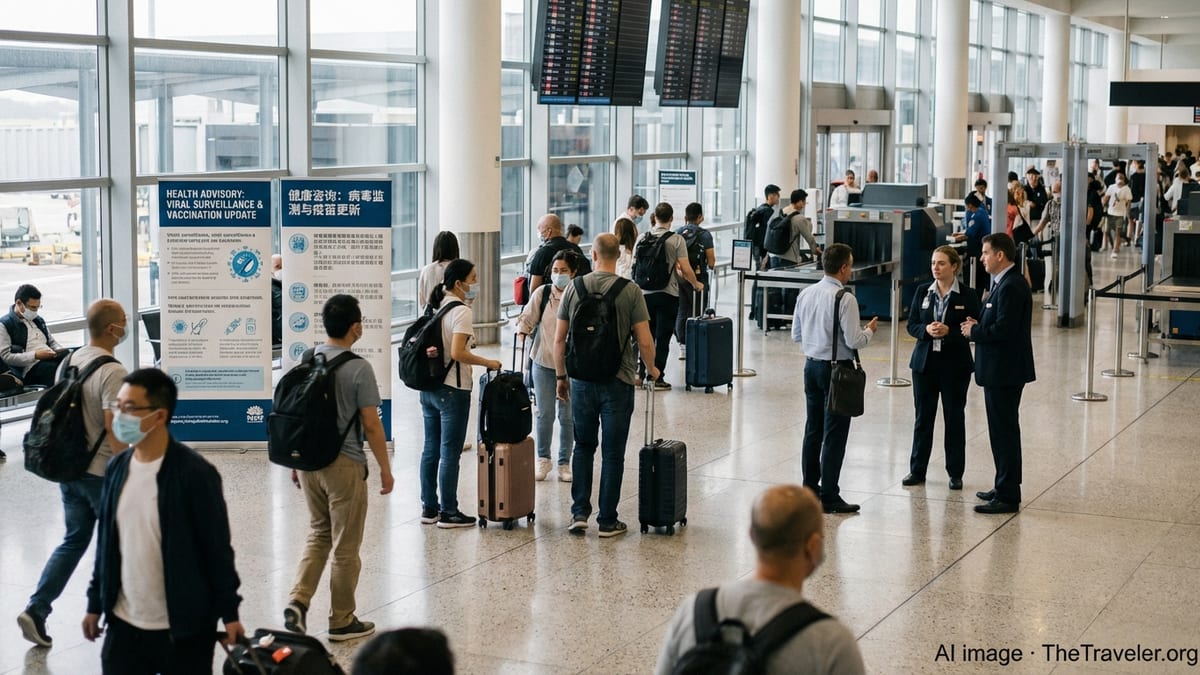
Heightened Surveillance at Australia’s Busiest Entry Point
The latest advisory centres on Sydney Kingsford Smith Airport and associated transport corridors, which together handle tens of millions of passengers a year and serve as primary gateways for arrivals from Asia, the Pacific and the Middle East. Officials say that ongoing biosurveillance programs picked up viral fragments during recent testing, triggering an escalation in precautionary measures designed to prevent new chains of transmission.
New South Wales health authorities have stressed that the advisory is precautionary, but reflects the reality that high passenger throughput makes Sydney a frontline buffer for potential outbreaks. International flights, domestic connections and regional services converge at the airport, increasing the chances that infections acquired overseas can be introduced and spread quickly if they are not detected early.
While the precise pathogen under review has not been publicly detailed in full, officials point to a combination of routine testing of ill travellers, wastewater sampling and genomic screening of clinical specimens as the basis for the warning. The aim is to flag possible threats at the border before they seed outbreaks in the community, a lesson drawn from the early stages of both the COVID‑19 pandemic and earlier measles importations linked to air travel.
Authorities have emphasised that at this stage the advisory does not signal an active outbreak within the airport terminals themselves, but rather an increased index of suspicion and an expanded effort to identify any cases that may be incubating among recent arrivals or transiting passengers.
Biosecurity Triggers After Viral Detection
Australia maintains one of the world’s more stringent biosecurity regimes, with specialists from the federal agriculture department working alongside health officials at major international ports. Under this system, certain laboratory signals act as triggers for additional investigation, including the detection of viral genetic material in aircraft wastewater, unexplained clusters of respiratory illness in travellers and unusual patterns in routine hospital admissions.
In the current case, a combination of these indicators has led to what officials describe as a stepped‑up surveillance posture at Sydney’s international and domestic terminals. That includes closer scrutiny of travellers presenting with fever or respiratory symptoms, additional messaging on incoming passenger cards and targeted follow‑up where flight manifests overlap with known exposure locations.
Airport operators and airlines have been advised to reinforce standard infection‑prevention measures, including frequent cleaning of high‑touch surfaces, ventilation checks in terminal areas and reminders to staff on the use of masks when dealing with visibly unwell travellers. Health officers stationed at the airport retain powers to assess, isolate or refer passengers for further medical review if they are suspected of carrying a serious communicable disease.
Officials note that while Australia has relaxed many of the emergency restrictions seen earlier in the decade, its legal framework still allows for rapid escalation of controls at ports of entry if a virus with significant public health implications is detected. The advisory signals that thresholds for such action are being actively monitored in light of global circulation of respiratory pathogens.
Travel Advice for International and Domestic Passengers
International and domestic travellers passing through Sydney are being urged to take practical steps that reduce both their own risk and the likelihood of carrying infections onwards to others. These include staying up to date with routine vaccinations such as measles, influenza and COVID‑19 before departure, monitoring closely for symptoms in the weeks after travel and seeking prompt medical advice if they feel unwell.
Health authorities are reminding passengers that respiratory viruses can present initially with nonspecific signs such as fatigue, mild fever, sore throat or runny nose before progressing to more recognisable illness. Because the incubation period for some infections can extend to nearly three weeks, travellers are asked to remain vigilant for an extended period after returning home or moving on to other destinations.
People who recently transited Sydney and later develop fever, rash or respiratory symptoms are advised to contact their doctor or local health service by phone before attending in person, and to wear a mask if they need to present at a clinic or emergency department. This helps reduce the risk of infecting others in waiting rooms, including young children, pregnant women, older adults and people with underlying medical conditions.
Officials stress that anyone with plans to travel via Sydney does not need to cancel trips solely because of the advisory, but should factor health precautions into their journey in the same way they consider insurance, documentation and security. Travellers with pre‑existing conditions or weakened immune systems are encouraged to discuss individual risk with a clinician ahead of departure.
Airport Screening, Wastewater Testing and Genomic Surveillance
The advisory highlights the increasingly sophisticated tools being used at major hubs like Sydney to identify emerging health threats in real time. In addition to traditional clinical testing of symptomatic passengers, authorities are relying on wastewater analysis from aircraft and terminal facilities, which can detect viral fragments shed by infected individuals even when they have mild or no symptoms.
Wastewater samples are analysed for a panel of respiratory and enteric pathogens, with any unexpected rises in viral load prompting further investigation. When clinical samples are taken from travellers who test positive, they are sequenced in public health laboratories to build a genomic picture of the viruses entering Australia. This helps officials spot new variants, track how infections move across borders and compare findings with international data.
These efforts mirror international programs that use air travel as an early‑warning network for novel pathogens. By linking sequencing data with anonymised travel histories, analysts can infer where particular viral strains are circulating and which routes carry the highest risk of importation. Sydney’s role as a southern hemisphere hub for flights from Asia and the Middle East makes it a critical node in this system.
Officials say the public should expect to hear more about such biosurveillance work as it becomes routine, with the current advisory representing one of the first times that signal detection at a major Australian gateway has translated into a widely communicated travel health message rather than quiet background monitoring.
Measles, Influenza and Other Travel‑Linked Risks
Although the latest advisory has been framed broadly around viral detection, experts underline that measles, seasonal influenza and COVID‑19 remain among the most likely infections to be imported through international travel. Recent health alerts in Australia have traced measles cases to passengers who transited major airports while infectious, underscoring how quickly the virus can spread among unvaccinated people.
Measles is particularly concerning because it is one of the most contagious human viruses and can cause serious complications, including pneumonia and encephalitis. Even a single imported case can ignite an outbreak if it lands in a pocket of low vaccine coverage. Travellers born after the mid‑1960s who are unsure of their vaccination status are being urged to confirm they have received two doses of a measles‑containing vaccine before flying.
Influenza and COVID‑19 continue to circulate globally, with patterns varying across regions and seasons. Air travel can bridge these patterns, introducing strains that may not yet be common locally. Health agencies recommend that people receive the annual flu shot and stay current with COVID‑19 boosters suited to their age and risk profile, particularly if they work in aviation or travel frequently.
Clinicians note that for many of these illnesses, early diagnosis not only improves outcomes for the individual but also allows contact tracing to begin quickly. Travellers who fall ill after passing through Sydney’s terminals are asked to mention their recent travel and any time spent in crowded airport areas when speaking with healthcare providers.
Implications for Airlines, Cruise Operators and the Tourism Sector
The advisory arrives at a time when airlines and tourism operators have been working to rebuild confidence and capacity after years of disruption. Industry groups say that clear, consistent health messaging is critical to maintaining traveller trust, and that they are coordinating closely with authorities to ensure public information at airports, cruise terminals and online booking platforms reflects the latest guidance.
Carriers operating through Sydney are reviewing protocols for managing unwell passengers on board and during disembarkation, including the use of masks for crew assisting symptomatic travellers, onboard isolation where feasible and rapid notification to ground‑based health teams if a concern arises mid‑flight. Similar plans are being revisited for cruise ships using Sydney as a home or transit port during the current season.
Tourism businesses emphasise that proactive health measures at gateways ultimately support the sector by helping to avoid larger disruptions that could follow if a significant outbreak were linked to travel. They argue that integrated biosurveillance, clear advice for passengers and swift follow‑up of suspected cases are preferable to broad, reactive restrictions that might be imposed if authorities were caught off‑guard.
Industry representatives also note growing traveller expectations that airports and carriers will take visible steps to safeguard health, from availability of hand sanitiser and masks to transparent cleaning regimens. Many of these practices, initially rolled out as emergency responses, are now seen as baseline features of a modern, resilient travel system.
What Travellers Through Sydney Should Do Now
For people with upcoming itineraries that involve Sydney’s international or domestic terminals, officials recommend a straightforward checklist: review your vaccination status, pack masks and hand sanitiser as standard travel items, and build flexibility into your plans in case illness forces a short period of isolation. Travellers with connecting flights are encouraged to allow enough time for any additional screening without adding unnecessary stress.
Passengers are being asked to pay particular attention to their health in the 18 to 21 days after travel, which captures the incubation windows of several key viral illnesses of concern. Anyone who develops fever, rash, persistent cough or shortness of breath in that period should seek medical advice, mentioning their recent use of Sydney’s gateways and any known exposure to sick individuals on flights or in crowded terminal areas.
Families travelling with young children, especially infants who are not yet fully vaccinated, are urged to consult their doctor or a travel health clinic before departure. Older adults and people with chronic conditions such as heart disease, lung disease, diabetes or immune compromise may also benefit from tailored advice on vaccines, medications to carry and strategies to reduce exposure during long journeys.
Authorities reiterate that the goal of the advisory is not to discourage travel, but to ensure that movement through a major global hub like Sydney does not inadvertently fuel the spread of preventable diseases. By combining advanced surveillance at the border with informed, health‑conscious behaviour from travellers, officials hope to keep tourism and business trips moving while limiting the risks that come with an interconnected world.