


More news on this day
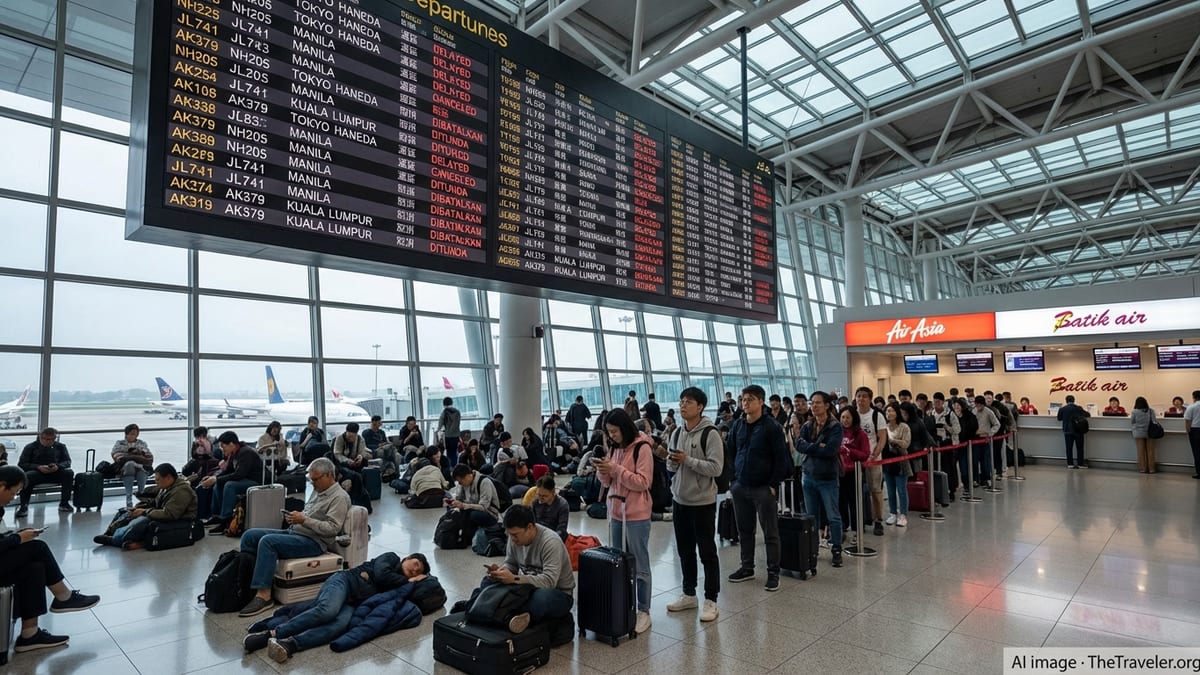
Asia’s air travel network is facing renewed disruption as 34 flight cancellations and 483 delays sweep across major hubs in Indonesia, Malaysia, Thailand, Japan, China and beyond, snarling operations for carriers including Batik Air, Thai AirAsia, Malindo Air, United Airlines and Tianjin Airlines and leaving passengers stranded from Narita and Kuala Lumpur to Jakarta and Harbin.
Fresh Data Points to Widespread Disruption Across Asia
The latest operational snapshots from aviation trackers and regional travel outlets on February 21 indicate another highly disrupted day for Asia’s aviation system, with dozens of cancellations layered on top of several hundred delays. While totals vary slightly between datasets, combined figures show 34 confirmed cancellations and roughly 483 delays concentrated across a network of major and secondary airports in Japan, Indonesia, Malaysia, Thailand, China and neighboring markets.
Jakarta’s Soekarno Hatta International Airport, Kuala Lumpur International Airport and Tokyo’s Narita International Airport stand out among the hardest hit, alongside Chinese gateways such as Harbin and Beijing. The disruptions cut across both domestic and international services, affecting short haul routes within Southeast Asia as well as long haul flights linking Asia with North America and Europe.
Operationally, the pattern aligns with a broader February trend in which cancellations remain comparatively limited but delay volumes climb sharply, overwhelming airport infrastructure at peaks. For travelers, the distinction is often academic: missed connections, missed business meetings and disrupted holidays are now familiar risks for anyone moving through Asia’s busiest hubs.
Industry analysts say the persistent disruptions reflect a complex mix of factors, including congested airspace, tight aircraft utilization, crew availability and localized weather systems, all hitting a region where traffic has roared back faster than airline and airport capacity.
Airlines Under Pressure: From Batik Air to United
Among carriers, Indonesia’s Batik Air again features prominently in daily disruption tallies, recording one of the highest concentrations of cancellations in the region. Recent days have seen the airline log dozens of cancellations alongside a significant number of delayed services across Jakarta and secondary Indonesian cities, turning what should be routine domestic hops into hours long ordeals for passengers.
Malaysia based Malindo Air, operating from Kuala Lumpur and other Malaysian gateways, is also contending with elevated delay volumes as traffic through Kuala Lumpur International Airport intensifies. Tight turnaround times on narrow body jets and a busy schedule of regional flights to Indonesia, Thailand and within Malaysia leave the airline vulnerable when even minor technical or crew issues emerge.
Low cost carrier Thai AirAsia has reported disruption on routes into and out of Bangkok and Phuket, with delays rippling across its dense regional network. The carrier’s point to point model, while lean, can see operational problems cascade quickly when aircraft are scheduled on back to back sectors throughout the day.
Long haul operators are not immune. United Airlines has faced a cluster of delays and at least two recent cancellations on services touching Tokyo’s Narita airport, a key transpacific hub. In northern China, Tianjin Airlines has been among the carriers affected by weather and traffic management restrictions, with Harbin, Tianjin and nearby airports registering a mix of pushed back departures and a handful of scrubbed flights.
Key Hubs: Narita, Kuala Lumpur, Jakarta, Harbin and Beyond
Tokyo Narita is once again emerging as a focal point for disruption. Although its total movements lag Tokyo Haneda, the airport hosts a high proportion of international services, meaning each cancellation or multi hour delay can strand hundreds of transit passengers at a time. Recent data show Narita logging double digit delays across both Asian regional flights and long haul services operated by Japanese, American and European carriers.
In Southeast Asia, Kuala Lumpur International Airport has reported several hundred delays across multiple days in February, with AirAsia, Malindo Air and Malaysia Airlines all contributing to congestion. While outright cancellations at Kuala Lumpur remain relatively modest compared with some Indonesian airports, sustained delays have translated into long queues at immigration and check in areas, as well as pressure on airport lounges and food outlets.
Jakarta’s Soekarno Hatta, Indonesia’s primary international gateway, has endured one of the region’s most challenging weeks. The airport has combined a comparatively high number of cancellations with large delay volumes, much of it centered on Batik Air’s domestic operation but also touching other Indonesian and foreign carriers. Secondary Indonesian airports such as Makassar and Palembang have also reported elevated cancellation ratios, underscoring how fragile regional connectivity remains outside the main hubs.
Further north, Harbin in China’s Heilongjiang province has seen schedules disrupted by seasonal weather and air traffic control measures. For Chinese carriers including Tianjin Airlines and Air China, even short suspensions in northern airspace can impact rotations across their broader domestic networks, contributing to delays as far away as Beijing and Tianjin.
Passengers Face Missed Connections and Mounting Costs
For travelers, the numbers translate into very personal disruptions. At Narita, passengers on delayed and canceled United and Japan bound services have reported long waits at rebooking counters and limited availability on later flights, especially on heavily booked transpacific routes to the United States. With aircraft often running near capacity, finding spare seats has become increasingly difficult on the same day.
In Jakarta and Kuala Lumpur, domestic and regional passengers are bearing the brunt of schedule volatility. Business travelers bound for meetings in Surabaya, Medan or Penang and holidaymakers heading for Thai and Indonesian beach destinations are encountering departure boards filled with late notices. Many are forced to rebook connections at their own expense, especially when disruptions are attributed to weather or air traffic restrictions rather than airline controllable issues.
Accommodation costs are also rising for those stranded overnight. Hotels near Narita and Kuala Lumpur International report spikes in last minute bookings on disruption heavy days, while central city properties see a secondary wave as passengers opt to abandon the airport and wait out the delay in more comfortable surroundings. Travel insurers say they are seeing an uptick in claims linked to missed connections and extended delays across Asia.
Families with children and older travelers are particularly exposed, as long waits at crowded terminals test patience and physical stamina. Social media posts from passengers at Jakarta, Bangkok and Tokyo in recent days describe overflowing gate areas, limited seating and queues snaking through terminal corridors as airlines work through backlogs.
Why Disruptions Keep Spiking in Early 2026
Aviation specialists point to several overlapping drivers behind the current wave of cancellations and delays. One key factor is strong demand. Passenger volumes on many intra Asian routes have returned to or surpassed pre pandemic levels, but some airlines are still operating with lean fleets after previous restructuring and aircraft retirements. This leaves little slack when a jet goes out of service for unplanned maintenance.
Crew availability remains another pressure point. While large scale staffing shortages have eased compared with the immediate post reopening period, airlines in Indonesia, Japan, Malaysia and Thailand continue to operate tightly scheduled rosters. Illness, training requirements on new aircraft types and regulatory limits on duty hours can all trigger knock on effects that culminate in last minute cancellations.
Infrastructure and airspace constraints are also a growing challenge. Busy corridors linking Southeast Asia with North Asia, particularly those funneling traffic through Bangkok, Kuala Lumpur, Jakarta and the Tokyo area, are seeing high utilization through much of the day. When weather systems move in, especially low visibility and snow in northern Japan and northeast China or thunderstorms in the tropics, air traffic control slows the flow of departures and arrivals, leading to holding patterns and late inbound aircraft.
Finally, many Asian airports are in the midst of modernization and expansion projects. While these works promise long term benefits, construction related runway closures, taxiway changes and terminal refurbishments can temporarily reduce capacity or complicate ground operations, increasing the risk that relatively minor issues cascade into broader disruption.
Operational Response from Airlines and Airports
In response to the latest spate of disruptions, airlines operating in and out of Narita, Kuala Lumpur, Jakarta and Harbin have stepped up schedule monitoring and day of operations control. Several carriers, including Batik Air and Thai AirAsia, have been selectively trimming lower demand flights and building slightly longer ground times into busy rotations in an effort to restore punctuality.
United and other long haul operators have focused on improving information flow, pushing real time updates through apps and email and urging passengers to check flight status before departing for the airport. Some carriers are also temporarily relaxing change fee policies on affected routes, allowing more flexibility for travelers to move their journeys earlier or later when storms or air traffic control restrictions are forecast.
Airports meanwhile are working to manage passenger flows and reduce the visible symptoms of disruption. At Kuala Lumpur and Jakarta, airport operators have deployed additional staff to assist with wayfinding and to help direct stranded passengers to rebooking desks and customer service counters. Temporary seating areas and overflow zones have been set up near heavily affected gates on peak days.
Technology is playing a bigger role as well. Several Asian hubs are accelerating the rollout of biometric boarding and automated check in kiosks in hopes of easing congestion at traditional counters, freeing airline staff to focus on disruption handling rather than routine processing.
What Travelers Can Do If Their Flight Is Affected
Travel advisers say passengers flying through Asia over the coming days should prepare for the possibility of disruption, even if their specific route or carrier is not currently among the most affected. Building in longer connection times, especially at busy hubs such as Jakarta, Kuala Lumpur, Bangkok and Tokyo, can provide a buffer if an inbound flight is delayed.
Experts recommend monitoring flight status closely via airline apps and signing up for text or email alerts. In the event of a cancellation or severe delay, acting quickly is critical, as seats on alternative flights are limited when multiple services are affected simultaneously. Travelers are advised to contact airlines through digital channels rather than queuing at the airport counter where possible.
Purchasing travel insurance that covers delays, missed connections and additional accommodation can also mitigate some of the financial risk associated with Asia’s current travel volatility. Policies vary, so travelers should read the fine print and keep documentation such as boarding passes, delay notifications and receipts for hotels and meals.
For those yet to book, choosing flights earlier in the day, when schedules are less vulnerable to accumulated delays, and considering itineraries with at least one backup option on alternative carriers may help reduce exposure. As Asia’s aviation network weathers another turbulent period, flexibility and preparation remain among the most valuable assets for anyone planning to fly.