


More news on this day
Flagship carriers including British Airways, Emirates, Delta Air Lines, Qatar Airways, Lufthansa and Air France are rolling out aggressive discounts on routes to Paris, Barcelona, Southeast Asia and major U.S. gateways, and fresh analysis from Expedia’s latest Air Hacks report suggests travelers who pair these sale fares with smart timing strategies can still shave hundreds of dollars off already reduced ticket prices.
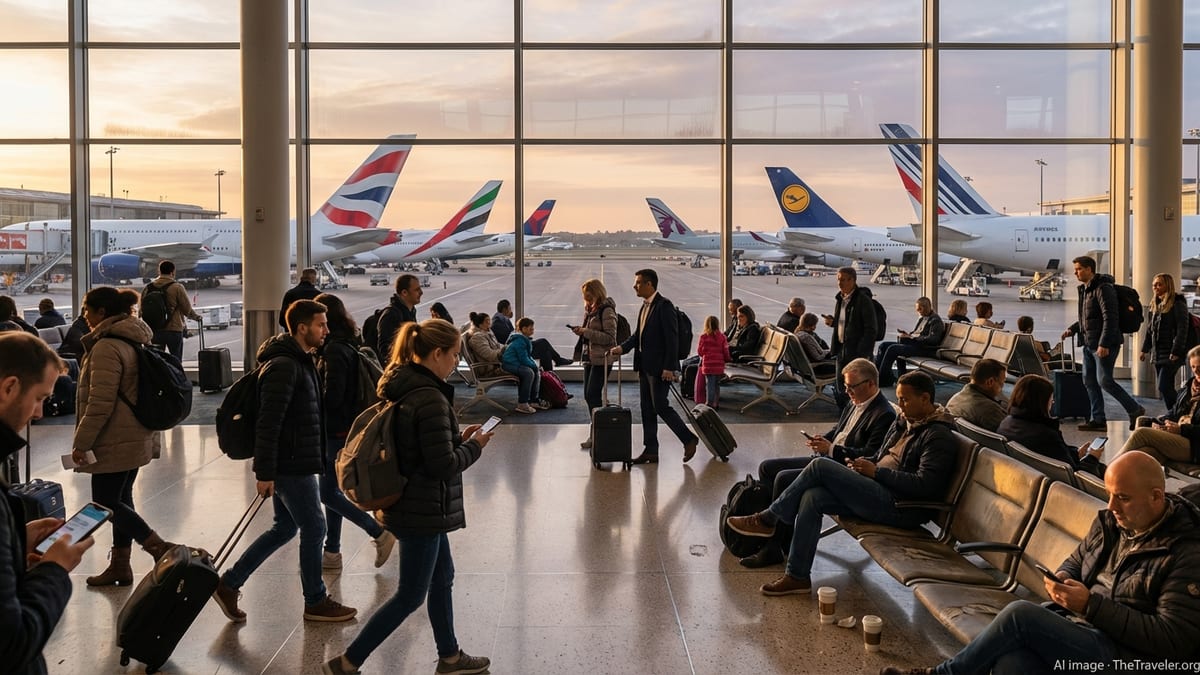
Flagship Carriers Turn to Price Cuts on Key Leisure Routes
After several years of volatile airfare, a combination of softer demand on some long-haul routes and rising competition is prompting full service airlines to court leisure travelers with lower fares. Industry analysts say that on transatlantic and Europe–Asia routes in particular, headline prices from major carriers have fallen from their 2022 and 2023 peaks, opening a window for travelers headed to classic city-break destinations such as Paris and Barcelona or long-haul escapes in Thailand and the United States.
British Airways, Air France and Lufthansa have all leaned on seasonal sales and bundled flight-and-hotel offers to stimulate demand on routes to and from Europe. Previous promotions have advertised multi-night packages from U.S. cities to London, Paris, Rome and Barcelona with per-person prices that undercut typical peak-season airfares alone, reflecting how far full-service carriers are willing to go to fill cabins when they expect softer load factors.
On the Gulf side, Emirates and Qatar Airways have been marketing early-bird fares to Europe and Asia from their network hubs, particularly for shoulder-season travel. These fares often target connecting traffic from North America, Australia and Asia-Pacific, drawing price-sensitive leisure travelers who are prepared to add a stop in Dubai or Doha in exchange for four-figure savings on premium cabins or competitive economy pricing during busy travel months.
Delta Air Lines and its transatlantic joint venture partners are meanwhile using targeted promotions to keep U.S.–Europe demand flowing outside the summer peak. Reduced fares to hubs such as Paris Charles de Gaulle and Barcelona El Prat, paired with competitive onward connections, have helped keep pressure on European rivals and contributed to a broader pricing reset on key leisure routes.
Expedia’s Air Hacks: Timing Is Now as Important as the Airline
While sale headlines grab attention, Expedia’s Air Hacks data shows that when you book and when you fly can matter as much as the brand on the tail. The latest Air Hacks analyses for 2025 and 2026, drawn from millions of transactions, indicate that average economy ticket prices have eased from last year and that travelers can unlock additional savings of 10 to 20 percent simply by shifting booking or departure dates.
For international itineraries, Expedia’s research highlights that booking on certain days of the week can deliver meaningful discounts. Recent data points to Sunday as one of the cheapest days to book international flights in many markets, with savings in the low to mid-teens percentage-wise compared with the most expensive booking days. For travelers in Europe, midweek booking days such as Wednesday are also associated with slightly lower average fares than weekend transactions.
Departure day has emerged as an even more powerful lever. Expedia’s 2025 Air Hacks report emphasizes that flying on a Thursday for international trips can save travelers close to 10 percent compared with starting their journey on a Monday, while the 2026 report for the German market finds that Friday departures can be up to 18 percent cheaper than Saturdays on many routes. That pattern is particularly relevant for long-haul leisure trips, where a shift of just one day can move a traveler out of the busiest demand peaks.
The reports also challenge the assumption that booking as far in advance as possible always guarantees the lowest fare. For international trips, Expedia now identifies a “magic window” as short as six to twelve days before departure in some markets, and around 31 to 45 days in others, where average prices trend lower than tickets bought months ahead. For business class, the optimal booking window stretches to roughly two to two and a half months out, when discounted premium inventory is still widely available.
Paris and Barcelona: Classic City Breaks at More Manageable Prices
Europe’s marquee city-break destinations remain perennial favorites, but the cost of getting there has been a concern for travelers since airfares surged after the pandemic. The combination of airline discounts and Air Hacks-style timing strategies is beginning to shift that calculation for trips to Paris and Barcelona, particularly outside the busiest summer weeks.
On the airline side, Air France, British Airways, Lufthansa and their partners continue to compete aggressively on North Atlantic routes feeding both cities. Promotional fares from U.S. and Canadian gateways to Paris Charles de Gaulle and Barcelona El Prat tend to be most prominent in end-of-summer and winter sales, when airlines look to smooth demand into autumn and early spring. For travelers with some flexibility on travel month and day of week, these sales can place round-trip economy fares to Western Europe at levels not seen since before the recent inflationary cycle.
Expedia’s data helps pinpoint when those lower fares are most likely to appear in booking engines. January and other shoulder months often emerge as the cheapest times of year to fly economy to Europe, and calendar search tools show pronounced drops in midweek prices versus weekend travel dates. By setting price alerts for specific routes such as New York to Paris or Chicago to Barcelona and then targeting Thursday or Friday departures within Expedia’s recommended booking window, travelers increase their odds of pairing airline sale pricing with broader market softness.
Secondary airports and alternative routings add another layer of savings potential. Data-backed advice from Expedia encourages looking beyond primary hubs when searching for Paris or Barcelona, whether that means departing from a nearby regional airport or considering one-stop itineraries via partner hubs. With major carriers determined to keep their aircraft full, passengers willing to accept a short connection through London, Amsterdam, Frankfurt or Doha can sometimes pay less than those insisting on nonstop service.
Thailand and Southeast Asia: Gulf and European Carriers Drive Competition
Thailand has reasserted itself as a long-haul favorite for European and North American travelers, and that popularity is shaping airline pricing. Emirates, Qatar Airways, Lufthansa and Air France all compete for passengers bound for Bangkok and regional gateways, while carriers such as British Airways and Delta facilitate onward connections through partner hubs. The result is a crowded marketplace in which sale fares to Southeast Asia are appearing more frequently outside traditional low seasons.
Expedia’s Air Hacks research underscores that long-haul routes to Asia are among the most sensitive to timing and routing strategies. Travelers who are prepared to depart on less popular days, avoid major holidays in both origin and destination markets, and accept a connection through Gulf or European hubs can trim hundreds of dollars off published fares to Thailand. In practice, that can mean flying midweek from a secondary airport, clearing security during quieter periods, and reaching Bangkok a few hours later than a nonstop but at a significantly reduced overall cost.
Seasonality remains a powerful factor. While peak travel periods around Western winter holidays and major local festivals in Thailand still command high fares, Expedia’s analysis highlights February, April and October shoulder windows when average prices on flights to Bangkok and Phuket ease. Pairing those months with the recommended booking windows and departure days can amplify savings, especially when airlines such as Qatar Airways and Emirates are simultaneously promoting early-bird or limited-time deals from their global networks.
For travelers in North America, connecting itineraries via Europe or the Middle East often undercut nonstop options from West Coast and East Coast gateways when booked with these tactics in mind. Using Expedia’s calendar view to compare month-wide pricing, then enabling price tracking on preferred routes, helps identify when flagship carriers quietly match or beat low-cost competitors on total journey cost to Thailand.
Cheaper Journeys Within and To the United States
Domestic and transatlantic travel to the United States has also become more favorable for deal seekers. Delta Air Lines and its alliance partners, along with European carriers such as British Airways, Lufthansa, Air France and Emirates via their U.S. gateways, have adjusted pricing to reflect cooler demand growth on some routes and the return of more capacity. According to Expedia’s recent Air Hacks findings, average economy fares have slipped from last year’s highs, particularly on routes where full-service carriers compete head-to-head with low-cost rivals.
For trips within the United States, Expedia’s data continues to show distinct patterns by day of week and booking horizon. Domestic travelers often find the lowest fares on Saturday departures, with Sunday emerging as the most expensive travel day. Booking windows tend to be shorter than for long-haul international trips, and price tracking tools can warn of sudden drops, enabling travelers to rebook or choose alternative dates on carriers such as Delta that frequently adjust fares in response to competitors.
On U.S.–Europe routes, sale activity from major carriers has remained elevated as airlines try to balance robust summer demand with softer shoulders. By coupling airline promotions with Air Hacks guidance, travelers heading from the United States to Paris, Barcelona or beyond can play the market to their advantage, watching for weekend booking discounts and midweek departure bargains. One-stop itineraries via alliance hubs, even on traditional network carriers, are often priced to compete with low-cost long-haul entrants.
Even premium cabins have become more accessible in select windows. Expedia reports that premium and business class fares have edged down compared with last year, and that booking roughly two months ahead of departure yields some of the best results. For travelers willing to travel outside peak holiday periods, that can make transatlantic lie-flat seats attainable at prices that would previously have bought only high-season economy.
How to Stack Airline Sales With Expedia’s Air Hacks
For many travelers, the most powerful savings come from stacking airline-led discounts with Expedia’s data-driven strategies. The first step is to identify carrier sales from airlines such as British Airways, Emirates, Delta, Qatar Airways, Lufthansa and Air France on desired routes to Paris, Barcelona, Thailand or U.S. cities. Once those base fares are located, the Air Hacks principles of timing, flexibility and smart search techniques can be layered on top.
Expedia recommends using month-view search calendars to spot the cheapest departure days and pairing that information with its guidance on which days of the week historically offer the lowest fares. Searching across multiple nearby airports and considering open-jaw or multi-city itineraries can also surface combinations where a discounted outbound leg on one airline pairs with a competitive return on another, all managed within a single booking workflow.
Another practical application involves booking windows. Instead of locking in sale fares many months ahead, travelers can watch prices in the weeks leading up to the ideal Air Hacks window, then pounce once both a carrier promotion and a favorable booking day align. In some cases, Expedia’s analysis suggests that waiting until one to two months before departure for economy, and two to three months for business class, delivers better results than booking at the moment a sale is first announced.
Travelers concerned about volatility can lean on price tracking and fare alerts within apps and booking platforms. By setting watches on target routes and dates, users receive notifications when prices fall, allowing them to capture under-the-radar discounts from major airlines that may not be widely advertised. This approach is particularly useful on competitive routes such as New York to Paris, London to Barcelona or European gateways to Bangkok, where full-service carriers frequently adjust fares in response to rivals.
What It Means for Travelers Planning 2026 Trips
The convergence of airline discounting and data-informed booking guidance is reshaping how travelers plan major trips. With flagship carriers trimming prices on key leisure routes and Expedia’s Air Hacks report offering granular insights into when fares tend to be lowest, itineraries that once felt out of reach are becoming more attainable for budget-conscious travelers.
For those eyeing Parisian boulevards, Barcelona’s waterfront, Thai beaches or American city breaks, industry watchers say the message is consistent: be flexible on dates, leverage tools that expose month-long price patterns and do not assume that the first sale fare you see is the best you will get. The evidence from recent booking data suggests that disciplined use of timing, routing and price alerts can yield substantial extra savings on top of already reduced base fares.
As always, there are trade-offs. Travelers booking close to departure may face limited seat selection or less choice of nonstop flights, while those insisting on prime holiday weeks will still pay a premium even when armed with the latest hacks. Yet as airlines continue to refine their revenue strategies and competition intensifies on marquee routes, the balance of power has shifted slightly back toward informed consumers.
For now, the combination of aggressive fare promotions from British Airways, Emirates, Delta, Qatar Airways, Lufthansa and Air France and the behavioral insights surfaced by Expedia’s Air Hacks reports points to a 2026 travel landscape in which research, flexibility and timing are as valuable as loyalty status when it comes to saving money on flights.