


More news on this day
The 930-passenger cruise ship Viking Yi Dun has departed Shanghai, drawing a line under a pioneering chapter as a Chinese-flag luxury vessel and underscoring shifting priorities in China’s cruise and inbound tourism landscape.
Get the latest news straight to your inbox!
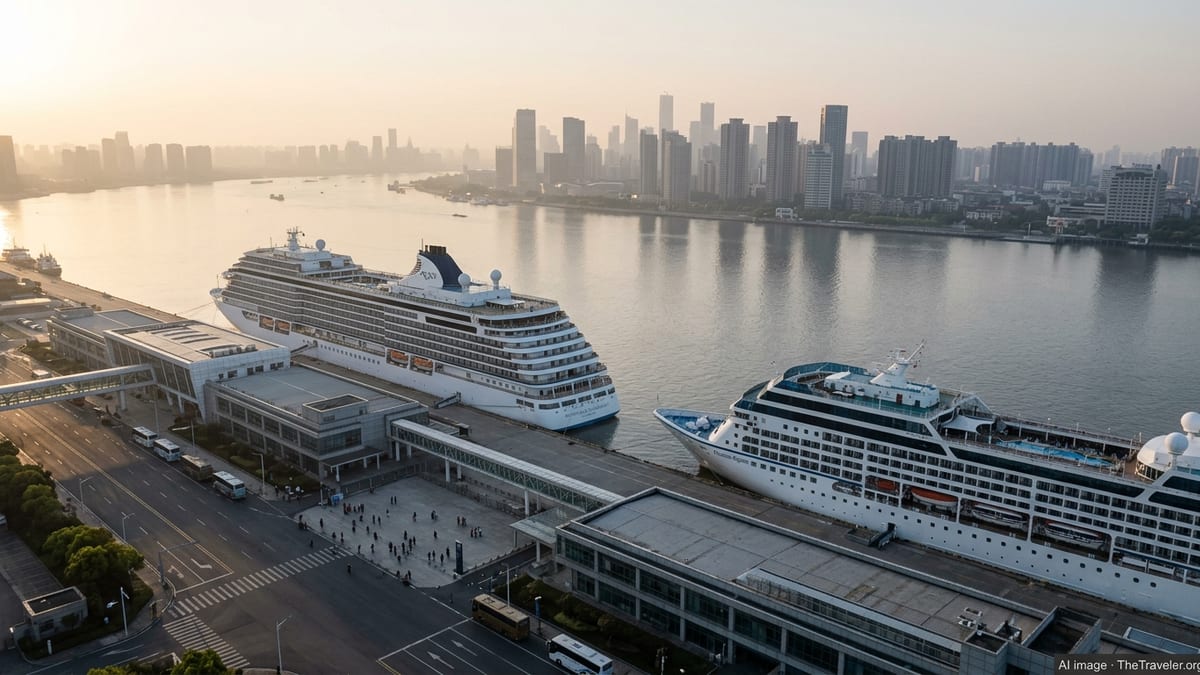
A Landmark Experiment in Chinese-Flag Cruising
Originally launched in 2017 as Viking Sun for Viking’s international ocean fleet, the ship was transferred into a joint venture with China Merchants and re-registered under the Chinese flag, taking the Chinese name Zhao Shang Yi Dun. Publicly available information describes it as the first Chinese-flag luxury cruise ship built to international standards and targeted primarily at overseas guests on domestic routes.
The reflagging allowed the vessel to operate under China’s cabotage framework, opening the way for itineraries entirely within Chinese waters. This positioned Viking Yi Dun as a flagship for a nascent premium segment in China’s cruise industry, testing how an established international brand could adapt to local regulation, port infrastructure and market conditions while still catering to foreign travelers.
Industry coverage indicates that the ship became a focal point in efforts to marry Chinese registration and shore-side partnerships with an international-style onboard product. The experiment provided a live case study in how foreign cruise operators might work within a Chinese-flag context, with implications for everything from customs processing and excursion development to marketing aimed at inbound tourism.
Over several years, Viking Yi Dun’s deployment demonstrated that a China-based, Chinese-flag luxury ship could attract international passengers seeking deeper exploration of the country, rather than quick port calls embedded in wider Asia itineraries. Its Shanghai base and coastal routing helped reinforce the city’s status as a regional cruise gateway.
Role in China’s Post-Pandemic Cruise Recovery
Reports indicate that Viking Yi Dun played a visible role as China cautiously restarted cruise operations after the global suspension of passenger sailings. Operating on pilot programs from Shanghai and other coastal hubs, the vessel was among the first ocean-going ships to resume carrying international guests on itineraries focused solely on China.
These early voyages concentrated on coastal routes linking major cities and emerging destinations, often paired with extensive land programs. Sample schedules combined Shanghai departures with calls at ports such as Zhoushan, Dongtou, Xiamen and Shenzhen, supported by inland touring to cultural and historical sites. The model aimed to reassure guests about health protocols while rebuilding confidence among local stakeholders in the viability of inbound cruise tourism.
The ship’s presence also aligned with broader policy goals to expand high-value tourism and highlight less familiar coastal regions. By including smaller or secondary ports, Viking Yi Dun brought international visitors to destinations that rarely see large-scale foreign cruise traffic, providing local authorities and businesses with practical experience in handling premium cruise calls.
Throughout this phase, the vessel functioned as both a commercial product and a test platform for new procedures. Port operations, passenger flows, and coordination between cruise line, joint-venture partners and local tourism entities were all refined in real time as China’s cruise market adapted to new conditions.
Departure from Shanghai and End of the Chinese-Flag Era
The recent departure of Viking Yi Dun from Shanghai, following a concentrated series of domestic and coastal deployments through 2024 and into 2025, effectively ends its period sailing under the Chinese flag. Trade publications and cruise-tracking reports note that the ship’s schedule of purely China-focused sailings had gradually narrowed, signaling a transition away from its original experimental role.
Coverage of the move frames the end of the Chinese-flag chapter as the closing of a distinct phase in the ship’s life cycle rather than a retreat from the Chinese market altogether. Commentators describe the Chinese-flag deployment as a finite pilot designed to jump-start premium coastal cruising, gather operational know-how and assess long-term demand for inbound-focused itineraries centered on Chinese ports.
The conclusion of this assignment coincides with broader changes affecting China’s cruise and tourism sectors, including the recovery of international air links, evolving visa policies and a more competitive regional cruise environment. As more ships return to Asia and additional homeports compete for itineraries, operators are re-evaluating where and how to deploy capacity that was tied up in specialized or experimental concepts.
For Shanghai, the departure brings to a close a period when a high-profile, Chinese-flag ship served as a symbol of the city’s ambitions to cement its role as a leading embarkation point for international cruise visitors to China. The operational lessons learned during this era are expected to influence how ports and tourism bodies support future calls by both domestic and foreign-flag ships.
Reflagging and Redeployment within Viking’s Global Strategy
Industry reports show that Viking Yi Dun has already undergone a reflagging process, shifting from Chinese registration to the Norwegian flag and receiving updated livery to prepare for new assignments. This change mirrors a broader pattern in which cruise operators adjust flag states and deployment plans in line with regulatory, commercial and fleet-optimization considerations.
The ship’s return to a more conventional registration is widely interpreted as part of Viking’s strategy to integrate the vessel into its expanding portfolio of ocean itineraries. With a capacity of around 930 guests and a design consistent with the rest of Viking’s ocean fleet, the ship can be absorbed relatively seamlessly into existing programs once it is no longer bound by the specific parameters of the Chinese-flag experiment.
Reports indicate that the vessel is expected to operate across European and Mediterranean routes after leaving China, reinforcing Viking’s emphasis on destination-focused itineraries in established cruise regions. In this context, the years spent under the Chinese flag may be viewed as an interlude that allowed the line to maintain visibility in Asia while global travel patterns were in flux.
For Viking, redeploying Viking Yi Dun also offers greater flexibility to balance capacity in markets where demand has rebounded strongly. It enables the company to leverage a relatively young ship in regions where brand awareness is already high, while continuing to tap interest in Asia through itineraries served by other vessels.
Implications for China’s Cruise Ambitions
The end of Viking Yi Dun’s Chinese-flag tenure is being watched closely by observers assessing the trajectory of China’s cruise industry. The project has often been cited as an early example of how China-based operators and international brands might collaborate on premium products designed for inbound travelers rather than exclusively for domestic guests.
The experience suggests that Chinese-flag luxury operations tailored to foreign passengers are possible but highly sensitive to external factors such as border policies, air connectivity and global demand cycles. While the ship helped restore activity and international visibility for Chinese ports, sustaining a dedicated Chinese-flag inbound product appears more challenging as more traditional cruise options return across Asia and beyond.
At the same time, the operational and regulatory knowledge accumulated during Viking Yi Dun’s time under the Chinese flag is likely to carry forward. Ports that handled the ship now have deeper experience with arrival procedures, security screening, provisioning and excursion logistics for premium foreign-oriented cruises, which could benefit future deployments by other lines and vessels.
For China’s long-term cruise ambitions, the ship’s departure underscores the importance of flexible models that can adapt to shifting market conditions. Rather than signaling an end to collaboration with international brands, the Viking Yi Dun case may instead point toward future partnerships in which ships move more fluidly between Chinese and global itineraries, drawing on lessons learned from this high-profile experiment.