


More news on this day
Thunderstorms moving through North Texas early Friday prompted a ground stop at Dallas Fort Worth International Airport, disrupting tightly packed morning flight schedules and creating fresh delays for travelers at one of the nation’s busiest hubs.
Get the latest news straight to your inbox!
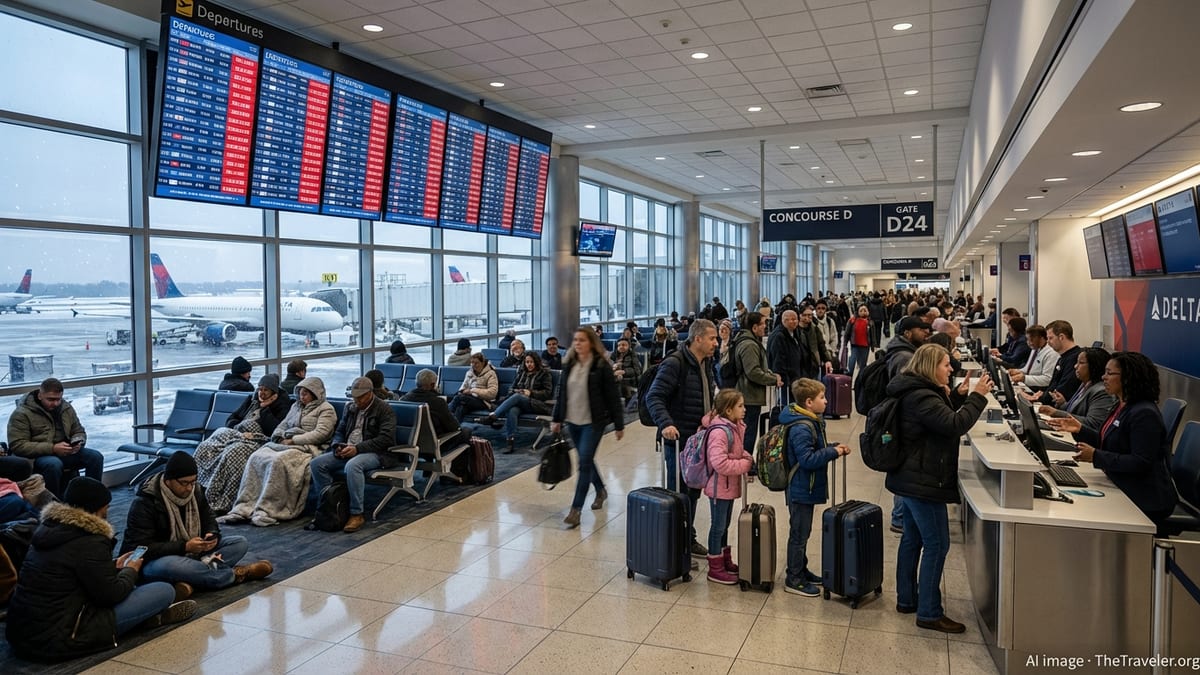
Weather System Stalls Morning Operations
Publicly available aviation data and regional forecasts indicate that strong thunderstorms developed in the Dallas Fort Worth area during the early morning hours, reducing visibility and bringing episodes of heavy rain and lightning near the airport. As cells moved across the North Texas airspace, convective activity along the approach and departure corridors intensified, triggering traffic management actions for Dallas Fort Worth International Airport.
According to national airspace status information, a ground stop was issued for flights destined for DFW that had not yet departed their origin airports. Such measures are typically used when thunderstorm clusters or low clouds reduce the capacity of arrival and departure routes, or when the movement of storms makes it difficult for controllers to sequence traffic safely.
The Friday morning timing magnified the impact. Many DFW-bound flights carry connecting passengers for business and leisure travel, and the first bank of departures from the hub depends heavily on inbound aircraft arriving on schedule. With aircraft unable to depart for North Texas during the ground stop window, ripple effects began to build across the network.
Delays and Cancellations Spread Through the Network
Flight tracking dashboards and airline status pages showed a growing wave of delays and scattered cancellations tied to the storm system and resulting air traffic restrictions. Some departures to Dallas Fort Worth remained at their gates under extended ground holds, while others were assigned significantly later departure times as the ground stop and follow-on delay programs took effect.
Passengers connecting through DFW faced missed connections and rebookings as the morning progressed. Reports from affected travelers described long waits on aircraft at origin airports, revised departure estimates, and gate changes as airlines reshuffled equipment and crews. In some cases, crews already operating at the edge of duty limits risked timing out, further complicating recovery efforts once the weather began to improve.
Disruption was not limited to Dallas Fort Worth itself. Regional airports in Texas and neighboring states that feed DFW’s hub operation also saw schedule changes, as flights that normally shuttle travelers into the hub for onward connections were held back or rescheduled. This cascading pattern is typical when ground stops affect a large connecting airport, especially during peak morning periods.
How a Ground Stop Works at a Major Hub
Ground stops are a key traffic management tool used to protect safety when weather or other issues sharply reduce an airport’s capacity. Under a ground stop, flights that have not yet departed for the affected airport are temporarily held at their origin, rather than being released into the airspace to circle in holding patterns while conditions remain unfavorable.
For a complex hub like Dallas Fort Worth, which normally handles thousands of daily operations, thunderstorms present a particular challenge. Strong cells can sit over arrival and departure fixes, produce wind shear and lightning near runways, and force air traffic controllers to limit the number of aircraft landing or taking off in a given time. When the available arrival rate drops below the scheduled demand, a ground stop or ground delay program is often the only way to keep traffic flows manageable.
Once radar imagery and pilot reports show that storms have weakened or moved away from key corridors, restrictions can be adjusted or lifted. However, even a relatively short ground stop can leave aircraft, crews, and passengers out of position, meaning that operational impacts often continue for several hours beyond the return of flyable weather.
Travelers Urged to Check Status and Expect Residual Delays
Airlines with large operations at Dallas Fort Worth advised customers through public channels to monitor their flight status closely and allow extra time at the airport. Same-day rebooking options, travel alerts, and limited fee waivers are commonly used in similar North Texas weather events, particularly during the late spring and early summer storm season.
Industry performance data show that thunderstorms are among the leading causes of weather-related delays at major U.S. hubs, and DFW’s central location makes it especially vulnerable to fast-developing storm complexes. Travelers connecting through North Texas on Friday were encouraged to build flexibility into their plans, including the possibility of longer layovers, later arrivals, or rerouting through alternate hubs if seats were available.
Observers note that while modern forecasting tools can often flag periods of heightened thunderstorm risk a day or more in advance, the exact timing and intensity of storms still involve substantial uncertainty. As a result, air traffic measures such as ground stops may be implemented or extended with little advance warning, as conditions evolve over the airport and key sections of its surrounding airspace.
Storm Season Challenges for Summer Travel
The latest disruption at Dallas Fort Worth highlights the broader challenges facing airlines and travelers as the core summer travel season coincides with an active convective weather pattern across parts of the United States. Forecast discussions for the Central and Southern Plains in recent days have pointed to repeated rounds of showers and thunderstorms, with some systems capable of producing intense rainfall, hail, and frequent lightning.
For carriers operating large connecting hubs in storm-prone regions, maintaining schedule reliability becomes increasingly difficult when clusters of storms form during peak travel windows. Even when total flight cancellations remain limited, a sequence of short but intense weather events can generate rolling delays that affect travelers across multiple days.
Travel analysts point out that this type of episodic weather disruption is now a routine feature of peak-season planning. Many travelers build in buffers or choose earlier flights in anticipation of potential afternoon and evening storms around key hubs such as Dallas Fort Worth. Friday’s ground stop underscores why those strategies can be valuable, especially for itineraries with tight connection times.