


More news on this day
Rail passengers across the East Midlands are being warned to expect a week of major disruption on services to and from London after a fatal collision between two East Midlands Railway trains near Bedford, which has left key sections of the Midland Main Line closed while investigations and repairs continue.
Get the latest news straight to your inbox!
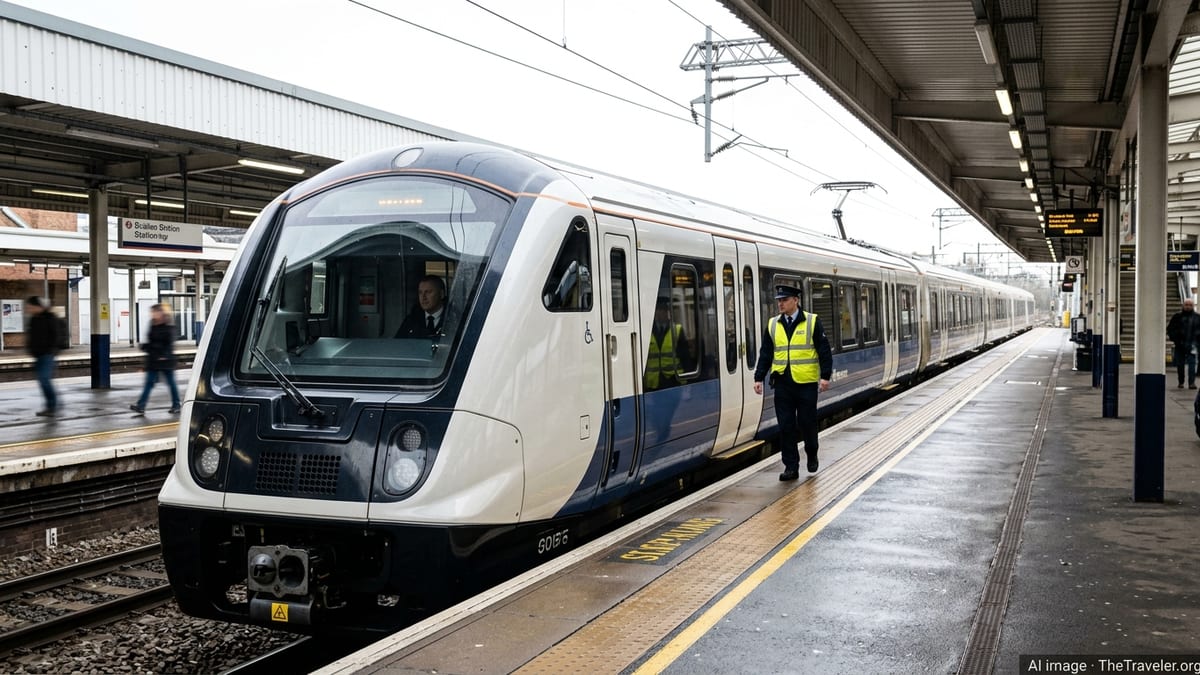
Services curtailed between London and the East Midlands
Publicly available information shows that trains on the busy Midland Main Line between London St Pancras, Bedford and the wider East Midlands are subject to cancellations, diversions and extended journey times following the collision on Friday 19 June near Elstow, just south of Bedford. Two East Midlands Railway services bound for the capital were involved in the incident, which occurred in the evening peak and led to the death of a driver and scores of injuries.
Reports indicate that the section of line affected was already due to be closed over the weekend for planned engineering work, but the scale of damage following the crash means restrictions are now expected to last significantly longer. Operators are focusing on keeping a limited service moving on alternative routes, while long-distance and commuter passengers are being urged to check journey planners repeatedly before travelling.
According to published coverage, Network Rail teams are working alongside specialist investigators to assess the state of the track, signalling and overhead power equipment in the vicinity of the crash. Until those inspections are complete and any urgent repairs carried out, normal operations between London and the East Midlands cannot resume, leading to a prolonged period of uncertainty for regular users.
Early indications from travel updates suggest that some trains from Nottingham, Derby, Sheffield and Corby to London are being turned short, diverted or replaced by buses on part of the journey. This is contributing to longer travel times and crowding on remaining services that are able to run into St Pancras.
Replacement buses and alternative routes for stranded passengers
Information published by journey planners and rail operators points to an expanded network of rail replacement buses operating around Bedford while the main line remains blocked. These buses are being used to move passengers between key intermediate stations and to connect with services running on unaffected stretches of track, but capacity is limited compared with normal train operations.
Passengers travelling from East Midlands towns into London are being advised in public notices to allow considerably more time than usual, with some journeys potentially taking an extra hour or more. Those with flexible plans are being encouraged to travel at quieter times of day or to postpone nonessential trips until later in the week, once the picture on repairs and reopening becomes clearer.
According to travel industry coverage, ticket acceptance has been agreed on some parallel routes, allowing East Midlands passengers to use other operators where capacity allows. However, these lines are themselves busy and can quickly become congested, particularly during commuter peaks and on services serving airports and other major hubs.
Local reports from the Bedford area describe significant pressure on road networks close to rail replacement stops, as displaced rail users compete with regular traffic. This has raised concerns that delays may ripple beyond the railway itself, with potential knock-on effects for bus reliability and road travel times across parts of the region.
Safety investigation keeps key corridor closed
The crash near Bedford has triggered a formal investigation by national rail accident specialists, working alongside the British Transport Police and other agencies. According to published reporting, investigators are gathering evidence from on-board data recorders, signalling logs, trackside equipment and witness accounts to determine precisely how two high-speed services came to collide on the same stretch of line.
Until that work progresses, the affected area is being treated as a controlled incident site, limiting the access available for routine engineering staff who would normally be able to move quickly to repair infrastructure and restore services. This has contributed to expectations of a week-long disruption window, as safety and investigative priorities take precedence over operational pressures.
Media coverage indicates that East Midlands Railway has adjusted its timetables at short notice, cancelling some services outright and altering stopping patterns on others. The operator is using its website, social media channels and station announcements to urge customers to verify the status of their specific train before leaving home, reflecting the fast-changing nature of the situation.
Industry commentators note that the Midland Main Line is a critical artery for both long-distance and commuter traffic connecting the East Midlands with London. Any extended closure of a section near Bedford, where multiple routes converge, inevitably has a disproportionate impact on the reliability of the wider network.
Ongoing engineering work heightens disruption
The timing of the collision has amplified the effect on passengers because it coincides with a period of planned engineering work on the same corridor. Network Rail had already scheduled closures and capacity restrictions around Bedford for track, signalling and infrastructure upgrades, part of a rolling programme of works designed to improve resilience and performance on the route.
According to information from rail industry briefings, the planned works involve complex tasks that cannot easily be moved or compressed, such as renewing track components, adjusting overhead line equipment and integrating signalling systems. With crash-related repairs now needing to be slotted into that programme, the operational constraints are tighter than originally forecast.
Some services that might otherwise have been diverted during the engineering work are now more difficult to reroute because of the limited availability of alternative paths on neighbouring lines. This is particularly true at busy junctions where freight, regional and long-distance passenger traffic all compete for the same infrastructure, making it harder to accommodate additional trains at short notice.
Passenger groups have highlighted that this combination of a major incident and pre-planned works underlines the vulnerability of key corridors when multiple factors overlap. They argue, in commentary carried by transport-focused outlets, that clear and timely communication about disruption is vital so that travellers can make informed decisions about their journeys.
Advice for East Midlands travelers planning the week ahead
For travellers in the East Midlands, publicly available guidance from train operators and journey planners emphasises preparation and flexibility in the days ahead. Passengers are being urged to check live updates on the morning of travel and again shortly before departure, as short-notice cancellations and changes of platform or stopping pattern remain possible while services are gradually restored.
Season ticket holders commuting into London from cities such as Leicester, Nottingham and Derby are being advised to consider working from home where possible, or to adjust working hours to avoid the busiest trains. For those who must travel, recommendations include allowing extra time to make connections, being ready for crowded replacement buses, and carrying water or other essentials in case of extended delays.
Long-distance leisure travellers, including international visitors using East Midlands routes to reach London, airports or onward connections, are encouraged by travel advisories to build in generous buffers between train journeys and time-critical events such as flights or theatre performances. Refund and ticket-change policies are being relaxed in some cases, although details vary between operators and ticket types.
As investigations and repairs progress over the coming week, the pattern of disruption on the East Midlands network is expected to evolve. Regular users are being told through public communications to monitor national journey planners and local news outlets for signs that sections of the route are reopening, while remaining prepared for continued short-term inconvenience on one of the region’s most important rail links.