


Florence and Rome are two of Italy’s great city destinations, but they are also powerful bases for exploring the country on day trips. With limited vacation time, many travelers wrestle with the same question: is it better to base in Florence and dip into Tuscany and the coast, or stay in Rome and fan out into Lazio, Umbria, and beyond? The answer depends less on abstract “must-sees” and more on the kind of Italy you want to experience, your tolerance for train time, and how quickly you like to travel.
Get the latest updates straight to your inbox!
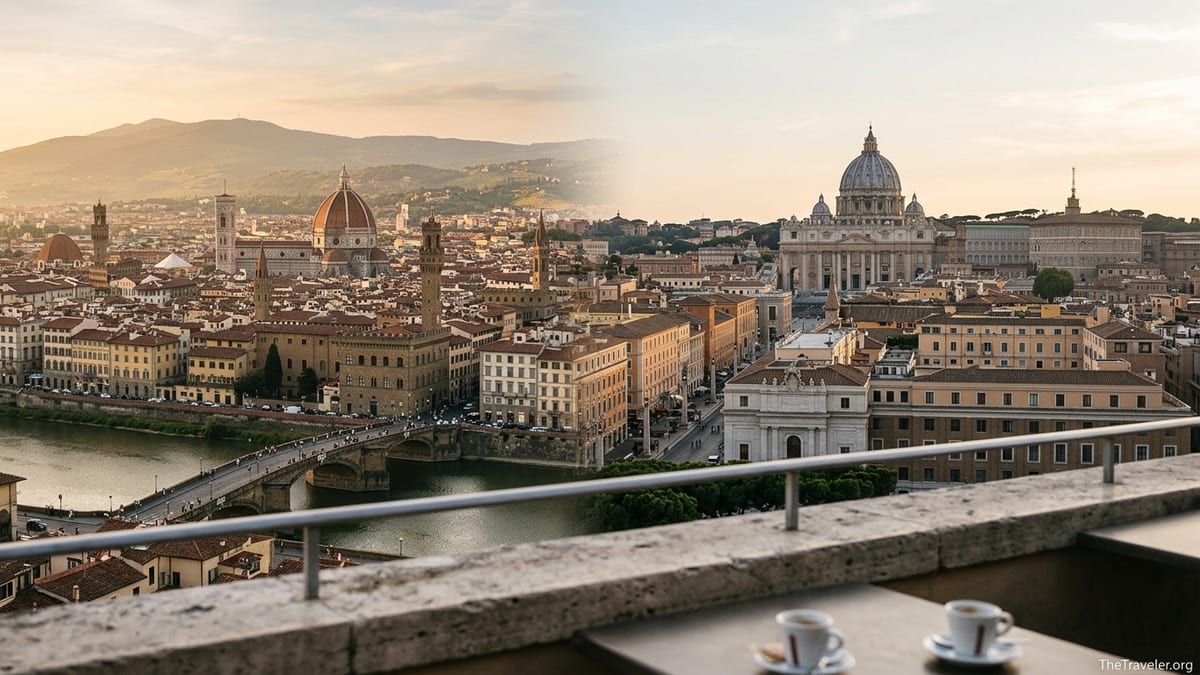
Florence vs Rome as a Day-Trip Hub
Florence is compact, walkable, and ringed by classic Tuscan landscapes, so the psychological shift from city to countryside happens fast. Step out of Santa Maria Novella station and in about an hour you can be leaning against medieval walls in Lucca, cycling the ramparts, or standing under the Leaning Tower in Pisa. Regional trains to Pisa usually take around 50 to 70 minutes, with fixed, relatively low fares that rarely require advance booking. For many travelers, that combination of small-city base and quick access to hill towns and vineyards feels like the romantic Italy they imagined.
Rome is a different beast. It is bigger, busier, and more sprawling, yet it also sits at the heart of an exceptionally dense web of rail and bus connections. A regional ticket to the seaside ruins of Ostia Antica or the fountains of Tivoli can cost just a few euros each way, with journey times often under an hour. You can walk out of Termini station after breakfast and be wandering through Roman apartment blocks frozen in time at Ostia Antica before lunch. The capital also reaches further afield in a single day, making ambitious trips to Orvieto in Umbria or even Pompeii possible if you are willing to start early and get back late.
Choosing between them comes down to the flavor of day trips you want. Florence specializes in gentle landscapes, wine country, and compact medieval towns. Rome delivers ancient ports, imperial villas, volcanic hill towns, lakes, and occasional long-haul archaeological blockbusters. Neither is objectively better, but each shapes a very different week in Italy.
What a Florence-Based Day Trip Looks Like
A prototypical Florence day trip is Siena. Buses and organized tours reach Siena in roughly 1.5 hours, and the payoff is wandering into a perfectly preserved medieval city built around the shell-shaped Piazza del Campo. Travelers often buy a combined ticket for the cathedral complex, which gives timed access to the Duomo, the Piccolomini Library with its vivid frescoes, and the Baptistery. Many visitors pair sightseeing with a long lunch of pici pasta and a glass of Chianti in a trattoria just off the main square, then return to Florence in the early evening without feeling rushed.
Another classic pairing from Florence is Pisa and Lucca. Trains to Pisa generally take under an hour, and most people spend a couple of hours around the Piazza dei Miracoli, climbing the Leaning Tower on a timed ticket and ducking into the cathedral and baptistery. From there, a short hop by regional train brings you to Lucca, a smaller walled city where you can rent bikes at one of the shops near the station and cycle the tree-lined ramparts. The journey back to Florence in the late afternoon is usually under 90 minutes, giving you a two-town day with a manageable transit load.
For more ambitious travelers, Florence can even serve as a jumping-off point for Cinque Terre. Recent guides are candid that a true day trip involves around 2.5 hours of train travel each way, typically changing in Pisa or La Spezia, before you board the local Cinque Terre service to hop between villages. That means a long but rewarding day of coastal views, short hikes between villages such as Vernazza and Monterosso, and seafood lunches overlooking the water. With this much travel, many visitors now choose to splurge on an overnight along the coast, but tight itineraries still make the Florence-to-Cinque Terre dash work by catching an early departure.
What a Rome-Based Day Trip Looks Like
From Rome, the template day trip is Ostia Antica. Riders take Metro line B to Piramide, switch to the suburban Metromare train, and in about 45 minutes from central Rome find themselves at the gate of the ancient port city. Entrance fees are modest compared with headline sites like the Colosseum, yet the ruins feel expansive and uncrowded. Travelers wander mosaicked bathhouses, sit on stone seats in the theater, and climb staircases inside former apartment buildings while hearing seagulls from the nearby sea. Many cap the day with a late seafood lunch in modern Lido di Ostia before riding back into Rome at sunset.
Tivoli provides a different flavor. Regional trains and buses typically reach the town in about an hour from Rome. From the station, it is a short walk up into the historic center and on to Villa d’Este, where multi-tiered Renaissance gardens erupt with fountains and grottoes powered by ingenious gravity-fed systems. A short bus or taxi ride away, Hadrian’s Villa spreads across the countryside in ruins that evoke an emperor’s private world, from artificial lakes to libraries. Combined tickets for the two sites plus transport from Rome can still be relatively affordable, especially if you use regional trains rather than all-inclusive coach tours.
Rome can also send you north into Umbria on a whim. Direct trains to Orvieto generally take a bit over an hour, with several departures a day. On arrival, a funicular whisks you up the volcanic tufa cliff into a hill town that feels worlds away from the capital. Travelers often spend their day visiting Orvieto’s striped cathedral, descending into underground cave systems carved by centuries of inhabitants, and sipping local white wine on panoramic terraces. It is a slower, more contemplative Italy than Rome, yet you still sleep in your Roman hotel that night.
Distance, Time and Cost: Understanding the Trade-Offs
On paper, Florence and Rome are well connected by high-speed trains. In practice, your daily experience is defined more by regional services and how long you are willing to sit on them. From Florence, regional trains to Pisa or Arezzo hover around the one-hour mark each way, making them easy half-day or full-day trips. Lucca takes roughly 80 minutes with a change at Pisa, while more distant destinations such as the Cinque Terre area often require at least 2.5 hours and a change in La Spezia or Pisa. Many travelers use that rule of thumb: under 90 minutes each way is a relaxed day trip, over two hours each way starts to feel like a marathon.
Rome’s regional network is dense and inexpensive. Current guides highlight that tickets to Ostia Antica or Tivoli can run to just a few euros one way, and journey times are frequently between 35 and 60 minutes. Orvieto is a bit farther and typically costs more, often in the mid-teens of euros each way depending on train type and how far in advance you book, but the dramatic hilltop arrival makes the extra spend feel worth it for many visitors. More ambitious excursions like Pompeii or Naples are technically feasible on high-speed trains, yet they add up quickly in both money and fatigue, and many Italian specialists now caution against them as simple “day trips” from Rome.
In both cities, regional train prices tend to be fixed and do not increase near departure, which means you can often buy them on the day from machines or ticket counters without penalty. High-speed services, by contrast, reward advance planning and are best booked earlier if you know your dates. Budget-conscious travelers looking to string together multiple day trips will generally lean heavily on the regional network and reserve the pricier high-speed options for major relocations between cities.
Types of Experiences: Art, Ruins, Wine or Sea?
The deeper question behind “Florence or Rome” is often about mood rather than logistics. Florence-centric day trips cluster around Tuscan identity: stone farmhouses, vineyards, hill towns, and small-scale Renaissance art. A typical week might see you take a bus tour through the Chianti region, stopping at a family-run winery for a tasting and light lunch; then a day in Siena immersed in Gothic art and Palio horse-race lore; then a combined Pisa and Lucca outing mixing big-ticket monuments with laid-back cycling. If you visit in the shoulder seasons of April or October, fields around San Gimignano or Volterra can glow with soft light while still being warm enough for terrace dining.
Rome’s orbit tilts toward antiquity and geological drama. In Ostia Antica, you step through entire Roman neighborhoods. In Tivoli, water thunders from hillside fountains and imperial ruins spill across a valley. Orvieto rises sheer from a volcanic plateau, its streets offering viewpoints across rolling Umbrian countryside. Even destinations further afield, like the Alban Hills and the papal retreat of Castel Gandolfo, frame their lakes and palaces with volcanic craters and forested slopes. If your dream Italy is layered with Roman roads, ruined amphitheaters, and crumbling villa walls, Rome is a more fertile base.
The sea is accessible from both cities but in different ways. From Florence, reaching the Ligurian coast or Cinque Terre in a day requires longer rides and early starts. Many travelers who want serious beach or hiking time now structure their itineraries so they overnight on the coast rather than commuting from Florence. From Rome, a quick suburban train run brings you to the beaches around Ostia, while longer day trips can reach Anzio or Nettuno for a mix of World War II history and seaside promenades. None of these are pristine escape-from-the-world beaches, yet for city dwellers craving salt air and a plate of fried seafood at lunch, they do the job admirably.
Who Should Base in Florence, and Who in Rome?
If this is your first trip to Italy and you picture terracotta rooftops, Tuscan vineyards, and compact medieval streets, Florence is more likely to match your imagination. Travelers who dislike very large, noisy cities often report feeling more relaxed using Florence as their base and making one or two well-chosen excursions: for example, a Siena day, a Pisa plus Lucca day, and perhaps a Chianti wine tour. Families with younger children also appreciate the shorter travel times and smaller stations, which make returning for an afternoon rest relatively easy.
Rome suits travelers who thrive on energy and want their day trips to feel dramatically different from one another. A five-night stay in Rome might see you spend one day at Ostia Antica exploring ruins under umbrella pines, another in Tivoli strolling Baroque gardens, and a third in Umbria tasting Orvieto Classico under the shadow of a cathedral. Older teenagers and adults often find the variety exciting. Rome also works well for repeat visitors who have already checked off many city-center sights and now want to deepen their understanding of ancient and early modern Italy through its wider region.
The deciding factor for many is how much you care about evenings. Staying in Florence, your nights tend to be calm: aperitivo in a small square, a sunset walk along the Arno, maybe a gelato while buskers play under the Duomo. From Rome, your day trips end in a city that stays buzzing late, with vibrant neighborhoods like Trastevere or Monti offering dinner far into the evening. Ask yourself whether you want to come “home” to serenity or to more urban stimulation.
Planning Strategy: How Many Day Trips Is Too Many?
A common mistake is to over-pack day trips into a short stay. Many up-to-date Rome guides now suggest that you only add a day trip if you have at least four full days in the city, and the same rule of thumb works for Florence. Two or three day trips in a seven-night stay is usually the upper limit before everything blurs into train timetables. For instance, a one-week Florence visit might include a full day in Siena, a Pisa and Lucca combo, and a Chianti countryside tour, leaving the rest of the time for museums and aimless city wandering.
When comparing Florence and Rome, think in terms of themes rather than sheer numbers. In Florence, choose one “art and history” outing (Siena or Arezzo), one “iconic landmark” outing (Pisa with its tower), and perhaps one “landscape and wine” outing (Chianti or Val d’Orcia). In Rome, aim for one “Roman ruins” day (Ostia Antica), one “villas and gardens” day (Tivoli), and one “hill town” experience (Orvieto or a smaller Lazio town such as Viterbo). This approach keeps your week varied without overextending your energy or budget.
It also pays to build in weather and seasonal flexibility. Summers around Florence and Rome now regularly climb into uncomfortable heat, making long days in full sun on stone ruins less appealing. In July or August, you might prioritize shaded gardens in Tivoli or early-morning visits to exposed sites like Pisa’s Field of Miracles, then retreat indoors for long lunches. In shoulder seasons, you can stretch your walking days further and perhaps add a more distant destination like Cinque Terre from Florence or a lake district around Rome without feeling worn down by the climate.
The Takeaway
There is no universal winner between Florence and Rome as a base for day trips, only a better fit for your travel style. Florence excels if you want a smaller, gentler city with easy access to Tuscan hill towns, vineyards, and a handful of iconic sights. Its best day trips, like Siena or a Pisa and Lucca combination, require manageable train or bus rides and reward you with intimate streetscapes and deep dives into medieval and Renaissance Italy.
Rome shines if you are drawn to sweeping history and varied landscapes. From the capital, you can stand in intact Roman apartment blocks at Ostia Antica one day, wander through fountain-filled gardens in Tivoli the next, and then gaze across Umbrian hills from Orvieto on a third. Public transport is frequent and often inexpensive, though journey times can creep up if you chase far-flung bucket-list sights.
If your itinerary allows, the most satisfying solution for many travelers is not to choose at all. Spending three or four nights in each city gives you a taste of both ecosystems of day trips and a more rounded sense of central Italy. If you must pick only one, let your gut decide: vineyards and hill towns lean you toward Florence, ruins and varied regional adventures tilt you toward Rome. Either way, Italy will reward you the moment you step off the train.
FAQ
Q1. Is Florence or Rome better for first-time visitors who want day trips?
Florence is often better for first-timers who picture Tuscan hill towns, vineyards, and manageable travel days. Rome works well if you are especially interested in ancient ruins and do not mind a busier, more urban base.
Q2. How many day trips should I plan from Florence?
For a stay of five to seven nights in Florence, two or three day trips is usually enough. Popular choices are Siena, Pisa plus Lucca, and a Chianti countryside or wine tour.
Q3. What is the easiest day trip from Rome by public transport?
Ostia Antica is one of the easiest. You combine the metro with a short suburban train ride, and you can be walking through ancient Roman streets in around 45 minutes from central Rome.
Q4. Can I visit Cinque Terre as a day trip from Florence?
Yes, but it is a long day that typically involves about 2.5 hours of train travel each way plus at least one change. Many travelers now prefer to spend a night on the coast if they can.
Q5. Are day trips from Rome more expensive than from Florence?
Not necessarily. Short regional trips from Rome to places like Ostia Antica or Tivoli can be very inexpensive. Longer excursions that require high-speed trains, such as to Naples or Florence itself, can cost more and add to your daily budget.
Q6. Which base is better if I do not like big, crowded cities?
Florence generally feels smaller and calmer than Rome, so it is usually the better base for travelers who are sensitive to noise, traffic, or crowds, especially in the evenings.
Q7. Can I use Florence or Rome as a base to visit vineyards without a car?
Yes. From Florence, many small-group tours take you into the Chianti region for tastings and lunch without needing to drive. From Rome, wine-focused trips tend to head to the Castelli Romani hills or Umbria and are usually organized as guided tours.
Q8. Is it realistic to take a day trip from Rome to Pompeii?
It is possible using high-speed trains and local connections, but it makes for a very long and often tiring day. Many Italy specialists now suggest visiting Pompeii as part of a separate southern Italy stay rather than a quick day trip from Rome.
Q9. Do I need to book train tickets in advance for day trips?
Regional train tickets for short day trips often have fixed prices and can usually be bought on the day from machines or ticket counters. High-speed trains, which are used for longer journeys, are best booked in advance to secure lower fares and seats.
Q10. If I have a week in Italy, should I split time between Florence and Rome?
If you can, splitting a week between the two gives you the best of both worlds. Three or four nights in each city allows time for one or two carefully chosen day trips from both Florence and Rome without rushing.