


Westgate Resorts is one of the most visible timeshare brands in the United States, with high-profile properties in Orlando, Las Vegas, Park City, Gatlinburg and beyond. If you have ever accepted a discounted stay, free show tickets or a gift card in exchange for “a short 90-minute presentation,” there is a good chance Westgate was involved. Before you sign anything, it is important to understand exactly how Westgate vacation ownership works in practice, what it will cost you every year, and the potential downsides that often only become obvious after buyers get home.
Get the latest updates straight to your inbox!
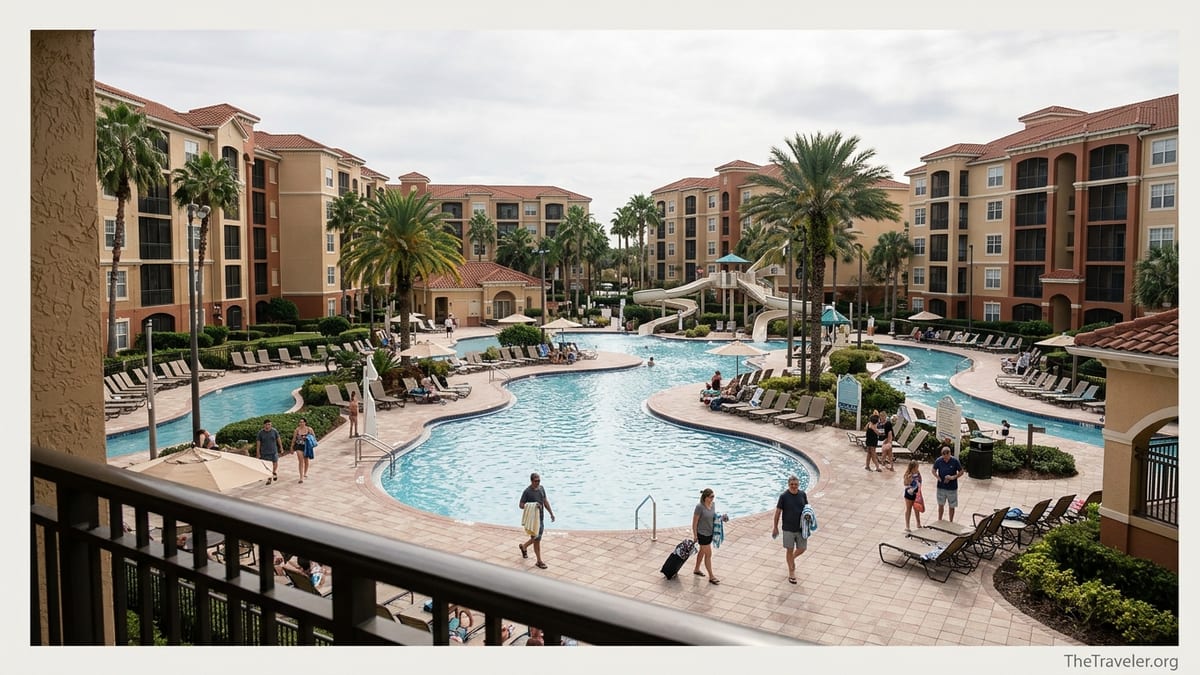
What Westgate Vacation Ownership Actually Is
At its core, a Westgate Resorts timeshare is typically a deeded real estate interest tied to a specific resort, unit type and season. In many cases it is a fixed week, meaning you own the right to use the same week number in the same villa year after year. For example, a family might purchase a deeded Week 26 in a two-bedroom villa at Westgate Lakes Resort & Spa in Orlando, giving them the right to stay there every late June or early July, as long as they keep up with their payments and annual fees.
Unlike a hotel booking, you are not just paying for a single vacation. You are buying a long-term obligation. Westgate treats most of its ownerships as real property, so your interest can be recorded in the county’s land records and typically runs in perpetuity or for a very long term. Even if you no longer vacation there, the annual fees will continue until you legally transfer or surrender the ownership.
Westgate also offers some floating or “seasonal” ownerships and access to exchange companies, which allow you to trade a week in Orlando for a stay at another destination, such as Westgate Smoky Mountain Resort & Water Park in Gatlinburg or Westgate Park City Resort & Spa in Utah. In practice, this flexibility depends heavily on availability, how early you plan and what season you own. A peak winter ski week in Park City will generally carry more trading power than a mid-September week in central Florida.
More recently, Westgate has layered on loyalty and travel programs like the World of Westgate rewards and Westgate Cruise & Travel, which can convert some usage into points or travel credits. These are add-ons to the basic structure, not substitutes for the underlying reality that you own a specific week at a specific resort and must pay for it each year whether you use it or not.
How a Typical Westgate Purchase Works
For most buyers, the journey begins with a marketing offer. You might see a social media ad for a three-night Orlando getaway for a few hundred dollars, or receive a phone call offering a low-cost Las Vegas stay plus show tickets. The catch is that at some point during your vacation you agree to attend a sales presentation on Westgate vacation ownership, often described as 90 minutes but frequently lasting two to three hours or more according to owner reports and consumer reviews.
During the presentation, sales staff walk you through model villas, emphasize family memories and rising hotel prices, then describe ownership packages. A common scenario might be an offer around five figures for a one-week annual stay in a one- or two-bedroom villa, typically financed with a high-interest loan if you cannot pay cash. It is not unusual for buyers to be quoted prices in the 15,000 to 30,000 dollar range or more for larger units, holiday weeks or desirable ski-season weeks in places like Park City, with only a small down payment due that day.
If you hesitate, the presentation often continues with “today only” discounts, upgraded unit types, or “owner resale” weeks at a supposedly steep markdown. Buyers frequently report being shown a higher initial price, then a lower figure after several rounds of manager approvals. For example, a couple might first be offered a 24,000 dollar package at Westgate Las Vegas Resort & Casino, decline, then be shown a “special” 14,000 dollar package framed as a one-time opportunity. The constant throughout is that you are asked to make a significant financial decision in a high-pressure environment, away from your usual support system and without time to research independently.
If you sign, you typically leave with a thick stack of documents, a payment schedule for the purchase price if you financed, and an annual bill for maintenance fees and taxes that will begin almost immediately. In many states you also have a short statutory rescission period, often between 5 and 10 calendar days from the date you sign, during which you can cancel in writing and receive a refund of your deposit. After that window closes, getting out becomes much more complicated.
What You Really Pay: Purchase Price, Maintenance Fees and Extras
The first cost is the purchase price itself. Because Westgate is selling directly to consumers through its own sales centers, the price you pay in the presentation room is typically far above the resale market. While individual numbers vary, it is common to see real-world examples of Westgate weeks bought directly from the developer for 10,000 to 30,000 dollars that later appear on resale marketplaces for only a few hundred dollars, or even with the seller offering to pay closing costs just to be free of the ongoing fees.
The fee that affects owners every year is the maintenance fee, sometimes called the assessment, plus any property taxes collected with it. Westgate’s own materials show that this fee varies by resort, unit size and season, and that it funds resort operations, staffing, utilities, insurance, housekeeping, landscaping and long-term repairs. A typical owner of a two-bedroom villa in a popular family resort like Westgate Lakes or Westgate Town Center near Orlando might pay a four-figure annual fee, often somewhere in the low to mid thousands of dollars, with the amount tending to increase over time rather than decrease.
For example, an owner of an every-year two-bedroom week might recall paying around 800 dollars in annual maintenance fees when they first bought, only to see that bill climb past 1,200 dollars after several years. Owners at more expensive mountain and ski resorts such as Westgate Park City often report even higher assessments reflecting the higher costs of operating in those locations. In addition, Westgate and its homeowners associations can levy special assessments in certain circumstances for major projects, which means an unexpected bill on top of the regular fee.
There are also travel costs that are easy to overlook in the presentation. Even if your stay is “prepaid” through ownership, you still need to get to the resort. A family of four driving to Orlando from Georgia might budget a few hundred dollars for fuel and food each way, while another family flying from Chicago to Salt Lake City to use their Park City ski week might spend thousands of dollars per trip on airfare, lift tickets and rental equipment. These real-world costs mean that a timeshare works best for travelers who are confident they can afford to vacation regularly and who prefer returning to similar destinations year after year.
Perks, Rewards and How They Really Work
Westgate highlights owner benefits and loyalty rewards to sweeten the value proposition. The World of Westgate loyalty program, for instance, offers tiered benefits such as discounts on on-property restaurants, spa treatments and retail, annual resort credits for higher tiers, waived resort and destination fees, and access to perks like discounted pool cabanas or complimentary water park admission at certain properties. Owners who have purchased directly from Westgate may be automatically placed into an ownership tier based on their total purchase price, with higher spending leading to richer perks.
In practical terms, these benefits can add some tangible value if you already love staying at Westgate resorts. A family that owns at Westgate Las Vegas, for example, might use discounted show tickets, food and beverage discounts, and free high-speed Wi-Fi during a long weekend, easily saving a few hundred dollars compared with paying full price. At Orlando properties like Westgate Town Center, perks like water park admission and resort fee waivers can meaningfully reduce on-site costs for families who plan to spend much of their time on property.
Westgate also promotes travel programs that allow owners to convert some use into points or access discounted travel products such as cruises, hotels and car rentals. A Park City owner might, for instance, deposit their ski week through an exchange or travel program in a particular year to book a Caribbean cruise instead, or use access to a partner network for a city weekend in New York. These possibilities are real for many owners, but they depend heavily on program rules, availability and booking windows. Owners often report that peak times and the most desirable destinations can be difficult to secure without planning many months in advance.
A crucial nuance is that many of the richest loyalty perks specifically apply to accounts purchased directly from Westgate and in good standing. Resale buyers who purchase a deed from an existing owner at a steep discount may find that they are not eligible for certain reward tiers, resort credits or on-property discounts. In practice, this creates a two-tier system where direct purchasers pay more but receive more perks, while resale buyers enjoy a lower upfront price but fewer benefits beyond the core right to occupy their unit week each year.
Key Questions to Ask Before You Buy
Because Westgate presentations move quickly and emphasize emotion, it is crucial to slow the process down by asking specific, concrete questions. One of the first is exactly what you are buying. Are you purchasing a deeded fixed week, a floating week in a specific season, or some form of points allocation? For example, ask whether “Week 32 in Orlando” means you are guaranteed that specific August week each year, or only entitled to book within a wider July to September window subject to availability.
You should also ask for the current annual maintenance fee including taxes, the average increase over the last five years, and any history of special assessments at your chosen resort. If a sales representative tells you your fee is currently around 1,200 dollars per year for a two-bedroom in Gatlinburg, follow up by asking what it was five years ago and whether there are any pending capital projects that might lead to a future fee spike. These real-world numbers matter more than projections about general “hotel inflation.”
Usage and exchange rules deserve the same scrutiny. Ask how early you can reserve your week, what happens if you do not use it one year, and what fees apply when you book exchanges through outside networks or internal programs. A Las Vegas owner who likes to attend a major annual convention, for instance, should confirm whether their week actually covers those dates or whether convention weeks are blocked out or subject to different rules.
Finally, be explicit about exit options. Ask whether Westgate participates in any official surrender or deed-back program for owners who have paid off their loans and are current on fees, and how often such requests are granted. Also ask what happens to your obligations if your income changes or you simply no longer vacation as often. If the representative cannot show you these answers in writing, assume that any verbal assurances may not be enforceable later.
Common Downsides and Complaints Owners Report
Even satisfied Westgate owners often acknowledge recurring downsides that are important to weigh before you buy. The most basic is inflexibility. Owning a fixed week at Westgate Smoky Mountain Resort & Water Park in Gatlinburg can be wonderful if you plan to visit the Smoky Mountains nearly every year, but it can feel like a burden if your travel style shifts toward international trips or offbeat destinations. Exchanging your week through external networks is possible, yet availability and extra fees mean the experience may not feel as simple as booking a hotel online.
Rising maintenance fees are another major concern. Consumer reviews and owner discussions frequently mention annual assessments that increase faster than general inflation, with some owners feeling that the quality of the accommodations does not always keep pace. A longtime owner of an every-other-year week might see their maintenance invoice climb steadily, even through economic downturns or after major resort renovations are complete, leading them to question whether the value still makes sense for their family.
Resale value is perhaps the most sobering downside. Buyers who paid 20,000 dollars or more during a high-pressure presentation often discover later that similar weeks are advertised on resale forums for a fraction of that price, and that completed resales, when they occur, sometimes involve the seller paying closing costs or even incentive cash to the buyer just to offload the ongoing fee obligation. That disconnect between developer pricing and resale reality is a structural feature of the modern timeshare industry, and Westgate is no exception.
Finally, potential buyers should be aware of the difficulty many owners report when trying to cancel after the rescission period or negotiate a surrender of their ownership. Better Business Bureau and consumer review sites include numerous stories from owners who felt they were given incomplete information during the sales process, struggled to reach knowledgeable representatives later, or experienced credit score impacts when they stopped paying on unwanted contracts. While individual outcomes vary, the pattern underscores that a Westgate timeshare is easiest to avoid before you sign, not after.
Real-World Scenarios: When Westgate Ownership Can Make Sense
Despite the potential pitfalls, there are scenarios where a Westgate timeshare can suit certain travelers. Consider a multigenerational family that lives in the Southeast and has visited Orlando several times. They know they love theme parks, plan to return annually for the foreseeable future, and value staying in a multi-bedroom villa with a full kitchen and resort-style amenities. If that family buys a reasonably priced week at a resort like Westgate Lakes or Westgate Town Center, uses it every year, and fully budgets for the annual fee and travel costs, they may feel satisfied over time, especially if they book during peak school break weeks when cash hotel rates are highest.
Another reasonable scenario might involve a ski-obsessed couple who plan to ski in Utah each winter for the next few decades. If they purchase a prime ski-season week at Westgate Park City, near the lifts and amenities of a major mountain, and actually use it almost every year, they may compare their effective nightly cost favorably to booking a similar condo at retail prices, especially if they bought resale at a steep discount from an existing owner rather than paying the full developer price.
However, these best-case scenarios depend on discipline and realistic expectations. Buyers need to treat the purchase more like a prepayment for a specific pattern of future vacations than an “investment” that will grow in value. They should be comfortable reading legal documents, tracking annual fee increases and making reservations early. Above all, they should enter the arrangement with the understanding that it may be difficult or impossible to recoup their initial outlay if their circumstances change.
For many casual travelers who like to mix destinations, chase last-minute deals or adjust plans based on airfare sales, a Westgate timeshare may feel more like a constraint than a benefit. Comparing the total long-term cost of ownership, including interest if financed and rising fees, against simply booking similar condos through vacation rental platforms or hotel loyalty programs is an essential step before signing a contract.
The Takeaway
Westgate Resorts offers spacious villas in popular vacation spots, from the high-rise tower of Westgate Las Vegas Resort & Casino to the wilderness feel of Westgate Smoky Mountain Resort in Gatlinburg and the theme-park convenience of its Orlando properties. For a specific kind of traveler who values returning to the same destinations, plans vacations well in advance and can comfortably afford rising annual fees, a carefully chosen week, particularly on the resale market, can deliver years of family memories.
Yet the structure of Westgate vacation ownership means that you are committing to a long-term obligation, not just booking a trip. Purchase prices sold directly by Westgate are typically far above what you could pay for a similar week on the resale market, maintenance fees tend to increase over time, and exit options after the short legal rescission period are limited and often frustrating. Complaints about high-pressure sales tactics, confusing contract terms and weak resale value are common enough that they should be part of any honest pre-purchase evaluation.
Before accepting a complimentary breakfast and a “quick” presentation, travelers should know exactly what they are walking into. Taking the time to research independent owner experiences, compare real nightly costs with regular vacation rentals, and understand both the benefits and the downsides can prevent expensive regret. Walking away from a deal that does not feel right is usually easier than trying to unwind it later.
If you are still interested in Westgate timeshare ownership after doing your homework, approach it cautiously: refuse to buy on the spot, take copies of all contract documents to review at home, verify the rescission rules in your state, and seriously consider the resale market first. A vacation should start with anticipation, not anxiety, and understanding how Westgate works before you buy is the best insurance that your ownership, if you choose it, will feel like a privilege rather than a burden.
FAQ
Q1. Is a Westgate Resorts timeshare a real estate purchase or just a vacation club?
A Westgate timeshare is usually a deeded real estate interest that grants you usage rights to a specific unit and week or season. It is more than a simple vacation club membership because you hold an actual ownership interest that comes with long-term obligations, including annual fees, until you legally transfer or surrender it.
Q2. How much do Westgate maintenance fees typically cost each year?
Maintenance fees vary widely by resort, unit size and season, but many owners report annual bills in the low to mid thousands of dollars for a two-bedroom villa. Mountain and ski properties and larger units often carry higher fees. These charges also tend to increase over time, so it is important to ask about recent history rather than assuming the current amount will stay the same.
Q3. Can I finance a Westgate timeshare purchase, and is that a good idea?
Westgate commonly offers in-house financing so buyers can spread the purchase price over several years, often at interest rates higher than typical home or auto loans. While this can make the upfront cost feel manageable, financing significantly increases the total cost of ownership. Many consumer advocates suggest avoiding financing entirely and only considering a timeshare if you can pay cash without straining your budget.
Q4. What happens if I miss a Westgate maintenance fee payment?
If you miss a maintenance fee payment, Westgate can charge late fees and interest, restrict your ability to use or exchange your week, and ultimately send the account to collections. Continued nonpayment may lead to foreclosure on the timeshare interest and negative entries on your credit reports. It is important to contact Westgate quickly if you anticipate difficulty paying to discuss any options before the account becomes seriously delinquent.
Q5. Are Westgate timeshares easy to resell if I change my mind later?
Most owners find that Westgate timeshares have little to no resale value on the open market. There are often many more owners trying to sell than buyers, and prices can be a small fraction of what the developer originally charged. Some sellers end up offering to pay closing costs or give the ownership away just to escape ongoing fees, so you should not buy a Westgate timeshare expecting to recover your purchase price.
Q6. Do I still have to pay if I skip using my week in a given year?
Yes. Your obligation to pay annual maintenance fees exists whether you use your week, exchange it or simply let it go unused. Some programs allow you to deposit your week for future use or trade it through an exchange network, but these options generally involve deadlines and additional fees. Not traveling one year does not suspend or reduce what you owe.
Q7. Are the sales presentations really required to get the promotional stay or gifts?
In most promotional offers, attending the sales presentation is a condition of receiving the discounted stay, gift card or attraction tickets. If you decline to attend or leave early, Westgate may charge you the full retail rate for your accommodations or withhold the promised incentives. It is essential to read the fine print before accepting any offer so you understand what you are agreeing to when you sign up.
Q8. Can buying on the resale market affect my benefits as a Westgate owner?
Yes. Resale buyers who acquire a Westgate timeshare from an existing owner often do not receive the same loyalty rewards, resort credits or on-property discounts that come with full-price developer purchases. While resale owners still gain the right to occupy their unit week and may access some basic services, they are generally excluded from certain higher-tier loyalty benefits, so the trade-off is a much lower upfront cost but fewer perks.
Q9. Is a Westgate timeshare a good way to save money on vacations?
For some owners who vacation at the same destinations regularly, plan far ahead and bought at a reasonable price, especially on resale, a Westgate timeshare can work out to a predictable nightly cost that compares favorably to similar condos. For many others, the combination of a high initial price, long-term financing costs and rising fees means they could have spent less by simply booking rentals or hotels as needed. The answer depends on your travel habits, financial situation and how carefully you do the math.
Q10. What should I do if I already bought and now have regrets?
If you signed very recently, check your contract and state law for the rescission period, which may give you only a few days to cancel in writing and receive a refund. If that period has passed, your options become more limited. You can contact Westgate to ask about any official surrender or deed-back programs, explore reputable resale or transfer options, and seek independent legal or consumer counseling. Whatever you do, avoid companies that cold-call promising quick, guaranteed exits for large upfront fees, as this part of the industry has many scams.