


I thought I understood how Europe’s private jet market worked. NetJets Europe, VistaJet, Flexjet, a handful of brokers, and then a constellation of smaller operators. GlobeAir, based in Austria, barely registered beyond the occasional logo on a Cessna Mustang at an executive terminal. It was only when I started comparing Europe’s major players side by side that I realised how differently GlobeAir is built, and why that difference matters if you are flying short hops between European cities rather than chasing ultra-long-haul range.
Get the latest updates straight to your inbox!
From Niche Austrian Operator to European Leader in Light Jets
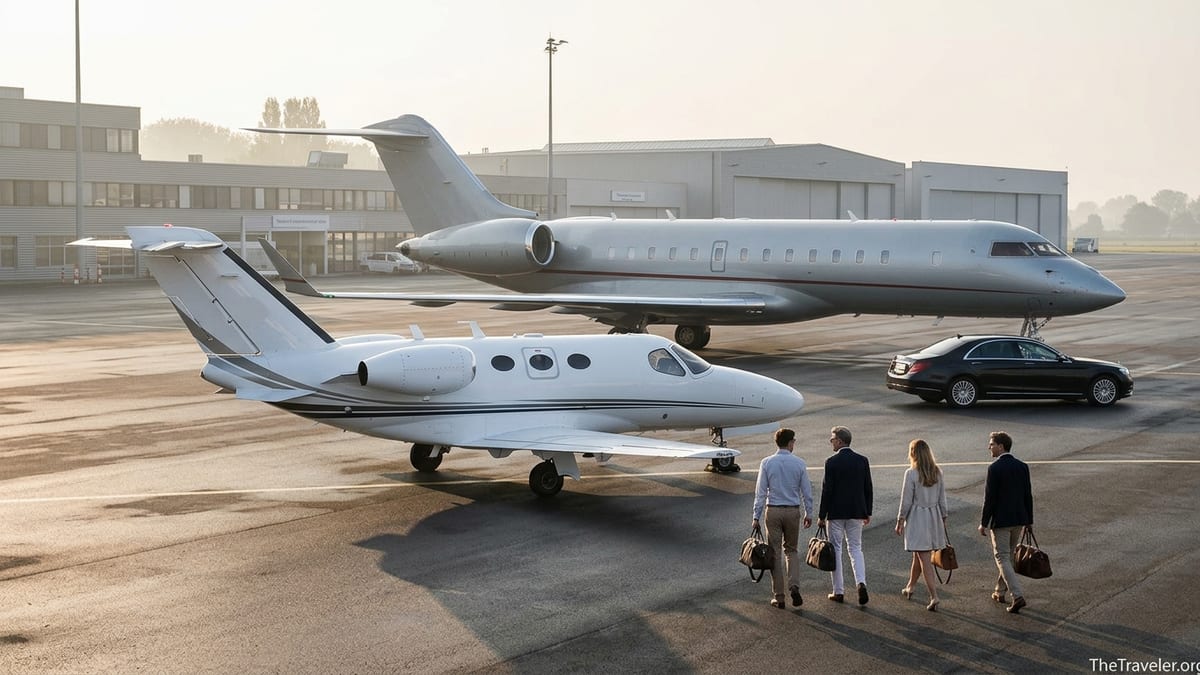
GlobeAir is headquartered near Linz, in Hörsching, Austria, and has spent more than 17 years quietly specialising in a single thing: very light jets shuttling passengers around Europe. Industry fleet reports consistently place GlobeAir among the top business jet operators on the continent by number of aircraft, but unlike NetJets or VistaJet, its entire fleet revolves around one model: the Cessna Citation Mustang, a four-passenger very light jet that is optimised for short to medium European sectors rather than transatlantic flights.
By 2025 GlobeAir was operating around 20 to 21 Mustangs, making it one of Europe’s largest operators of this specific aircraft type. Where NetJets Europe might spread its fleet across everything from Embraer Phenoms and Cessna Latitudes to large-cabin Bombardier Globals, GlobeAir has bet on uniformity. The cabin experience, cockpit systems and performance profile are nearly identical from one tail number to the next, something you notice when you fly repeatedly between the same city pairs such as Zurich to Milan or Nice to Geneva.
That homogenous fleet is more than an operational quirk. It allows GlobeAir to position aircraft flexibly around Europe without maintaining large, expensive bases, and to keep crews current on a single type. For travellers, that translates into a consistent seat layout, predictable baggage capacity and broadly similar flying times on the 90-minute to two-hour sectors that define much of European private aviation.
How GlobeAir’s Model Compares With NetJets, VistaJet and Flexjet
When most travellers think of private jets in Europe, three names dominate: NetJets Europe, VistaJet and, increasingly, Flexjet. NetJets, ultimately owned by Berkshire Hathaway, is the world’s largest private jet operator and a pioneer of fractional ownership. Its European arm focuses on owners who buy a share in an aircraft type and commit to a set number of hours per year. VistaJet positions itself as a global membership airline for corporations and ultra-high-net-worth individuals who need guaranteed availability on super-midsize and large-cabin jets, often flying between continents. Flexjet, long established in North America, has been expanding in Europe with a strong focus on super-midsize and large jets as well.
Placing GlobeAir alongside these giants highlights an immediate difference. NetJets Europe and Flexjet offer fleets that range from light jets like the Embraer Phenom 300 to long-range types such as the Bombardier Global series. VistaJet focuses almost entirely on large-cabin jets, including Bombardier Globals and Challenger models, suited for London to New York or Paris to Dubai. GlobeAir, by contrast, does not pretend to serve that market. A Citation Mustang is a four-seat aircraft with relatively modest range and luggage capacity, ideal for London to Paris, Geneva to Olbia or Munich to Palma, not for intercontinental missions.
The business models diverge just as sharply. NetJets and Flexjet lean on long-term fractional ownership contracts and multi-year commitments where clients may invest several million dollars or euros into an aircraft share, plus ongoing management fees. VistaJet has high-end subscription-style programs where clients commit to blocks of hours at premium hourly rates in exchange for global access and consistent service levels. GlobeAir operates almost entirely on ad hoc charter and prepaid jet card hours, with more modest financial commitments and a focus on on-demand, point-to-point travel within Europe rather than lifetime aviation strategies.
Pricing in Practice: What a Flight Actually Costs
Comparing headline pricing in private aviation is notoriously tricky. Published hourly rates often exclude fuel surcharges, de-icing, catering and repositioning costs. Independent comparison sites in German-speaking Europe list GlobeAir’s entry-level pricing from around 3,800 euros for a short very light jet sector, while broader market surveys suggest that light jet charter in Europe typically averages noticeably more per hour than that figure once all fees are included. The reality is that GlobeAir, with its focused Mustang fleet and dense European network, often quotes noticeably sharper prices on short hops than competitors flying larger, more expensive aircraft.
Consider a summer weekend flight from Zurich to Olbia in Sardinia, a popular route for families heading to the Costa Smeralda. On a large operator using a midsize jet, you might see all-in quotes approaching five figures each way, especially in peak August weeks. With GlobeAir, the same routing on a Mustang can sometimes price closer to what you would expect to pay for four last-minute business-class tickets on a network carrier plus the cost of airport transfers and hotel nights lost to inconvenient schedules. The saving comes partly from the smaller, more economical aircraft and partly from the company’s ability to reposition a Mustang efficiently within its European network.
By contrast, if you attempted to book the same Zurich to Olbia flight on a global program like VistaJet, you would likely be offered a super-midsize or large-cabin jet that is overkill for a family of four and a couple of suitcases. The hourly rate could easily be several times higher than that of a very light jet, and the minimum flight-time commitments for program members may mean you are paying for hours you are not fully using. For frequent Mediterranean and intra-European city hops under about two hours’ flying time, GlobeAir’s focused fleet can bring the per-trip cost closer to the realm of rational indulgence rather than corporate extravagance.
The Operational Details You Only Notice When You Fly
It is on the ground, and in the way flights are actually delivered, that GlobeAir’s differences become tangible. The company runs its operations 24 hours a day across Europe, but instead of concentrating aircraft in a handful of large bases, it positions its Mustangs dynamically based on demand. For passengers, that often means shorter positioning legs and a better chance of finding an aircraft near your departure point, especially in secondary cities such as Graz, Innsbruck or Basel that do not always see heavy traffic from the bigger global programs.
GlobeAir also leans heavily into its size as a specialist operator. With a single aircraft type, pilots, cabin configuration and maintenance routines are standardised. The company even maintains its own Part 145-certified maintenance facility in Linz, which allows tighter control over aircraft downtime and reliability. While NetJets, VistaJet and Flexjet all operate sophisticated maintenance programs of their own, they must spread attention across multiple aircraft types, each with its own quirks and supply-chain requirements.
As a passenger, the result is a set of small but noticeable consistencies. The cabin of a Citation Mustang is intimate. Four club seats face each other, with a small refreshment center and a compact lavatory. You will not find the full standing-height cabin of a Challenger 350 or the bedroom of a Global 6000, but you will find the same interior every time you board a GlobeAir jet. For a quick hop from Barcelona to Nice or Vienna to Milan, that predictability, combined with fast boarding through dedicated FBOs, can be more valuable than an extra foot of cabin height you will barely use.
Who GlobeAir Really Suits: Use Cases Across Europe
GlobeAir’s sweet spot is the traveller who needs fast, short-notice travel between European cities and leisure destinations without committing to the full financial and contractual weight of fractional ownership. Think of a family based in Munich that spends summer weekends in Ibiza, a small investment fund team shuttling between Zurich, London and Luxembourg for client meetings, or a luxury hotel group flying executives to site visits along the Mediterranean. Their trips are typically between 45 minutes and three hours of flying, rarely require more than four passengers, and do not justify a large-cabin jet.
For these travellers, GlobeAir’s on-demand charters and jet card products offer flexibility. The company’s jet card, for instance, allows clients to prepay for flight hours with the operator’s own fleet rather than a brokered mix of aircraft. There are no long-term aircraft-share contracts or complex residual-value calculations to contend with, unlike fractional programs at NetJets or Flexjet. The trade-off is that you are not getting intercontinental reach or guaranteed large-cabin availability during peak seasons, but many Europe-focused travellers do not need that in the first place.
By comparison, a corporate legal team that splits its time between London, New York and Dubai is more likely to be attracted to VistaJet or a large fractional provider. They may value the ability to fly non-stop from Paris to Hong Kong in a Global 7500, with a full galley and lie-flat beds, far more than shaving half an hour off a shuttle between Geneva and Milan. The European market is big enough to support both kinds of users, but it is easy to misjudge where you fit until you map out your typical year of travel.
The Subtle Trade-Offs: Comfort, Image and Environmental Optics
Choosing GlobeAir over a more famous name in private aviation involves trade-offs that go beyond pricing. The Citation Mustang’s compact cabin, while comfortable for short flights, is not designed for on-board meetings, stand-up presentations or sleeping. Taller passengers will need to duck, and baggage capacity is more constrained than on a midsize jet. If part of your motivation for flying private is making a statement when you roll up to the FBO in a gleaming large-cabin jet, a small Mustang may not send quite the same message as a long-range Bombardier Global or Gulfstream.
On the other hand, some travellers appreciate the environmental optics of flying a smaller, more efficient jet when their mission profile allows. While reliable, precise emissions comparisons are hard to make, it is broadly accepted that a very light jet carrying four people on a one-hour flight will burn less fuel than a large-cabin jet flying the same route with the same number of passengers. For an executive team that needs the flexibility of private aviation but is conscious of corporate sustainability reporting, choosing a smaller aircraft where practical can be a meaningful gesture.
The cabin service model differs as well. On a VistaJet Global, you might expect a dedicated cabin host, elaborate catering and bespoke amenities that rival commercial first class. GlobeAir’s Mustangs typically operate with just the two pilots and a more modest catering offering, especially on short legs. For many travellers who view private aviation primarily as a tool rather than an experience, that trade-off is perfectly acceptable, especially when total travel time from apartment door to hotel check-in is dramatically reduced.
Understanding Contracts and Commitments Before You Choose
What really separates GlobeAir from the big three, and from many European brokers, is the level of commitment it requires. Ad hoc charters are straightforward: you request a quote, confirm details, pay, and fly. The company’s jet card and fractional-style products step up the relationship but still sit well below the multi-year, multi-million-euro commitments that fractional ownership often entails. Funds that you prepay are typically drawn down against actual flying rather than being tied up in a complex aircraft-ownership structure.
NetJets and Flexjet, by comparison, are built on the premise of ownership. You purchase a fraction of an aircraft, agree to a minimum number of hours per year and accept a schedule of management fees, hourly rates and potential resale or buyback provisions when you exit. For frequent intercontinental travellers flying 100 hours or more a year, those structures can make sense. They provide guaranteed availability and the stability of long-term planning. For a family that wants to fly a few weekends to Mallorca, Courchevel and Porto Cervo each year, they can be unnecessarily heavy.
GlobeAir also differentiates itself from many brokers by operating its own fleet rather than exclusively sourcing aircraft from third-party operators. That has implications for transparency. When you book through a broker, you may not know exactly which operator will fly your mission until close to departure, and aircraft type and interior quality can vary. With GlobeAir, you know you are getting a company-operated Citation Mustang with a known cabin and flight deck. That familiarity matters if you are concerned about safety records, maintenance standards or simply the onboard experience being consistent from one trip to the next.
The Takeaway
Comparing GlobeAir with Europe’s better-known private aviation brands is a bit like comparing a boutique high-frequency shuttle service with a global luxury airline. NetJets, VistaJet and Flexjet are built to move executives and families across continents in a variety of aircraft types, with layers of ownership and membership structures. GlobeAir is built to move small groups quickly around Europe in a single, tightly optimised aircraft type, with simpler commitments and a narrower mission profile.
If your travel year is filled with short hops between London, Geneva, Milan, Palma, Ibiza, Salzburg or Nice, and you rarely need more than four seats at a time, GlobeAir’s model can make private jet travel feel surprisingly accessible compared with the cost and complexity of fractional ownership or large-cabin memberships. You sacrifice some space, glamour and long-haul capability, but you gain agility and, often, better value on the flights you actually take.
The key is honesty about your real flying needs. Map out your likely routes, passenger counts and trip frequency across a typical year. If the pattern shows mostly intra-European sectors under about two hours and limited long-haul demand, operators like GlobeAir deserve a close look alongside the marquee names. In a market as varied as European private aviation, the most famous name is not always the best fit for the way you really travel.
FAQ
Q1. Is GlobeAir cheaper than NetJets or VistaJet for European flights?
In many cases, yes for short intra-European routes using four seats or fewer. GlobeAir’s Citation Mustangs are smaller and more economical than the midsize and large-cabin jets typically deployed by NetJets or VistaJet, so per-trip pricing on routes such as Geneva to Ibiza or Munich to Olbia can be noticeably lower, especially when you are not locked into a long-term ownership program.
Q2. How many passengers can a GlobeAir jet carry comfortably?
GlobeAir’s fleet is built around the Cessna Citation Mustang, which is designed for up to four passengers in a club seating configuration. It can technically carry a fifth passenger in certain layouts, but four is the realistic comfort limit, particularly if you are travelling with luggage.
Q3. Can GlobeAir fly long-haul routes such as London to New York?
No. The Citation Mustang is a very light jet with limited range, intended for relatively short flights within Europe and nearby regions. For transatlantic or long-haul missions such as London to New York or Paris to Dubai, travellers usually turn to operators like VistaJet, NetJets or Flexjet, which field larger, long-range aircraft.
Q4. Does GlobeAir offer memberships or only on-demand charters?
GlobeAir offers both. You can book single ad hoc charter flights, or you can purchase a jet card or similar prepaid-hours product that locks in access to its own fleet of Mustangs without the complexity of fractional ownership. These programs are designed for travellers who fly regularly within Europe but are not ready to buy an aircraft share.
Q5. How far in advance do I need to book with GlobeAir compared to larger operators?
GlobeAir can often accommodate short-notice requests, especially for popular European routes, but availability always depends on aircraft positioning and seasonality. Booking a few days in advance is sensible during peak summer or major events, while quieter periods may allow for same-day or next-day arrangements, similar to many other on-demand operators.
Q6. What kind of airports does GlobeAir typically use?
GlobeAir focuses on business aviation terminals and smaller airports across Europe, from major hubs like London’s business airports and Paris-area executive fields to regional airports near Alpine resorts or Mediterranean marinas. The Mustang’s performance allows access to shorter runways than some larger jets, which can sometimes place you closer to your final destination.
Q7. How does the onboard experience on a GlobeAir Mustang compare to larger jets?
The experience is more compact and utilitarian. You get a private, quiet cabin with four facing seats, light catering and direct boarding through an FBO, but you will not find stand-up headroom, large galleys or separate bedrooms. For flights under about two hours, most passengers find the comfort perfectly adequate, though it is less opulent than a super-midsize or large-cabin jet.
Q8. Is safety comparable between GlobeAir and the larger fractional operators?
GlobeAir, like NetJets, VistaJet and Flexjet, operates under strict European aviation regulations and maintains its own certified maintenance operation for its fleet. While safety cultures vary by company, reputable operators in Europe adhere to rigorous standards, and GlobeAir has built its business on operating a single aircraft type to high, repeatable safety and maintenance benchmarks.
Q9. When would NetJets, VistaJet or Flexjet be a better choice than GlobeAir?
These larger operators are usually better suited for travellers who regularly fly longer sectors, need larger cabins for more passengers or on-board meetings, or require consistent access to long-range jets for intercontinental travel. If your itinerary frequently includes routes such as London to New York, Paris to Dubai or Geneva to Hong Kong, a global fleet and long-term program can make more sense.
Q10. How should I decide which European private jet company fits my needs?
Start by listing your typical routes, number of passengers, trip frequency and whether you need long-haul capability. If most of your flying is short intra-European hops with four or fewer travellers, operators like GlobeAir may offer better value. If you need larger cabins, global reach or guaranteed availability at very short notice across continents, it is worth comparing fractional and membership programs from NetJets, VistaJet, Flexjet and similar global players before committing.