


For Canadian travelers, two of the most talked-about airline credit cards are the WestJet RBC World Elite Mastercard and the TD Aeroplan Visa Infinite. Both promise free checked bags, strong welcome offers and ongoing travel perks, but they work very differently in real life. Understanding those differences can mean hundreds of dollars in savings each year, especially if you regularly fly within Canada or to popular leisure spots like Mexico, the Caribbean or Europe.
Get the latest updates straight to your inbox!
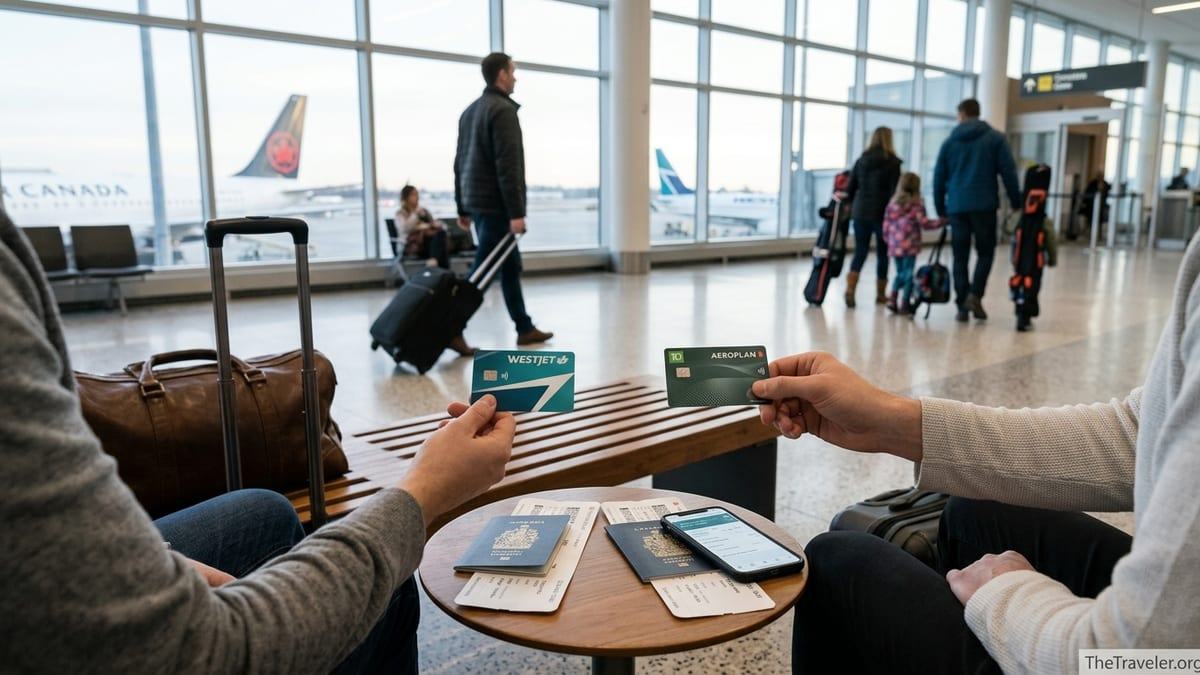
Core Philosophy: Cash-Style WestJet Points vs Flexible Aeroplan Miles
The biggest divide between these cards is the loyalty currency. The WestJet RBC World Elite Mastercard earns WestJet points, which behave a bit like a cash rebate toward WestJet and Sunwing flights and vacation packages. You simply apply points at booking, and their value stays relatively stable. If a one-way flight from Calgary to Victoria costs about $200, you might use roughly 200 WestJet dollars in points to cover most of the fare, plus taxes and fees. There are no classic award charts to learn and fewer “sweet spots” but also far fewer confusing rules.
The TD Aeroplan Visa Infinite earns Aeroplan points, which operate as traditional airline miles. Their value changes depending on routes and availability. A Toronto to Vancouver round-trip that might sell for $800 in cash can sometimes be booked for around 25,000 to 35,000 Aeroplan points plus taxes and surcharges if you find “Dynamic” or partner award space. Savvy travelers can unlock excellent value on long-haul flights, especially in business class, but it takes more effort and flexibility.
In practical terms, travelers who mainly want straightforward discounts on WestJet or Sunwing flights often prefer the WestJet card. Those who are open to hunting for reward seats, potentially flying Air Canada or Star Alliance partners like Lufthansa, United or ANA, and who are willing to be flexible with dates usually get more upside from the TD Aeroplan Visa Infinite.
There is also a psychological difference. With WestJet’s more cash-like points, it feels easy to burn rewards on any fare you see. With Aeroplan, some travelers tend to hoard points, waiting for a “perfect” redemption, which can be powerful for big bucket-list trips but less satisfying if you mostly fly short hops.
Annual Fees, Interest Rates and Overall Cost of Carrying
Both cards sit in the premium travel segment in Canada with annual fees in the same general range. At the time of writing in June 2026, the WestJet RBC World Elite Mastercard charges an annual fee around the low one-hundreds for the primary cardholder, and a smaller fee for additional cardholders. TD Aeroplan Visa Infinite also charges a primary fee in roughly the same band, with common promotional offers waiving the fee for the first year for new cardholders.
For a practical example, imagine a family in Edmonton who flies WestJet to Maui every spring. Even if they pay the full annual fee on the WestJet RBC World Elite, the free checked bags and companion voucher can easily outweigh that cost in a single trip. A couple in Montreal who flies Air Canada to Paris once a year might find the TD Aeroplan Visa Infinite fee similarly offset by the welcome bonus, free checked bags and solid earning rates on travel and gas.
Interest rates on purchases and cash advances are broadly similar between the two cards and are not the primary differentiator. Both are designed for people who pay their balance in full each month to maximize rewards. If you often carry a balance, a lower-rate product will generally be more suitable than either of these premium travel cards, regardless of perks.
One cost-related nuance is how easy it is to justify keeping the card long term. Because the WestJet card bakes in an annual companion voucher that you can repeatedly use on a high-value flight, many loyal WestJet travelers view the annual fee more like a prepayment against future flight savings. With TD Aeroplan, the retention value is more tied to your earning and redemption habits, which can feel less tangible if you are not booking award travel every year.
Earning Potential: Everyday Spending and Travel Categories
Both cards have moved toward richer category bonuses, reflecting how Canadians actually spend. The WestJet RBC World Elite Mastercard now earns elevated WestJet points on WestJet and Sunwing purchases and has enhanced earn rates at common everyday categories such as gas and groceries. For example, filling a $100 tank of gas in Calgary or doing a $200 grocery run in Winnipeg can generate significantly more WestJet points than simple base earn, accelerating your next flight discount.
TD Aeroplan Visa Infinite, by contrast, focuses its highest earn rates on Air Canada travel, gas, grocery and often direct travel purchases. Booking an Air Canada ticket from Ottawa to Halifax, paying for a hotel in Vancouver or renting a car in Kelowna through common booking channels can all generate bonus Aeroplan points. For many urban professionals who put most of their recurring spending on one card, that means a steady flow of points every month without needing to think about category optimization too deeply.
Consider a Toronto household that charges about $1,500 each month in combined groceries and gas, plus two or three domestic round-trips per year. On TD Aeroplan Visa Infinite, those grocery and gas charges can add up to tens of thousands of Aeroplan points per year, enough to cover a return trip to Western Canada or contribute meaningfully to a future Europe award. With WestJet RBC World Elite, that same pattern of spending can create a sizeable WestJet points balance, ideal for offsetting peak-season pricing on popular leisure routes like Toronto to Cancun.
The key question is where you intend to redeem. If you mostly see yourself on WestJet or Sunwing aircraft flying to Canadian cities, beach destinations or Las Vegas and Orlando, the WestJet earning structure lines up beautifully. If you want more flexibility across Air Canada’s network, including partners to Asia, South America and Europe, TD Aeroplan’s categories feed a genuinely global mileage program.
Welcome Bonuses, Companion Vouchers and Free Checked Bags
Where these two cards really diverge in day-to-day travel value is in their headline perks. The WestJet RBC World Elite Mastercard is built around the World Elite companion voucher and free checked bags on WestJet-operated flights. New cardholders typically receive a welcome companion voucher after their first purchase plus a sizeable chunk of WestJet points as a one-time welcome offer, subject to promotions. Going forward, you receive an annual companion voucher when you meet a minimum spend requirement, currently set at several thousand dollars in net purchases per voucher year.
The companion voucher lets you bring a second traveler on a round-trip itinerary at a reduced base fare. For example, a couple flying from Vancouver to Honolulu could pay the full fare for the first ticket and use the voucher to book the second seat at a significantly lower base fare amount, then pay applicable taxes and fees on both tickets. Used on a popular WestJet route during school holidays, this single benefit can save several hundred dollars. Additionally, the card provides a free first checked bag for the primary cardholder and up to eight companions on the same WestJet reservation paid with the card, a meaningful benefit for families heading to ski trips or all-inclusive resorts.
TD Aeroplan Visa Infinite does not offer a general companion voucher, but it counterbalances that with a rich welcome bonus of Aeroplan points and a first free checked bag on Air Canada flights for the primary cardholder and eligible companions on the same reservation. A family of four flying from Halifax to Toronto on Air Canada can avoid checked bag fees for all four passengers if the booking is linked correctly, saving a notable sum on a single trip. On some promotions, TD also rebates the first-year annual fee, and cardholders may qualify for various limited-time offers like boosted bonuses when adding an authorized user and meeting spend thresholds.
In practice, the WestJet companion voucher is most powerful for couples or families who take at least one round-trip WestJet flight each year and can leverage the discounted second ticket. If you are a solo traveler, the voucher’s value is far more limited. TD Aeroplan’s proposition is more evenly split between the free checked bag and pure points earning, which benefits both solo travelers and families as long as they stick with Air Canada or partners for most flights.
Redemption Experience: Booking Flights and Maximizing Value
Redemption is where the everyday traveler often feels the difference most clearly. With the WestJet RBC World Elite Mastercard, you log into your WestJet account and see your points balance as a dollar-like amount. When booking a flight from, say, Winnipeg to Kelowna, you can simply choose to apply your WestJet points at checkout to reduce the cash price. There are no blackout dates, and you can use points on sale fares just as easily as on peak dates, although taxes and certain fees will still need to be paid in cash or card.
By contrast, Aeroplan redemptions through TD Aeroplan Visa Infinite require more strategy. You will search for reward flights via the Aeroplan website or app. A Toronto to Lisbon itinerary, for example, might cost 40,000 points one day and 65,000 another due to dynamic pricing and availability. Partner airlines such as TAP Air Portugal or United can sometimes offer better value than Air Canada on the same route if there is partner award space. Taxes and surcharges can vary widely; some transatlantic flights might have relatively modest fees, while others can carry higher carrier surcharges.
For a traveler who just wants to book the exact WestJet flight they see advertised during a seat sale and knock a few hundred dollars off with points, the simplicity of WestJet’s system is extremely appealing. A Calgary family booking a spring break trip to Palm Springs can choose their preferred dates, cabin, and fare type, then reduce the cost with points without worrying about dynamic award charts.
For a Vancouver-based traveler aiming for a once-in-a-lifetime business class ticket to Tokyo or Zurich, Aeroplan miles from the TD card can be dramatically more valuable. It is not uncommon, for example, for a business class ticket that would cost well over $4,000 in cash to be available for a six-figure Aeroplan points amount plus taxes. Reaching those large balances is easier when everyday spending, welcome bonuses and occasional transfer bonuses all feed the same Aeroplan account.
Insurance, Protections and Everyday Non-Travel Perks
Both cards include a fairly comprehensive set of insurance benefits by Canadian market standards, but there are subtle differences that matter for frequent travelers. The WestJet RBC World Elite Mastercard typically includes out-of-province/out-of-country emergency medical coverage up to a certain age threshold, flight delay and trip interruption insurance, lost or delayed baggage coverage and common carrier accident insurance. A family flying from Regina to Orlando with connections in Toronto, for example, could potentially claim reasonable meals and hotel costs if weather causes an overnight delay and they meet the policy conditions.
The TD Aeroplan Visa Infinite card also brings a robust insurance package, including emergency medical coverage for eligible travelers, trip cancellation and interruption coverage when travel arrangements are charged to the card, delayed and lost baggage coverage, and rental car collision damage waiver when the rental is paid with the card and the agency’s collision damage waiver is declined. A business traveler renting a car in Calgary or Montreal could rely on this coverage instead of paying extra at the counter, as long as they adhere to vehicle type and time limit conditions.
One difference that stands out for many cardholders is mobile device insurance, which TD Aeroplan Visa Infinite has made a selling point. If you purchase a smartphone such as an iPhone or Samsung Galaxy using the card (or charge a defined portion of its cost and bill payments to the card), it may be protected against theft, loss, or accidental damage up to a stated maximum for a defined period after purchase. For travelers who carry expensive phones as boarding passes, travel wallets and cameras, this can be a reassuring extra.
On the lifestyle side, both issuers periodically bundle in perks like food delivery subscription discounts, airport parking offers or gas station promotions. For example, WestJet RBC World Elite cardholders have, at times, been offered complimentary or discounted memberships to app-based delivery services, while TD Aeroplan cardholders may receive targeted offers for bonus points at specific retailers. These extras change over time and are best viewed as seasonal bonuses rather than core reasons to choose one card over the other.
Which Travelers Benefit Most From Each Card?
When you strip away the branding, the choice often comes down to your home airport and preferred airline. If you live in a city where WestJet has strong presence, such as Calgary, Edmonton or Halifax, and you mainly fly to North American sun destinations or within Canada, the WestJet RBC World Elite Mastercard aligns naturally with how you already travel. The companion voucher and free checked bags can feel like a built-in annual discount on your family’s main holiday.
Consider a Calgary couple who take one big vacation to Maui each January and one shorter weekend trip to Vancouver in the summer. Using the companion voucher on the Maui flights could save several hundred dollars on the second ticket, while the free checked bags save on ski gear or golf clubs when flying domestically. Their ongoing spending at gas stations, supermarkets and on WestJet tickets generates WestJet points that directly reduce next year’s holiday cost. For them, the WestJet card becomes part of an annual rhythm.
Alternatively, a Toronto-based consultant who frequently flies to Montreal, New York and occasionally London or Frankfurt on Air Canada and partners would likely find far more value in the TD Aeroplan Visa Infinite. Their flights earn Aeroplan points, which combine with gas and grocery spending to quickly reach the threshold for transatlantic economy or even business class awards. The free checked bag and the possibility of enhanced airport experiences through Aeroplan status align with the way they already travel.
In mixed-scenario households, it is not unusual for one partner to hold WestJet RBC World Elite for the companion voucher and WestJet-focused trips, while the other holds TD Aeroplan Visa Infinite for Air Canada and long-haul redemptions. This combination can work particularly well in larger cities where both airlines operate a wide slate of routes and where families split their travel between beach holidays and business or educational trips overseas.
The Takeaway
Both the WestJet RBC World Elite Mastercard and the TD Aeroplan Visa Infinite are strong Canadian travel cards, but they serve different kinds of travelers. WestJet’s card is at its best for people who want simple, dependable savings on WestJet and Sunwing flights, especially couples and families who can fully exploit the companion voucher and free checked bags. The value is concrete and easy to see on every booking, which many travelers appreciate.
TD Aeroplan Visa Infinite leans into flexibility and upside. It is the more powerful tool for those who want to play the points game, targeting high-value Aeroplan redemptions on Air Canada and Star Alliance partners. The trade-off is that you need to be willing to spend time searching for awards and understanding how dynamic pricing works on different routes and dates.
When deciding between them, start by looking at your last two years of flying. Which airline did you fly most often? Were your trips mainly domestic, sun destinations, or long-haul overseas? Then look at your next two years of planned travel. If the answer revolves around WestJet-operated routes and family holidays, the WestJet RBC World Elite Mastercard will likely feel like the more natural fit. If your upcoming travel leans heavily toward Air Canada and international networks, TD Aeroplan Visa Infinite will usually be the smarter long-term companion.
Ultimately, the best card is the one that complements your real-world travel habits, not your idealized wish list. Choose the product that lines up with your usual airports, airlines and spending patterns, and you will see the rewards show up not just as numbers in an account, but as real seats on planes and real savings on your future trips.
FAQ
Q1. Is the WestJet RBC World Elite Mastercard or TD Aeroplan Visa Infinite better for a family of four?
The better card depends on which airline you fly most. If your family mainly flies WestJet to Canadian cities or sun destinations, the WestJet card’s companion voucher and free checked bags can deliver very clear savings on one big trip per year. If you mostly fly Air Canada, especially from hubs like Toronto or Vancouver, TD Aeroplan’s free checked bags and points for Air Canada and partner flights often add up faster.
Q2. Which card has the more valuable welcome bonus?
Both cards typically offer strong welcome bonuses, but in different forms. WestJet’s bonus is usually framed as a chunk of WestJet points plus an early companion voucher, which feels like an instant discount on an upcoming WestJet trip. TD Aeroplan Visa Infinite often offers a large number of Aeroplan points and sometimes a first-year annual fee rebate, which can be especially valuable if you are planning a long-haul or international award flight within the first year.
Q3. Can I use the WestJet companion voucher for any route?
The companion voucher can be used on most WestJet-operated round-trip routes, subject to fare type and specific terms. In practice, many cardholders use it on higher-priced itineraries such as Western Canada to Hawaii, transcontinental trips or peak-season flights where the discount on the second seat is most meaningful. Taxes, fees and charges still apply for both travelers.
Q4. Does TD Aeroplan Visa Infinite give me automatic lounge access?
The TD Aeroplan Visa Infinite card itself does not grant unlimited lounge access the way some ultra-premium cards do. Instead, it focuses on earning Aeroplan points, free checked bags and strong travel insurance. Any lounge access for Aeroplan members is generally based on your Aeroplan Elite Status or separate lounge passes, not simply holding this specific card.
Q5. Which card is better for occasional travelers who only fly once a year?
For once-a-year travelers, the WestJet RBC World Elite Mastercard can be very compelling if that annual trip is on WestJet and you can use the companion voucher on a relatively expensive route. Occasional Air Canada flyers might still benefit from TD Aeroplan’s welcome bonus and free checked bag, but the ongoing value is strongest if you continue to earn and redeem Aeroplan points beyond a single trip.
Q6. Can I hold both cards at the same time?
Yes. Many frequent travelers carry both cards, using WestJet RBC World Elite for WestJet and Sunwing bookings and TD Aeroplan Visa Infinite for Air Canada and Star Alliance travel. This strategy lets you capture free checked bags and accelerated earnings with whichever airline you happen to be flying, though you will pay two annual fees unless they are offset by promotions or banking packages.
Q7. How do free checked bags work on each card?
With WestJet RBC World Elite, the primary cardholder and up to eight guests on the same WestJet booking paid with the card receive a free first checked bag, which can save a large family substantial fees on a single holiday. With TD Aeroplan Visa Infinite, the primary cardholder and eligible companions on the same Air Canada reservation linked to their Aeroplan account receive a first checked bag at no extra charge, which is particularly helpful for families and groups traveling together.
Q8. Which card is better if I want to fly business class internationally?
TD Aeroplan Visa Infinite is usually the stronger choice for international business class goals. Aeroplan points can be redeemed for premium cabins on Air Canada and Star Alliance partners, often yielding high cents-per-point value compared to economy tickets. WestJet points are better viewed as a way to discount economy and premium economy tickets on WestJet and Sunwing rather than as a path to aspirational long-haul business class redemptions.
Q9. What happens if I stop flying WestJet or Air Canada as often?
If your airline habits change, you may find diminishing value from a card tied to that carrier. A WestJet cardholder who relocates to a city where WestJet has limited service, or a TD Aeroplan cardholder who shifts to flying ultra-low-cost carriers, may want to re-evaluate whether a more general travel rewards or cash back card is a better fit in future years.
Q10. How should I decide between these cards if I am new to travel rewards?
Start by checking which airline serves most of your typical trips and which airport you use most often. If you see WestJet on your boarding passes more than Air Canada and you like straightforward discounts, lean toward WestJet RBC World Elite. If you are open to learning a bit about award bookings and often fly or plan to fly Air Canada and its partners, TD Aeroplan Visa Infinite will likely give you more flexibility and upside over time.