


For years, the WestJet RBC World Elite Mastercard sat near the top of many Canadian travelers’ wallets. Free checked bags, rich welcome bonuses and a powerful companion voucher made it easy to justify the annual fee. But after several rounds of changes, minimum-spend rules and quiet devaluations, the real value of this card in 2026 is far murkier. If you are wondering whether to keep, cancel or apply for this card, it is time to strip the marketing down to the harsh truth.
Get the latest updates straight to your inbox!
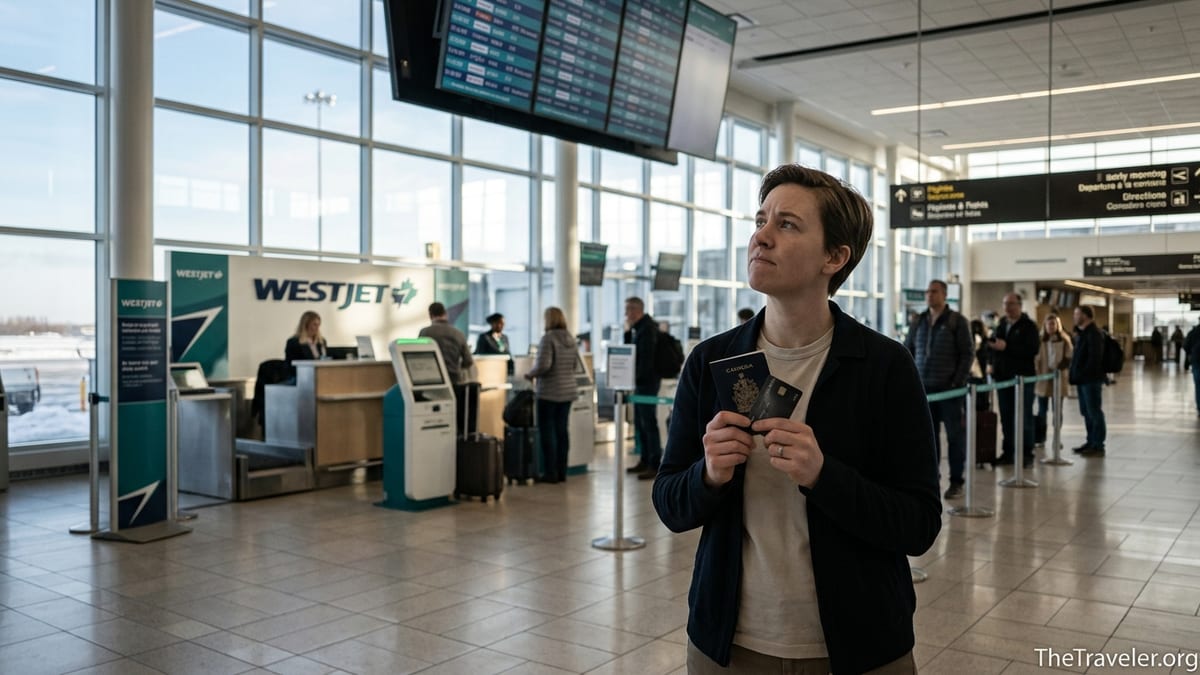
The headline perks look great, but the fine print tells a different story
On the surface, the WestJet RBC World Elite Mastercard still looks compelling. As of mid 2026, new cardholders can earn a large welcome bonus in WestJet points after their first purchase and after meeting a minimum spend requirement within the first three months. The earn rates are straightforward: around 2 WestJet points per dollar on WestJet and partner vacation bookings and around 1.5 points per dollar on everyday purchases. The card also carries a free first checked bag perk for the primary cardholder and up to eight guests on the same reservation when the fare is paid with the card, plus an annual companion voucher that can offset a second ticket.
In practice, these perks are tightly fenced by conditions that materially reduce their value. The companion voucher arrives only several weeks after your first purchase and, in later years, only if you hit a minimum spend requirement in the prior voucher year. The free checked bag benefit applies only when you book eligible WestJet fares and ensure your WestJet Rewards number and card are correctly attached to the reservation, something many travelers discover too late at the airport counter. The net result is that what looks like set-and-forget value actually demands active management, calendar reminders and careful fare selection to realize what the brochure promises.
Consider a family of four flying from Calgary to Toronto on WestJet in economy. With the card, the primary cardholder and up to three companions can check a first bag for free, which can easily save around 30 to 40 Canadian dollars per person each way compared with paying standard bag fees. On a simple round trip, that could be 240 to 320 dollars of value. But if the flights were booked through a third-party site and the WestJet Rewards number did not attach correctly, those savings disappear, and the airport agent is unlikely to make exceptions based on your card alone.
The harsh truth is that the headline perks only work for travelers who are already loyal to WestJet, who book directly with the airline and who are willing to track multiple conditions and timelines. For casual or price-sensitive flyers who chase the lowest fare on any airline, much of this theoretical value will never be realized in the real world.
The new minimum-spend rule quietly erodes the companion voucher
The companion voucher used to be the star of the show: pay the annual fee and you automatically received a round-trip companion ticket discount each year. That is no longer the case. For vouchers issued on or after November 5, 2025, you must meet a minimum annual spend, currently set at several thousand dollars in net purchases on the card in the 12 months following the issuance of your previous voucher, before WestJet will deposit the new voucher into your account.
To see how this plays out, imagine you receive your companion voucher on March 15, 2026. From that date until March 14, 2027, you need to put at least 5,000 Canadian dollars in eligible purchases on your WestJet RBC World Elite Mastercard. If you only manage 3,500 dollars because you shifted spending to a grocery bonus card or took advantage of another bank’s promotion, your voucher earn year ends with no new companion voucher. You will still be charged the annual fee when your card renews, but the signature perk you were expecting simply will not appear.
Many cardholders miss the fact that the spend clock is tied to the voucher anniversary, not the card anniversary. That makes it very easy to get caught out, especially if your statement cycles or life circumstances change. Several long-time card users report discovering months later that they fell just short of the minimum spend and have no recourse. From a traveler’s perspective, this is a sharp devaluation: a perk that once arrived automatically now requires you to prioritize this card for day-to-day spending, even when other cards may offer higher cash back or more flexible points.
The unpleasant takeaway is that if you are not willing to centralize at least 5,000 dollars of annual spend on this card, you should treat the companion voucher as a one-time welcome perk, not a reliable long-term benefit. For many households, that undermines the original reason they signed up.
Companion voucher math: when it saves you money and when it fails
Even if you do unlock the companion voucher, it is no longer the automatic slam dunk it once was. The voucher offers a fixed base fare for the second traveler on a round-trip ticket, with different price points depending on whether you fly within Canada and the continental United States or to the rest of WestJet’s network, and whether you select economy or premium cabins. Taxes, fees and charges still apply in full for the companion, and you must book eligible fare types.
Take a typical example: a couple flying Vancouver to Toronto in economy during a shoulder season, where the primary traveler’s round-trip base fare might price around 450 dollars before taxes and fees, and the second traveler might normally pay the same. Using the companion voucher, the second traveler’s base fare drops to a fixed discount amount, often well under that 450 dollar mark. After factoring in taxes and airline surcharges, it is realistic to save 200 to 300 dollars on the second ticket. In this scenario, the card’s annual fee is more than offset, and the voucher delivers clear value.
Now compare that with a promotional seat sale or a low-cost competitor on the same route. If WestJet is charging 299 dollars round trip during a flash sale, the spread between the companion’s fixed base fare and the standard sale fare may shrink to the point where savings are modest, perhaps 50 to 100 dollars after fees. On some international routes where taxes and airport charges make up the majority of the ticket cost, real-world savings can be even slimmer. Travelers on forums have described struggling to use vouchers for long-haul routes where the total price difference was not compelling enough to justify locking into WestJet.
The key truth is that the companion voucher only shines when you are booking moderately expensive round-trip itineraries directly with WestJet, often at peak or near-peak times, and you are flexible on dates and cabins. If you mostly chase seat sales, book one-way tickets, or split travel across multiple carriers, it is very easy for a voucher to expire unused, turning a supposed benefit into a source of frustration.
Earning and redeeming WestJet points: simple but inflexible
One of the card’s genuine strengths is that its reward currency is easy to understand. You earn a fixed percentage back in WestJet points on purchases and can apply those points against the base fare of WestJet flights and vacation packages, subject to modest minimum redemption thresholds. There is no complicated award chart, no blackout dates and no need to hunt for saver availability. If a seat is for sale, you can generally use points to discount it.
For example, a frequent WestJet flyer who puts 20,000 dollars a year on the card, with 5,000 dollars of that on WestJet flights and packages and the rest on everyday spending, might expect to earn around 325 to 350 dollars worth of WestJet points over a year under current earn rates. That is straightforward value that can offset a family’s annual trip to Mexico or a couple of domestic flights. Combined with the free checked bag and a well-used companion voucher, the economics can still look attractive for someone who flies WestJet several times a year.
The trade-off is that WestJet points are tightly tied to one airline’s ecosystem. You cannot easily convert them into hotel points or another airline’s miles, and you cannot redeem them for statement credits the way you could with a flexible cash-back card. If WestJet reduces service to your home airport, raises fares, or if your travel patterns shift toward other carriers, you may find yourself sitting on a balance that is hard to use at full value.
Contrast that with a no-fee cash-back card that offers 1.5% back on all purchases. On 20,000 dollars of annual spend, you would earn around 300 dollars in cash that can be directed toward any flight, hotel or travel expense on any airline, or simply saved. For travelers who are not firmly locked into WestJet, that flexibility can outweigh the marginally higher earn rate of WestJet points on WestJet-specific purchases.
Fees, foreign exchange and insurance: the hidden cost side of the ledger
Beyond the headline annual fee, which has been creeping higher and is currently well above 100 dollars for the primary cardholder plus additional fees for authorized users, the WestJet RBC World Elite Mastercard carries standard foreign transaction charges on purchases made in other currencies. That means every tap in a Paris café or Tokyo convenience store costs you roughly 2.5% on top of the exchange rate. For a traveler who spends 3,000 dollars in foreign currency over a long trip, that is around 75 dollars in extra fees that deliver no added reward value.
Many competing travel cards available to Canadians have eliminated foreign transaction fees entirely. Using one of those options instead on international trips can immediately save you that 2.5% spread, which is often a more certain benefit than hoping to optimize a companion voucher once a year. For a card that positions itself as a flagship travel product, continuing to charge full foreign transaction fees is a significant drawback.
On the plus side, the WestJet RBC World Elite Mastercard includes a reasonably robust suite of travel and purchase insurance: out-of-province medical coverage, trip interruption and delay protection, lost or delayed baggage insurance, rental car collision damage waiver, and, more recently, mobile device coverage up to a stated maximum when the device is purchased with the card. These protections can be valuable in real situations, such as a weather-related cancellation that forces you into an overnight hotel stay, or a cracked smartphone screen a few months into ownership.
However, it is important to recognize that similar or better insurance packages are available on several competing premium cards, some of which also offer lounge access, flexible points programs and no foreign transaction fees. Unless you are specifically attached to WestJet’s ecosystem, insurance alone is rarely a decisive reason to hold this particular card, especially as the annual fee increases and other perks become harder to unlock.
Real-world traveler experiences: frustration behind the marketing
Look beyond the glossy product pages and you will find a growing chorus of long-time cardholders expressing disappointment with the direction of this card. Frequent WestJet flyers who once considered the WestJet RBC World Elite Mastercard a no-brainer now describe it as barely break-even, or even as a net loss once the time spent managing vouchers and chasing missing perks is factored in.
Common complaints include delayed or missing companion vouchers after renewal, confusion around the new minimum-spend timelines, and difficulties using exchanged lounge passes due to capacity constraints. Several travelers have reported situations where they exchanged their companion voucher for lounge access only to be turned away at busy hubs, effectively nullifying a perk they had counted on for a long-haul trip.
Other cardholders highlight the erosion of the companion voucher’s value on international routes, where rising taxes and fees mean that the voucher only lightly trims the total price. One traveler described using the card for years to fly annually to Hawaii at a meaningful discount, only to find that recent changes made it difficult to extract similar value, leading them to cancel the card after using a final voucher.
These experiences underline a crucial truth: this card demands more effort today than it did a few years ago. You need to read email notifications carefully, monitor your WestJet Rewards account, track your spend against the voucher threshold, and verify benefits before travel. Some travelers are happy to do this in exchange for targeted savings on WestJet-heavy itineraries, but many casual users simply do not have the bandwidth, which leads to disappointment and a sense that the card’s marketing does not fully match everyday reality.
Who still wins with this card, and who should walk away
Given all of these changes, there are still travelers for whom the WestJet RBC World Elite Mastercard makes sense. If you live near a major WestJet hub like Calgary, Edmonton, Vancouver or Toronto, and you typically fly WestJet three or more times a year, the combination of free checked bags, ongoing WestJet points earnings and a properly used companion voucher can still outperform many generic cash-back cards.
Imagine a Calgary-based family that takes one winter vacation to Mexico and two domestic trips on WestJet each year. On those three trips, free checked bags might easily save 300 to 400 dollars annually, the companion voucher could shave another 200 to 300 dollars off the second ticket on the Mexico itinerary, and day-to-day spending on the card might generate an additional 250 to 350 dollars in WestJet points. In this focused, WestJet-first case, the card can still produce 750 to 1,000 dollars in total value against an annual fee around the low hundreds.
On the other hand, if you live in a smaller market with limited WestJet service, switch airlines based on price, or rarely check bags, your path to meaningful value is much narrower. A traveler in Halifax or Regina who flies WestJet once a year and otherwise uses the card mainly for everyday purchases is unlikely to unlock the companion voucher every year under the new minimum spend rules, and may wind up better off with a no-fee cash-back product or a more flexible travel rewards card.
The stark truth is that this card is now a niche tool. It rewards a specific behavior pattern: high WestJet loyalty, predictable annual itineraries and consistent card spend. For everyone else, it has become a trap for annual fees and unused perks.
The Takeaway
The WestJet RBC World Elite Mastercard is no longer the broadly compelling travel card it once was. Between rising annual fees, a newly introduced minimum-spend requirement to unlock the annual companion voucher and the limited flexibility of WestJet points, it now suits a narrower slice of Canadian travelers. If you are a heavy WestJet user based near one of the airline’s hubs and you are willing to route the majority of your spending through this card, you can still come out ahead, especially if you consistently check bags and book at least one moderately expensive round-trip for two each year.
For many others, however, the harsh truth is that the card’s real-world value has slipped behind simpler alternatives. A straightforward cash-back card or a flexible travel rewards product with no foreign transaction fees can deliver more reliable, easier-to-use benefits without the homework of tracking voucher anniversaries and minimum spends. Before renewing or applying, run the numbers based on how you actually travel over the next 12 to 24 months, not on how you hope to travel. If the math does not convincingly beat your alternatives, it may be time to cancel the card, cash out your remaining WestJet points strategically, and move on.
FAQ
Q1. Is the WestJet RBC World Elite Mastercard still worth it after the 2025 changes?
The card can still be worth it for frequent WestJet flyers who check bags regularly and can reliably meet the annual minimum spend to unlock the companion voucher. For occasional travelers or those who mix airlines, simpler cash-back or flexible travel cards often provide better value.
Q2. How hard is it to meet the minimum spend required for the annual companion voucher?
That depends entirely on your lifestyle. If you routinely put more than 5,000 Canadian dollars of annual expenses on one credit card, it is manageable. If you spread spending across several cards or primarily use debit, you may struggle to hit the threshold and could lose the voucher in a given year.
Q3. How much can I realistically save with the companion voucher?
On a typical round-trip for two in economy between major Canadian cities, many travelers can save roughly 200 to 300 dollars on the second ticket if they book at non-sale prices. On heavy sale fares or high-tax international routes, savings can shrink significantly.
Q4. Does the free checked bag benefit work on all WestJet fares?
Generally, the free first checked bag applies when you book eligible WestJet fares, attach your WestJet Rewards number and pay with the card. Some ultra-basic or highly restricted fares may have different rules, and bookings through third-party sites can complicate benefit recognition, so it is important to verify details before flying.
Q5. Are WestJet points better than simple cash back?
WestJet points can be more rewarding if you frequently fly WestJet and redeem for flights or vacation packages at good base fares. Cash back offers more flexibility because it can be spent on any airline or non-travel expense. For travelers who are not clearly WestJet-loyal, cash back is often easier to use fully.
Q6. What about foreign transaction fees on the WestJet RBC World Elite Mastercard?
The card still charges a standard foreign transaction fee on purchases made in other currencies, typically around 2.5% on top of the exchange rate. If you travel abroad often, a card with no foreign transaction fees may save you more than the WestJet-specific perks.
Q7. How strong is the travel insurance on this card?
The card’s travel insurance package is reasonably comprehensive, including out-of-province medical, trip interruption and delay coverage, rental car collision and some mobile device protection. However, several competing premium cards match or exceed these benefits while also offering more flexible rewards or lower fees.
Q8. Can I share the companion voucher with friends or family?
The companion voucher must be used by the primary cardholder on an eligible itinerary, but the second traveler can be a friend or family member. You cannot simply transfer or sell the voucher, and all travel rules and booking windows still apply.
Q9. What happens if I cancel the card after earning a companion voucher?
Generally, if you cancel the card, you may lose unused benefits tied to it, including companion vouchers that have not been redeemed. It is usually wise to use any outstanding vouchers or points before closing the account, or confirm the issuer’s current policy before you cancel.
Q10. If I mostly fly other airlines, should I keep this card?
Probably not. If your flights are mostly on carriers other than WestJet, the specific perks of this card, such as WestJet points, free checked bags on WestJet and the companion voucher, will rarely apply. A flexible travel rewards or cash-back card is likely to offer better overall value.