


More news on this day
WestJet’s flight attendants strike is reverberating across Saskatchewan this weekend, with workers picketing at Saskatoon’s airport and passengers in Regina confronting cancellations, shifting itineraries and limited in-person assistance.
Get the latest news straight to your inbox!
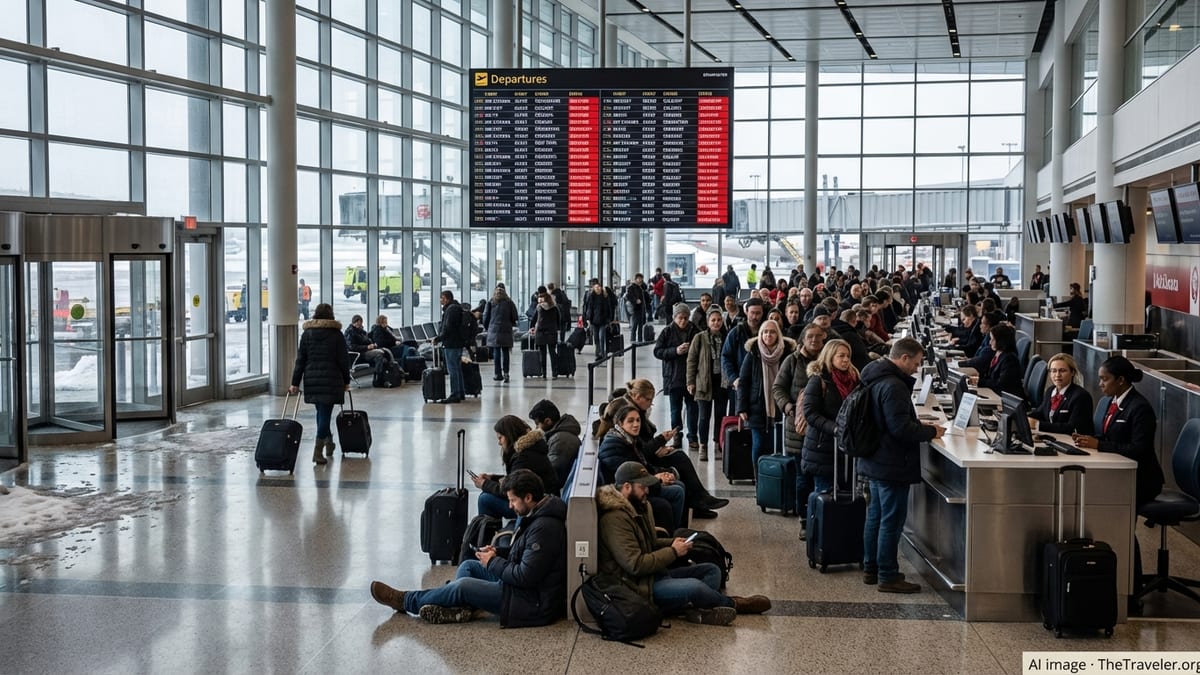
Picket lines in Saskatoon highlight contract-staff gap
Picketing at Saskatoon John G. Diefenbaker International Airport has drawn attention to the role of contract ground staff who work WestJet counters in Saskatchewan. Publicly available information and local commentary indicate that many front-line workers handling check-in and boarding at Saskatoon and Regina are employed by third-party contractors rather than the airline itself, limiting what they can do for stranded travelers during labour disruptions.
Reports from travelers and airport observers describe a scene where striking cabin crew members are visible outside the terminal, while contracted agents inside are largely confined to routine tasks such as printing boarding passes and tagging baggage. When cancellations or major delays occur, those staff have limited authority to arrange hotels, issue refunds or reroute passengers to other airlines, leaving most rebooking to WestJet’s call centre and digital tools.
This structural gap has become a focal point for frustration among travelers who expected face-to-face problem solving at the airport. The strike has effectively exposed how much of WestJet’s customer-care capacity in Saskatchewan resides off-site and online, instead of at the check-in desk.
Regina passengers navigate cancellations and changing plans
In Regina, travelers are dealing with a growing wave of disruptions as WestJet cancels flights to prevent aircraft and crew from becoming stranded away from their home bases. Published coverage and social media posts describe passengers receiving short-notice cancellation emails, followed by long waits to access rebooking options.
Some Regina-bound and Regina-originating flights have been pulled from schedules as the airline pares back operations during the work stoppage. WestJet has indicated in previous labour disputes that proactive cancellations are intended to avoid last-minute disruptions and overnight stranding, but for passengers this can still mean abandoned itineraries, missed connections and unexpected overnight stays.
Accounts from affected travelers suggest that many are turning to alternative airlines or routing through different hubs to complete essential trips. Others are opting to delay or cancel journeys entirely when rebooking options fall days after their original departure times. The uncertainty has been particularly difficult for those with time-sensitive commitments, such as international connections, medical appointments or major family events.
Limited in-person support puts pressure on digital channels
With Saskatchewan airports relying heavily on contract agents, most WestJet customers in Saskatoon and Regina are being directed toward the airline’s app, website and call centre for help. Public-facing advisories and third-party commentary urge passengers not to expect local airport staff to process complex itinerary changes or reimbursements during the strike.
Travelers report long hold times and repeated call drops as thousands of passengers across the network seek assistance at the same time. Online self-service tools have been key in previous Canadian airline labour disputes, but their effectiveness often depends on seat availability on remaining flights and the traveler’s comfort with digital rebooking.
The imbalance between limited in-person support and high demand for remote assistance has left some passengers unsure where to turn. In Saskatchewan, this has occasionally spilled over into tensions at airport counters, where contract staff have little leeway to go beyond basic check-in tasks despite facing upset travelers at close range.
Passenger rights and voluntary flexibility policies
According to publicly available guidance on Canada’s Air Passenger Protection Regulations, flights cancelled directly because of a legal strike are generally considered outside an airline’s control. In those cases, compensation for inconvenience is typically not required, but carriers remain responsible for refunding fares or rebooking travelers as soon as possible.
WestJet has previously introduced temporary flexibility policies when facing potential labour disruption, allowing passengers on affected dates to change or cancel trips without standard fees. Recent notices indicate similar waivers around the current strike period, enabling some Saskatchewan travelers to adjust plans pre-emptively rather than waiting for formal cancellations.
Consumer advocates point out that the practical value of such flexibility often depends on how early a passenger acts. Those able to move travel dates or switch to alternative routes quickly may find more available seats, while others who wait for cancellation notices can find themselves competing for limited remaining capacity across multiple airlines.
Broader implications for Saskatchewan air connectivity
The WestJet stoppage is the latest shock to Saskatchewan’s already fragile air connectivity. Business organizations and local leaders have previously flagged reduced schedules and route cuts as a concern for the province’s economy, tourism and ability to attract major events.
With fewer airlines and non-stop routes serving Saskatoon and Regina compared with larger Canadian hubs, labor disruptions at a single carrier can have an outsized impact. Travelers who rely on WestJet for key links to Calgary, Edmonton and other western gateways are finding that same-day alternatives are limited, particularly at peak travel times.
As the strike continues, attention in Saskatchewan is likely to focus not only on the immediate disruption, but also on long-term questions about airport staffing models, route diversity and resilience. For many travelers lining up at check-in or watching cancellation notices appear on departure boards, the current turmoil is reinforcing how dependent the province’s air links have become on a small number of carriers and a complex web of contracted services.