


More news on this day
A slow-speed Link light rail derailment near Seattle’s International District/Chinatown Station disrupted weekend travel for several hours, suspending downtown service and sending riders to shuttle buses and other backup options.
Get the latest news straight to your inbox!
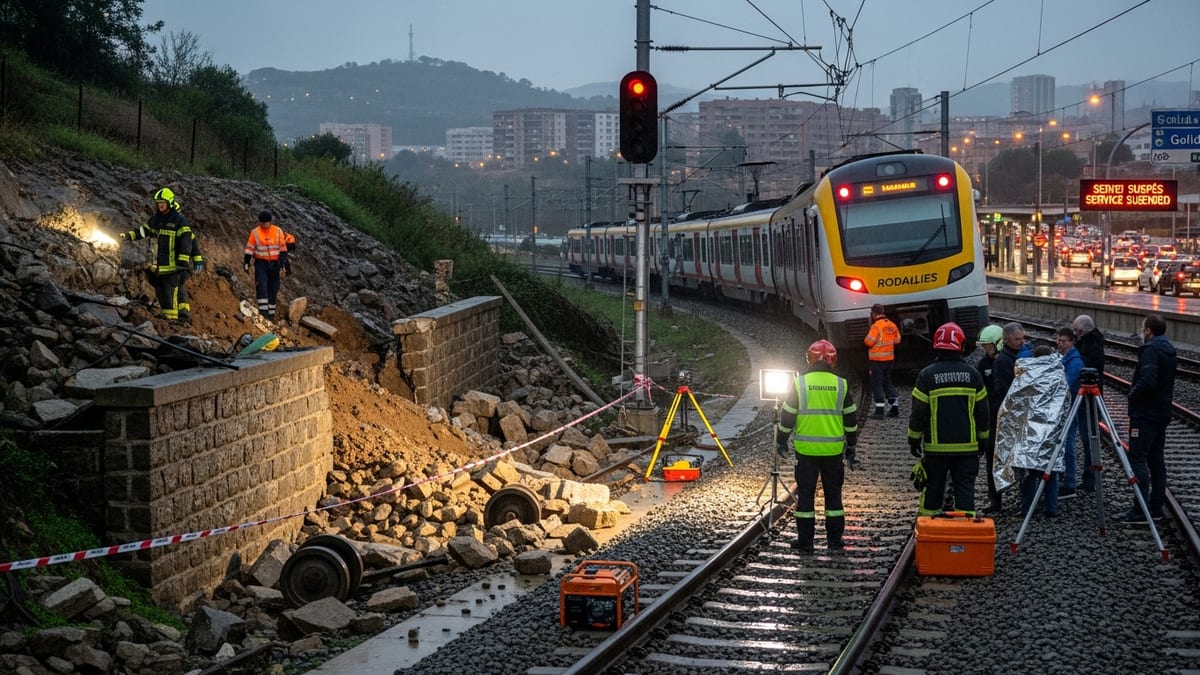
Low-speed derailment blocks key downtown junction
Publicly available information indicates that an out-of-service Link light rail train derailed at low speed as it entered the International District/Chinatown Station, just south of downtown Seattle. The incident occurred late Saturday, with the train appearing to be largely empty apart from the operator, and no injuries were reported.
Initial accounts from riders and bystanders describe the train coming off the tracks on a section of track where trains typically operate at reduced speed while negotiating a complex series of track switches. The derailment left the train partially obstructing the guideway in one of the system’s most critical junctions, where lines converge to serve central Seattle.
The location of the incident meant that even a low-impact derailment quickly translated into major operational challenges. With a disabled train sitting in the tunnel throat leading into the downtown stations, service through the area could not continue safely until rail crews had inspected the track, assessed equipment damage and re-railed or removed the train.
Information shared on local forums and social channels suggests the affected train was not carrying regular passengers at the time, which limited the immediate safety risk but did little to reduce the knock-on effects for the Sunday morning commuting and event crowds.
Several hours of suspended service and shuttle bus bridges
Reports from riders indicate that Link light rail service through downtown Seattle was suspended for several hours on Sunday morning while crews worked to clear the derailed train and check the surrounding track. Northbound and southbound trains approaching the city center were reportedly turned back short of the affected section, and riders were instructed to transfer to replacement bus services.
Shuttle buses operated as a bridge across the disrupted segment, with passengers directed to board at nearby surface stops. Travelers recount crowded conditions, extended waits and slower-than-usual trips as buses attempted to absorb rail-sized passenger volumes on streets already congested by weekend traffic and construction.
Published coverage notes that the timing coincided with planned events drawing large numbers of visitors to the stadium district and downtown. For many riders heading to work, the airport or sports events, the unplanned outage added 30 minutes or more to typical journey times, with some reporting missed connections and resorting to ride-hailing services when shuttle lines grew long.
By later in the morning, transit alerts and rider reports indicated that regular light rail service was gradually restored, once the train had been moved and safety checks were complete. A subsequent onboard announcement referenced the issue as resolved, with trains again operating through the International District/Chinatown Station.
Focus on switches and slow-speed rail operations
Early public discussion around the incident has centered on the complex trackwork at the entrance to the downtown transit tunnel, where multiple lines, storage tracks and crossover switches intersect. Transit enthusiasts and frequent riders commenting online describe this location as a slow zone where trains are routed carefully through a series of switch points.
According to technical information available on similar derailments in light rail systems, slow-speed incidents at switch locations are often related to wheel and track alignment issues, switch position problems or debris on the rail rather than high-speed operation. In this case, observers who saw the aftermath described minimal visible damage and suggested the train appeared to have come off the rail close to the switch area.
Because the derailment occurred at low speed, the forces involved were relatively limited compared with high-speed mainline rail incidents, which likely contributed to the lack of injuries and contained structural damage. However, even minor misalignments at a choke point like the International District/Chinatown entrance can require extensive inspections to ensure that no underlying infrastructure or signaling components were compromised.
Network diagrams and previous safety reports for the Seattle light rail system highlight the area south of downtown as a critical operating node, where any blockage can ripple across the entire corridor. The slow-speed nature of the derailment meant the event was more disruptive from a reliability and capacity standpoint than a severe safety crisis, but it has nonetheless intensified scrutiny of maintenance and monitoring at key switch clusters.
Rider frustration adds to broader reliability concerns
The episode quickly fed into a growing public conversation about the reliability of Seattle’s expanding light rail network. Riders posting on community platforms described being offloaded from trains, redirected to street-level buses and waiting in long queues, with some calling the experience a reminder of why they hesitate to depend on transit for time-sensitive trips.
Regular users pointed out that, in recent months, service on the Link system has already been affected by scheduled tunnel maintenance, ventilation issues and occasional mechanical faults. While these events vary in cause and duration, many commuters experience them as a pattern of unpredictable interruptions that complicate daily planning.
Travelers headed to Seattle-Tacoma International Airport appeared particularly affected, as the derailment occurred during a period when visitors and residents rely on the train to avoid congestion on regional highways. With trains halted through downtown, some airport-bound passengers reported calculating whether to stay with the shuttle buses or switch to taxis and ride-hailing, weighing cost against the risk of further delay.
Commentary from local transit advocates suggests that disruptions during weekends and game days can have an outsized impact on public perception, since many occasional riders form their impressions of the system during these trips. The slow-speed derailment has therefore raised questions not only about maintenance but also about how quickly the system can recover from unexpected failures in its most constrained sections.
Calls for clearer communication and stronger contingency planning
Beyond the derailment itself, much of the criticism has focused on communication and contingency planning. Riders recounted unclear or inconsistent announcements on trains and platforms, with some unsure of where shuttle buses would stop or how long the outage would last. Several noted difficulty hearing or understanding onboard messages, a long-standing complaint on the system.
Publicly available service alerts did acknowledge the disruption and directed passengers toward alternate routes, but riders relying on journey-planning apps or maps reported that real-time information often lagged behind conditions on the ground. For visitors unfamiliar with Seattle’s bus network, the sudden shift from light rail to surface transit, without easily visible wayfinding, proved especially challenging.
Transit-watchers commenting online have renewed calls for a more robust contingency strategy when rail service is unexpectedly interrupted in core segments. Suggestions include pre-planned bus corridors with transit-priority lanes, clearer signage at affected stations, and standardized scripts for announcements that quickly explain what has happened and what options are available.
In the aftermath of the incident, many riders also expressed appreciation for front-line staff and operators managing a complex situation, while urging system managers to treat the derailment as a case study in how to minimize disruption the next time an out-of-service train encounters trouble in a constrained part of the network.