


More news on this day
When storms ground aircraft and snarl schedules, passengers often assume airlines must pick up the tab for hotels and meals. In most countries, however, bad weather is treated as an event outside a carrier’s control, which sharply limits what travelers are entitled to and leaves many relying on a patchwork of voluntary policies, regional regulations and credit-card coverage.
Get the latest news straight to your inbox!
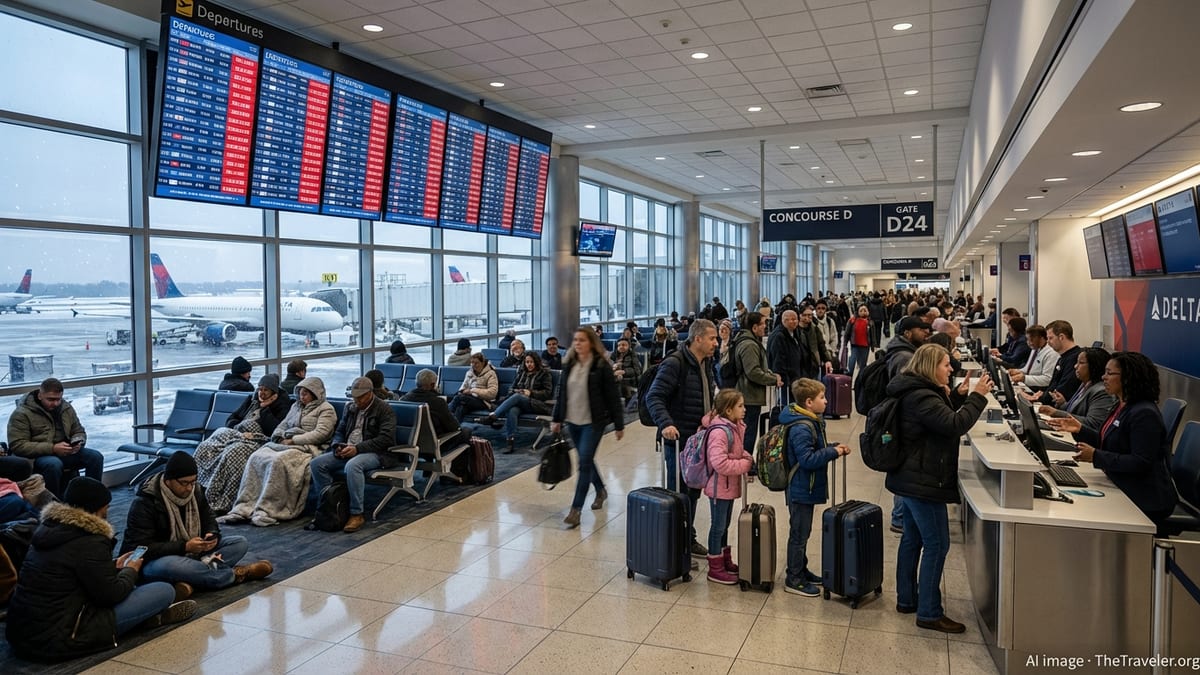
How U.S. rules treat weather delays and cancellations
In the United States, federal rules draw a clear distinction between disruptions within an airline’s control, such as some mechanical issues or staffing problems, and uncontrollable events like severe weather. Public guidance from the Department of Transportation indicates that carriers are not legally required to provide meals, lodging or other incidental expenses when a cancellation or long delay is caused by bad weather or air traffic conditions beyond the airline’s control.
For weather-related disruptions, U.S. airlines are generally required to honor the fare you purchased, offer a refund if the airline cancels or significantly changes your flight and you choose not to travel, and make the full text of their contract of carriage available. According to federal consumer information, passengers are entitled to a refund of the unused portion of their ticket when the airline cancels or significantly delays a flight and the traveler no longer wishes to take the trip, regardless of the reason for the disruption.
Beyond refunds, most other benefits during weather events are dictated by each airline’s own policies. The Department of Transportation’s Airline Cancellation and Delay Dashboard compiles those commitments, showing at a glance which U.S. carriers voluntarily promise meal vouchers, hotel stays or ground transportation when disruptions are within their control. When weather is the cause, those same commitments typically do not apply, leaving assistance to the airline’s discretion on a case-by-case basis.
There are some separate protections that apply regardless of the cause of delay. Federal tarmac delay rules, for example, require U.S. airlines to provide food and water after a lengthy wait on the ground and to ensure access to restrooms and basic medical assistance. These obligations apply even when storms or other uncontrollable factors are behind the disruption, but they are limited to situations where passengers are kept aboard an aircraft for extended periods.
What airlines typically provide during weather events
Because weather is treated as outside a carrier’s control, many U.S. contracts of carriage state that passengers are responsible for their own hotels and meals if a storm or other natural event forces a cancellation or extended delay. An example from a major U.S. carrier’s publicly posted conditions of carriage explains that when a delay is beyond the airline’s control, travelers are expected to cover lodging, meals and other incidental costs themselves.
That approach is common across the industry, although practices can vary. A review by the U.S. Government Accountability Office found that while carriers often advertise assistance such as hotel or meal vouchers for controllable disruptions, they typically exclude weather and other force majeure events from those guarantees. In practice, some airlines may still issue vouchers or arrange hotels during severe weather disruptions, but those gestures are usually framed as a courtesy rather than a legal obligation and may depend on local availability and staffing.
Airlines are more consistent in offering rebooking during weather problems. When a storm is forecast, carriers routinely issue travel waivers, allowing customers to change flights within a specified window without change fees or fare differences on certain routes. Publicly available information indicates that airlines may proactively relax fare rules ahead of major weather events to keep operations running more smoothly and reduce the number of passengers stranded at airports.
Travelers should also pay close attention to the cause of a delay as it appears in airline communications and airport departure boards. If a disruption that begins with weather later involves crew or equipment issues, some portions of the delay may fall within the carrier’s control, potentially opening the door to additional assistance under that airline’s customer service plan. Those nuances are reflected in carrier policies and in the data summarized on the U.S. government’s customer service dashboard.
How protections differ in Europe and Canada
Passengers flying in other regions may face a different set of rights when weather disrupts a trip. In the European Union, Regulation (EC) No 261/2004 establishes common rules on assistance and compensation when flights are canceled, heavily delayed or overbooked. Weather and other “extraordinary circumstances” can exempt airlines from paying cash compensation, but European case law has held that carriers still owe passengers “care” in the form of meals, refreshments and hotel accommodation when necessary, even during major natural events.
Under that European framework, travelers whose flights are canceled or significantly delayed by storms are entitled to basic support such as food and drink vouchers and hotel stays when an overnight wait is required, along with transportation between the airport and the hotel. Published summaries of the regulation explain that these care obligations apply regardless of whether the disruption stems from extraordinary circumstances, although compensation payments for inconvenience can be waived when the airline can demonstrate that weather was the cause.
Canada’s Air Passenger Protection Regulations take a different, tiered approach. The rules, which apply to flights to, from and within Canada, set out minimum standards of treatment and, in some situations, compensation based on how much control the airline has over the disruption. Official summaries from the Canadian Transportation Agency note that events outside airline control, such as certain security issues and weather, generally limit a carrier’s duty to pay compensation for inconvenience but still require specific standards of treatment.
Transport Canada materials and related government briefings describe an evolving framework in which airlines must provide clear communication, rebooking or refunds in defined circumstances and, for delays or cancellations within their control, additional compensation. Weather typically falls into the “outside airline control” category, which reduces eligibility for monetary compensation but does not eliminate requirements for standards of treatment such as information updates and reasonable rebooking options.
How to protect yourself before storms hit
Given the limited obligations airlines face during bad weather, many consumer advocates stress the importance of planning ahead. Federal “Fly Rights” guidance encourages passengers to review airline contracts of carriage and customer service plans before travel, paying particular attention to how carriers handle weather, missed connections and lengthy delays. Those documents spell out whether the airline routinely covers hotels or meals in any circumstances and what counts as an event within its control.
Travel insurance and credit card protections can fill some of the gaps. Many standalone policies and premium credit cards offer trip delay and interruption benefits that reimburse reasonable expenses like hotels and meals when a trip is delayed for a set number of hours by covered reasons, often including severe weather. Travelers are typically required to keep receipts and file claims after the trip, but these benefits can provide relief in situations where airlines are not obligated to pay.
Checking forecasts and proactively adjusting plans can also reduce the likelihood of being stranded. When storms are predicted, airlines often waive change fees for affected routes, allowing travelers to move trips earlier or later without penalty. Publicly available airline travel advisories show that these waivers can appear days before a major weather event, giving passengers an opportunity to reroute through less affected hubs or shift travel to calmer windows.
Finally, understanding that entitlement to hotels and meals is limited during weather disruptions can help set expectations at the airport. While it is always reasonable to ask whether vouchers or accommodations are available, especially during long or overnight delays, passengers should be prepared for the possibility that they will need to make their own arrangements and seek reimbursement later through insurance or credit card benefits rather than relying on the airline.
Key documents and tools to consult during disruptions
Several public tools can help travelers quickly understand what they are owed when storms interrupt their plans. The U.S. Department of Transportation’s Airline Cancellation and Delay Dashboard outlines, carrier by carrier, which amenities each airline commits to provide during controllable delays and cancellations, including meals, ground transportation and hotel stays. Although weather delays are categorized separately, the dashboard offers a clear picture of each airline’s overall customer service posture.
In Canada, the Canadian Transportation Agency provides detailed web pages summarizing passenger rights under the Air Passenger Protection Regulations, including how standards of treatment and compensation change depending on whether a disruption is within or outside the airline’s control. These materials explain how passengers can file complaints if they believe a carrier has not met its obligations.
Within the European Union and associated countries, official summaries of Regulation 261 and national enforcement body websites describe the circumstances under which airlines must provide care and, where applicable, compensation. Travelers can use those resources to check whether a weather-related disruption crosses time or distance thresholds that trigger assistance, even when storms are classified as extraordinary circumstances.
Wherever they are flying, passengers facing bad weather will benefit from knowing that refunds are often the most concrete right when a flight is canceled or significantly changed, while extras such as meals and hotels depend heavily on local law, the specific airline and, in many cases, an individual carrier’s willingness to go beyond what regulations strictly require.
U.S. DOT Airline Cancellation and Delay Dashboard