


More news on this day
Passengers traveling through Nairobi’s Jomo Kenyatta International Airport (JKIA) are facing widespread delays as an ongoing workers’ go-slow disrupts Kenya Airways operations and several international airline services linked to the hub.
Get the latest news straight to your inbox!
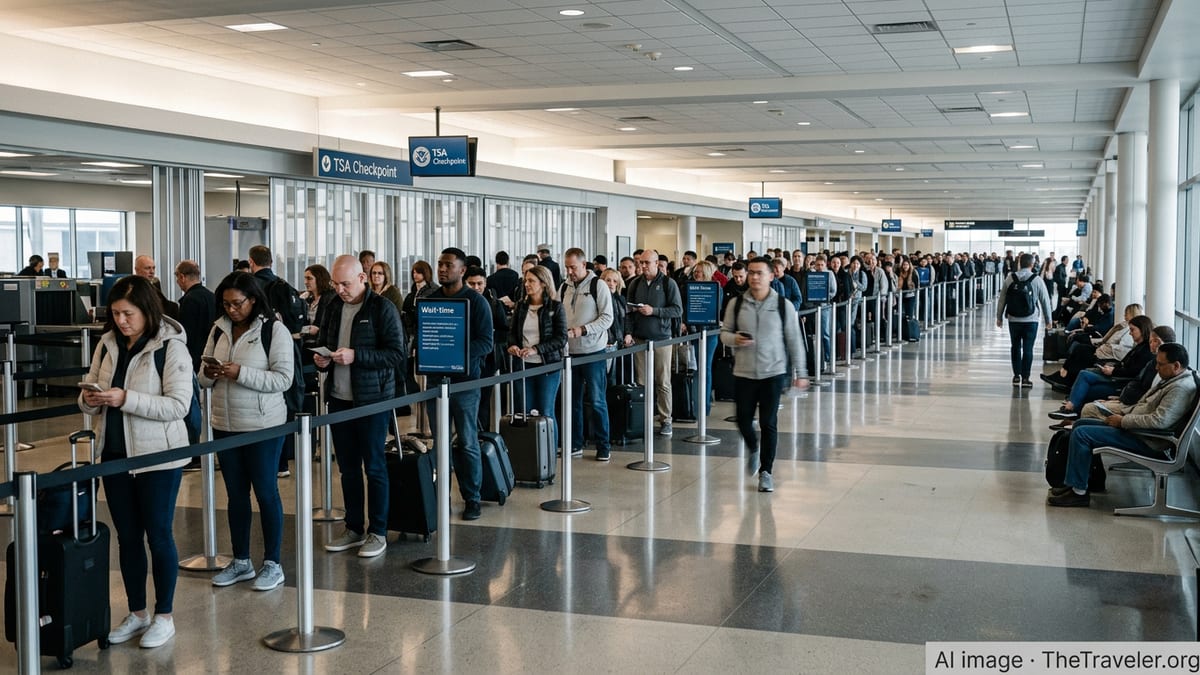
Operational Slowdown at JKIA Creates Network-wide Knock-on Effects
Reports from Nairobi indicate that on August 30, 2026, a go-slow involving staff linked to key airport and aviation agencies at JKIA triggered hours-long delays across the airport’s departure banks. Publicly available coverage describes lines building at check-in, security, and boarding gates, with outbound traffic experiencing rolling disruption through the day and into the night.
Kenya’s main gateway operates around the clock and handles the bulk of the country’s international traffic, meaning even a partial slowdown in air-traffic management or ground operations quickly cascades into wider delays. Travel advisories and local media reports note that the situation remains fluid, with the scale of impact varying by airline, route, and departure time.
While the airport remains open, the reduced pace of handling aircraft, baggage, and passenger flows has narrowed operational margins. Flight-tracking data and passenger accounts show a pattern of late departures, schedule reshuffles, and aircraft held on the ground while departure slots are spaced out, creating knock-on effects for connections across Africa, the Middle East, Europe, and North America.
Kenya Airways Delays: Long-haul, Regional and Domestic Routes Affected
Kenya Airways, which is based at JKIA and operates the largest schedule from the airport, has acknowledged ongoing disruption across its network. A customer update issued on August 30, 2026, highlights air-traffic control constraints and indicates that flights were departing with average delays of two to three hours, even where services remained on the schedule.
Long-haul routes appear particularly exposed, as departure delays in Nairobi ripple into late arrivals and tighter turnaround times at overseas airports. Flight-status portals on August 30 and 31 showed the Nairobi to New York service KQ2 operating but with a history of substantial delays, often running well behind its planned early-morning departure and contributing to missed onward connections for some passengers.
On regional links, historical activity for Kenya Airways’ Johannesburg service KQ762 shows at least one recent cancellation in the current disruption window, as an evening departure from Nairobi to Johannesburg on August 28, 2026, was listed as canceled. Industry trackers and passenger posts point to further schedule adjustments on high-frequency regional routes such as Entebbe, Kilimanjaro, and Lusaka, where some flights have been delayed or consolidated to manage aircraft and crew availability.
Domestic services are also feeling the strain. Data compiled by consumer-rights portals shows isolated cancellations on routes such as Kisumu to Nairobi in the second half of August, alongside shorter but still disruptive delays on Mombasa and Eldoret sectors. Kenya Airways has urged passengers to update their contact details on its website or mobile app so that rebooking options and timing changes can be communicated more quickly.
Impact on Partner and International Airlines Using JKIA
The disruption at JKIA is not limited to Kenya Airways. As the primary regional hub in East Africa, Nairobi connects a wide range of international carriers to secondary cities across the continent. Coverage from regional and international media outlets notes that flights operated by airlines such as Qatar Airways and Emirates have also experienced delays when transiting through JKIA during the current go-slow.
In some cases, flights marketed under the codes of Qatar Airways, Emirates, or other partners are actually operated by Kenya Airways aircraft and crews under codeshare agreements. When a Kenya Airways-operated sector is delayed or rescheduled, passengers holding tickets issued by partner airlines can see their itineraries disrupted even if the long-haul leg into or out of Doha or Dubai remains on time.
Travel-industry commentary and passenger reports describe longer-than-usual ground times in Nairobi for certain Middle East and regional services, with knock-on delays affecting onward connections to Asia, Europe, and the Americas. While most of these flights are still operating, revised departure times and late inbound connections are increasing the risk of missed links and overnight stays for travelers on complex multi-leg journeys.
Some regional African carriers that rely on JKIA as a connection point have also reported schedule pressures as aircraft and crews arrive late from Nairobi. Industry observers point out that when a major hub slows down, even modestly, the effects tend to spread across the network of airlines that interline or share passengers there.
Recent Safety and Runway Incidents Add to Operational Strain
The current staffing-related disruption follows on the heels of several operational incidents at JKIA that have put additional pressure on schedules. Local news outlets recently reported a tyre-burst incident involving an aircraft landing at the airport, which briefly suspended runway operations and forced inbound flights to hold or divert while the runway was inspected and cleared.
Although that incident was resolved within a relatively short period, aviation analysts note that any runway closure at a single-runway international hub can create a backlog that takes hours to absorb, especially during peak departure and arrival waves. When such events occur close in time to workforce actions or air-traffic management constraints, the recovery window shortens and airlines have less flexibility to reposition aircraft.
Official planning documents and infrastructure reports for JKIA underscore that the airport is undergoing phased upgrades to its runway and terminal systems. While most of this work is scheduled during off-peak periods, occasional restrictions linked to construction activity can also tighten capacity. Combined with the present go-slow, these factors contribute to an environment where even routine schedule disruptions may have outsized consequences for airlines and passengers.
Travel experts following the situation suggest that the convergence of infrastructure works, isolated runway events, and staffing issues has made it more challenging for carriers to recover punctuality quickly, particularly on high-demand long-haul routes and regional trunk services.
Advice for Affected Passengers and What to Expect Next
Consumer travel guidance emerging in the wake of the go-slow emphasizes that passengers with upcoming departures from JKIA should prepare for potential delays and monitor their bookings closely. Publicly available advisories recommend checking flight status on airline websites or apps before leaving for the airport, and allowing additional time at check-in and security in case passenger processing remains slower than usual.
For travelers already impacted by delays or cancellations, passenger-rights organizations and travel-law resources highlight that options typically include rebooking on later services, adjusting itineraries to alternative connection points, or seeking refunds where flights are canceled. The precise remedies depend on the airline, ticket type, and governing regulations on the route, but documentation of delays and any additional expenses remains important in case claims are pursued later.
As of August 31, 2026, Kenya Airways has indicated through public updates that it is working with aviation stakeholders to stabilize operations and is proactively contacting customers whose flights are directly affected. Travel analysts expect that if staffing levels and air-traffic control capacity improve over the coming days, the airline network through JKIA could gradually return to more typical levels of punctuality, though localized delays may persist while the backlog clears.
Passengers connecting through Nairobi in early September are being advised by travel planners to keep itineraries as simple as possible, avoid tight layovers where feasible, and review insurance coverage for trip interruption. With JKIA continuing to play a central role in East African aviation, the pace at which the airport resolves the current disruptions will be closely watched by airlines and travelers across the region and beyond.
Kenya Airways Customer Update, August 30, 2026
CGTN coverage of JKIA flight delays, August 30, 2026