


Intrepid Travel has become one of the best known names in small group adventure tours, with trips that range from budget-friendly camping in Namibia to premium journeys through Japan. Before you put down a deposit on an Intrepid itinerary, it helps to understand how the company works in practice: what is really included, how flexible the bookings are, what kind of travelers you will be joining and how its responsible travel credentials translate on the ground. This guide walks through the key things to know, using concrete examples from real trips and recent policies so you can decide if Intrepid is the right fit for your next adventure.
Get the latest updates straight to your inbox!
Who Intrepid Travel Is Best For
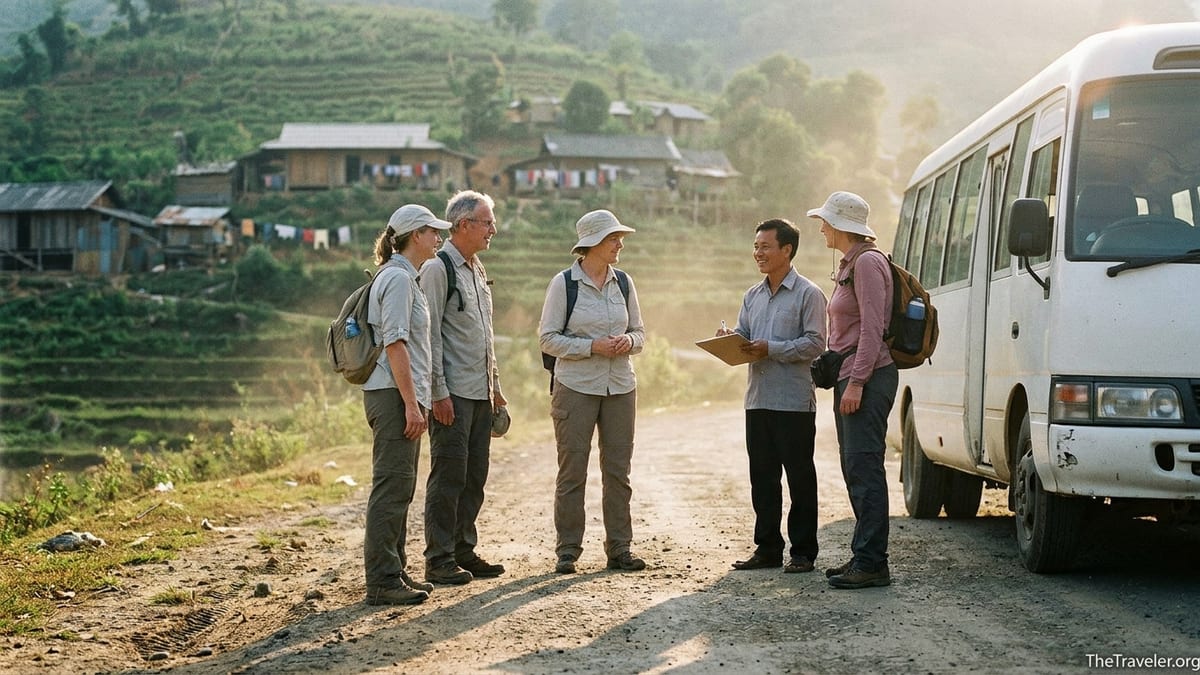
Intrepid specializes in small group trips that typically cap at about 12 to 16 travelers, led by a local leader and focused on using local accommodation, transport and restaurants. That model tends to work well for solo travelers who want company, first-time visitors to a region who prefer to leave the logistics to someone else, and people who value structure but do not want a 50-seat coach tour. For example, a solo traveler from the United States who joins a 10-day “Best of Vietnam” trip can expect to move between Hanoi, Hoi An and Ho Chi Minh City on trains and local flights, sharing experiences like street food tours and village visits with a consistent group rather than navigating each transfer alone.
Intrepid trips are grouped into lines such as Basix, Original, Comfort and Premium, which signal the level of comfort and inclusions. A Basix trip around Thailand might use simple guesthouses, overnight trains and local buses, while an equivalent Premium itinerary would feature centrally located hotels with private bathrooms, more meals and some internal flights to cut down on long travel days. Travelers who are used to four-star city breaks may be happier in Comfort or Premium, while backpackers on a tighter budget often gravitate to Basix or Original.
Age range is another factor. Intrepid is generally open-age, which means you may find a mix of 20-somethings, 40-something professionals and retired couples on the same departure. The company also runs dedicated 18-to-35-style trips in some regions for those who prefer being with peers closer to their own age. If you are hoping for a strictly “youth” or strictly “over-50s” group, it is important to read trip reviews and ask an Intrepid consultant what the typical demographic is on the specific itinerary and time of year you are considering.
Intrepid suits travelers who are comfortable with early starts and full days of activity. On a two-week itinerary in Peru, for instance, you might have multiple mornings where you are on the road by 6 or 7 a.m. to catch a flight, beat crowds to a site like Machu Picchu or travel between regions. If you prefer leisurely breakfasts and long afternoons by the pool, look closely at the day-by-day schedule before booking.
Understanding Pricing, Inclusions and Extra Costs
One of the most important things to know before booking with Intrepid is that the headline price typically covers accommodation, ground transport during the tour, some key activities and some meals, but not everything. Long-haul international flights to the start city are almost always separate. On a week-long Amalfi Coast sailing adventure, for example, the listed price might include your berth on a small yacht, basic onboard meals and guided coastal walks, but you would still need to budget for dinners in port, drinks and your flights to and from Italy. A discounted sailing departure in July 2026 listed from just under the equivalent of 2,700 Australian dollars is a good example: that price is for the tour itself, not your airfare.
Day-to-day spending money can vary a lot by destination. On a Basix trip in Southeast Asia, travelers sometimes report that street food lunches and local dinners can stay under the equivalent of 15 to 25 US dollars per day if you stick to local options. By contrast, on a Premium itinerary in Scandinavia, you might spend that much or more on a single casual meal. Intrepid usually provides an estimated daily budget in the trip notes. It is wise to treat those numbers as minimums and add a margin for drinks, optional museum entries or a taxi when you are too tired for public transport.
Optional activities are another common source of confusion. Many Intrepid itineraries list extra-cost experiences such as hot air ballooning in Cappadocia, a helicopter flight over Victoria Falls or a cooking class in Kyoto. These can be highlights, but they can also add hundreds of dollars to your total spend if you say yes to everything. Before you book, read the detailed itinerary for your chosen trip and highlight which optional activities matter most to you, then add a realistic cost estimate for those to your budget.
Be aware that single supplements work differently depending on the trip. Intrepid prices are usually based on twin-share rooms, which means solo travelers are paired with a same-gender roommate unless they pay extra for a “single supplement” where available. On some popular trips and peak dates that supplement can be a significant fraction of the tour price. If you are particular about having your own bathroom or are a light sleeper, factor this into your decision up front rather than assuming private rooms are standard.
Booking Flexibility, Deposits and Cancellations
Intrepid promotes flexible bookings to give travelers more confidence when planning ahead. At the time of writing, the company allows you to hold a spot on many trips for a short period without paying a deposit, and then pay your balance in installments up to 56 days before departure instead of in one lump sum. If you cancel up to 56 days before your trip, in many cases your deposit can be converted into a credit to use on a future departure rather than lost entirely. These policies are designed to make it easier to commit to a trip a year out, when work schedules and personal circumstances might still change.
However, flexibility is not unlimited. Once you are within the final weeks before departure, standard cancellation fees usually climb quickly and can reach 50 percent or more of the tour price, rising to 100 percent close to the start date. Flight tickets, pre- and post-tour accommodation and certain permits may be nonrefundable from the moment they are booked. For instance, if you have an Intrepid trip to Nepal that includes a domestic flight into the Everest region, backing out late could mean those sector tickets are lost even if the rest of your tour cost is partially credited.
Intrepid strongly recommends travel insurance, and in some destinations it is effectively mandatory. For itineraries involving high-altitude trekking in places like Peru or Nepal, or remote sailing in destinations with limited medical facilities, you are typically required to show evidence of insurance that covers emergency evacuation and medical treatment. From a practical perspective, travel insurance is also what protects you if you become ill before departure or if a close family member’s situation forces you to cancel. Because Intrepid’s own cancellation fees can be steep in the final window, it is worth choosing a policy that explicitly covers tour operator costs, not just flights and hotels.
The company occasionally changes departure dates or confirms trips only once a minimum number of travelers have booked. Intrepid also advertises that a trip is “guaranteed to depart” once at least one traveler is fully paid. In reality that means you should watch payment deadlines carefully. Paying your balance early locks in your own spot, but if you are hoping a departure becomes guaranteed before you buy flights, it may be prudent to wait until you see that status on the itinerary page or to call Intrepid and ask about current booking numbers.
What the On-the-Ground Experience Really Feels Like
On the ground, an Intrepid trip typically blends organized group activities with pockets of free time. A day on a classic Morocco itinerary might start with a guided walk through Marrakech’s medina in the morning, a traditional lunch arranged by your leader, then a free afternoon where you can choose between joining an optional hammam visit, souvenir shopping or simply resting at the riad. Evenings often involve a group dinner, especially early in the tour when people are still getting to know each other.
The small group format can be a double-edged sword. Many travelers praise the camaraderie that develops after sharing overnight trains, long bus rides and meals together in places like India or Mexico. For introverts or highly independent travelers, however, constant social interaction and moving as a pack can be tiring. Past customers sometimes note that the pace feels rushed, with early starts and what they describe as inefficient routing, such as only one main activity scheduled after a long travel day. Before you book, it is helpful to scan several recent reviews of your specific trip to see whether people mention downtime, rushed sightseeing or long hours in transit.
Another important nuance is that Intrepid often works with local partner companies in each country. Your tour leader is usually contracted through one of these destination management companies, and on certain days local specialist guides join for specific sites. This can be a strength, since it supports local businesses and brings destination-specific expertise. It can also mean the experience varies more from trip to trip than if everything were run by one central team. Some recent traveler feedback describes excellent local leaders who added spontaneous market tours or translated in family-run restaurants. Other reviews mention situations where transfers were late or hotel check-ins were disorganized, with travelers feeling that complaints did not always lead to swift refunds.
Accommodation and transport standards depend heavily on the trip style you book. On a Basix overland safari in East Africa you might share a tent in a community campsite, help with cooking on rotation and spend long days in a custom safari truck. On a Premium tour of Japan, you are more likely to stay in well-rated city hotels, ride high-speed trains and enjoy curated meals in local restaurants. If you have a low tolerance for cold showers, shared bathrooms or stairs without elevators, stick to Comfort or Premium options and read the accommodation notes in detail.
Intrepid’s Responsible Travel Claims, Explained
Intrepid has built much of its brand around responsible travel. The company has been carbon neutral since around 2010 and became a certified B Corporation in 2018, a designation that involves third-party assessment of its social and environmental practices. More recently, Intrepid has been adding carbon labels to hundreds of itineraries so travelers can see an approximate emissions figure for a given trip and compare, for example, the footprint of an overland journey in Europe versus a fly-in fly-out short break.
In 2025 the company announced a shift away from relying on carbon offsetting alone and toward a climate impact fund and more direct emissions reductions. In practical terms, that might mean investing in more fuel-efficient vehicles for local partners, prioritizing itineraries that use trains instead of short flights where reasonable, or choosing locally owned hotels with stronger environmental practices. For a traveler, this shows up not as abstract policy but as real choices, such as taking an overland train between Florence and Rome instead of a domestic flight, even if the latter could appear faster on paper.
Intrepid’s responsible travel policies also cover issues such as animal welfare, cultural respect and child protection. For instance, itineraries avoid activities like elephant riding and instead support sanctuaries that focus on observation at a distance. City tours often highlight local social enterprises, such as restaurants in Southeast Asia that train disadvantaged youth or cooperatives in Latin America that support Indigenous artisans. On an Egypt trip, a visit to a women-run Nubian guesthouse might be included to direct tourism dollars toward female entrepreneurs in a conservative region.
That said, it is sensible to approach any sustainability claims with a healthy dose of scrutiny. Some travelers appreciate Intrepid’s attempts to be transparent about its impact, while others argue on travel forums that any company flying people around the world still contributes significantly to emissions, or that marketing terms like “eco” and “local” can be overused. Before you book, it is worth reading Intrepid’s most recent responsible travel or climate disclosure documents and deciding whether their approach aligns with your own values.
Comparing Intrepid With Other Small Group Operators
When deciding whether to book with Intrepid, many travelers compare it with similar brands such as G Adventures, Exodus Travels or country-specific specialists. Like its competitors, Intrepid focuses on small groups, local leaders and itineraries that mix highlights with lesser-known experiences. On a two-week small group tour of Japan, for example, both Intrepid and a competitor might include Tokyo, Kyoto and Hiroshima, stays in a traditional ryokan and a visit to the Fushimi Inari Shrine, but differ in hotel choices, free time and included meals.
Price-wise, Intrepid often sits in a middle band. It is usually more expensive than purely backpacker-focused hop-on hop-off bus networks and some local operators you could book directly once in-country, but cheaper than fully escorted luxury tours with five-star hotels. A traveler evaluating a 10-day group trip in Mexico might find that Intrepid’s Original trip costs a bit more than a bare-bones local operator that uses larger groups and budget hotels, but less than a boutique company that limits groups to eight and stays exclusively in upscale boutique properties.
One of Intrepid’s distinctive features is the range of trip styles under one brand. You might do a Basix overland adventure in Africa in your twenties and come back for a Premium food-focused tour of Italy in your forties without changing companies. By contrast, some rivals focus more narrowly on one segment, such as youth hostel tours or high-end walking holidays. This breadth can be convenient if you enjoy the company’s general philosophy and booking process and want to stick with a familiar provider as your travel style evolves.
Reviews of Intrepid are mixed, much like reviews of its main competitors. On one end of the spectrum are travelers who rave about transformative experiences and impeccably organized itineraries. On the other are those who feel the value proposition is not as strong, especially when they tally what they could have arranged independently using online booking tools. As you weigh your options, it helps to read recent, destination-specific accounts on independent platforms that mention concrete details like average hotel standards, punctuality of transfers and how the company handled any mid-trip problems.
The Takeaway
Booking a trip with Intrepid Travel can be a smart choice if you want the ease of a professionally designed itinerary, the social element of a small group and the reassurance of a company that publicly prioritizes responsible travel. It is especially appealing for solo travelers and those venturing into regions where independent travel feels intimidating, such as parts of Central Asia, East Africa or remote sections of South America.
At the same time, Intrepid is not a magic shortcut that removes all uncertainty. Trips can be fast-paced and occasionally disorganized, and you remain responsible for understanding what is included, what is not and how the company’s booking and cancellation rules work. Before you pay a deposit, take time to read the full trip notes, look at a handful of independent reviews from the past year for your exact itinerary and cross-check that the pace, accommodation level and group style genuinely match your expectations.
If you are excited by early starts, shared experiences and the chance to see a destination through the eyes of local leaders while contributing to community-based tourism projects, Intrepid may be a good fit. If you prefer slow travel, spontaneous route changes or complete privacy, you may be happier planning your own trip or opting for a more customized tour. The key is to align your personal travel style and budget with what Intrepid actually offers on the ground, rather than with a generic idea of what a “small group adventure” should be.
FAQ
Q1. Is Intrepid Travel a legitimate and financially stable company?
Intrepid is a long-established tour operator that has been running small group trips since the late 1980s and operates in more than 100 countries. Like any travel provider, it is not risk free, but it is considered a mainstream player rather than a pop-up agency, which many travelers find reassuring when paying deposits months in advance.
Q2. Are Intrepid trips worth the price compared with planning independently?
Value depends on how much you would enjoy or use the inclusions. If you are comfortable booking your own guesthouses, trains and activities, you may be able to travel more cheaply on your own. If you value having logistics, local guides and some activities bundled, the slightly higher cost of an Intrepid trip can feel worthwhile, especially in complex destinations where language barriers and transport can make independent travel time consuming.
Q3. What kind of people usually join Intrepid tours?
Groups are typically a mix of solo travelers, couples and friends, with ages often ranging from late twenties to retirees. Many participants are from English-speaking countries such as the United States, Canada, the United Kingdom and Australia, though that varies by region and time of year. People tend to be curious, reasonably active and open to sharing meals and experiences with strangers.
Q4. How physically demanding are Intrepid trips?
It varies greatly by itinerary. Urban cultural trips in Europe or North America may involve daily walking on city streets and standing in museums, while trekking routes in Nepal or Peru demand sustained hiking at altitude. Each trip lists a physical rating, so it is important to match this honestly with your fitness level and to talk with Intrepid or your doctor if you have concerns about conditions like heart or lung issues before booking more strenuous options.
Q5. Can I travel with Intrepid if I have dietary restrictions?
Yes, but communication is essential. Intrepid commonly hosts travelers who are vegetarian, vegan, gluten free or have allergies, and leaders do their best to help you find suitable meals. That said, in remote areas or on homestays, options can be limited. If you have a serious allergy, carry translated cards explaining your restrictions and consider bringing some backup snacks that you know are safe.
Q6. How safe are Intrepid tours for solo female travelers?
Many solo women choose Intrepid precisely because they appreciate having a group and local leader, particularly in destinations where they might feel less comfortable alone after dark. Shared transfers, vetted accommodation and local advice generally improve safety. Normal travel precautions still apply, such as being mindful of alcohol intake, securing your valuables and speaking up to your leader if a situation or activity feels uncomfortable.
Q7. Does Intrepid guarantee departures, or can my trip be canceled?
Some departures are clearly marked as guaranteed once a minimum number of people have fully paid. Others may be canceled or merged with nearby dates if too few travelers book. If traveling on fixed vacation dates, it is wise to ask Intrepid directly about how many people are currently booked and to avoid nonrefundable flights or hotels until your departure is guaranteed.
Q8. What is not included in most Intrepid tour prices?
Typically, international flights to and from the start and end cities, travel insurance, many lunches and dinners, optional activities and personal expenses such as drinks, tips and laundry are not included. Some itineraries also leave certain entrance fees or airport transfers at your own cost. The detailed trip notes list inclusions line by line, and it is worth checking these carefully.
Q9. How environmentally friendly are Intrepid trips in reality?
Intrepid has stronger environmental policies than many mainstream operators and has invested in carbon measurement, climate initiatives and responsible travel guidelines. However, any long-haul travel will have a carbon impact, and sustainability initiatives are an ongoing process rather than a perfect solution. Travelers who care about this can prioritize itineraries that use trains or buses instead of short flights and support local enterprises highlighted by their leaders.
Q10. What should I read in the fine print before I pay a deposit?
Focus on the booking conditions, cancellation and change fees, payment schedule, minimum group size, physical rating, rooming arrangements and what is and is not included in the price. It is also sensible to look at any notes about seasonal conditions, such as monsoon rains or extreme heat, that might affect your travel dates. Understanding these details up front reduces the risk of disappointment or surprise costs later.