


Whether you are catching a red-eye to North America, landing close to midnight from Europe, or navigating a long layover to Southeast Asia, where you sleep before or after a flight at Seoul Incheon International Airport can make or break the journey. The good news: around Incheon Airport you will find everything from capsule pods inside the terminal to full resort complexes with spas and casinos, plus a dense cluster of mid-range hotels in nearby Airport Town Square. This guide walks through the main options, what they are really like in practice, and how to choose the right one for your schedule and budget.
Get the latest updates straight to your inbox!
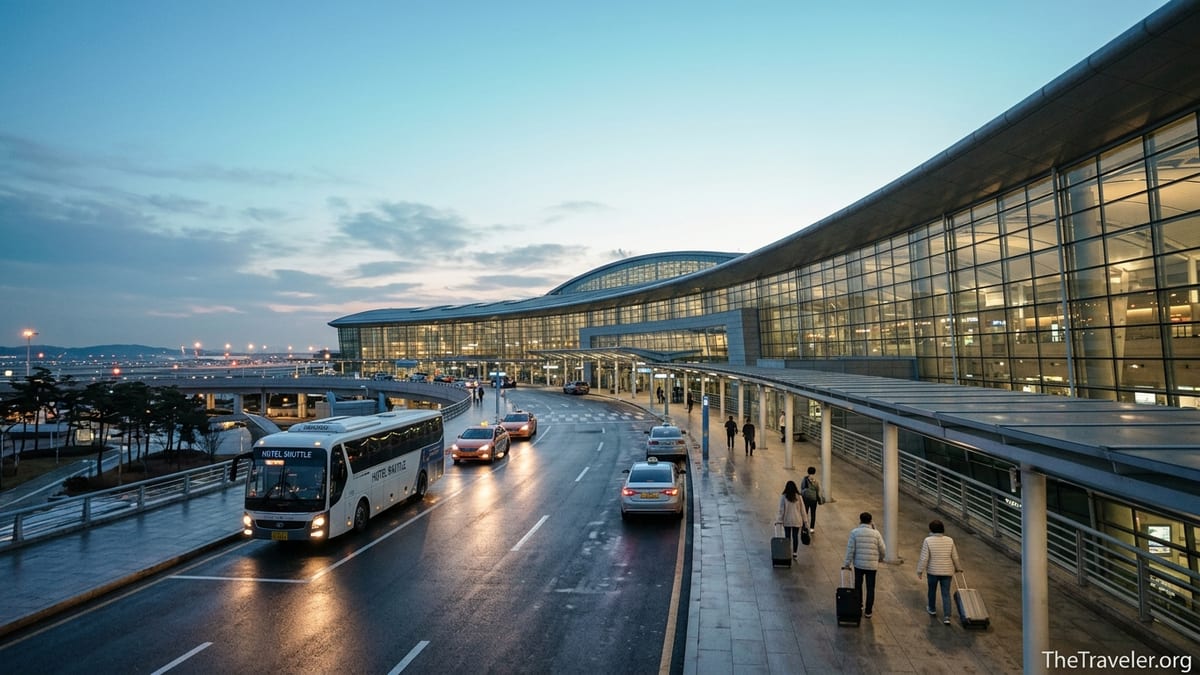
Understanding Your Options Around Incheon Airport
Incheon International Airport sits on Yeongjong Island, about 30 to 60 minutes west of central Seoul depending on whether you take the Airport Railroad Express or an airport limousine bus. Because the distance is significant, especially in early-morning traffic or after midnight when trains slow down, many travelers choose to stay near the airport rather than commute from downtown. The area around the terminals has been developed into an aerotropolis, with capsule hotels and transit hotels inside the airport, large resorts a short shuttle ride away, and an entire satellite town around Unseo Station built largely to serve passengers coming through Incheon.
Broadly, you have four types of places to stay. First are capsule and transit hotels inside the terminals, designed for short, sleep-and-shower stays without leaving the building. Second are full-service international hotels directly connected or very close to the terminals, appealing if you want comfort without thinking about transport. Third is the nearby resort cluster around Paradise City, which suits those who want entertainment, shopping, and restaurants. Finally, there is Airport Town Square around Unseo Station, where you will find a concentration of mid-range Korean and international chain hotels at generally lower prices than properties physically attached to the airport.
In practice, your best option depends on when your flight leaves, whether you are checked in or not, if you are traveling hand-luggage-only or with large suitcases, and how sensitive you are to cost. A traveler catching a 7:00 a.m. transpacific flight might prioritize walking time and choose a capsule hotel right in Terminal 2. Someone arriving late but with a full free day before their next flight might prefer to check in at an Unseo hotel, explore neighborhood restaurants that stay open late, and ride the Airport Railroad back to the terminal in the morning.
Prices can fluctuate widely with season and demand, but you can think in general ranges. Capsule hotels inside the terminals often charge by the hour, so a six- to eight-hour rest can cost roughly what a budget hotel night in Unseo might cost. Full-service terminal-connected hotels and resorts typically sit in the higher mid-range to luxury bracket, sometimes several times the nightly rate of a basic airport district hotel. Keeping those rough tiers in mind will make it easier to compare options that fit the way you actually travel.
Sleeping Inside the Terminal: Capsule and Transit Hotels
If you want to maximize sleep and minimize movement, the capsule and transit hotels inside Incheon Airport are the most convenient solution. The best-known option is Darakhyu, a capsule hotel concept operating in both Terminal 1 and Terminal 2. The Darakhyu facilities are located on the land-side of the terminals, typically around the transportation center level, which means you can access them after immigration and baggage claim, but before going through security for your next departure. Many travelers use them for late arrivals, very early departures, or long layovers where they want a private resting space without leaving the airport complex.
Darakhyu capsules are more like compact micro-rooms than traditional narrow capsules. Most pods come with a single bed, a small desk ledge, mood lighting, and integrated storage for a carry-on bag. Some units include a private shower, while others use shared facilities down the corridor. Bookings are usually made in blocks of hours, for example a six-hour or twelve-hour stay, rather than a strict overnight. For a typical early-morning departure, travelers might check in around 10:00 p.m., sleep, shower, and then walk upstairs to their check-in counter around 5:00 a.m. Because occupancy can be high on busy travel days, it is wise to book in advance when your schedule is fixed.
In addition to capsule hotels, both Terminal 1 and Terminal 2 also host transit hotels airside. These are designed specifically for passengers who do not want, or are unable, to clear immigration into Korea. If your bags are checked through and your connecting flight is the same calendar day or early the next morning, an airside transit hotel room lets you stay within the secure area. Rooms are more like compact business hotel rooms than capsules, typically with a standard bed, desk, and private bathroom. Rates are often higher than the capsule options, and again are commonly sold in blocks of hours rather than by the calendar night.
Realistically, these airside transit hotels shine when you have a long connection but cannot or do not wish to enter the country, such as when you are in transit on a single ticket between two long-haul flights. If you are already planning to pass immigration and access the city or the broader airport area, the land-side capsule hotels, resorts, or Unseo hotels will generally give you more space or better value for a similar or lower cost.
Terminal-Connected and Shuttle Hotels for Maximum Convenience
Beyond the capsule and transit hotels inside the buildings, Incheon Airport is also served by a number of full-service hotels that are either physically connected to the terminals or accessible via very short shuttle rides. These are particularly attractive for travelers who want the comfort of a standard hotel room, on-site dining, and full-service amenities, but still need to be within a few minutes of check-in counters. They are popular with business travelers, families with children, and anyone carrying a lot of luggage who wants to avoid early-morning subway crowds.
Several mid-range and upscale international-brand hotels cluster in the immediate airport district, often advertising complimentary shuttle buses that run throughout the day between hotel entrances and the terminal arrival levels. A typical example is a four-star hotel that offers spacious rooms with proper work desks, a restaurant or cafe open for early breakfast, and amenities like small fitness rooms or business centers. Shuttle journeys usually take around 10 to 15 minutes, depending on traffic and the exact location, and hotels generally publish their shuttle timetables on their own websites and at airport information counters.
When choosing among these properties, it helps to think about your departure time. If your flight leaves around 9:00 or 10:00 a.m., an airport hotel with a shuttle departing on the half hour might be perfectly adequate. You can enjoy breakfast, catch a 7:00 a.m. shuttle, and still arrive early enough for check-in and security. If you have a departure before 7:00 a.m., you should carefully check the earliest shuttle time. Some hotels might start service later, which could mean relying on a taxi instead. In that case, a property directly linked to Terminal 2 or one of the capsule or transit hotels could save you both money and anxiety.
Shuttle hotels can also be a pragmatic compromise for travelers in transit with checked baggage. After you collect your suitcase, clear customs, and step into the public arrivals hall, you can follow signs to the hotel shuttle pick-up zones. In practice, many travelers simply look for hotel-specific signs in the bus area and wait at the clearly marked bays. Because Incheon traffic is generally predictable outside of rush hour, the advertised shuttle times tend to be reliable, but it is still sensible to allow a small buffer when traveling during busy holiday periods or in poor weather.
Resort-Style Stays: Paradise City and Neighboring Complexes
For travelers who want more than just a place to sleep, the resort district near Incheon Airport provides a very different style of overnight stay. The flagship development in this area is Paradise City, an integrated resort located close to the terminals on Yeongjong Island. Designed to function as a self-contained leisure hub, it combines large hotels with entertainment facilities such as a casino, art installations, spa and wellness areas, kids’ zones, and multiple restaurants and cafes. It is marketed as a destination in its own right rather than simply an airport hotel.
Staying at a resort like Paradise City can make sense if your layover is long enough to actually enjoy the facilities, or if you are starting or ending your trip to Korea and want a relaxing buffer before a long flight. For example, a family flying home to Europe might spend their last night here, allowing children to swim or explore the game zones while adults enjoy spa treatments or a leisurely dinner. With a short shuttle or taxi ride back to the terminal in the morning, they can then head straight to check-in feeling rested instead of rushing from central Seoul.
The main trade-offs with resort-style stays are cost and focus. Room rates at integrated resorts frequently sit above standard airport hotels, reflecting the additional facilities and branding. Food and beverage prices inside the complex are also commonly higher than off-resort neighborhood restaurants. Moreover, these properties are designed for recreation, so if your priority is simply to sleep for a few hours and catch an early flight, the added amenities may not justify the expense. That said, if you are celebrating a special occasion, recovering from a long trip, or traveling with companions who want a final vacation-style evening before flying, the resort zone near Incheon can be a memorable choice.
Another practical consideration is time of arrival. If your flight lands close to midnight and you have an early departure the following morning, you may not have many hours to fully enjoy a resort’s pools or entertainment. In such cases, a capsule hotel inside the terminal or a straightforward shuttle hotel may be more rational. If you are landing in the afternoon and flying out late the next day, then a resort stay could turn an otherwise tedious layover into a mini getaway, complete with time to explore hotel art collections, lounges, and outdoor courtyards.
Unseo Station & Airport Town Square: Best Value Near the Airport
Just one stop from the terminals on the Airport Railroad line sits Unseo Station, the heart of what is often called Airport Town Square. This satellite neighborhood was built specifically to serve the flow of passengers and airport workers, and today it is one of the best-value areas to stay near Incheon Airport. Around Unseo, you will find a dense collection of guesthouses, business hotels, and international mid-range brands, along with Korean barbecue restaurants, cafes, convenience stores, and late-night eateries that cater to people arriving at odd hours.
The train ride from Incheon Terminal 1 Station to Unseo is only a few minutes on the all-stop Airport Railroad service, and trains run from early morning into late night. From Unseo Station, many hotels are within a five- to ten-minute walk, and some offer short shuttle rides back to the terminal for guests with large luggage. Staying here can often cut your accommodation cost compared to resorts or terminal-connected hotels, particularly during peak travel seasons when prices inside the airport zone spike.
Many travelers with flights departing mid-morning or later choose Unseo for its balance of price and convenience. A common pattern looks like this: check into a mid-range hotel in the evening, drop your bags, and walk a block or two to a Korean barbecue or fried chicken restaurant for dinner. Afterwards, pick up snacks and drinks at a convenience store, sleep in a standard room with more space than a capsule pod, and in the morning roll your suitcase back to Unseo Station to catch the short train ride to your terminal. For many, that feels closer to staying in a normal Korean neighborhood than being isolated inside an airport building.
Airport Town Square is also helpful if you have a flexible schedule and want to adjust plans at the last minute. Because the area has many accommodation options, there is often at least some same-day availability except during major holidays. If a capsule hotel inside the terminal is fully booked or more expensive than you anticipated, it is often possible to find a room in Unseo on short notice, then use the frequent Airport Railroad service to reach your check-in counter early the next day.
When It Makes Sense To Stay in Central Seoul Instead
Not every early or late flight demands an airport-area stay. In some situations, remaining in central Seoul until the day of your departure still makes sense. The key factors are your flight time, your tolerance for early-morning travel, and where exactly in the city you are staying. The fastest way from downtown to the airport is usually the nonstop Airport Railroad Express from Seoul Station to Incheon Terminal 1 and Terminal 2, which can take around 45 minutes of travel time, plus whatever you need to get to Seoul Station itself.
If your flight from Incheon departs in the early afternoon or evening, staying in central neighborhoods like Myeongdong, Hongdae, or Gangnam on your last night lets you make the most of your time in the city. You can enjoy a relaxed final morning of sightseeing or shopping, check out of your hotel around late morning or midday, then head to the airport via train, limousine bus, or taxi with a comfortable buffer before boarding. In this scenario, an overnight near the airport might simply shorten your last day in Seoul without offering a large reduction in stress.
On the other hand, for departures before about 9:00 a.m., an airport-area stay often provides more peace of mind. Early on certain days, some subway lines into central Seoul run less frequently, and while taxis are available, you could face heavy traffic depending on weather or road conditions. Many travelers decide that trading one extra night in the city for an extra hour or two of sleep and a short shuttle or elevator ride to the check-in counters is worthwhile, especially at the end of a long trip when they are already tired.
If you are torn between the two, consider splitting your stay: spend most of your trip in central Seoul, then move to a hotel in Unseo or a capsule hotel at Incheon for the final night. This approach keeps you close to the city’s attractions for the bulk of your visit while still reducing stress on departure day. It does involve packing up and changing locations once more, but for many travelers the trade-off between an extra move and a calmer morning at the airport is acceptable.
Practical Tips for Choosing the Right Stay Near Incheon
Once you have decided roughly which area around Incheon suits your plans, a few practical considerations can help narrow down individual properties. First, think about check-in and check-out times relative to your flights. Capsule and transit hotels often allow more flexible hourly bookings, which can be useful if you arrive before dawn or need only a half-night rest. Standard hotels typically follow a mid-afternoon check-in and late-morning check-out pattern, although some near the airport offer earlier check-in or later check-out for a fee. Matching these times to your flights can avoid paying for unused hours or waiting around the lobby when you would rather be sleeping.
Second, consider your luggage and travel companions. Solo travelers with just a backpack may be happy weaving through the terminal on escalators and riding the Airport Railroad to Unseo in exchange for lower prices. Families pushing strollers and multiple suitcases, or older travelers who prefer minimal walking, might place higher value on properties directly connected to the terminal or with very frequent shuttle buses. In practice, that might mean paying a little more for a room but saving energy and time on the ground.
Third, pay attention to what facilities you actually need for the night. If your only priority is a shower and three or four hours of uninterrupted sleep before boarding your next long-haul flight, a capsule hotel or basic Unseo business hotel can be more than sufficient. If you know you want a proper restaurant meal, space to repack suitcases, or a quiet desk to work from in the evening, a full-service airport hotel or resort may be worth the additional cost. Travelers who are sensitive to noise might want to look at recent guest comments on soundproofing, especially for hotels directly facing runways or major roads.
Finally, check transportation details the day before you travel. Looking up the first Airport Railroad departure from Unseo or confirming the earliest hotel shuttle departure time can prevent early-morning surprises. Similarly, if you are arriving very late at night, note when the last Airport Railroad train leaves the terminals. If your flight is scheduled to arrive close to that time, choosing a capsule or terminal-adjacent hotel can act as an insurance policy in case of delays, sparing you the need to negotiate with taxis in the small hours.
The Takeaway
Seoul Incheon Airport offers a rare range of accommodation choices packed into a relatively small area, from compact sleeping pods inside the terminals to full-scale resorts and a lively satellite town only one train stop away. Rather than asking which hotel is objectively “best,” it is more useful to start with your own itinerary: your arrival and departure times, whether you plan to clear immigration, how much luggage you carry, and how important budget is compared with convenience.
If you value maximum convenience, capsule or transit hotels inside the terminals and full-service properties directly connected to the airport minimize early-morning stress. If you want more space and local flavor without straying far, Airport Town Square around Unseo Station combines easy rail access with an everyday Korean neighborhood atmosphere and generally better room rates. For travelers treating a long layover or the last night of a trip as an opportunity to unwind, the nearby resort complexes offer a more luxurious and entertaining end to the journey.
Whichever option you choose, planning your overnight near Incheon Airport with the same attention you give to flight times and seat selection will pay off. A well-chosen stay can turn awkward hours between flights into a restorative break, leaving you better rested and ready for the next leg of your travels.
FAQ
Q1. Is it worth staying near Incheon Airport for an early morning flight?
For departures before about 9:00 a.m., many travelers find that staying near the airport is worth it. It reduces the risk of delays on the way from central Seoul, lets you sleep longer, and usually means a short shuttle or elevator ride to your check-in counter instead of navigating trains or highways in the dark.
Q2. How early should I arrive at Incheon Airport if I stay in Unseo?
If you are staying around Unseo Station, plan to board the Airport Railroad at least three hours before an international flight and two hours before a domestic one. The ride to the terminals is short, but this buffer covers walking time, check-in, security, and any small delays on the train.
Q3. Can I book the Darakhyu capsule hotel on arrival, or do I need a reservation?
Same-day bookings at Darakhyu are sometimes possible, but the capsules can sell out on busy travel days or during holiday seasons. If you have a fixed early departure or very late arrival, reserving in advance through the hotel’s official channels gives you more certainty and usually clearer information about available time blocks.
Q4. What is the difference between the transit hotel and capsule hotel at Incheon?
The transit hotel is located airside and is intended for passengers who stay within the secure zone between flights. Rooms are more like standard small hotel rooms and generally cost more. The capsule hotel is land-side, accessible after immigration, and offers smaller pod-style rooms that are usually cheaper and sold in shorter hourly blocks.
Q5. Are airport-area hotels near Incheon noisy because of aircraft?
Most modern airport-area hotels near Incheon are built with soundproofing in mind, and many guests report relatively quiet rooms despite runway proximity. However, noise levels can vary by property and room orientation, so if you are sensitive to sound it is worth checking recent guest impressions and requesting a higher floor or a room facing away from active runways.
Q6. How late do trains run between Incheon Airport and Unseo Station?
The all-stop Airport Railroad service between the terminals and Unseo typically runs from early morning until late at night, with frequency tapering off in the late evening. Exact last-train times can vary slightly by day and season, so it is wise to confirm the schedule close to your travel date, especially if your flight arrives late at night.
Q7. Are there food options near the hotels around Unseo Station?
Yes, the Airport Town Square area around Unseo Station has a wide range of casual restaurants and convenience stores. Travelers commonly find Korean barbecue spots, fried chicken places, noodle shops, cafes, and late-opening minimarts within a short walk of most hotels, making it easy to get a meal even after arriving in the evening.
Q8. Do hotels near Incheon Airport usually offer free shuttles?
Many mid-range and upscale hotels in the immediate airport district offer complimentary shuttle buses to and from the terminals, but not all do. When comparing properties, check whether the shuttle is free, how often it runs, and what the first and last departure times are. In some cases, taking a short taxi ride may be more convenient if shuttle schedules do not align with your flight.
Q9. Is it safe to arrive late at night and go straight to an airport-area hotel?
Incheon Airport and the surrounding hotel districts are generally regarded as safe, and late-night arrivals are common. Official airport taxis, hotel shuttles, and the immediate Unseo area are used by many travelers every day. As always, follow normal travel precautions such as using licensed transport, keeping valuables secure, and confirming directions before you travel.
Q10. Should I stay at an airport hotel on my first night in Korea or go straight into Seoul?
If your flight lands in the afternoon or early evening and you feel comfortable navigating a train or bus after a long flight, heading straight into central Seoul lets you start experiencing the city immediately. If you land very late, feel jet-lagged, or are traveling with young children or heavy luggage, spending the first night at an airport-area hotel and transferring into the city the next morning can be a gentler, more restful start to your trip.